‘Chin up, as well as our elbows’ Five exceptional Manitobans reflect on what it means to be Canadian while bracing against Hurricane Trump’s vitriol and economic upheaval
Read this article for free:
or
Already have an account? Log in here »
To continue reading, please subscribe:

Digital Subscription
One year of digital access for only $205*
- Enjoy unlimited reading on winnipegfreepress.com
- Read the E-Edition, our digital replica newspaper
- Access News Break, our award-winning app
- Play interactive puzzles
*First annual payment billed as $205.00 + GST for one year. This annual subscription will automatically renew at $233.00 + GST every 52 weeks (10% off the regular annual price of $259.35). Offer available to new and qualified returning subscribers only. Cancel any time.
To continue reading, please subscribe:
Add Free Press access to your Brandon Sun subscription for only an additional
$1 for the first 4 weeks*
- Enjoy unlimited reading on winnipegfreepress.com
- Read the E-Edition, our digital replica newspaper
- Access News Break, our award-winning app
- Play interactive puzzles
*Your next Brandon Sun subscription payment will increase by $1.00 and you will be charged $17.95 plus GST for four weeks. After four weeks, your payment will increase to $24.95 plus GST every four weeks.
Read unlimited articles for free today:
or
Already have an account? Log in here »
Canadians have been trying to make sense of a new reality since Canada-United States trade talks broke down on Aug. 21.
The following day, President Donald Trump’s administration imposed 50 per cent tariffs on US$20 billion worth of Canadian exports to the U.S.
The federal government responded in kind a few days later, rolling out tariffs on $27.6 billion worth of imports from the U.S.
The Free Press contacted five Manitobans who have been appointed to the Order of Canada and asked them for their thoughts on the status of Canada-U.S. relations and what is means to be a Canadian today. Their responses have been edited for length and clarity.
Dr. Judith Bartlett
One of the first Indigenous doctors to graduate from the University of Manitoba and helped establish the Aboriginal Health and Wellness Centre. She was appointed to the Order of Canada in 2017.
What does it mean to be Canadian right now?
Dr. Judith Bartlett (left) and Governor General Julie Payette during a ceremony at Rideau Hall in 2018.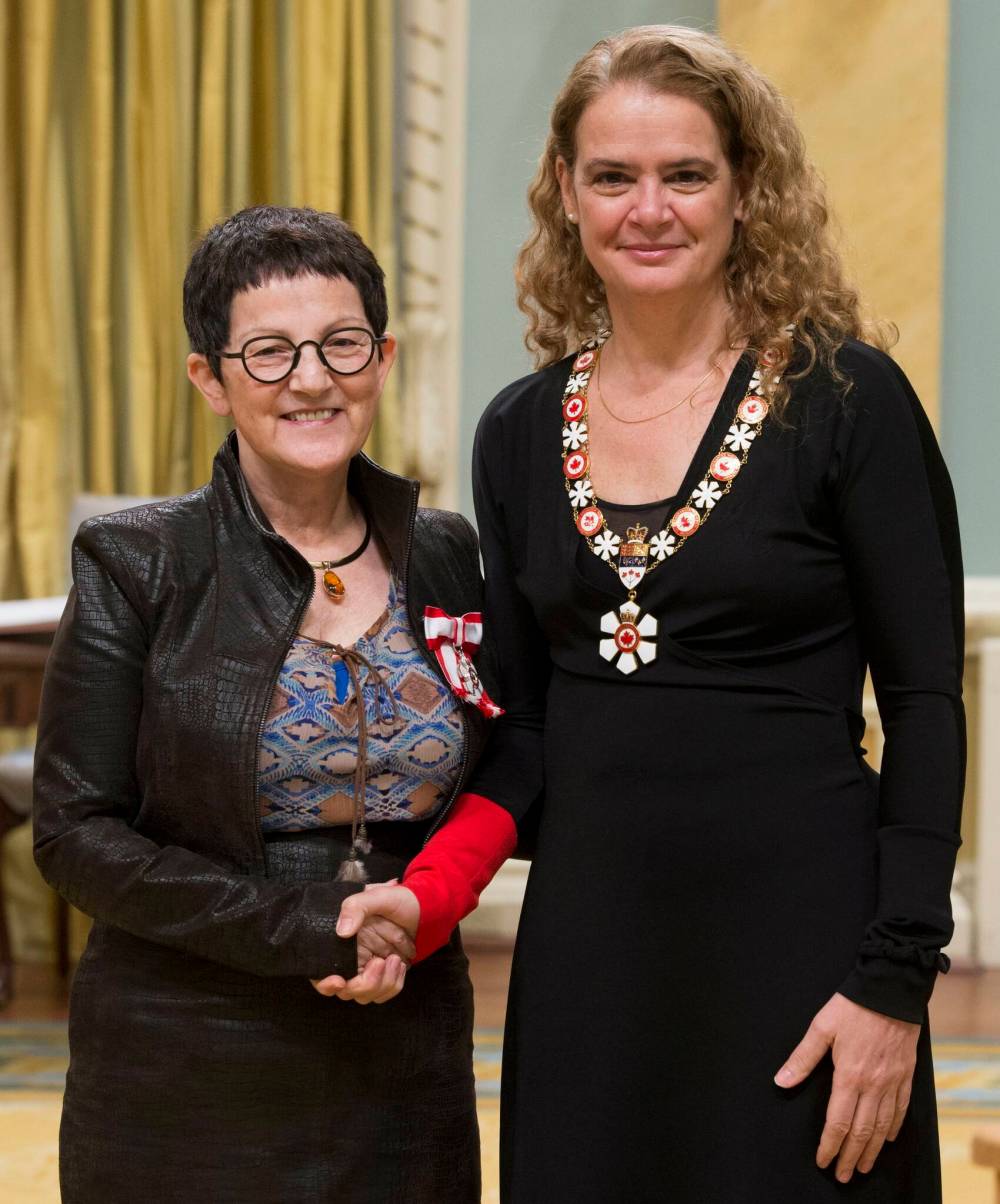
“I’ve been really happy to be a Canadian for a long time (and) really grateful to have been born in Canada, despite the fact that it takes a long time to get things to change. Generally, I think we’re a more egalitarian-focused country than many places. I’m… really happy that we’re kind of coming together as Canada a little bit, despite it being over a difficult subject.”
How worried are you about Canada’s future?
“Overall, I look back — I remember when I bought my first house in 1989. The interest rate was 18 per cent. Now Canada is much more financially positioned to be able to deal with a crisis.
“Personally, I don’t have any worries, but certainly I do for those who have been struggling already from day to day and from generation to generation. This kind of a blip in our society and economic machine will put that backwards again, and that’s a really tough thing to happen.
“Just when you see some people, some populations, just beginning to come out of really dire straits — then this is a glitch that occurs and there’s not much we can do about it at this point.”
What is your message to fellow Canadians at this moment?
“I think Canada is going in the right direction, in terms of opening trade within Canada, as well as trade deals all around the world. But no matter what, we’ll still have the U.S., I think, as a major trading partner.”
Is there anything else you would like to add at this historic juncture?
“You know, this isn’t really a historic juncture, from my perspective being an Indigenous person. First off, it’s not the first Canada-U.S. tariff issue.
“The other thing is, trading has been going on across the Americas for thousands of years — even before there was a Canada and U.S.A. People find a way to move forward, and we’ll get through this, as well.”
Emőke Szathmáry
A physical anthropologist and president and vice-chancellor of the University of Manitoba from 1996 to 2008. She was appointed to the Order of Canada in 2003.
What does it mean to be Canadian right now?
Dr. Emoke Szathmáry was appointed to the
Order of Canada in 2003.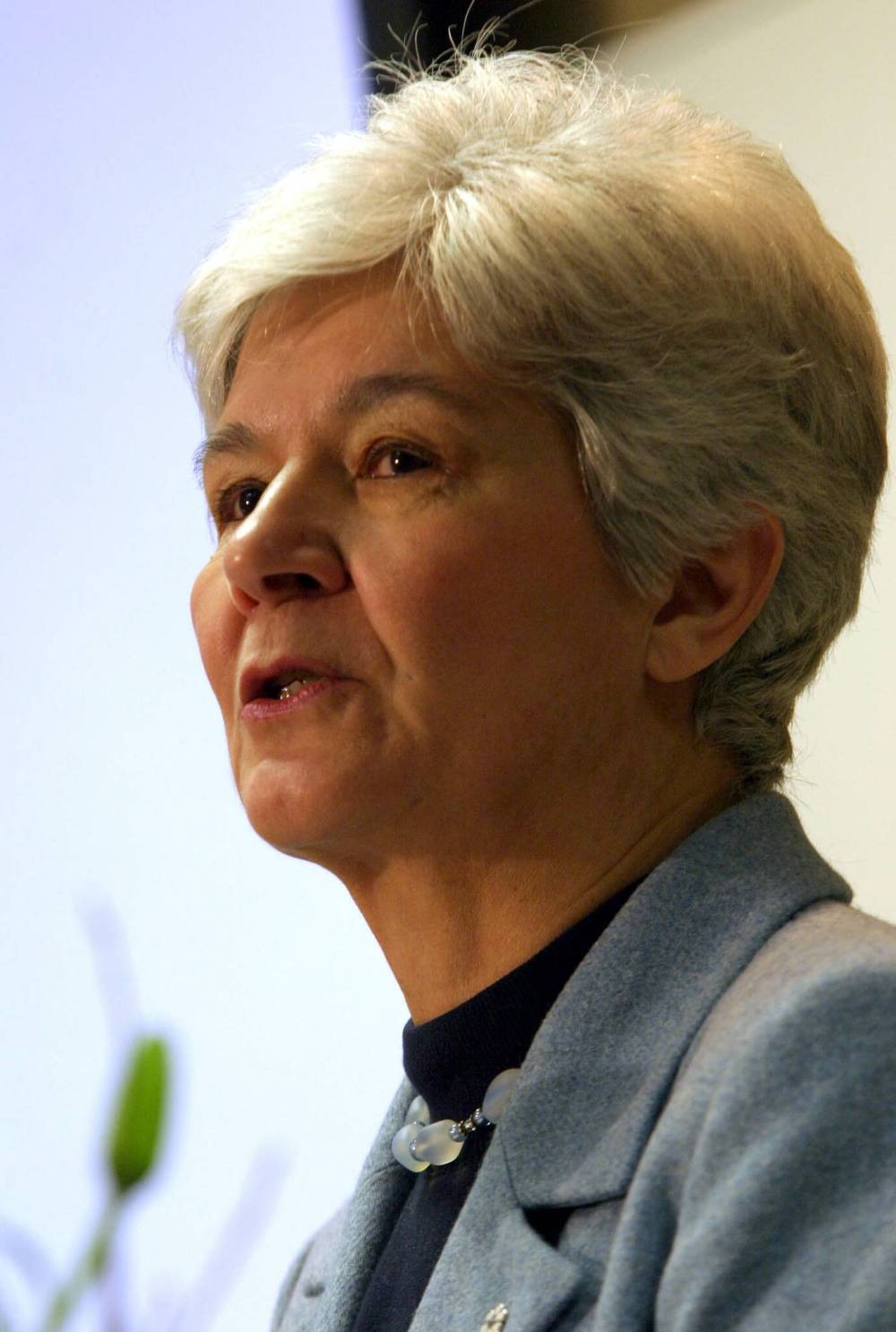
“Probably no different than it meant yesterday or two years before Trump was elected. I’ve always been proud to be a Canadian, but I’m really proud of where our prime minister is leading us right now, because I think it takes courage to take the stance that he has taken, and by all accounts, the country is following him.
“What I mean that it takes courage — it takes courage to stand up for your principles, and especially when you are standing up to an authority that economically is very, very much stronger than you are and also is militarily powerful.
“And also, let’s face it, we have allies in the United States — we have family ties and friends, and so on, and that whole long history behind us, so you have to regret that maybe we’re hurting them, too.
“The fact is, there are principles that we have as Canadians, so I’m rather proud that we’ve taken this very courageous stance.”
How worried are you about Canada’s future?
“I’m not worried about Canada’s future because I think that we will hold out until attitudes change. I am, however, worried about the people who will be directly affected by the losses that will occur.
“I am worried about those who will directly bear the cost of standing up for our principles, which can mean for them job losses or loss of income, or everything that maybe they’ve tried to build economically in their lives.”
What is your message to fellow Canadians at this moment?
“My advice would be to back our government. Yes, we have our political differences. We have different ideas about how any given problem can be solved — that’s why we have political parties — but I think we can hold both in abeyance and really back our government and not show signs of fracture, because it’s very easy, then, to erode confidence. It’s the tactic of divide and conquer.”
Is there anything else you would like to add at this historic juncture?
“I happen to love this country. I care about its values. I love the fact that we are officially bilingual, although I’ve lost my competence with oral French. I love the idea that we recognize errors that our previous governments have made and try to rectify them, whether it’s with Indigenous people or even immigrants.
“It wasn’t exactly easy to be a (displaced person) when we came, but the point is that we survived, and I think we’re better people for it. We care about each other.
“Authority here is accountable to the people who are elected. We observe law. So there are a lot of things that are really valuable in Canada, and I don’t want that lost.”
Ed Schreyer
Premier of Manitoba from 1969 to 1977 and governor general of Canada from 1979 to 1984. He was appointed to the Order of Canada in 1979.
What does it mean to be Canadian right now?
Former Governor General Ed Schreyer was
appointed to the Order of Canada in 1979.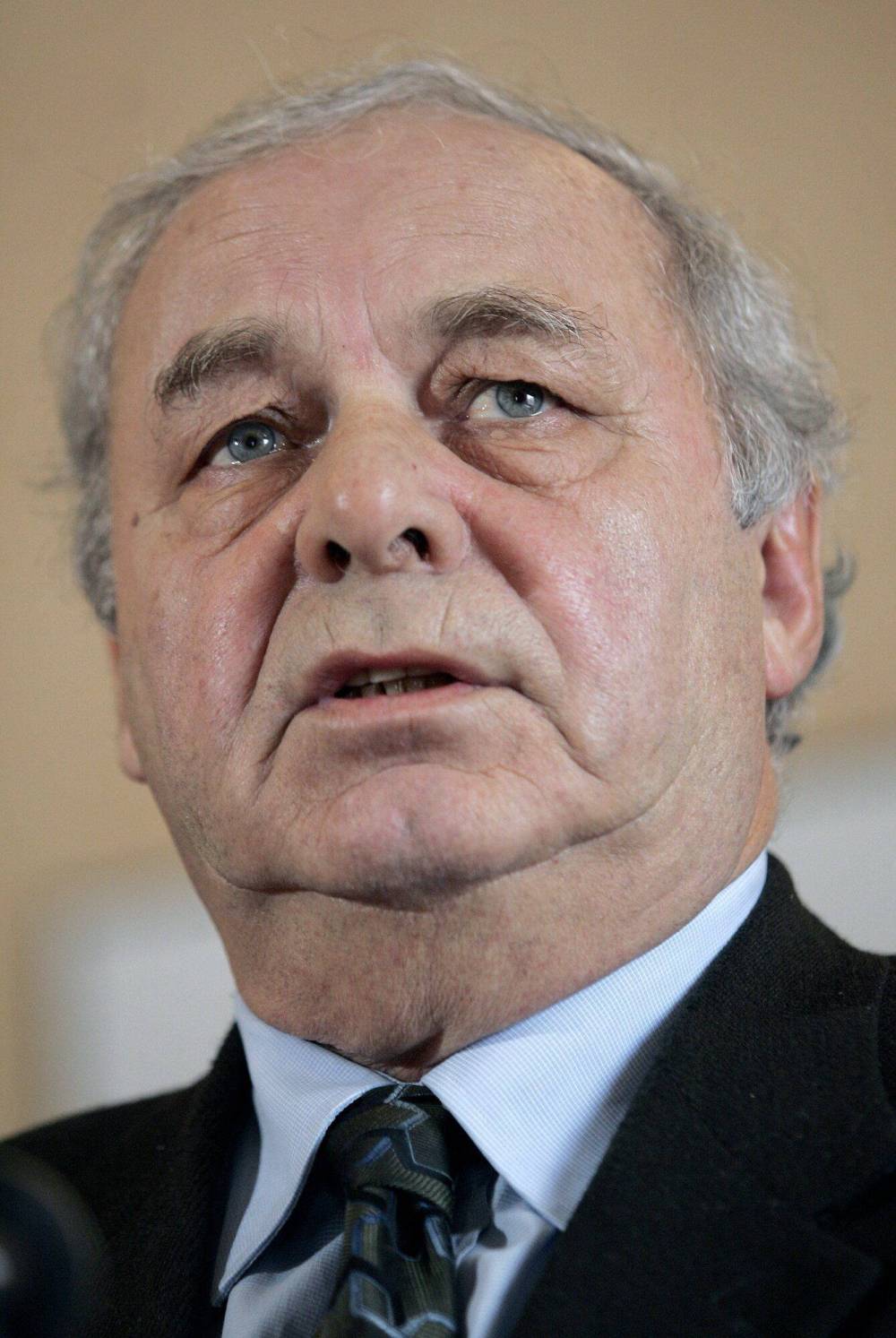
“We’re a middle strength, a middle-sized country, (and we’ve done) not too badly in our recent history with getting along in international relations and in helping to promote world peace and free trade, etc. I think we’ve been behaving rather well.
“And now we face the reality that one of our closest neighbours and longtime friends happens to have a government in place that is not particularly rational or helpful. It seems to be trying to take advantage of its larger size and population, and larger economy and GDP, to try and force us to accept features and measures in a trade agreement that are greatly to our disadvantage.
“And so we are, through our current government, trying to propose rational alternatives.”
How worried are you about Canada’s future?
“There’s a bit of an unknown here, but I’m not worried in the sense that I think that we are going to suffer greatly.
“We may take some measures that will be to our temporary disadvantage, but I don’t see any existential threats and therefore I think we should have the resilience to deal and to cope with it much as we did in 1939-40 and ever since.”
What is your message to fellow Canadians at this moment?
“To simply keep our chin up, as well as our elbows, and to encourage our prime minister and his colleagues to carry on much as they’ve been doing in recent months.”
Is there anything you would like to add at this historic juncture?
“I could add my surprise — almost incredulity — at the fact that we are facing some rather unwelcome and undesired challenges and problems, not because of any doing on our part, but because of the totally unexpected attitudes of a neighbouring political leader in a nearby country.”
Art DeFehr
A businessman and humanitarian whose travels have taken him to more than 140 countries. He was appointed to the Order of Canada in 2003.
What does it mean to be Canadian right now?
“(Canadians are) important in many ways, but they don’t dominate.
“Canada has, overall, tried very hard to deal with diversity, which is something the world has not done very well. We don’t do it perfectly, but I think Canada is a place that tries to reflect to what the globe is. We do talk a lot about values that are not totally selfish as some other people do.
“Canada is in a place right now where it’s setting a standard (that) if the whole world was like (it), it would be a better place.”
Art DeFehr, president and CEO of Palliser Furniture, was appointed to the Order of Canada in
1979.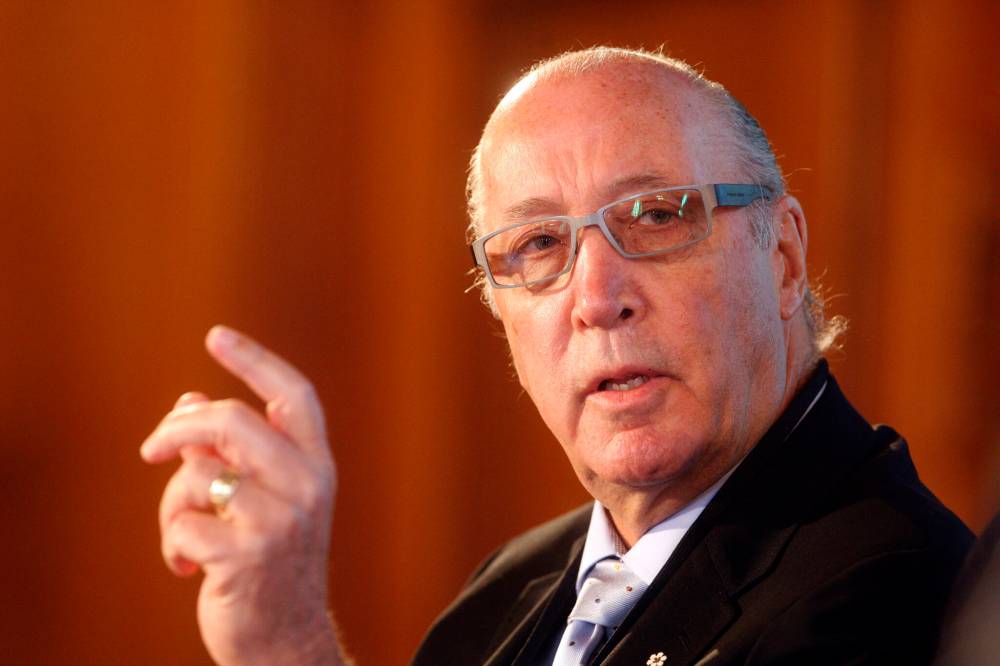
How worried are you about Canada’s future?
“We are going to manage through these challenging times, but certainly having a big neighbour that is losing its way is not helpful.
“I do worry about the fact that we have parts of Canada that don’t appreciate enough how unique we are and then want to separate. But I think Canada will probably manage to retain most of that which we are proud of.”
What is your message to fellow Canadians at this moment?
“We’re a diverse place geographically and, increasingly, culturally, and we should not take that for granted. It’s not something that happens easily or automatically or universally.
“We have to understand that the way we’ve been able to live together across geography and cultural variety is very unique. We have to appreciate it and preserve that.”
Is there anything else you would like to add at this historic juncture?
“We have accomplished a great deal and we can celebrate it, but celebrate it in a way that (acknowledges) that it takes work to sustain it. It doesn’t happen automatically.”
Steve Bell
A singer-songwriter who has released 21 albums over a 30-year career. He was appointed to the Order of Canada in 2022.
What does it mean to be Canadian right now?
“Let me first acknowledge that I am a 65-year-old, straight, white male who has lived his whole life with unmerited privilege, which certainly colours my experience.
“I think Canadians generally think more collectively than individually — we think of ourselves more as a ‘we’ than a ‘me.’
“Metaphorically, we could be thought of as a single, festive parade of multi-coloured, diverse floats, rather than a string of billboards along a highway advertising competing interests.
“The dismissive and degrading postures and policies of the American government towards Canada are currently, I think, bringing out the best in us. To build something positive out of this negative would be such a ‘Canadian’ thing to do.”
Singer-songwriter Steve Bell was appointed to the Order of Canada in 2022.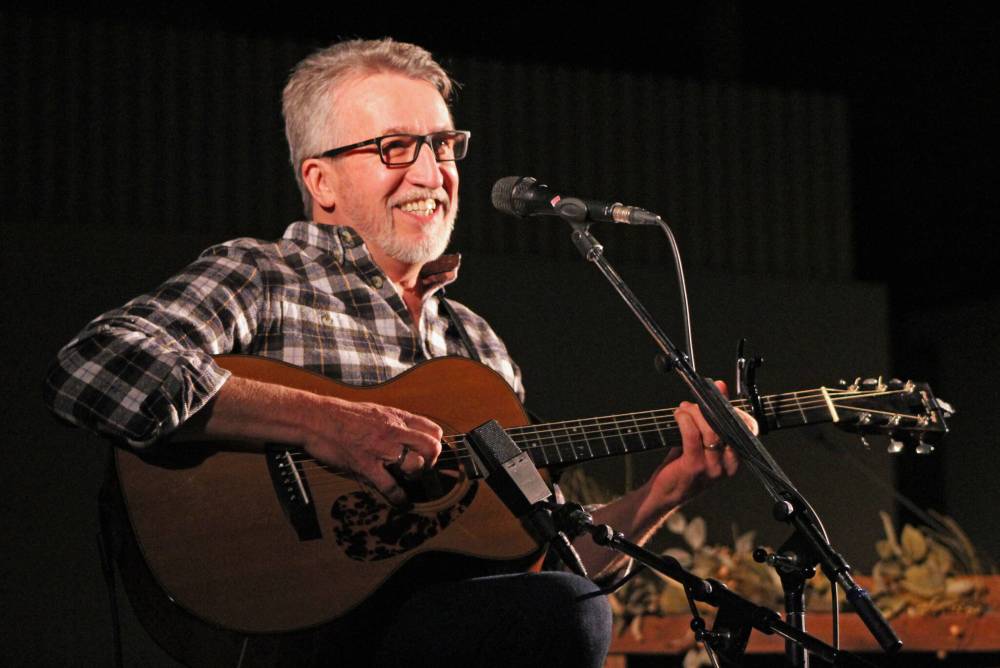
How worried are you about Canada’s future?
“I’m not terribly worried yet. However, if Americans don’t use the midterms (election in November for all 435 members of the House of Representatives and one-third of the 100-member Senate, as well as many state and local positions) to decisively rein in the current administration, we could all be facing much greater challenges.
“Regarding Canada’s future, I am far more concerned about the global climate crisis than I am (about) the petty tyrannies of a flailing and failing political entity.”
What is your message to fellow Canadians at this moment?
“Let’s do our best to attend to, and take care of, each other.
“Let’s also be vigilant to resist using totalizing language that demonizes people groups on either side of the 49th parallel.
“And let’s use our pocketbooks to vote — not to punish or retaliate, but to vote.”
Is there anything you would like to add at this historic juncture?
“It would be the easiest — and laziest — thing in the world to identify ourselves by what we’re not rather than by what we are. We have our own sins to acknowledge and amend.
“This is an opportune moment to double down on our own efforts to grow toward what John Ralston Saul calls ‘A Fair Country.’ And here, the double meaning of the word ‘fair’ is important: beautiful and just.”
aaron.epp@winnipegfreepress.com | gabrielle.piche@winnipegfreepress.com


Gabby is a big fan of people, writing and learning. She joined the Free Press business beat in 2021.
Our newsroom depends on a growing audience of readers to power our journalism. If you are not a paid reader, please consider becoming a subscriber.
Our newsroom depends on its audience of readers to power our journalism. Thank you for your support.
Related Articles
Davidson to lead provincewide economic development agency