

‘Not his best work,’ Kinew says of Trump’s order to rename Lake Ontario

Advertisement
Read this article for free:
or
Already have an account? Log in here »
To continue reading, please subscribe:

Digital Subscription
One year of digital access for only $205*
- Enjoy unlimited reading on winnipegfreepress.com
- Read the E-Edition, our digital replica newspaper
- Access News Break, our award-winning app
- Play interactive puzzles
*First annual payment billed as $205.00 + GST for one year. This annual subscription will automatically renew at $233.00 + GST every 52 weeks (10% off the regular annual price of $259.35). Offer available to new and qualified returning subscribers only. Cancel any time.
To continue reading, please subscribe:
Add Free Press access to your Brandon Sun subscription for only an additional
$1 for the first 4 weeks*
- Enjoy unlimited reading on winnipegfreepress.com
- Read the E-Edition, our digital replica newspaper
- Access News Break, our award-winning app
- Play interactive puzzles
*Your next Brandon Sun subscription payment will increase by $1.00 and you will be charged $17.95 plus GST for four weeks. After four weeks, your payment will increase to $24.95 plus GST every four weeks.
Read unlimited articles for free today:
or
Already have an account? Log in here »
An executive order by U.S. President Donald Trump to rename Lake Ontario as Lake America is “sad,” Premier Wab Kinew says.
“You know, when a rock band is really over the hill and you see them in a casino playing some song from 50 years ago? I think that’s the part of Donald Trump’s presidency we’re at now,” the Manitoba premier said Thursday.
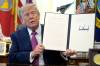
The Republican president signed an executive order Thursday directing his Interior Department to update the lake’s name in the U.S. geographic naming service. Canada is not bound by the name change.
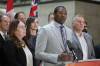
MIKAELA MACKENZIE / FREE PRESS FILES Premier Wab Kinew compared this stage of Donald Trump’s presidency to an over-the-hill rock band. 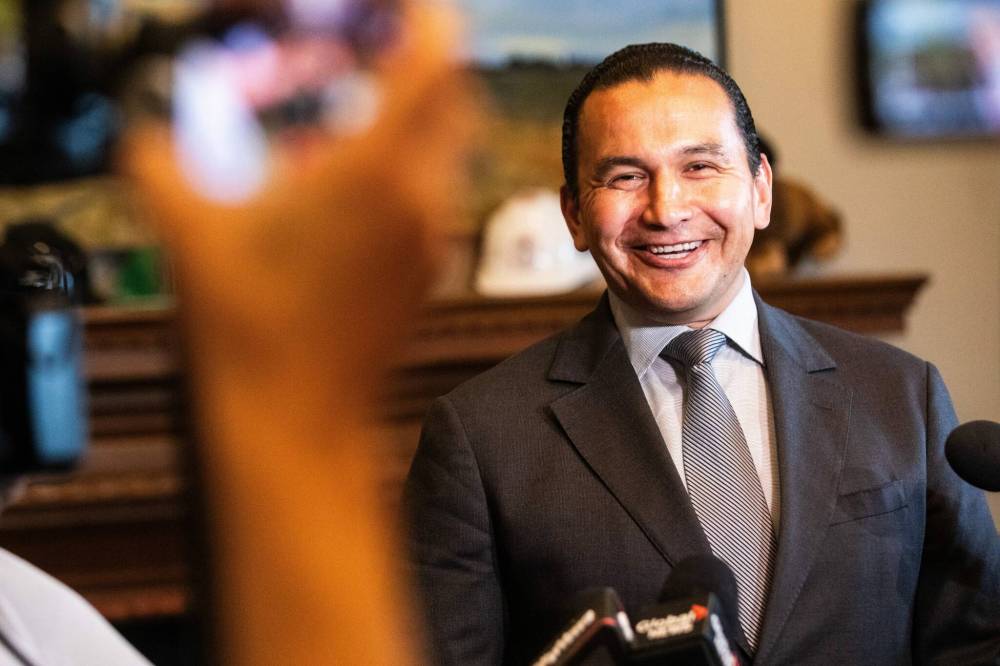
Trump had been floating the idea of the renaming in recent days as the U.S. announced it was imposing 50 per cent tariffs on $27 billion worth of Canadian goods over the weekend after trade talks between the countries broke down.
It’s not the first time that Trump has scribbled his name in Sharpie on an order to rename a body of water. Last year it was to change the Gulf of Mexico to “Gulf of America.”
“He thought he had a real hit, a real golden oldie with the Gulf of Mexico, and he’s trying to bring back that.”
“He thought he had a real hit, a real golden oldie with the Gulf of Mexico, and he’s trying to bring back that,” Kinew said.
“He’s trying to play the hits for his base, but I think everybody here thinks it’s a little sad and it’s not his best work,” said the premier, who has never shied away from critiquing the U.S. leader.
Lake Ontario is one of multiple Great Lakes that the U.S. and Canada share borders along.
There is no global body that determines names of international bodies of water and Trump has wide latitude over how the U.S. government recognizes geographic places and landmarks.
“I think everybody here thinks it’s a little sad and it’s not his best work.”
Ontario Premier Doug Ford, who has traded insults with Trump this week, brushed aside the lake’s name change as “a lot of rhetoric.”
The name Lake Ontario comes from the Huron Indigenous people’s word “oniatarí:io,” which means “lake of shining waters.” The province of Ontario, founded in 1867, took its name from the lake.
Trump said that while his action was not meant to send any particular geopolitical message, “Canada’s been ripping us off for a long time” on trade and military issues.
Manitoba’s premier has said Canada can’t get a good trade deal with a “bad person” and told reporters last week that Trump is “very weak” and about to “get slaughtered” in the November mid-term elections.
— with files from the Associated Press
carol.sanders@freepress.mb.ca
Carol Sanders
Legislature reporter
Carol Sanders is a reporter at the Free Press legislature bureau. The former general assignment reporter and copy editor joined the paper in 1997. Read more about Carol.
Every piece of reporting Carol produces is reviewed by an editing team before it is posted online or published in print — part of the Free Press‘s tradition, since 1872, of producing reliable independent journalism. Read more about Free Press’s history and mandate, and learn how our newsroom operates.
Our newsroom depends on a growing audience of readers to power our journalism. If you are not a paid reader, please consider becoming a subscriber.
Our newsroom depends on its audience of readers to power our journalism. Thank you for your support.
Carol Sanders
Legislature reporter
Carol Sanders is a reporter at the Free Press legislature bureau. The former general assignment reporter and copy editor joined the paper in 1997. Read more about Carol.
Every piece of reporting Carol produces is reviewed by an editing team before it is posted online or published in print — part of the Free Press‘s tradition, since 1872, of producing reliable independent journalism. Read more about Free Press’s history and mandate, and learn how our newsroom operates.
Our newsroom depends on a growing audience of readers to power our journalism. If you are not a paid reader, please consider becoming a subscriber.
Our newsroom depends on its audience of readers to power our journalism. Thank you for your support.
Related Articles
Who gets to name a lake? What to know about Trump's renaming of Lake Ontario
Advertisement Advertise With Us