

UN report details foreign networks fueling war in Sudan
Advertisement
Read this article for free:
or
Already have an account? Log in here »
To continue reading, please subscribe:
Digital Subscription
One year of digital access for only $1.44 a week*
- Enjoy unlimited reading on winnipegfreepress.com
- Read the E-Edition, our digital replica newspaper
- Access News Break, our award-winning app
- Play interactive puzzles
*Billed as $5.77 plus GST every four weeks. After 52 weeks, price increases to the regular rate of $19.95 plus GST every four weeks. Offer available to new and qualified returning subscribers only. Cancel any time.
To continue reading, please subscribe:
Add Free Press access to your Brandon Sun subscription for only an additional
$1 for the first 4 weeks*
- Enjoy unlimited reading on winnipegfreepress.com
- Read the E-Edition, our digital replica newspaper
- Access News Break, our award-winning app
- Play interactive puzzles
*Your next Brandon Sun subscription payment will increase by $1.00 and you will be charged $17.95 plus GST for four weeks. After four weeks, your payment will increase to $24.95 plus GST every four weeks.
Read unlimited articles for free today:
or
Already have an account? Log in here »
BRUSSELS (AP) — The United Nations said in a report Thursday that foreign networks are helping fuel the brutal war in Sudan that has raged between the army and the paramilitary group Rapid Support Forces since 2023, killing at least 59,000 people, displacing some 13 million and pushing many parts of the African nation into famine.
It said a network of companies based in the United Arab Emirates, Colombia and Chad, among other nations, had supplied military contractors, weapons and training to the RSF.
“The mission finds reasonable grounds to believe that a transnational network supplied the Rapid Support Forces with weapons, logistics, training and foreign personnel, including Colombian contractors involved in advanced weapons and drone systems,” according to a summary of the investigation by the Independent International Fact-Finding Mission for the Sudan, an independent body mandated by the U.N. Human Rights Council.
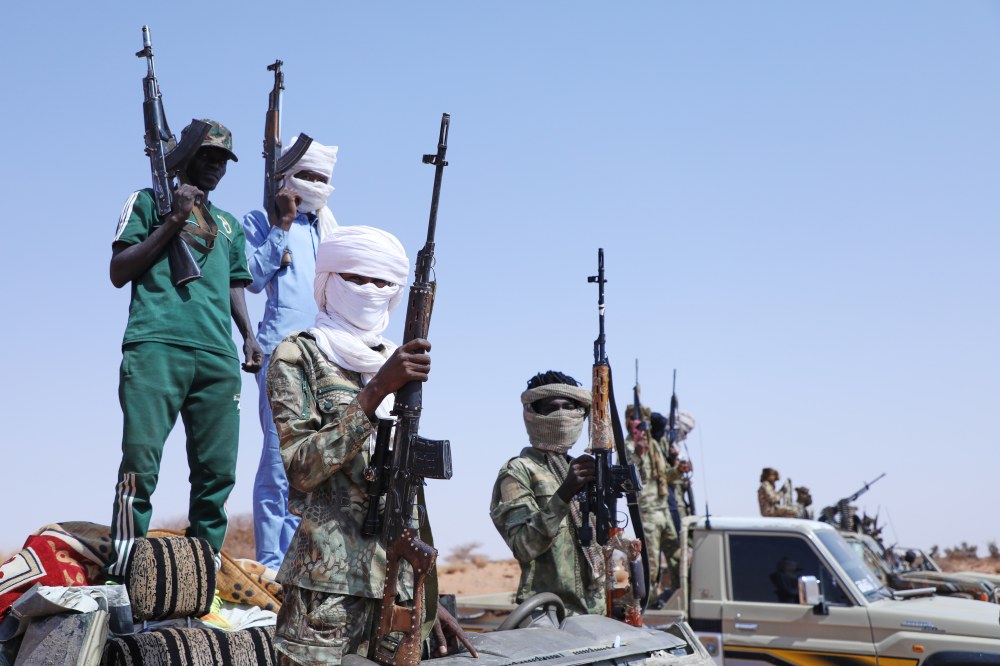
It found that “individuals and entities operating from, registered in, or linked to the United Arab Emirates played a significant role in networks involved in the recruitment, financing, transportation and deployment of foreign military contractors and the provision of military-related support benefiting the Rapid Support Forces.”
The UAE regularly denies that it backs the RSF militarily.
The report also said that foreign-supplied drones “expanded” the Sudanese army’s drone capabilities, though it added that the findings about external support to the army “remain preliminary.”
The investigators called for the U.N. Security Council to extend its arms embargo on Sudan.
“The weapons, financing, personnel and technology that sustain this war must be constrained,” it said.
Investigators said they had documented drone attacks on civilians and civilian infrastructure by both sides that may amount to war crimes.
They also linked foreign-trained fighters to two massacres in 2025 in Zamzam camp and El Fasher.
Survivors among the more than 100,000 people who fled el-Fasher reported RSF fighters gunning down civilians in homes and in the streets, leaving the city littered with bodies. Satellite photos have since appeared to show RSF disposing of bodies in mass graves or by burning them.
Chad, Colombia and the United Arab Emirates cooperated with the investigators but “no substantive response” came from Ethiopia, Libya, South Sudan and Somalia. Panama, whose finance industry has faced accusations of industrial-scale money laundering, requested more time to reply. So far, the U.N. said neither the Sudanese military nor the RSF have cooperated with the investigation.
An AP investigation in July showed that Colombian mercenaries had trained children to fight for the RSF. Rights groups say the Colombians were recruited by a state-linked firm in the UAE, which denies providing arms or military support to any warring party in Sudan.
The United States has urged the U.N. to impose new sanctions to bring the warring parties to the negotiating table.
A draft of the U.S. resolution, seen by The Associated Press in August, deplores “the continuous influx of external military assistance, weapons, and ammunition to the warring parties, which is prolonging the conflict and undermining mediation efforts,” including launching drones and unmanned aerial systems from third countries.
The proposed resolution demands that all countries “cease any direct or indirect support to the warring parties, be it logistical, financial or military, which enables conflict to continue.”
___
This story corrects a previous version that said the investigation was carried out by Volker Türk, the U.N. High Commissioner for Human Rights. It was carried out by the Independent International Fact-Finding Mission for the Sudan, an independent body mandated by the U.N. Human Rights Council.