

In Florida’s 15th execution this year, man put to death for killing linked to ‘Hog Trail Murders’
Advertisement
Read this article for free:
or
Already have an account? Log in here »
To continue reading, please subscribe:
Digital Subscription
One year of digital access for only $1.44 a week*
- Enjoy unlimited reading on winnipegfreepress.com
- Read the E-Edition, our digital replica newspaper
- Access News Break, our award-winning app
- Play interactive puzzles
*Billed as $5.77 plus GST every four weeks. After 52 weeks, price increases to the regular rate of $19.95 plus GST every four weeks. Offer available to new and qualified returning subscribers only. Cancel any time.
To continue reading, please subscribe:
Add Free Press access to your Brandon Sun subscription for only an additional
$1 for the first 4 weeks*
- Enjoy unlimited reading on winnipegfreepress.com
- Read the E-Edition, our digital replica newspaper
- Access News Break, our award-winning app
- Play interactive puzzles
*Your next Brandon Sun subscription payment will increase by $1.00 and you will be charged $17.95 plus GST for four weeks. After four weeks, your payment will increase to $24.95 plus GST every four weeks.
Read unlimited articles for free today:
or
Already have an account? Log in here »
STARKE, Fla. (AP) — A Florida man convicted in one of a series of suspected killings that became known as the “Hog Trail Murders” in the 1990s was put to death Thursday, becoming the state’s 15th person executed this year.
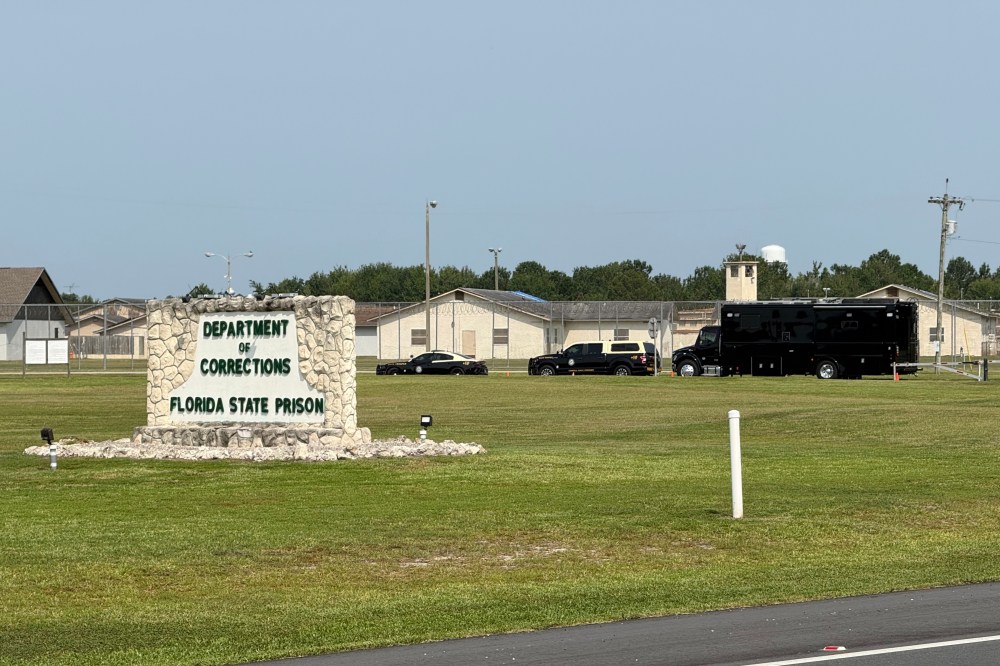
Daniel Owen Conahan Jr., 72, was pronounced dead at 6:12 p.m. after receiving a three-drug lethal injection at Florida State Prison near Starke. He had been sentenced to die for the 1996 kidnapping and strangling of Richard Allen Montgomery, whose mutilated body was found in a wooded southwest Florida area where authorities found the remains of at least six people over a three-year span.
Conahan was already strapped to a gurney with an IV in his arm when the curtain to the death chamber went up at 6 p.m. A spiritual adviser was at his feet and prayed throughout the process.
The team warden asked Conahan if he had any final statement, and Conahan replied, “No sir.” The deadly drug cocktail began to flow at 6:01 p.m. Conahan began to pant and then twitch briefly before going still. Several minutes later, the warden shook Conahan and shouted his name but there was no response.
A medic entered the death chamber at 6:11 p.m. to check for vitals, and Conahan was declared dead a minute later.
Conahan died in the nation’s busiest death chamber. Florida has carried out more than half the 25 total executions in the U.S. so far this year under Republican Gov. Ron DeSantis, who leaves office in January.
Conahan was identified by authorities as a person of interest in the other deaths, but he was never charged. He argued the evidence against him in Montgomery’s death was circumstantial.
Multiple bodies found in popular hunting area
Conahan was arrested in July 1996 after local and state law enforcement officials spent more than two years investigating a series of homicides in which mutilated and decomposing bodies were discovered in a wooded area of Charlotte County, north of Fort Myers.
As the number of bodies increased, so did media coverage. The deaths eventually were dubbed the “Hog Trail Murders” because of the swampy, wooded locations where the bodies were found. The case has been featured many times over the past three decades on true-crime television shows, YouTube channels and podcasts.
Hunters found the first body in February 1994, and at least five more were discovered over the next three years. While most of the remains were severely decomposed, investigators believed Montgomery was found within 24 hours of his death. Investigators eventually determined the killer was targeting homeless men.
Investigators found similarities in cases
Detectives started looking into Conahan in 1996 after a man in prison for stealing Conahan’s car claimed Conahan had lured him to a remote area and offered to pay him to pose for nude photos. The man said he drove off in the car after seeing a knife.
Later, detectives learned about a case with similarities in Fort Myers, in which a victim claimed a man who offered cash for nude photos had tied him to a tree and attempted to strangle him. Conahan was arrested and charged with attempted murder, and several months later was also charged in Montgomery’s death.
Conahan waived his right to a jury trial and was convicted by a judge of murder and kidnapping in August 1999.
Conahan was never charged with any other homicides, but a sheriff’s office report about the investigation concluded that all of the victims discovered within a 10-mile (16-kilometer) radius were likely killed by the same person.
In 2007, a land survey crew discovered eight bodies in Fort Myers. The four victims identified by authorities were homeless, and officials said they all suffered similar injuries to the Charlotte County victims. Investigators at the time publicly identified Conahan as a person of interest, but he was never charged.
One relative of a Hog Trail victim says her family would celebrate Conahan’s death
According to corrections officials, 11 victim family members attended Thursday’s execution, but the officials wouldn’t say if they were relatives of Montgomery or of Conahan’s other suspected victims.
Joan Rodemann, the sister of a Hog Trail victim named William Melaragno, released a written statement saying that her family would celebrate Conahan’s death.
“Finally, the gates of HELL will open and you can join the other soulless spawns of the devil. Sadly, you won’t feel the pain or fear you horrifically brought onto your victims,” Rodemann said. “Our prayers are for the victims and their families.”
Florida leads the way in executions
A total of 47 people were executed in the U.S. in 2025. Florida led the way with 19 lethal injections, a state record since the death penalty was reinstated in 1976.
In July, Florida executed two prisoners in one day, the first state in nearly a decade to do so. Another Florida execution is planned shortly, that of Curtis Wilkie Beasley, 77, on Sept. 29. Beasley was convicted of beating a woman to death with a hammer and stealing her car in 1995.
All Florida executions are by injection of a sedative, a paralytic and a drug that stops the heart, according to the Department of Corrections.