

Many Venezuelan immigrants shun Florida and turn to smaller cities in Utah, elsewhere
Advertisement
Read this article for free:
or
Already have an account? Log in here »
To continue reading, please subscribe:

Digital Subscription
One year of digital access for only $205*
- Enjoy unlimited reading on winnipegfreepress.com
- Read the E-Edition, our digital replica newspaper
- Access News Break, our award-winning app
- Play interactive puzzles
*First annual payment billed as $205.00 + GST for one year. This annual subscription will automatically renew at $233.00 + GST every 52 weeks (10% off the regular annual price of $259.35). Offer available to new and qualified returning subscribers only. Cancel any time.
To continue reading, please subscribe:
Add Free Press access to your Brandon Sun subscription for only an additional
$1 for the first 4 weeks*
- Enjoy unlimited reading on winnipegfreepress.com
- Read the E-Edition, our digital replica newspaper
- Access News Break, our award-winning app
- Play interactive puzzles
*Your next Brandon Sun subscription payment will increase by $1.00 and you will be charged $17.95 plus GST for four weeks. After four weeks, your payment will increase to $24.95 plus GST every four weeks.
Read unlimited articles for free today:
or
Already have an account? Log in here »
MIDVALE, Utah (AP) — Snow-covered mountains ringing a valley of wide, free-flowing roads remind Venezuelan transplants that the growing suburbs south of Salt Lake City offer what Miami can’t.
One million Venezuelans were released into the United States after crossing the Mexican border during a record immigration surge, and many shunned Miami and other longtime immigrant footholds for smaller places with less established communities — a pattern found in an exclusive Associated Press analysis of fedteral data from fall 2018 to summer 2025.
These cities and towns promised better jobs, cheaper homes, less traffic and higher quality of life, outweighing Florida’s allure of tropical weather and ease of getting by on Spanish alone.
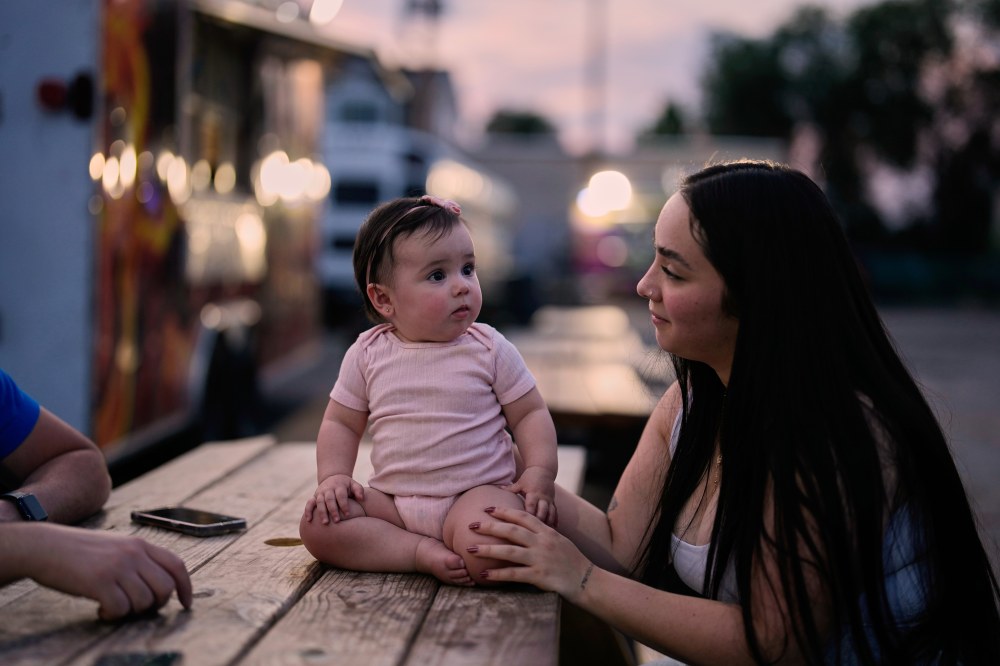
Enrique Vera, 32, crossed the border in Yuma, Arizona, in 2021 and went to Miami to settle with his mother, who’d been there six years. But he found Florida untenable, he told AP — “the work, the conditions, the low pay.”
After less than two weeks there, Vera and his mother accepted a cousin’s invitation to Utah. In the southern suburbs, with massive new housing tracts and pristine shopping centers, Vera found factory work but soon quit to turn a hobby baking for co-workers into his own business. Today he employs 15 people — many, like him, asylum seekers — at a warehouse and two bakeries.
Utah — known as a relatively immigrant-friendly state despite deep Republican roots and support for President Donald Trump — became a top destination for Venezuelans crossing the border, along with parts of the Chicago, Denver, Atlanta, Dallas and Houston metro areas, AP’s data show. Venezuelans also went to smaller cities including Madison, Wisconsin; Albuquerque, New Mexico; and Savannah, Georgia.
It’s a pattern playing out across the U.S.: Some Cubans eschewed Florida and went to Louisville, Kentucky, and Odessa, Texas; Colombians chose the Boston and Denver areas; and Paterson, New Jersey, was the top pick among Peruvians.
These communities have both benefited from the influx of people and struggled to integrate their new arrivals.
Venezuelans stand out for their sheer numbers. About 8 million people, or one-fourth of the country’s population, have fled since 2014, many to the United States. About 30,000 of the 1 million released into the U.S. in AP’s data said they were going directly to Utah.
For Venezuelans in Utah, Trump’s deportation drive has instilled widespread fear
Despite the growing population here, there are few Venezuelan flags, bumper stickers or displays of patriotism on the bustling commercial strips of Midvale, an older suburb of about 40,000 people at the interchange of two highways. Signs are generally in English. The Venezuelan population has mixed in with the largely white population as new houses, malls, office parks and warehouses have gobbled up barren hillsides to meet demand for cheaper land.
Trump’s immigration crackdown instilled fear and made Venezuelans less visible since 2023, when arrivals peaked in Utah and in the United States as a whole. Everyone here seems to know someone who returned to Venezuela voluntarily because they feared being detained and deported or because they lost their work authorization.
In May 2025, Alberto Salcedo opened the parking lot of his Centro de Apoyo Familiar Church to Venezuelan food trucks. The asylum-seeking evangelical pastor dreamed of creating a vibrant gathering spot for Venezuelan immigrants. Nearly 20 vendors and 5,000 visitors came each week, he said, with trucks serving empanadas, arepas, even burgers and sushi. But that dropped down to maybe five vendors and a few hundred people. The fear of deportation is real, he said.
Restaurant owner Fidel Arrieta said it’s affected his business, too. He opened Arempa’s, his first restaurant in downtown Salt Lake City in 2019, drawing non-Latino customers and Venezuelan immigrants alike. Arempa’s — where the walls are filled with photos of Venezuelan waterfalls, an image of Mona Lisa eating an arepa and Miss Venezuela portraits — grew to five restaurants. But three closed in the last year as business slowed.
Arrieta’s wife — co-owner Sandy Arrieta — wanted to stay open. But he believes nothing will turn around while Trump’s in office.
“Until the government changes, the problems will not end,” said Fidel, 65, who immigrated in 1994.
For proof of the growing Venezuelan population, look no further than Utah’s churches
In 2001, Gregorio Rausseo immigrated to Utah, knowing no one. Fast-forward more than two decades, to 2023: Rausseo had just started as pastor at Saint Therese of the Child Jesus Church and was ready for the annual celebration of the patron saint of Zulia, an oil-rich Venezuelan state that includes Maracaibo, the country’s second-largest city. He was shocked to see more than 1,000 parishioners snake into the lobby and parking lot.
“I asked the deacon, ‘All of them are Venezuelan?’ He said … ‘They are all Maracuchos,'” a term for someone from Maracaibo.
Today, Rausseo estimates about 40% of his church’s more than 700 families are Venezuelan immigrants.
Carlos Trujillo, a 42-year-old lawyer who handles immigration cases, puts Venezuelan immigrants in three categories: those who came for the Church of Jesus Christ of Latter-day Saints; those who came to join family or friends; and those who came knowing no one. He has repeatedly heard variations of, “This is a place where I can bring my family and have a start.”
Trujillo — who immigrated in 2001, as an 18-year-old whose parents decided he would do better living with family closer to the Mormon church headquarters — said his firm has about 1,700 immigration cases, with staff fielding calls in a large room resembling a call center.
Many of the Venezuelans here came after COVID hit, flying to the Mexican border before January 2022, when Mexico tightened travel restrictions for Venezuelans. That prompted hundreds of thousands to walk through the Darien Gap, a jungle in Panama and Colombia, on a grueling journey through at least eight countries.
Ashly Estupinan, 18, walked the jungle with her grandmother. In Mexico, they used the appointment app CBP One to enter the U.S. in San Diego. Trump ended CBP One on his first day in office, two years after his predecessor, Joe Biden, started it and let more than 900,000 people come legally with two-year permits.
Estupinan, who graduated high school this spring, and her grandmother chose Utah because her uncle was there. “It’s very tranquil, very pretty, the people are very friendly,” she said.
Word of mouth and family advice brought many to Utah
Juan Gonzalez, 41, a cook at Arempa’s, walked the jungle for four days with his brother — passing corpses, he said — before eventually crossing the U.S. border in Texas. He went to Utah on the advice of a distant cousin.
“He had gone to other states, and Utah struck him as the best one,” Gonzalez said, noting he’s drawn to the state’s “strong economy.”
Many Venezuelan immigrants here work in food service — at restaurants or selling meals from their homes. Some proudly noted that a local Walmart now stocks special flour for arepas.
Others cycle through low-wage jobs: construction, nail salons, warehouse and factory work.
Gonzalo Rodriguez, 39, worked as a laborer, carpenter and office manager before rising to general manager of Fillerup Employment Services, a construction company. He said it had about 25 Venezuelans in its workforce of about 300 when he arrived in 2020. By 2022, that grew to 165.
At one point, Rodriguez said, Venezuelans camped in tents on the sidewalk at the company’s office park in suburban Sandy, waiting for work and accepting food while migrant shelters were full.
Julio Gonzalez, 33, climbed company ranks from laborer to human resources manager after crossing the border in 2021 with his wife and son, then 9, in Del Rio, Texas. A friend in Utah told him it was a good place to live. Many here agree, saying they’ve felt no pervasive racism in Utah.
It was a welcome change for Gonzalez, who said he lived in Panama for six years under anti-Venezuelan xenophobia that prompted his move to the United States.
Hector Escalona, 42, also started in construction at Fillerup, then opened a barber shop in 2022. He now has 27 barber chairs at three shops, and many employees are Venezuelan. He said he’s expanding his business even with uncertainty about his asylum case.
Others have had less financial success.
Adaya Amaya, 47, ran a catering business from her home and now operates a food truck but barely gets by. She crossed the border in 2021 with her daughter, now 9, and father, now 74. They relied at times on a food bank. She knows other Venezuelans who’ve slept in their cars.
Her father gave up his asylum claim in June to return to Maracaibo because he didn’t want to burden her.
Some wonder: Is goodwill toward immigrants cooling in Utah?
In the 2024 election, Trump — and his immigration enforcement campaign messages — won Utah by 22 points. The same year, Carlos Moreno, who won asylum after fleeing Venezuela in 2009, was elected to the Salt Lake County Council.
The state’s immigrant-friendly reputation is tied to the Utah Compact, a 2010 document signed by hundreds of local governments, businesses and civic leaders that endorses “common-sense immigration reforms that will strengthen our economy, as well as attract talent and business to our state.”
But Trujillo, the immigration attorney, said goodwill cooled during the Biden-era immigration surge and some elected leaders who were allies became more guarded in public comments.
Gov. Spencer Cox called the Venezuelan Tren de Aragua gang “a growing threat in Utah” in 2024, but few major crimes in the state have been linked to the group.
Venezuelan immigrants repeatedly told AP that a small minority of their own are their worst enemies — not just those who commit crimes but those who drink in public, play loud music and repair cars in the street. They say that while some of that behavior may be accepted in Venezuela, they must adopt local norms.
“It makes me angry,” said Joiren Rangel, who arrived in 2018 and worked at an Amazon warehouse before opening two Venezuelan restaurants, one of which closed last year. “We saw that we were in a different country and had to abide by the rules. In Venezuela, I would drive with my daughter seated on my lap. I would never do that here.”
Many here are still waiting on their asylum cases
Some asylum seekers were told to wait 10 years for an initial appointment in 2023, but the government has moved aggressively to winnow the backlog. Still, about 500,000 Venezuelans have pending cases in immigration court, more than any other nationality.
Loreana Pachano, who spent much of her childhood in Miami, has been waiting 10 years for an asylum interview. She was increasingly impatient but now wonders whether she might do better if her case remains open until after Trump leaves office.
She and her husband settled in Florida but tired of long commutes and anti-Venezuelan sentiment. They moved to Utah after a friend told her that construction wages were significantly higher. “If we had to start from scratch, how about we start from scratch somewhere else?” she remembers thinking.
Now a real estate agent, she sells houses to asylum seekers who crossed the border and has seen the impact of Trump’s policies — for example, a bank closing on a house that a Venezuelan client gave up because she lost work authorization when Trump ended Temporary Protected Status for more than 600,000 Venezuelans.
“It feels like we’re building on quicksand. We’re trying to build a future here for ourselves, for our kids,” said Pachano, who flips homes and owns trucking and construction businesses with her husband while raising their 3- and 7-year-old daughters.
“Are we going to be here by the time we reach retirement age? We don’t know. You don’t know when the rug is going to be pulled right under your feet.”
___
Associated Press reporter Aaron Kessler contributed to this report.
Related Articles
A border surge reshaped America. Now, data shows who 4.5 million migrants were and where they went
Advertisement Advertise With Us
Advertisement Advertise With Us