Prenatal appointments and no place to pump: Navigating pregnancy and postpartum needs at work
Advertisement
Read this article for free:
or
Already have an account? Log in here »
To continue reading, please subscribe:

Digital Subscription
One year of digital access for only $205*
- Enjoy unlimited reading on winnipegfreepress.com
- Read the E-Edition, our digital replica newspaper
- Access News Break, our award-winning app
- Play interactive puzzles
*First annual payment billed as $205.00 + GST for one year. This annual subscription will automatically renew at $233.00 + GST every 52 weeks (10% off the regular annual price of $259.35). Offer available to new and qualified returning subscribers only. Cancel any time.
To continue reading, please subscribe:
Add Free Press access to your Brandon Sun subscription for only an additional
$1 for the first 4 weeks*
- Enjoy unlimited reading on winnipegfreepress.com
- Read the E-Edition, our digital replica newspaper
- Access News Break, our award-winning app
- Play interactive puzzles
*Your next Brandon Sun subscription payment will increase by $1.00 and you will be charged $17.95 plus GST for four weeks. After four weeks, your payment will increase to $24.95 plus GST every four weeks.
Read unlimited articles for free today:
or
Already have an account? Log in here »
NEW YORK (AP) — The ambulance dispatch station where Heydi Fernandez waited for calls as an emergency medical technician didn’t have a private place to pump breast milk when she returned to work three months after giving birth to her son.
So she expressed her milk sitting at a dining table when none of her colleagues were eating meals there.
One day, the CEO of the private ambulance company she worked for paid a surprise visit to the station and introduced himself to Fernandez while she was pumping.
“This is his first impression of me, and I was in a panic,” Fernandez said, recalling how she told the CEO she could not shake his hand because hers probably had milk on it. She worried the awkward exchange might have career consequences. “Am I going to get fired? Or is this going to impact my future here if I move up within the company?” she thought.
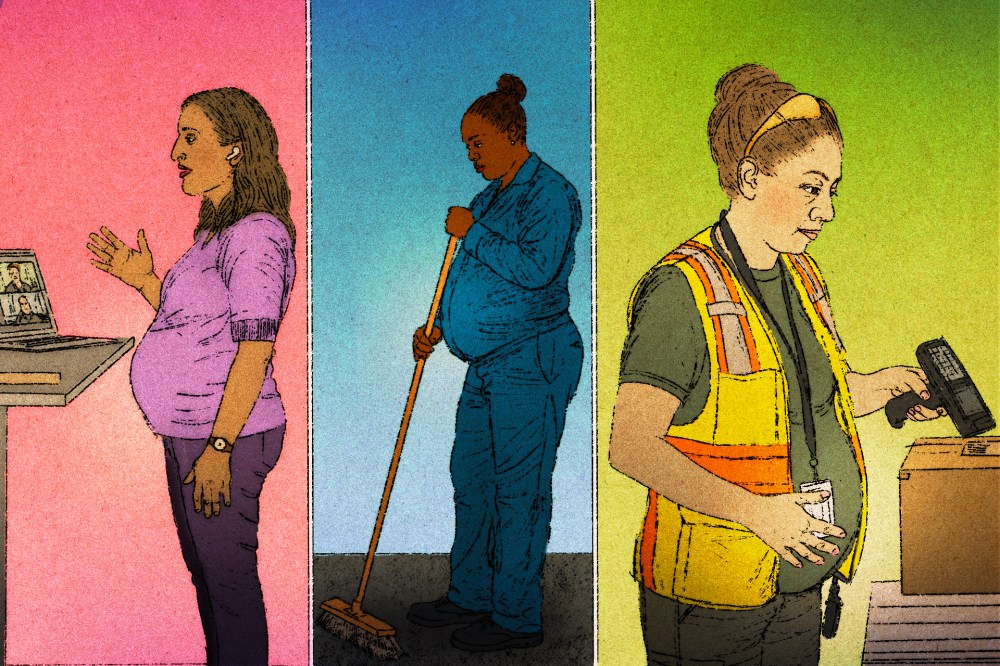
Many women encounter discrimination during pregnancy and after childbirth, despite state and federal laws designed to protect them. As a result, pregnant and postpartum workers often worry about how hiring managers or employers will view them if they disclose a pregnancy or request job modifications as new mothers.
“Their employer is required to provide them accommodations, if those are available, and see if there’s a different job that they can do while they’re pregnant,” said Cortney Shegerian, co-founder of Shegerian Conniff, a Los Angeles law firm that represents workers alleging pregnancy discrimination and breastfeeding rights violations. “That oftentimes is seen by the employer as a big inconvenience, as something that they just don’t want to deal with.”
These are suggestions from legal experts and workers for ensuring pregnancy-related employment needs are respected before and after a baby is born.
Know your rights under the federal Pregnant Workers Fairness Act
Under a U.S. law that took effect in 2023, employers with at least 15 workers are required to make reasonable health and safety accommodations so employees who are pregnant or have recently given birth can remain in their jobs.
The Pregnant Workers Fairness Act entitles women to seek a wide range of changes at work, including help with physically demanding tasks like lifting heavy objects, flexible scheduling to attend medical appointments and reduced exposure to hazardous chemicals, according to guidance published by A Better Balance, a nonprofit legal advocacy organization that promotes gender and racial equality in workplace policies.
The law also protects those who are trying to get pregnant through in vitro fertilization and pregnant workers with medical conditions such as severe nausea and vomiting, A Better Balance President Inimai Chettiar said. Some religious employers were exempted in federal court from the requirement to accommodate workers’ fertility treatments.
For nursing mothers, the law guarantees breaks and a private space other than a bathroom for lactation needs.
“Your employer cannot force you on leave or retaliate against you for requesting accommodation,” Chettiar said. “And the employer has to prove that it would be an undue hardship for them to deny the accommodation, and that’s a really high legal standard. They have to prove it would cause them significant difficulty or expense.”
Weigh the best time to tell your employer about your pregnancy
Deciding when to tell a manager or a potential employer about a pregnancy is one of the first considerations for most women.
“The sad reality is that pregnant workers still need to tread really carefully, and in our experience pregnancy discrimination is still insidious and rampant,” Chettiar said. “But I want to also emphasize that you do have rights as a pregnant worker.”
To access the protections of the Pregnant Workers Fairness Act, your employer needs to know you have a need related to pregnancy, childbirth or a related medical condition. But that doesn’t mean your supervisor or co-workers do; some companies allow you to discuss requests directly with the human resources department, according to A Better Balance.
“If you do decide to tell your workplace what’s going on, keep track of how it goes, take notes, put things in writing, especially if you’re worried that they could retaliate,” Chettiar added.
Shegerian recommends informing employers about a pregnancy when it’s far enough along that you would tell friends. For many people, that’s after the first trimester.
“Let them know, ‘Listen, I’m pregnant … and feeling fine so far but I’m due on such-and-such date, and I’m not sure about my leave yet, but I’ll keep you posted,’” Shegerian said.
If a doctor advises modifications to your duties or work environment, get the specific advice in writing, and let your employer know as soon as possible, Shegerian suggested.
Decide how to handle job interviews
Women may be reluctant to mention pregnancies out of fear the information might hurt their chances for promotions or new jobs. A disqualification on that basis counts as discrimination under the law, Shegerian said.
“I would hate for the illegal thing to happen, which is that an employer automatically says, ‘This person is going to be out in nine months … and we just don’t want to deal with that, so let’s take her out of the pile,’” she said.
Amy Green had three miscarriages before she started receiving daily hormone injections to help maintain another pregnancy. The shots made her feel ill, but she was well enough by the end of the first trimester to look for work as a school counselor.
A 1978 amendment to the groundbreaking Civil Rights Act of 1964 prohibited workplace discrimination based on pregnancy, childbirth or related medical conditions. Green still worried she wouldn’t be considered for jobs and wore a loose tank top and a cardigan to conceal her condition. She needed work, especially the health insurance.
“There’s no right answer,” Green said, adding that disclosing might increase the risk of not getting hired but withholding could create the impression of intentional deception. “We’ve built this process for women where there’s no good choice.”
After your child’s birth or miscarriage, you still have rights
Protections don’t end with a pregnancy. Women can request paid or unpaid time off to recover from miscarriages or for medical conditions such as postpartum depression.
They are also entitled to breaks and private spaces for expressing breast milk. With no space available at her dispatch station, Fernandez, the EMT, used rooms in hospitals to pump when she was out delivering patients.
Then a manager told Fernandez her pumping breaks interfered with the needs of hospital and patient customers. If a transport call came in while she was pumping and she couldn’t respond immediately, it would be passed to another medical service; the manager gave Fernandez two weeks to pick a new shift to work.
She panicked, not knowing how she would manage childcare if her hours changed. She called a help line at A Better Balance and learned that imposing schedule changes because of lactation was considered retaliation, which both the Pregnant Workers Fairness Act and a law that took force in 2022, the Providing Urgent Maternal Protections for Nursing Mothers Act, prohibit.
In the end, Fernandez got to stick with her original schedule.
“If my ambulance service … is willing to accommodate my breastfeeding needs, there’s no reason why any other job should not be willing to,” Fernandez said.
___
Share your stories and questions about workplace wellness at cbussewitz@ap.org. Follow AP’s Be Well coverage, focusing on wellness, fitness, diet and mental health at https://apnews.com/hub/be-well