

Judge strikes down Trump policy that cut millions in teacher-training money
Advertisement
Read this article for free:
or
Already have an account? Log in here »
To continue reading, please subscribe:

Digital Subscription
One year of digital access for only $205*
- Enjoy unlimited reading on winnipegfreepress.com
- Read the E-Edition, our digital replica newspaper
- Access News Break, our award-winning app
- Play interactive puzzles
*First annual payment billed as $205.00 + GST for one year. This annual subscription will automatically renew at $233.00 + GST every 52 weeks (10% off the regular annual price of $259.35). Offer available to new and qualified returning subscribers only. Cancel any time.
To continue reading, please subscribe:
Add Free Press access to your Brandon Sun subscription for only an additional
$1 for the first 4 weeks*
- Enjoy unlimited reading on winnipegfreepress.com
- Read the E-Edition, our digital replica newspaper
- Access News Break, our award-winning app
- Play interactive puzzles
*Your next Brandon Sun subscription payment will increase by $1.00 and you will be charged $17.95 plus GST for four weeks. After four weeks, your payment will increase to $24.95 plus GST every four weeks.
Read unlimited articles for free today:
or
Already have an account? Log in here »
BOSTON (AP) — A federal judge on Thursday struck down a 2025 order from the Trump administration that cut hundreds of millions of dollars in teacher-training money.
U.S. District Judge Angel Kelley in Massachusetts wrote in her order that the Education Department’s directive violated federal law and was arbitrary and capricious.
In February 2025, the Education Department cut about $600 million in grants for teacher training, characterizing them as supporting “ divisive ideologies ” such as diversity, equity and inclusion efforts. The grants were intended to address teacher shortages.
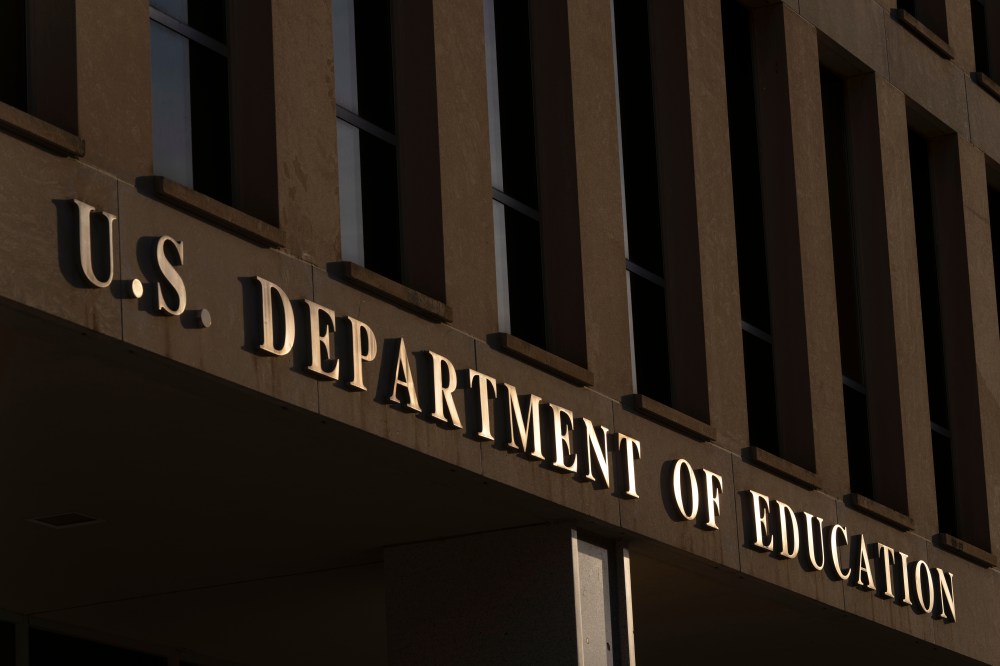
The Education Department’s order was hasty, Kelley wrote. The administration did not follow requirements in the law for giving notice or accepting comments about a proposal, she said. She said they also didn’t take into account just how much the states and a wide array of students, teachers and principals rely on these grants.
“In short, the reliance interests are many, substantial, and deep-rooted,” Kelley wrote.
Her ruling does not restore the grant money. She writes that arguments related to recovering that funding need to be brought in the Court of Federal Claims.
The Education Department did not immediately respond to an email from The Associated Press requesting comment.
The directive had stripped the majority of funding to the Teacher Quality Partnership and Supporting Effective Educator Development, effecting more than 100 programs. Eight Democratic-led states sued, saying the cuts were likely driven by efforts from the Trump administration to eliminate diversity, equity and inclusion programs, and a federal judge in Boston temporarily halted the cuts.
The federal appeals court in Boston turned away an appeal from the administration to allow them to resume.
But in April 2025, the Supreme Court ruled the government could cut the grants while the case proceeds. The high court’s conservative majority wrote states could keep the programs running with their own money for now, despite the judge in Boston saying that the programs already were being effected.
The states have argued that the grants help develop teachers in crucial areas such as math, science and special education, and that data has shown they help to boost teacher retention rates and ensure educators remain in the profession beyond five years.