

Quebec party leaders prepare for final debate as elections draw near
Advertisement
Read this article for free:
or
Already have an account? Log in here »
To continue reading, please subscribe:

Digital Subscription
One year of digital access for only $205*
- Enjoy unlimited reading on winnipegfreepress.com
- Read the E-Edition, our digital replica newspaper
- Access News Break, our award-winning app
- Play interactive puzzles
*First annual payment billed as $205.00 + GST for one year. This annual subscription will automatically renew at $233.00 + GST every 52 weeks (10% off the regular annual price of $259.35). Offer available to new and qualified returning subscribers only. Cancel any time.
To continue reading, please subscribe:
Add Free Press access to your Brandon Sun subscription for only an additional
$1 for the first 4 weeks*
- Enjoy unlimited reading on winnipegfreepress.com
- Read the E-Edition, our digital replica newspaper
- Access News Break, our award-winning app
- Play interactive puzzles
*Your next Brandon Sun subscription payment will increase by $1.00 and you will be charged $17.95 plus GST for four weeks. After four weeks, your payment will increase to $24.95 plus GST every four weeks.
Read unlimited articles for free today:
or
Already have an account? Log in here »
MONTREAL – With less than two weeks to go in the Quebec election campaign, party leaders are gearing up for a third and final debate that could see Parti Québécois Leader Paul St-Pierre Plamondon at the centre of attention.
“Everyone is taking aim at the Parti Québécois,” said André Lamoureux, political scientist and professor at Université du Québec à Montréal.
The Radio-Canada debate on Wednesday will be the last opportunity for leaders to spar before the vote on Oct. 5. They met twice already on the debate stage last week.
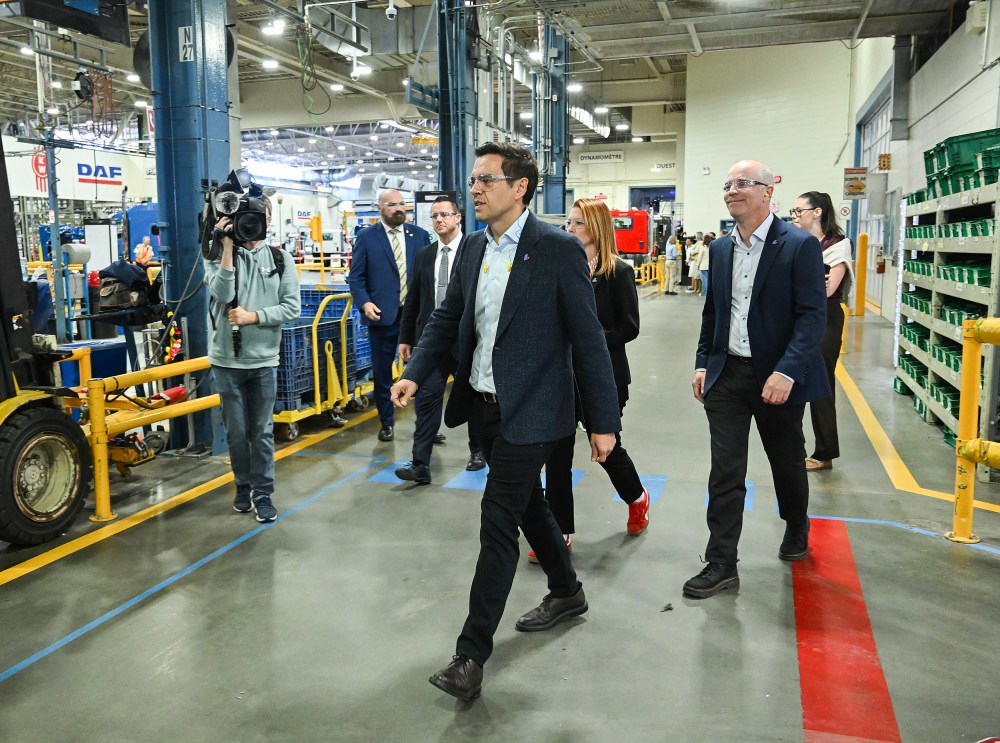
But in the last few days, Lamoureux has noted how the PQ has become a frequent target of attacks by other parties, with public opinion polls suggesting it is leading in the campaign.
But the political analyst noted how some of the criticism can backfire.
For example, last week, when Liberal Leader Charles Milliard said that 70 per cent of Quebecers did not want a referendum, St-Pierre Plamondon responded by saying that 80 per cent of the province did not want the Quebec Liberals in government.
“That’s what I’m looking forward to seeing. Will it be effective against the Parti Québécois? Or will Paul St-Pierre Plamondon take those attacks and redirect them with even more efficiency?” he said.
Coalition Avenir Québec Leader Christine Fréchette is struggling to position her party as an alternative to the Parti Québecois, said Lamoureux. He noted how she is also trying to distance herself from the track record of her predecessor, François Legault who led the province as premier for close to eight years.
“Quebecers don’t trust this party,” he said.
Lamoureux expects Fréchette to try to regain momentum in this last debate.
“She is going to try to give it her all. That’s where we’ll see if her leadership … can give mass appeal to her message and turn the tide,” he said.
Anne-Marie Gingras, retired political science professor, still expects a close battle between the Coalition Avenir Québec and the Parti Québécois in many ridings, while also warning that some voters are tuning out.
“People don’t know where to turn to find a solution. And that is at the core of the Coalition Avenir Québec’s decline over the last few days, because (people feel like) everything is going wrong,” she said.
She also said the Coalition Avenir Québec has not managed to get voters to focus on any of its achievements while in government.
“With everything that has happened over the past eight years, there have been successes and there have been mistakes, but the successes aren’t really being highlighted,” she said.
The Quebec Liberal Party is currently the official Opposition, but its support is concentrated in urban ridings in Montreal and the English-speaking community, and Lamoureux said he does not expect them to make headway among French-speaking voters.
“For francophones, right now, the Quebec Liberal Party is going through the worst period in its history,” he said.
Lamoureux described the Conservative party as a “surprise” and may win seats in the election, he said, which would be a first in its history.
At the last general elections, the conservatives won close to 13 per cent of the popular vote but elected no candidates. Before the legislature dissolved, the Conservatives had one member who had crossed the floor from the Coalition Avenir Québec.
Lamoureux sees Québec solidaire as failing to convince voters of their message and losing support with francophone voters.
The party leaders have faced questions in recent days about potential alliances if no party succeeds in forming a majority.
Parti Québécois Leader Paul St-Pierre Plamondon said Monday that an alliance was out of the question, after his rivals suggested his ideas are similar to those of Conservative Leader Éric Duhaime.
This report by The Canadian Press was first published Sept. 22, 2026.