Pritzker establishes AI cabinet in Illinois amid calls for greater regulation
Advertisement
Read this article for free:
or
Already have an account? Log in here »
To continue reading, please subscribe:

Digital Subscription
One year of digital access for only $205*
- Enjoy unlimited reading on winnipegfreepress.com
- Read the E-Edition, our digital replica newspaper
- Access News Break, our award-winning app
- Play interactive puzzles
*First annual payment billed as $205.00 + GST for one year. This annual subscription will automatically renew at $233.00 + GST every 52 weeks (10% off the regular annual price of $259.35). Offer available to new and qualified returning subscribers only. Cancel any time.
To continue reading, please subscribe:
Add Free Press access to your Brandon Sun subscription for only an additional
$1 for the first 4 weeks*
- Enjoy unlimited reading on winnipegfreepress.com
- Read the E-Edition, our digital replica newspaper
- Access News Break, our award-winning app
- Play interactive puzzles
*Your next Brandon Sun subscription payment will increase by $1.00 and you will be charged $17.95 plus GST for four weeks. After four weeks, your payment will increase to $24.95 plus GST every four weeks.
Read unlimited articles for free today:
or
Already have an account? Log in here »
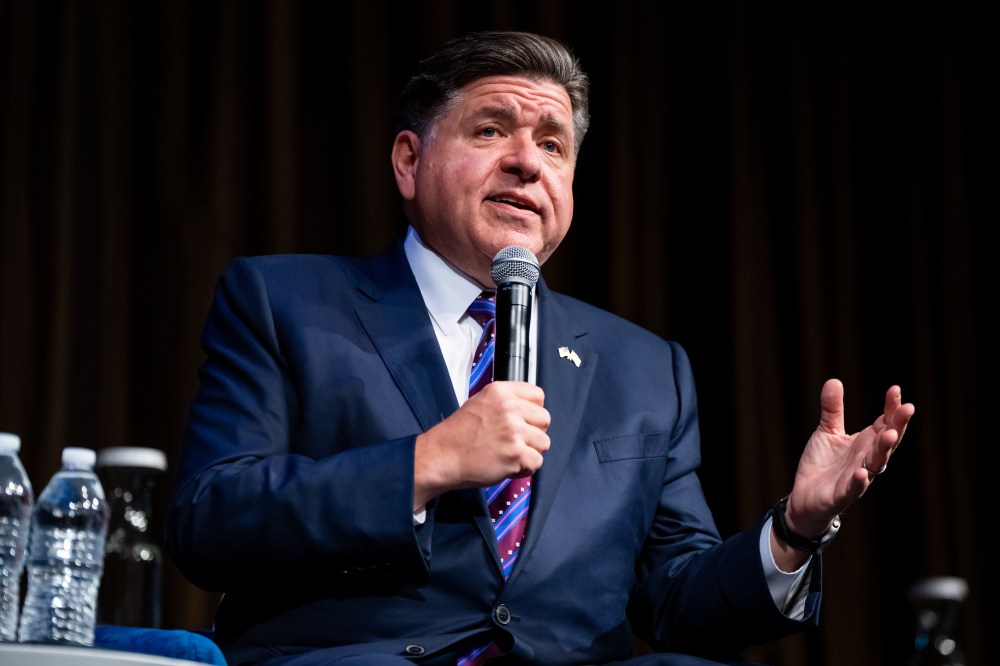
Gov. JB Pritzker is setting up a new group within state government to explore more regulations for artificial intelligence as calls grow across the country for new restrictions.
Pritzker signed an executive order on Tuesday to establish an AI Cabinet made up of experts and representatives from several state agencies. The unpaid group, which will formulate policy proposals through 2027, will analyze and assess “the various risks posed by AI to the safety of Illinois residents and the critical infrastructure residents rely on.”
It’s the latest move by Illinois to tackle state-focused AI regulation as the federal government continues to take a hands-off approach, even as industry insiders sound the alarm on the technology’s capabilities.
A former Anthropic and OpenAI researcher alleged in an explosive social media post earlier this month that AI companies are building a tool that could become “out of control” and pose a threat to human existence by 2030.
“Artificial Intelligence has enormous potential to transform our everyday lives, but when experts and industry leaders sound the alarm bell, urge us to slow down, and ask for guardrails, we should listen,” Pritzker said in a statement.
The cabinet will formulate policies and procedures to protect Illinois residents and public assets like water systems, education and information systems from threats posed by AI. It will also analyze “emerging AI incidents and share lessons learned” from them.
The advisory group will also make policy recommendations on risk management and assess the feasibility, timeframe and any other challenges for implementing them.
The cabinet will consider regulations tying data center incentives or operational approval to a company’s ability to meet safety, accountability and transparency standards. It will also look into addressing strain on the energy grid from data centers, evaluating how state procurement and contracting practices can incorporate AI safety and accountability measures, and assessing if existing legal options are good enough to hold AI companies that cause harm accountable.
Legislative action
Illinois lawmakers have already taken steps to regulate AI.
Pritzker signed Senate Bill 315 in July, also known as the Artificial Intelligence Safety Measures Act, which increases transparency and accountability requirements for the largest artificial intelligence models — those that generate more than $500 million in annual revenue and are trained using massive computing power. It establishes new reporting standards for the possibility that the AI model could be used for large-scale harm, such as by helping create a chemical, biological or nuclear weapon or committing cyber-attacks.
It also made Illinois the first state to require annual audits of AI. The law takes effect in 2028.

Since the whistleblower came forward earlier this month, Pritzker has been aggressively calling on Congress to step in.
“It should be among the top priorities, but don’t misunderstand, it is dangerous and it’s dangerous on the level of nuclear weapons,” Pritzker said on ABC’s Sunday morning news show. “So that’s why it needs to be an international endeavor.
Pritzker has urged Congress to immediately begin holding hearings on AI safety and impose national standards.
___
This story was originally published by Capitol News Illinois and distributed through a partnership with The Associated Press.