Heralding home
Massey Lectures author argues housing should be a right — not a commodity
Advertisement
Read this article for free:
or
Already have an account? Log in here »
To continue reading, please subscribe:

Digital Subscription
One year of digital access for only $205*
- Enjoy unlimited reading on winnipegfreepress.com
- Read the E-Edition, our digital replica newspaper
- Access News Break, our award-winning app
- Play interactive puzzles
*First annual payment billed as $205.00 + GST for one year. This annual subscription will automatically renew at $233.00 + GST every 52 weeks (10% off the regular annual price of $259.35). Offer available to new and qualified returning subscribers only. Cancel any time.
To continue reading, please subscribe:
Add Free Press access to your Brandon Sun subscription for only an additional
$1 for the first 4 weeks*
- Enjoy unlimited reading on winnipegfreepress.com
- Read the E-Edition, our digital replica newspaper
- Access News Break, our award-winning app
- Play interactive puzzles
*Your next Brandon Sun subscription payment will increase by $1.00 and you will be charged $17.95 plus GST for four weeks. After four weeks, your payment will increase to $24.95 plus GST every four weeks.
Read unlimited articles for free today:
or
Already have an account? Log in here »
Homelessness, a burgeoning issue in North America, is also an international problem. Proposals to help the unhoused have included building more housing units, government-controlled rents and subsidizing the needy.
Leilani Farha, a former United Nations special rapporteur, Ottawa-based lawyer and international advocate for human rights and housing, blames the crisis on rampant commodification of shelter. Her first book Housing Inc., based on her 2026 CBC Massey Lectures, examines global perspectives on the unhoused and precariously housed.
Farha’s extensive experience and deep caring for those denied the security and human dignity of a place of their own are clear on every page. Her very personal descriptions of dealing with homeless people and groups, as well as governments and businesses, are heart-wrenching and frustrating.
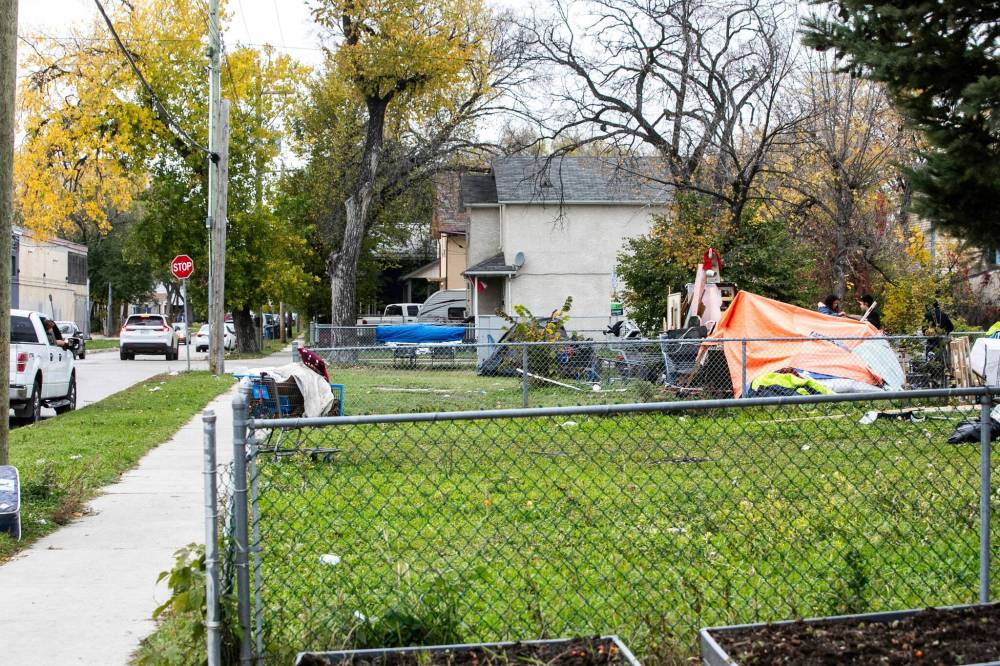
Mikaela MacKenzie / Free Press files
Author Leilani Farha sees the issue of homelessness as being tied up with the rampant commodification of shelter, accusing moneyed interests of demeaning people.
She opens with the section Home, eloquently elaborating on richly varied aspects of human need for housing: “Think about what home gives us. Existence. Dignity. Identity. Security. Our relationships with each other, and with society at large.”
Throughout, she decries the “financialization” of housing, investment consortiums such as Blackstone, GreyStar and Black Rock “treating homes as assets, governments enabling them.” She concludes that this mimics colonization, accusing monied interests of demeaning people, as when former prime minister Brian Mulroney differentiated between “deserving” and “undeserving” poor.
As housing rapporteur from 2014-20, Farha had access to many perspectives on problems of housing. While at the UN, she started the organization The Shift, where she continues to try moving the idea of home from a commodity to a human right.
Farha charges governments and big business with hypocritically building and renovating merely as investment. “Renoviction” displaces people to poorer options, or none at all.
Visiting sidewalk dwellers in Bengaluru, India, Farha noted the contrast between their deprivation and “advertisements for new luxury housing developments that offered not just a place to live, but a lifestyle.”
She imagines these destitute people in better conditions, in dwellings that are “modest, built at a human scale.” Farha expresses nostalgia for her grandparents’ home, built in the early 20th century, without explaining how “human scale” homes would be able to provide for teeming millions worldwide.
Farha’s descriptions of the problems are cogent and disturbing, if slanted toward world-government and against irresponsible profit. She laments huge towers as “functional and uninspiring on the inside, ugly and inhuman on the outside” without mentioning the infamous brutalism of Communist architecture.
Farha focuses on the corruption of government enabling big business. Other factors in homelessness, such as drug addiction, mental health issues and lack of social supports, seem like afterthoughts.
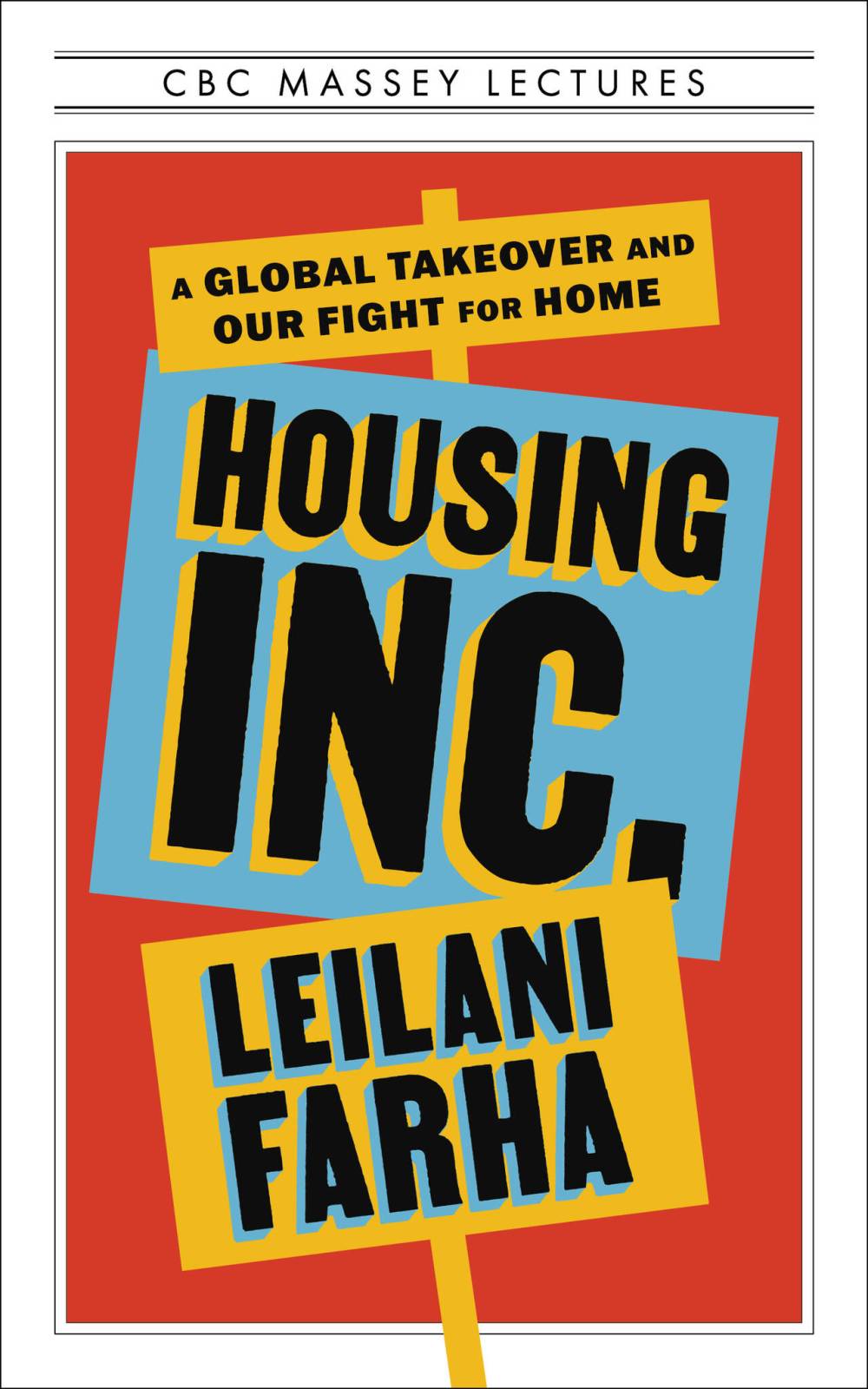
Housing Inc.
Celebrating rights codified by “We, the People of the United Nations” would be more convincing if more than one third of UN members were actual democracies.
Her demonization of business, and government, is not always as complex as the problems. She characterizes Winnipeg’s hotly debated new detox centre as “forced incarceration” of drug victims, where authorities could “hold them in cells, without their consent, for seventy-two hours.”
Nonetheless, it’s hard to argue with her insistence that the housing system is broken. Home means more than sleeping places: it means community, food and employment opportunities and socialization.
Among Farha’s suggestions: “Protect people’s security of tenure… No tenant should pay more than 30% of their income on rent… In many places, there are enough empty units to house pretty much everyone experiencing homelessness.” Sacrifices by big business in order to allow more people to be housed seems a small price to pay.
Farha also advocates for housing first — no evictions to homelessness: “Stop treating housing as an extractive industry,” she writes.
Among other suggestions:
• Society must make affordable housing available.

• Tenants’ needs should come before investors’ profits.

Sean Norton photo
Leilani Farha
• Governments at all levels must be held accountable.
Virtue-signalling promises by governments and conglomerates to provide a few reasonably priced units have not worked.
In Housing Inc., Farha presents a poignant account of the seemingly intractable problems of homelessness.
Bill Rambo, a retired teacher living in Landmark, is very thankful for his home.