Disarming discourse

Gladwell’s exploration of America’s gun crisis separates myth and misconception from fact

Advertisement

Advertise with us

The idea of a Canadian lecturing Americans on their insane attitudes towards gun violence might seem ill-advised at this moment of fraught relations between our two countries.

Read this article for free:


or

Already have an account? Log in here »

To continue reading, please subscribe:

Subscribe and receive a limited-edition Free Press branded hat or tote.

Digital Subscription

One year of digital access for only $205*

  • Enjoy unlimited reading on winnipegfreepress.com
  • Read the E-Edition, our digital replica newspaper
  • Access News Break, our award-winning app
  • Play interactive puzzles

*First annual payment billed as $205.00 + GST for one year. This annual subscription will automatically renew at $233.00 + GST every 52 weeks (10% off the regular annual price of $259.35). Offer available to new and qualified returning subscribers only. Cancel any time.

To continue reading, please subscribe:

Add Free Press access to your Brandon Sun subscription for only an additional

$1 for the first 4 weeks*

  • Enjoy unlimited reading on winnipegfreepress.com
  • Read the E-Edition, our digital replica newspaper
  • Access News Break, our award-winning app
  • Play interactive puzzles
Start now

*Your next Brandon Sun subscription payment will increase by $1.00 and you will be charged $17.95 plus GST for four weeks. After four weeks, your payment will increase to $24.95 plus GST every four weeks.

The idea of a Canadian lecturing Americans on their insane attitudes towards gun violence might seem ill-advised at this moment of fraught relations between our two countries.

Goodness knows, shelves full of books by Americans themselves have already been written on this suicidal pathology.

But, hey, the popular non-fiction author and journalist Malcolm Gladwell — born and raised in southern Ontario, but a U.S. resident his entire career — has a long pedigree on the topic.
Manuel Valdes / Associated Press files
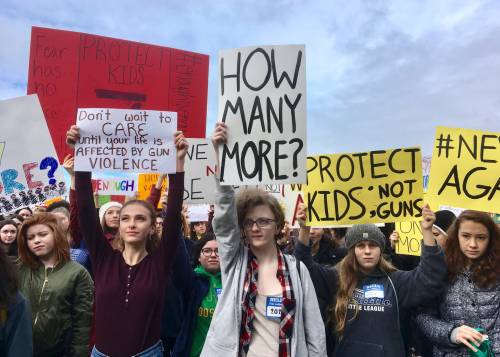
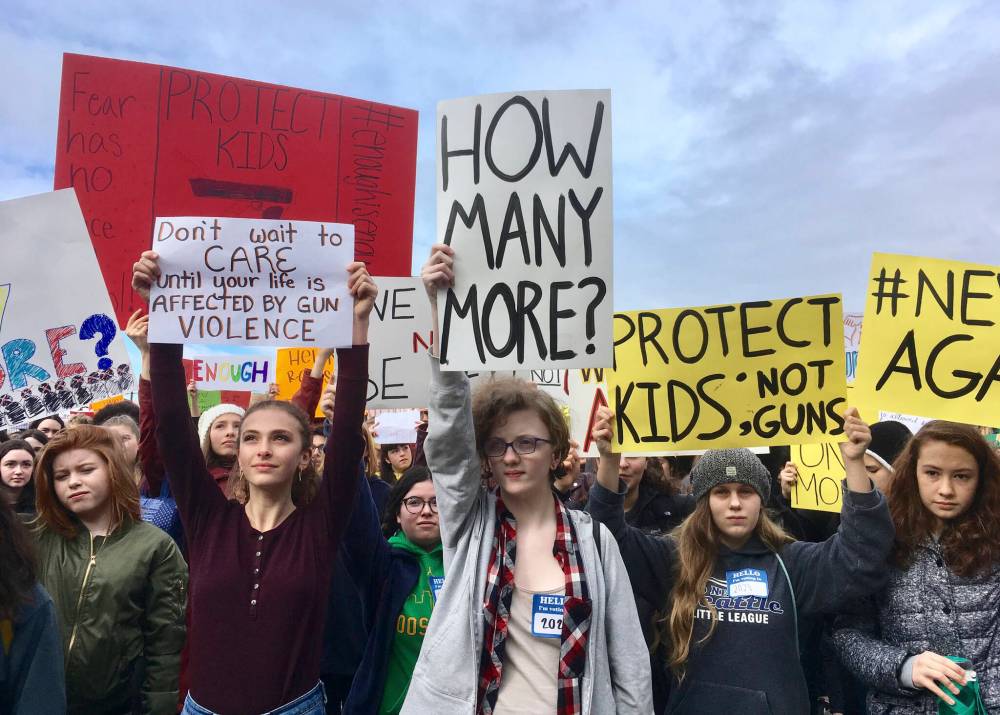
                                Students in Seattle protest gun violence a month after the Feb. 14, 2018 shooting at Marjory Stoneman Douglas High School in Parkland, Fla., where 17 people were killed.

Manuel Valdes / Associated Press files

Students in Seattle protest gun violence a month after the Feb. 14, 2018 shooting at Marjory Stoneman Douglas High School in Parkland, Fla., where 17 people were killed.

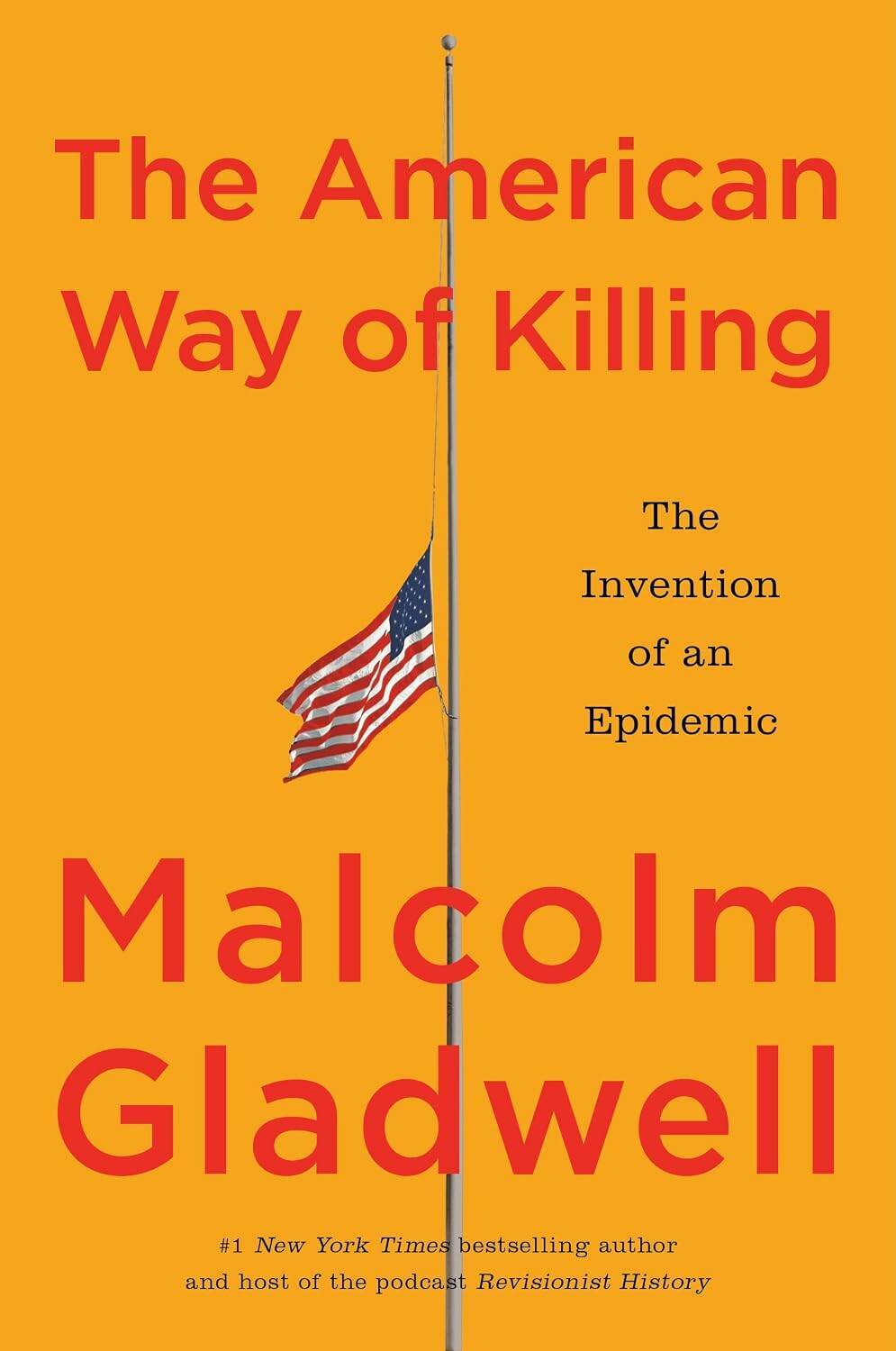
“I’m particularly drawn to American stories of criminals and criminality,” he notes in his introduction to his latest book of sociological non-fiction, The American Way of Killing, “because you cannot cross between the U.S. and Canada, as I have done six or seven times a year for nearly half a century, and not be struck by how peculiar America is.”

Gladwell notes that his first book, The Tipping Point (2000), was inspired by the seemingly inexplicable drop in crime in New York City in the 1990s.

He has also explored violence and criminality in succeeding books, such as Blink (2005), What the Dog Saw (2009) and Talking to Strangers (2013).

At 63, Gladwell now devotes most of his energies to his weekly podcast, Revisionist History. In the summer of 2023 he aired a five-part series on U.S. gun violence.

This book, his ninth, essentially repurposes the research he and his podcast team did then. He buries this fact at the back in his acknowledgments.

Indeed, readers may be forgiven for feeling this is less a standalone book than a study guide to a now three-year-old podcast series.

The book contains excerpts from many of those interviews, replete with the syntactical errors, flabbiness and misdirections common in conversational speech. In audio this is fine; in print it is distracting and lazy.

Nevertheless, using his trademark technique of conveying academic research via stories of actual human beings, Gladwell makes lots of good points.

Shannon Greer photo
                                Malcolm Gladwell

Shannon Greer photo

Malcolm Gladwell

He shows how Americans fool themselves into thinking gun violence has flatlined in recent decades because homicide rates have remained stable. But, in fact, more gunshot victims would die if medical trauma care had not made such impressive strides.

Among his other arguments:

• Americans think their constitution’s Second Amendment, with its “right to bear arms,” was drafted to allow for citizens’ defence against government tyranny. But it was really meant as a tool for southern plantation owners to control their slave populations.

• U.S. progressives have argued, certainly in the wake of the 2020 George Floyd killing, that gun violence is a byproduct of over-policing. But in fact, American cities employ half the police of similarly sized European cities, which have one-fifth the number of homicides.

• Progressives have also concentrated their gun-control energies on trying to ban assault rifles, even though they account for a tiny fraction of the deaths caused by handguns.

• Americans confuse the mythology of TV westerns, such as the all-time classic Gunsmoke, set in a lawless Dodge City, Kansas, with historical reality. In fact, gun control laws in 19th-century Kansas were much stronger than they are anywhere in the U.S. today.

• U.S. policy-makers act as though gun violence is primarily “instrumental,” committed for some intentionally nefarious purpose. But the majority is “expressive” violence, or as Gladwell says, “young men getting into arguments and losing their heads.”

To his credit, Gladwell unearths all sorts of fascinating evidence to upend conventional wisdom on why the U.S. is an outlier among developed nations for gun violence, incarceration rates and proliferation of firearms.
The American Way of Killing

The American Way of Killing

It’s likely too late for them to change now.

Americans will disarm only when their guns are pried, as per Charlton Heston’s notorious boast, from their “cold, dead hands.”

If Gladwell thinks differently, it’s time for him to get out of Dodge.

Morley Walker is a retired Free Press editor and writer.
Report Error Submit a Tip

More Stories

Bombers, Stamps rumble a can’t-miss must-win

Taylor Allen 7 minute read Preview

Bombers, Stamps rumble a can’t-miss must-win

Taylor Allen 7 minute read Friday, Oct. 9, 2026

The Winnipeg Blue Bombers, Calgary Stampeders and Saskatchewan Roughriders are playing musical chairs and pretty soon the music is going to stop.

One of them will be left without a seat at the post-season table, and Saturday’s clash between the Bombers (7-8) and Stampeders (8-8) at Princess Auto Stadium (6 p.m.) will go a long way toward determining who that will be.

You’re not going to want to miss this one.

“We’ve shown we can play great, we’ve shown we can play terrible. So, let’s try to play on the great side and really lock in,” said Bombers halfback Evan Holm on the team’s mindset this week.

Read
Friday, Oct. 9, 2026

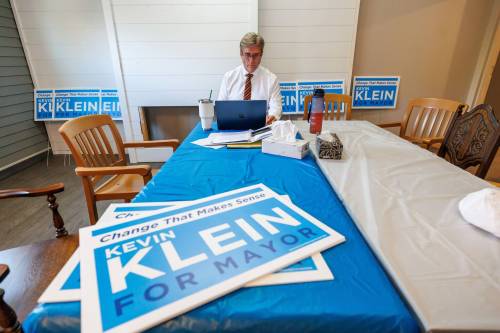
A Rocky day on the mayoral campaign trail for Kevin Klein

Malak Abas 12 minute read Preview

A Rocky day on the mayoral campaign trail for Kevin Klein

Malak Abas 12 minute read Friday, Oct. 9, 2026

Kevin Klein acknowledges it’s hard to foresee what he’ll wake up to each morning in the final weeks of a mayoral campaign.

But the seasoned politician, who has served as both a city councillor and a provincial cabinet minister, couldn’t have predicted the events — what he describes as “drama” — that unfolded last Sunday.

Fellow mayoral candidate Mike Vogiatzakis accused Klein’s campaign team of offering him a job to drop out of the race, while a guest writer’s column in the Winnipeg Sun that questioned the deaths of Indigenous children at residential schools, just days after the National Day for Truth and Reconciliation, sparked condemnation from a prominent Indigenous organization. (Klein is the CEO of the Klein Group, the company that owns the Sun. He has maintained he is not involved in its operations while running for mayor.)

The Free Press had already been scheduled to join Klein on the campaign trail Monday, intending to document a day in the life of the front-running candidate to unseat incumbent Scott Gillingham, before the controversies hit.

Read
Friday, Oct. 9, 2026

A Life's Story: Writer built bridges with genuine curiosity, compassion for diversity of religious practices

Janine LeGal 6 minute read Preview

A Life's Story: Writer built bridges with genuine curiosity, compassion for diversity of religious practices

Janine LeGal 6 minute read Yesterday at 6:00 AM CDT

Brenda Suderman knew how to make people feel comfortable. For a journalist, that character trait is a real strength, and it made people trust and appreciate her.

Whether covering musicals, worship spaces, the effects of pandemic shutdowns, death rituals and practices of different traditions, the discovery of the burial of 2,284 infants in unmarked graves, or any other of the countless topics she wrote about in her four- decade career, Suderman did it with genuine interest and care.

Born and raised in Winkler, Suderman grew up on a farm. Much of her childhood was spent in gardens and sugar beet fields.

Baptized at 16, she became a member of the Winkler Bergthaler Mennonite Church. The restrictions against women at the time contributed to planting the seeds of Suderman’s feminist perspective.

Read
Yesterday at 6:00 AM CDT

Person killed in workplace accident at Fairmont construction site

Morgan Modjeski 3 minute read Preview

Person killed in workplace accident at Fairmont construction site

Morgan Modjeski 3 minute read Friday, Oct. 9, 2026

Emergency responders were on scene and Manitoba Workplace Safety and Health is investigating after a worker died following an incident at a Winnipeg construction site Thursday.

Little information about the worker killed was provided, but the fatal incident happened at the Fairmont Winnipeg, located at 2 Lombard Place, with police responding around 5 p.m.

The hotel is currently closed and is an active construction site. The person killed has not been identified by name.

Information from a provincial spokesperson said the deceased was working for Kepsco Construction when they were fatally injured after a “portion of an overhead canopy collapsed during asbestos abatement work.”

Read
Friday, Oct. 9, 2026

Gladwell’s exploration of America’s gun crisis separates myth and misconception from fact

Reviewed by Morley Walker 4 minute read Preview

Gladwell’s exploration of America’s gun crisis separates myth and misconception from fact

Reviewed by Morley Walker 4 minute read Saturday, Oct. 3, 2026

The idea of a Canadian lecturing Americans on their insane attitudes towards gun violence might seem ill-advised at this moment of fraught relations between our two countries.

Goodness knows, shelves full of books by Americans themselves have already been written on this suicidal pathology.

But, hey, the popular non-fiction author and journalist Malcolm Gladwell — born and raised in southern Ontario, but a U.S. resident his entire career — has a long pedigree on the topic.

“I’m particularly drawn to American stories of criminals and criminality,” he notes in his introduction to his latest book of sociological non-fiction, The American Way of Killing, “because you cannot cross between the U.S. and Canada, as I have done six or seven times a year for nearly half a century, and not be struck by how peculiar America is.”

Read
Saturday, Oct. 3, 2026

Puppies, stocks — ‘zoomies’ abound

Andrew Froese 4 minute read Yesterday at 2:01 AM CDT

This spring, I adopted a three-month-old rescued German Shepherd mix. To say she is easily excitable is an understatement.

It is not really her fault. A puppy’s frontal cortex, the part of the brain that helps with decision-making and impulse control, is still developing. When an older dog, or a human, gets tired, we generally understand we should rest. Puppies have not quite figured that out. They often interpret tiredness as a signal something is wrong, which makes them more alert, more reactive and harder to settle.

That creates a feedback loop. The puppy gets tired, which makes her frantic, which makes her more tired, which makes her even more frantic. Eventually, this becomes what people call the “zoomies”: frantic sprinting, biting, jumping and general chaos.

From the outside, it looks like the puppy has too much energy. In reality, the opposite is true. The zoomies are not a sign of excess energy. They are a sign the puppy is overtired and does not know it yet.