Hunters take issue with Saskatchewan’s plan to end chronic wasting disease testing

Advertisement

Advertise with us

REGINA - Saskatchewan's government is ending a program that tests chronic wasting disease in deer and similar animals, a decision some hunters say they were blindsided by.

Read this article for free:


By clicking the button above, an account will be created and you will begin to receive some of our recommended newsletters. You may opt out of any newsletter by visiting your Email and Communication Preferences page or by clicking "unsubscribe" at the bottom of any email.

or

Already have an account? Log in here »

To continue reading, please subscribe:

Digital Subscription

One year of digital access for only $1.44 a week*

  • Enjoy unlimited reading on winnipegfreepress.com
  • Read the E-Edition, our digital replica newspaper
  • Access News Break, our award-winning app
  • Play interactive puzzles

*Billed as $5.77 plus GST every four weeks. After 52 weeks, price increases to the regular rate of $19.95 plus GST every four weeks. Offer available to new and qualified returning subscribers only. Cancel any time.

To continue reading, please subscribe:

Add Free Press access to your Brandon Sun subscription for only an additional

$1 for the first 4 weeks*

  • Enjoy unlimited reading on winnipegfreepress.com
  • Read the E-Edition, our digital replica newspaper
  • Access News Break, our award-winning app
  • Play interactive puzzles
Start now

*Your next Brandon Sun subscription payment will increase by $1.00 and you will be charged $17.95 plus GST for four weeks. After four weeks, your payment will increase to $24.95 plus GST every four weeks.

REGINA – Saskatchewan’s government is ending a program that tests chronic wasting disease in deer and similar animals, a decision some hunters say they were blindsided by.

A bulletin on the province’s website says the program is to be eliminated at the end of this month.

Don Gordon, president of the Saskatchewan Trappers Association, said Thursday the move could result in less hunting, because hunters might not want to eat untested meat.

A mule dear buck forages for food as the sun rises near Dog Pound, north of Calgary, on Saturday, Jan. 13, 2024. THE CANADIAN PRESS/Jeff McIntosh

“It’s a step backward for the people who have become accustomed to ensuring that, in their minds, what they’re consuming as wild game is free of chronic wasting disease,” he said from Nipawin, Sask. 

“(Another) concern that I might hear from our organization would be how much of these animals or how many of these are going to be dumped because of the uncertainty.”

Chronic wasting disease affects the brains and nervous systems of cervids, such as deer, elk and moose.

Health Canada says there have been no reported cases of the disease in humans, but it recommends people don’t eat meat from infected animals.

Saskatchewan’s program requires hunters to submit animal heads for voluntary or mandatory testing, depending on where the animals were hunted.

In its bulletin, the province says uptake from hunters has been low and that ending the program provides an opportunity to find efficiencies.

It says even though head testing will stop, environment ministry staff would continue to monitor wildlife health and population using other methods. 

“Saskatchewan continues to recognize chronic wasting disease as an important wildlife-health issue,” the bulletin says.

“The decision to end government-funded testing does not mean (the disease) has disappeared or that it is no longer important to wildlife management decisions.”

Darrell Crabbe, executive director of the Saskatchewan Wildlife Federation, said the province informed him of its decision Wednesday night – catching him off guard.

“This was kind of a bombshell for us.”

Crabbe declined to provide the federation’s opinion on the decision, because the organization is still developing its position.

The province’s bulletin says hunters who are uncomfortable consuming untested meat can stop hunting, gift meat to those who are fine eating it or feed it to their animals as long as it’s been thoroughly cooked. 

It says the province won’t provide refunds to those who have already purchased licences and that edible flesh from cervids are not allowed to be wasted, destroyed, spoiled or abandoned. 

Gordon said if the decision results in more hunters leaving animals to rot on the land, that could cause the disease to spread more easily.  

“If these carcasses of these animals are all of a sudden starting to be moved from one area to the other, it is a known way of expanding the range of this disease,” he said.

“And I can see some people just saying, ‘Well, I guess I’m not going hunting then.’ And that is a loss all the way around. That’s the fuel and the food and the family time that’s not going to be spent.”

This report by The Canadian Press was first published Oct. 15, 2026.
Report Error Submit a Tip

More Stories

Detox centre ready but staffing challenges persist

Scott Billeck 6 minute read Preview

Detox centre ready but staffing challenges persist

Scott Billeck 6 minute read 2:01 AM CDT

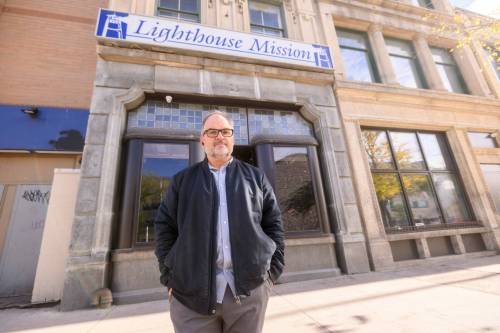
Peter McMullen’s decade-long struggle with addiction gives him insight into the challenges Lighthouse Mission hopes to address with a new Main Street detox facility focused on connecting people with longer-term treatment.

McMullen, executive director of Lighthouse Mission, knows how difficult it can be to navigate Winnipeg’s addiction treatment system, particularly when someone is ready to seek help but the services they need aren’t immediately available.

Now, after years of planning and a lengthy renovation of two century-old buildings, the downtown organization is preparing to open a 10-bed detox facility at 667 and 669 Main St., with five beds each for men and women.

The facility could begin accepting clients as early as November, provided Lighthouse Mission can overcome one final hurdle: recruiting enough staff to operate it.

Read
2:01 AM CDT

Backstreet Boys’ 12-show Toronto run offers millennials a ticket to simpler times

Alex Nino Gheciu, The Canadian Press 5 minute read Preview

Backstreet Boys’ 12-show Toronto run offers millennials a ticket to simpler times

Alex Nino Gheciu, The Canadian Press 5 minute read Saturday, Oct. 17, 2026

When Chelsea Smith heard the Backstreet Boys were coming to Toronto, she had a simple message for the five men who soundtracked her childhood.

“Here's my credit card, take all my money.”

The 35-year-old Vancouver fan wasn’t bluffing. Having already travelled to Las Vegas to see her teenybopper crushes, she's now preparing to fly across the country for two Toronto concerts, spending roughly $600 on tickets alone.

And she's hardly the only millennial willing to pay a tidy sum to party like it’s 1999.

Read
Saturday, Oct. 17, 2026

State Industries, StateMix, StateCraft: trio of Winnipeg firms under one roof, one mantra

Aaron Epp 7 minute read Preview

State Industries, StateMix, StateCraft: trio of Winnipeg firms under one roof, one mantra

Aaron Epp 7 minute read 2:01 AM CDT

Popcorn, rollerblades and the Baha’i faith are all part of Payam Towfigh’s story.

Born in Iran, the 59-year-old is the president and CEO of the State Group, a collection of three companies all headquartered under the same roof in Winnipeg.

They include State Industries Ltd., the manufacturer of polyurethane parts where Towfigh started his career in 1989 while completing an engineering degree at the University of Manitoba. He purchased the company from founder Stan Baldwin three years later.

“I really wasn’t planning to take over State Industries,” Towfigh says, before adding with a smile: “My kids tell me that I’m not very employable since I’ve only had one job in my life.”

Read
2:01 AM CDT

Four charged in St. James fight

2 minute read Yesterday at 4:03 PM CDT

Four people are facing charges after an assault at a St. James apartment building.

A man was struck in the face with a pistol when he answered the door at his apartment suite in the 2200 block of Portage Avenue at about 2:15 a.m. Oct. 18, and a physical fight broke out in the hallway. Bear spray was used during the fight, the Winnipeg Police Service stated in a news release Sunday.

Police learned one of the men involved in the fight had been armed at a nearby restaurant, in the 2100 block of Portage Avenue, where he was refused service. Restaurant staff called police after seeing what appeared to be a gun in the man's hand as he was leaving.

A group of men then went to the apartment building and knocked on a suite door, police said, adding the men involved knew each other. The man who was armed at the restaurant was involved in the altercation, police stated, but no specific details about his role were released.

Brilliant legacy

Conrad Sweatman 6 minute read Preview

Brilliant legacy

Conrad Sweatman 6 minute read 2:01 AM CDT

With impressionism, things can look messy when you’re eyeing the brush strikes up close. Stand back, voila, the piece comes into focus.

But with photomosaics, an image made up of hundreds of smaller photos, it’s the opposite. The closer you stand, the more images you see.

In the era of AI art, it’s all too easy to fire off a kitschy digital photomosaic. The internet is littered with mindless renderings showing, say, an image of the Statue of Liberty made up of a thousand Big Macs.

It’s another and rare thing to build a photomosaic by hand, with a genuine artist’s grasp of the form’s strange double life. This is what, for the past eight years or so, a collaborative team — in particular Edmonton-based creator and curator Larisa Sembaliuk Cheladyn, sculptor Royden Mills, Theodora Harasymiw and a group of volunteers — did for Ukrainian Voice: A Legacy Mosaic, one of four new exhibitions at the Oseredok: Ukrainian Cultural and Education Centre.

Read
2:01 AM CDT

Province looks to keep nearly $1M from traffic stop

Erik Pindera 4 minute read Preview

Province looks to keep nearly $1M from traffic stop

Erik Pindera 4 minute read 2:01 AM CDT

The RCMP constable could see that Alireza Haghgoo was nervous.

The 22-year-old, seated as a passenger in a rental Nissan SUV the Mountie pulled over for speeding outside Brandon in late July, was breathing heavily and tapping his foot constantly, as the carotid artery on his neck visibly pumped blood.

He had good reason to be jumpy — considering Mounties found nearly $1-million in cash that justice officials allege is drug money in the car he and Ahmad Shahpoor Ahmadi, 44, were driving from Calgary to Toronto.

The province’s director of criminal property forfeiture filed a lawsuit in the Court of King’s Bench last week in an attempt to keep the more than $956,000 in cash seized during the traffic stop on July 31 as well as a more than $70,000 watch.

Read
2:01 AM CDT