Waymo to test robotaxis in Toronto as it guns for 2028 launch date
Advertisement
Read this article for free:
or
Already have an account? Log in here »
To continue reading, please subscribe:
Digital Subscription
One year of digital access for only $1.44 a week*
- Enjoy unlimited reading on winnipegfreepress.com
- Read the E-Edition, our digital replica newspaper
- Access News Break, our award-winning app
- Play interactive puzzles
*Billed as $5.77 plus GST every four weeks. After 52 weeks, price increases to the regular rate of $19.95 plus GST every four weeks. Offer available to new and qualified returning subscribers only. Cancel any time.
To continue reading, please subscribe:
Add Free Press access to your Brandon Sun subscription for only an additional
$1 for the first 4 weeks*
- Enjoy unlimited reading on winnipegfreepress.com
- Read the E-Edition, our digital replica newspaper
- Access News Break, our award-winning app
- Play interactive puzzles
*Your next Brandon Sun subscription payment will increase by $1.00 and you will be charged $17.95 plus GST for four weeks. After four weeks, your payment will increase to $24.95 plus GST every four weeks.
Read unlimited articles for free today:
or
Already have an account? Log in here »
Self-driving taxi operator Waymo is poised to launch a test phase in Toronto, with the goal of carrying its first passengers in 2028 as part of a push to breach the broader Canadian market.
The California-based ride-hailing company says the Ontario government has given it the green light to take part in a provincial pilot program that regulates testing of autonomous cars.
The move could give a jolt to the province’s auto tech sector, shake up the ride-hailing market and potentially boost accessibility for the sight-loss community, observers say, even as concerns persist around safety and job security.
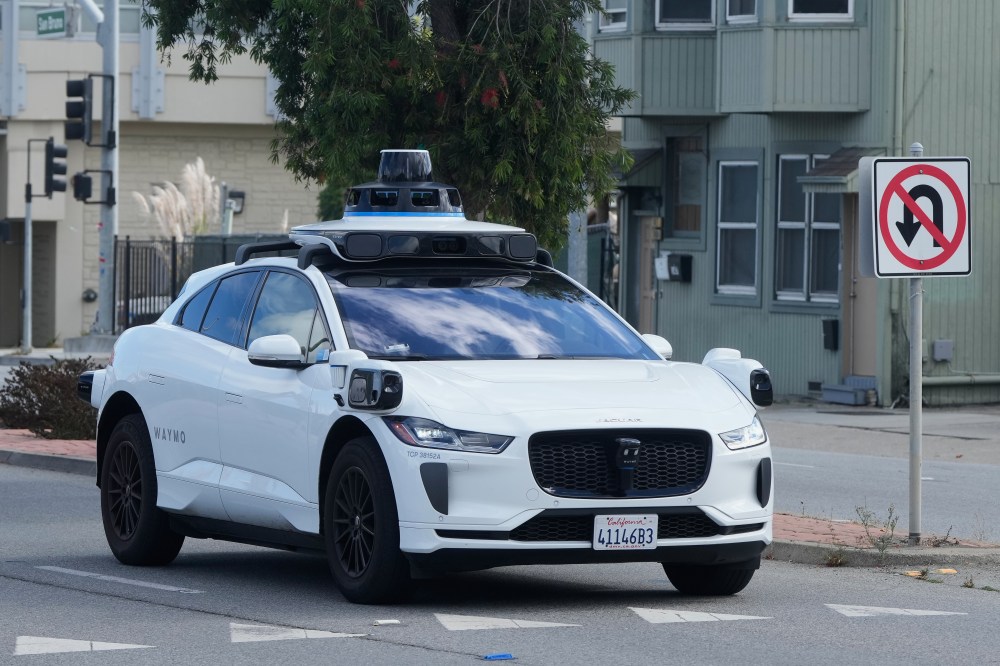
Waymo, owned by Google parent company Alphabet Inc., says the first phase includes high-definition street mapping and data collection starting this year, to be followed by test runs of the robotaxis with a driver behind the wheel.
Waymo co-CEO Tekedra Mawakana sought to reassure skeptics who say autonomous vehicles struggle to handle more complicated environments, including bad weather, heavy traffic or unusual situations.
“We’re proud to bring the Waymo Driver to Toronto and to partner with a community that shares our commitment to safer streets and more accessible mobility,” she said in a release.
“Expanding into Canada marks an important milestone in Waymo’s global journey.”
Waymo cars were involved in 95 per cent fewer crashes causing serious injury or death compared with humans in cities where the service operates, the tech firm said, citing internal data from more than 400 million fully autonomous kilometres driven.
Waymo’s arrival could prove an accelerant for a budding cluster of auto-oriented tech companies in Ontario, industry leaders say.
“This is a big victory for some of the untold stories in mobility technology in Canada — the kinds of companies that don’t get the headlines but, in terms of investment value … are just as material as the ones that bend metal and melt plastics,” said Flavio Volpe, president of the Automotive Parts Manufacturers’ Association.
He waved off worries about greater reliance on American companies at a time when trade ties have been weaponized against Canada by a more protectionist U.S. administration.
“We’re in a really difficult period of Canada-U.S. relations where it’s easy to make that criticism, and in a lot of cases it sticks. But this is a world leader, and it is definitely the No. 1 player outside of China,” Volpe said of Waymo. He noted it has added jobs to the economies of Ontario and Quebec.
For its Canadian launch, Waymo is partnering with Toronto-based Element Fleet Management, which will provide maintenance, customer service and other support functions.
Waymo’s distinctive white crossover SUVs will not be the first fully autonomous vehicles to traverse Toronto streets under the provincial pilot program.
Last year, California-based Gatik began a rollout of 50 self-driving box trucks across Loblaw’s distribution network in the Greater Toronto Area. Many of those trucks are now cruising the streets and ferrying groceries with no one behind the wheel, relying instead on more than two-dozen cameras, radar and lidar, a laser-based measurement of distance.
Waymo cars draw on a broader array of sensors than many autonomous vehicles, including Teslas. The latest Waymo taxis sport 13 cameras, six radar units and four lidar devices versus nine cameras and zero radar or lidar on most Tesla models.
“They have way more sensors, which makes the whole system more robust,” said Sidney Givigi, a professor of robotics and machine learning at Queen’s University’s School of Computing.
However, harsh weather remains a real concern.
While Waymo has deployed fully autonomous taxis in more than a dozen U.S. cities, Denver may be the only one that hosts significant snowfall.
“All the sensors can get occluded by snow … which is something that they don’t have in California,” Givigi said. “What if there is ice on the road, or you have a very strong blizzard and then you try to stop your car on a hill — and it does not stop?”
It could also represent a threat to companies with human hands at the wheel, or to the job security of drivers themselves.
Robotaxis also carry the potential to make urban travel more accessible for people who are blind or partially sighted.
Michelle McQuigge, CEO of Toronto-based non-profit Balance for Blind Adults, said it’s “remarkably common” for drivers to take off at the sight of a service animal, despite laws mandating their admission.
“I travel with a guide dog. I’m totally blind. And we get service denials at least once a month, I would say, if not more,” she said.
McQuigge qualified that self-driving rideshares are not a “magic bullet” and that cost and ease of use — the process of requesting and then finding the car, for example — pose potential pitfalls. But overall, she remains “cautiously optimistic” about the technology.
Nonetheless, some California companies with a big presence in Canada see Waymo’s Toronto beachhead as a good sign.
“We believe the future of mobility will be hybrid, with human drivers and autonomous vehicles operating side by side,” said Laura Miller, Uber Canada’s head of policy, in a statement.
The ride-hailing company has partnerships with more than 30 autonomous vehicle companies, including Toronto-based Waabi, she said.
With driverless taxis on the road ahead, Miller called on the province, industry and communities to set clear safety standards and “prepare for the impact on workers.”
Some of them may have cause for concern.

“There’s a possibility that some drivers would be replaced at one point in time,” acknowledged Marc-André Way, president of the Canadian Taxi Association.
“No one should be pressing the panic button,” he added, saying cab companies would consider incorporating autonomous vehicles into their fleets “eventually.”
The rollout will occur under a phased approach that prioritizes safety and job creation, including a “credible jobs plan” setting out projected positions and hiring timelines, said transport minister Dakota Brasier, a spokesperson for Ontario Transportation Minister Prabmeet Sarkaria, in an email.
This report by The Canadian Press was first published Oct. 16, 2026.
Companies in this story: (TSX:EFN)