Former foes and a united front Fight to keep Canada whole has pulled together strange political bedfellows and diverse groups
Read this article for free:
or
Already have an account? Log in here »
To continue reading, please subscribe:
Digital Subscription
One year of digital access for only $1.44 a week*
- Enjoy unlimited reading on winnipegfreepress.com
- Read the E-Edition, our digital replica newspaper
- Access News Break, our award-winning app
- Play interactive puzzles
*Billed as $5.77 plus GST every four weeks. After 52 weeks, price increases to the regular rate of $19.95 plus GST every four weeks. Offer available to new and qualified returning subscribers only. Cancel any time.
To continue reading, please subscribe:
Add Free Press access to your Brandon Sun subscription for only an additional
$1 for the first 4 weeks*
- Enjoy unlimited reading on winnipegfreepress.com
- Read the E-Edition, our digital replica newspaper
- Access News Break, our award-winning app
- Play interactive puzzles
*Your next Brandon Sun subscription payment will increase by $1.00 and you will be charged $17.95 plus GST for four weeks. After four weeks, your payment will increase to $24.95 plus GST every four weeks.
Read unlimited articles for free today:
or
Already have an account? Log in here »
EDMONTON — Shortly before midday on a crisp Tuesday, with just six days to go before Alberta’s big referendum, dozens of Edmonton’s movers and shakers filed into a second-floor hall of the swanky Royal Glenora Club, where the local chamber of commerce was holding a special luncheon.
Outside the hall’s soaring windows spread a painterly scene — lush parks of jutting pines and golden-leafed trees embracing the North Saskatchewan River.
Inside, on a low stage, an even more striking sight: former Alberta premiers Rachel Notley and Jason Kenney settled into chairs beside each other, teamed up to deliver a key message.
This temporary alliance is a sign of strange times, indeed. Notley, whose Alberta NDP swept to victory in 2015 on the back of a split conservative vote, and Kenney, who united the province’s right to oust her government in 2019, aren’t friends and do not see eye-to-eye on most things.
They are both Canadians, though.
(John Ulan / The Canadian Press files) Former Alberta premiers Jason Kenney and Rachel Notley, from opposite ends of the political spectrum, are united in their disdain for the tolerance of separatists in the governing United Conservative Party.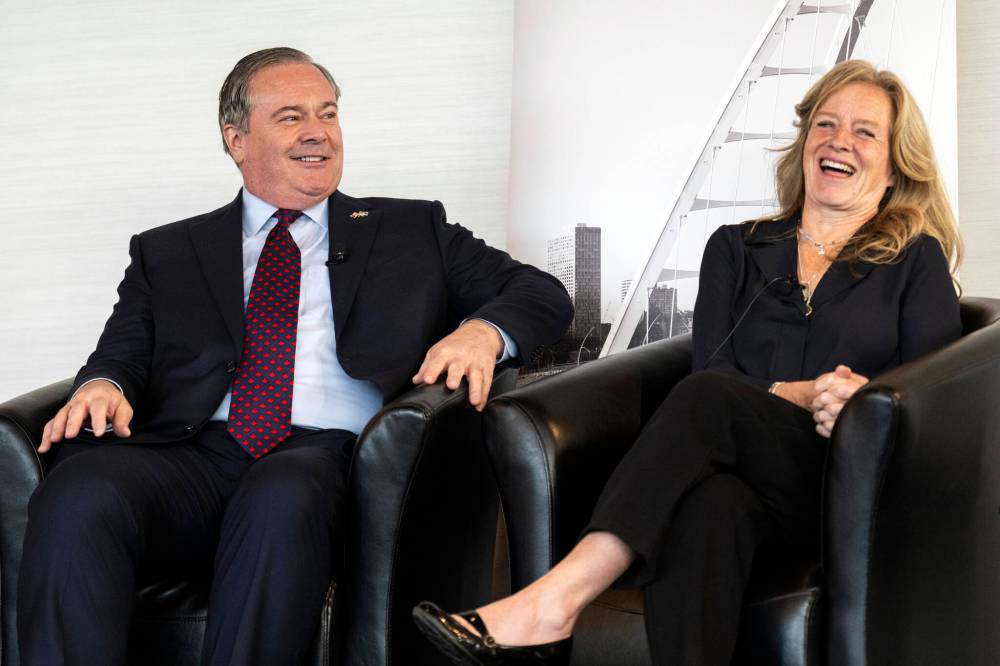
So in the weeks leading up to Alberta’s decision Monday, the two former foes joined forces, making their case for Albertans to stay in Canada.
In a scrum with reporters after the luncheon, one journalist joked about the duo’s newfound “Lennon and McCartney-like synergy” in advocating for a federalist position.
Notley laughed. “You’ve been waiting to use that line all day, haven’t you?”
In truth, even at the luncheon, they couldn’t fully keep the knives stowed away; both took brief digs on policy or lost seats. But on their core message, they were united.
The cost to Alberta’s economy of leaving would be immense, they said — and even simply holding a referendum cast a shadow of uncertainty that would scare investors away.
Though Kenney stopped short of criticizing his successor, Premier Danielle Smith — “I don’t want to be a Monday-morning quarterback,” he said — he was more blunt in his words for the separatists in the United Conservative Party, the one he was responsible for founding.
“I think the myth is that this is the culmination of generations’ worth of western alienation.”
“Separatists trying to infiltrate a federalist party are fundamentally dishonest and disrespectful of democracy,” he said.
“They’re welcome to go and make their case in separatist parties as they’ve been doing for 45 years, but they’re not welcome to try to take over a party and a government created and elected on the basis of loyalty to Canada, period, full stop.”
Notley didn’t miss a window to jump in.
“I’ll be a Tuesday-morning quarterback,” she said. “They should be ejected from caucus, and that’s exactly what the leader should do. And in failing to do that, she is abdicating her obligation to Albertans and to Canadians.”
What makes that exchange, this discussion, and the entire pre-referendum week in Alberta feel surreal, is how unnecessary it seems. Few people in the province want this.
Polls have consistently showed that the vast majority of Albertans — about three in four — want to stay in Canada, and despite years of separatist campaigning, that figure hasn’t budged.
Yet the referendum will go ahead, at a price tag of nearly $130 million.
So how did it come to this? How did it get to the point that a minority of voters pushed a whole province to this position?
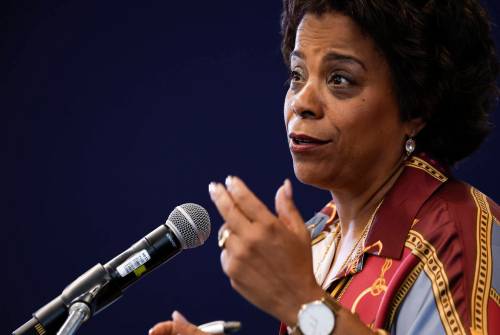
(Melissa Martin / Free Press) Senator Paula Simons, a longtime retired journalist from Edmonton, has spent much of her time in recent weeks connecting with communities in advance of Monday’s Alberta referendum.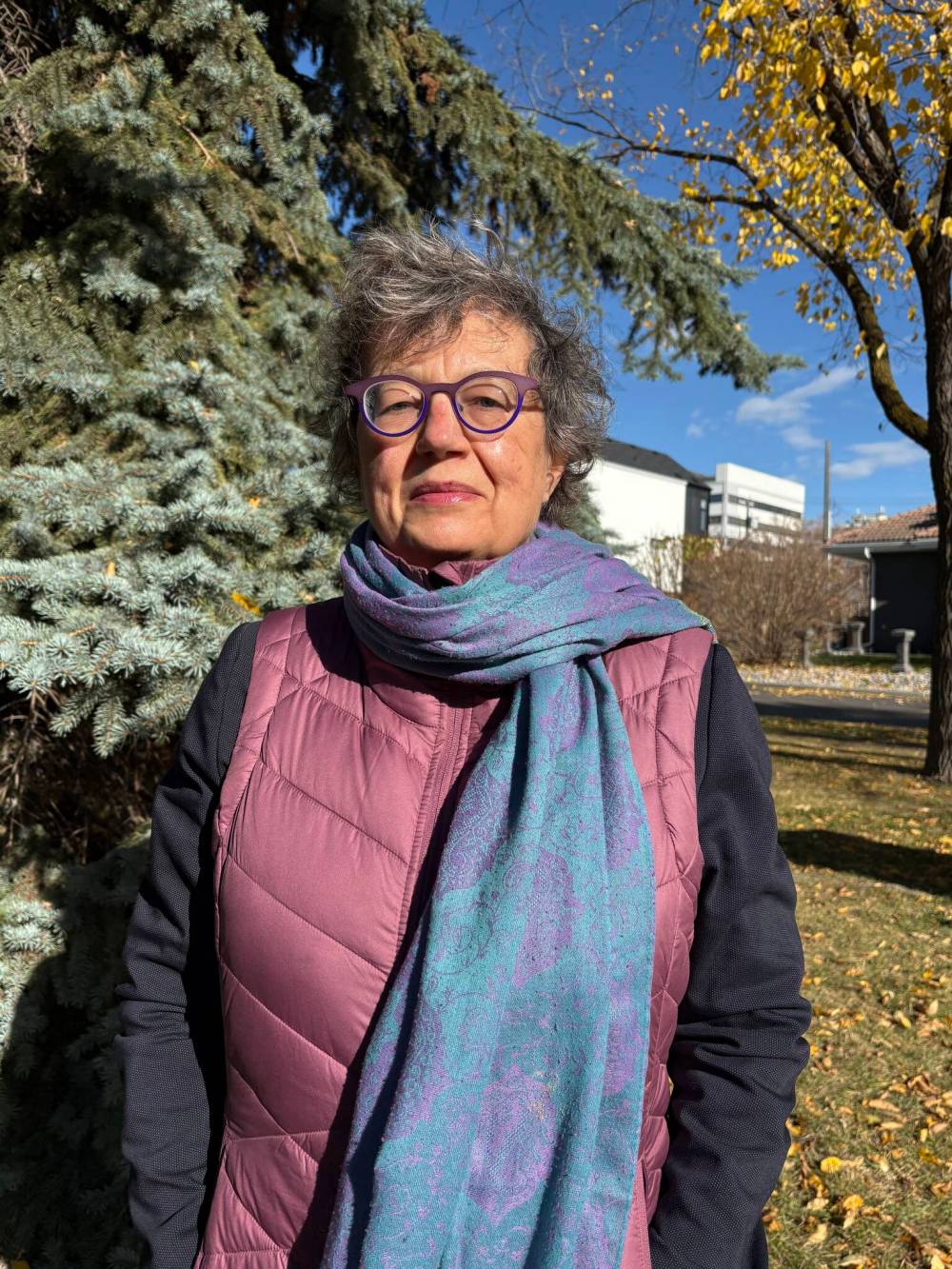
It’s true that there have always been separatists in Alberta, starting even before it joined confederation. In the early 1980s, when now-Senator Paula Simons was starting out as a journalist in her beloved hometown of Edmonton, separatism was “having a bit of a moment,” she says, driven by anger over Pierre Elliot Trudeau’s National Energy Program.
Those were the days of the Western Canada Concept Party, founded by Winnipegger Doug Christie, a lawyer whose primary claim to fame was defending virulent antisemites and neo-Nazis in court. The party had its only electoral success in Alberta, winning a provincial seat in a 1982 byelection, which it promptly lost in the general just nine months later.
“This has always been there and it’s always been sort of the dark bass line, but we never let them sing lead,” Simons says, chatting over lunch at a cosy cafe in the heart of Edmonton earlier this week.
And in some ways, the current separatist movement is not a neat continuation of those that came before. In reality, says Jared Wesley, a political science professor at the University of Alberta, an analysis of public opinion data reveals a sharp shift in the wake of COVID-19, a red-hot anger that grew into the convoy protests, and now this.
“I think the myth is that this is the culmination of generations’ worth of western alienation,” says Wesley, who grew up in Minnedosa. “That’s the story separatist leaders want people to hear. It’s part of a nation-building exercise for them to try to invent a history from which most nationalist movements come from.”
The key, Wesley says, is how cultural and institutional factors came together. That anger over pandemic restrictions surged along with the global rise of the populist right and an endless stream of culture-war battles, much of it imported: one of the best predictors of separatist sympathy, he says, is how much an individual consumes American far-right media.
And that anger found a path to outsized influence thanks to one small rule built into the UCP’s structure.
“Separatists trying to infiltrate a federalist party are fundamentally dishonest and disrespectful of democracy.”
In 2017, after longtime Member of Parliament Kenney turned to Alberta politics to unite the Progressive Conservative and Wildrose parties as the UCP, the new party included in its bylaws a rule that allows just one-quarter of its 87 constituency associations to force a leadership review.
That was the mechanism by which 22 constituency groups pushed Kenney to resign in 2022, in the aftermath of COVID, thus paving the way for former Wildrose leader Danielle Smith to take over. And it’s the same mechanism, Wesley says, by which Smith is now “beholden” to the most extreme wing of the party, what he calls the “Gang of 22.”
“It allows a group of really disgruntled, highly organized, mobilized folks to threaten the premier directly and say, ‘If you don’t deliver our policy objectives, we are going to oust you from power,’ which they did to (Kenney),” Wesley says. “And they’re doing the same thing to the his replacement, who they put in power.”
Many observers of Alberta politics the Free Press spoke with this week see Smith as primarily interested in her own political survival. (One voter in Wainwright called her a “windsock.”) In the leadup to the referendum, the premier has tried to play to both sides, tossing bones to the separatists while insisting on her own belief in staying in Canada.
That puts her in a quagmire, no matter the outcome of Monday’s vote.
“She’s not pleasing either side,” Wesley says. “Federalists don’t trust that she’s a federalist, and separatists don’t trust that she’s a separatist. And that’s not a great place for a leader of a party to be in, let alone the premier of the province.”
Those fault lines are already on display. Many vocal separatists feel that Smith has been insufficiently supportive of their aims; one constituency association, led by a prominent separatist, has already pledged to take her to a leadership review.
(Jason Franson / The Canadian Press files) Jeffrey Rath leads the Alberta Prosperity Project.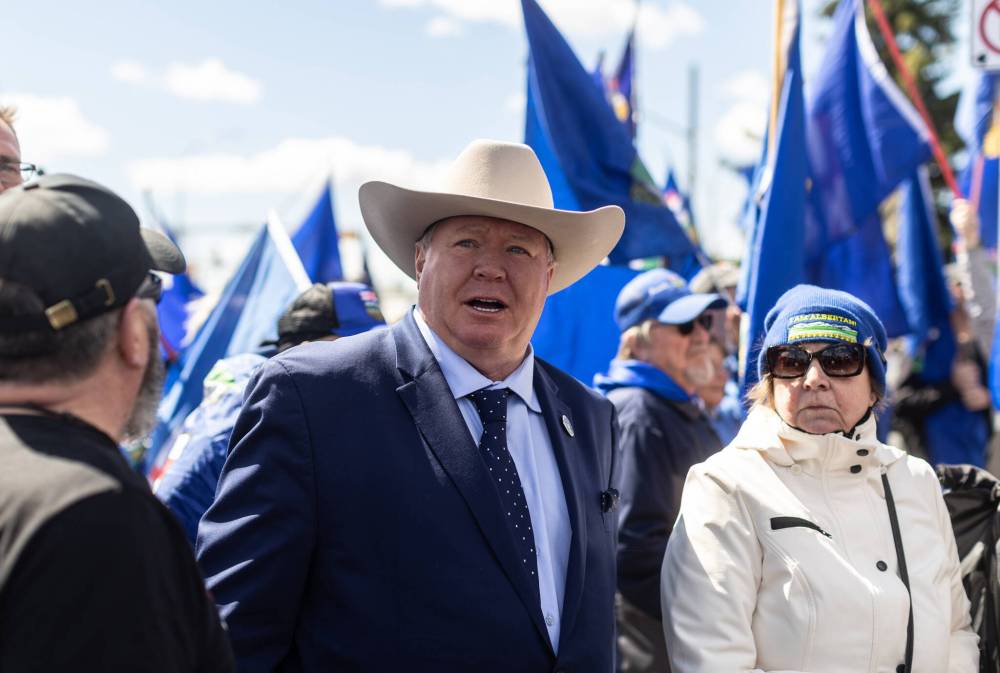
And earlier this week, the Alberta Prosperity Project, one of the largest separatist campaigns, led by firebrand Jeffrey Rath, sent a mass text to its supporters urging them to vote “no” on the nine referendum questions that do not directly deal with secession, including questions about limiting immigration and curtailing the rights of temporary workers.
“If the nine pass, Edmonton and Ottawa will point to them as proof Albertans want to fix Canada and stay,” the text read, indicating its distrust of Smith’s agenda. “Don’t hand them that.”
In a way, this fractious relationship is a silver lining not just for the federalist majority, but also for how Alberta will move forward after Monday. To many in the province the referendum is deeply embarrassing: voters the Free Press spoke with were largely mortified at how much attention it was drawing across Canada.
“The irony is that what might unite Albertans most after this campaign is how much they resented being part of it and how much they resent the premier for calling it,” Wesley says.
That’s similar to what Simons sees, as she looks around Alberta. For weeks, the senator has been meeting with people in communities all over the province, speaking with them about their concerns leading up to the referendum. There have been days, she says, where it felt like Alberta was being “held hostage” by a small minority opposed to Canada, and to immigration.
But one day in the summer, as she was strolling around Edmonton’s popular multicultural Heritage Festival (“Which is better than Folklorama,” she adds, “You can fight me on this”), she looked around at the thriving and incredibly diverse crowd and had what she calls “an epiphany.”
“We’ve seen an empowering of a whole new tranche of Albertans who’ve become politically activated by this. I think that will be the hopeful conclusion.”
“I thought, ‘This is the city I love,’” she says. “I had this feeling you have when you hold your baby and you think, ‘I love this city, I love the diversity, the vitality.’ This is my idea of heaven. And I had this sense that for the people who are leading the separatist campaign, this is their version of hell.
“What I think of as the bright, dynamic future of our city and their province, is what they see as the end of the Alberta they knew and loved… but the power of Alberta, the magic of Alberta, is that we have always been able to welcome and absorb newcomers.”
And she points to the new collaborations that rose, as federalists sought to energize and mobilize the pro-Canada vote. The province’s campaign laws prevented registered groups from collaborating directly and limited how much they could spend, but that didn’t stop delicate new alliances, including the Kenney-Notley team-up, from forming.
Those supporters ranged from former Conservative MP Monte Solberg on the right, to the Alberta Federation of Labour on the left, along with faith groups, Indigenous groups, ethnic communities, academics. Folks from across the entire spectrum of society, bound by what was, just a year ago, a wholly mundane statement: they are Canadian.
“I think it has empowered a whole bunch of people who would never have gotten involved in politics before… but they’re willing to step up for this,” Simons says. “We’ve seen an empowering of a whole new tranche of Albertans who’ve become politically activated by this. I think that will be the hopeful conclusion.”
And Albertans may need those alliances, in the years to come.
“A good thought experiment is, ‘If separatism goes away tomorrow, would this group disband?’” Wesley says. “No, they would find another issue, because that’s what far-right populist groups do.”
melissa.martin@winnipegfreepress.com

Melissa Martin
Reporter-at-large
Melissa Martin reports and opines for the Winnipeg Free Press.
Every piece of reporting Melissa produces is reviewed by an editing team before it is posted online or published in print — part of the Free Press‘s tradition, since 1872, of producing reliable independent journalism. Read more about Free Press’s history and mandate, and learn how our newsroom operates.
Our newsroom depends on a growing audience of readers to power our journalism. If you are not a paid reader, please consider becoming a subscriber.
Our newsroom depends on its audience of readers to power our journalism. Thank you for your support.
Related Articles
Alberta’s immigrants feeling xenophobic chill from some questions in Monday’s referendum