Skunk in downtown Vancouver that bit people tests positive for rabies
Advertisement
Read this article for free:
or
Already have an account? Log in here »
To continue reading, please subscribe:
Digital Subscription
One year of digital access for only $1.44 a week*
- Enjoy unlimited reading on winnipegfreepress.com
- Read the E-Edition, our digital replica newspaper
- Access News Break, our award-winning app
- Play interactive puzzles
*Billed as $5.77 plus GST every four weeks. After 52 weeks, price increases to the regular rate of $19.95 plus GST every four weeks. Offer available to new and qualified returning subscribers only. Cancel any time.
To continue reading, please subscribe:
Add Free Press access to your Brandon Sun subscription for only an additional
$1 for the first 4 weeks*
- Enjoy unlimited reading on winnipegfreepress.com
- Read the E-Edition, our digital replica newspaper
- Access News Break, our award-winning app
- Play interactive puzzles
*Your next Brandon Sun subscription payment will increase by $1.00 and you will be charged $17.95 plus GST for four weeks. After four weeks, your payment will increase to $24.95 plus GST every four weeks.
Read unlimited articles for free today:
or
Already have an account? Log in here »
VANCOUVER – A skunk that bit a number of people in downtown Vancouver has tested positive for rabies.
Vancouver Coastal Health issued a news release notifying the public of the confirmed case on Wednesday.
The health authority said interactions with skunks are rare, but “a small number of people bitten by the skunk have been assessed and received rabies vaccinations and immunoglobulin to prevent rabies.”

Rabies virus is a fatal viral infection that affects the brain and nervous system. It is found in the saliva of infected animals and can be transmitted through a bite or a scratch from an infected animal, Vancouver Coastal Health said.
“Rabies virus is not transmitted through exposure to the spray, urine or feces of infected skunks,” it added.
Though bats are the only known “reservoirs” for rabies in British Columbia, the authority said “occasional spillovers to other animal species in specific geographical areas, including skunks, have occurred in B.C.”
The seriousness of the infection was highlighted in an issue of the Canadian Medical Association Journal earlier this year, where infectious disease physicians described the case of an 11-year-old Ontario child who died of rabies in 2024.
Dr. Brian Hummel, the case report’s senior author and a pediatric infectious disease physician at McMaster Children’s Hospital in Hamilton, told The Canadian Press in June that it’s “an extraordinarily rare infection” for humans in Canada, with only 28 cases reported since 1924.
The most recent rabies case before the 11-year-old boy was a man who died after exposure to a bat in B.C. in 2019.
Hummel said once symptoms of rabies start, there is no treatment or cure, but noted the virus has a relatively long incubation period — usually weeks — before symptoms of illness start to show.
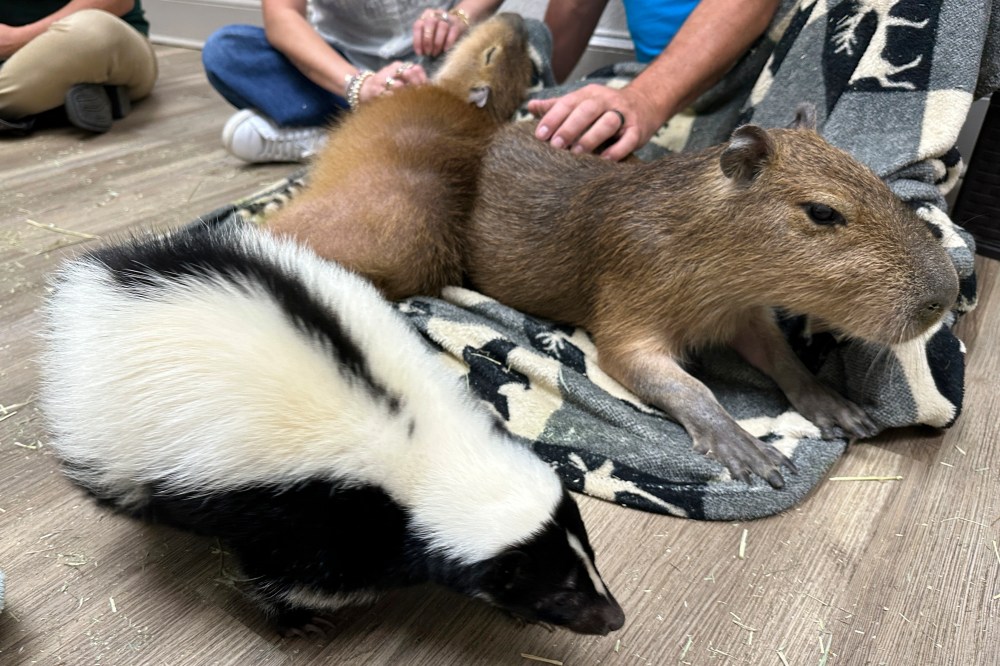
Anyone who may have been bitten or scratched by a sick or abnormally behaving skunk in Vancouver’s West End neighbourhood between Sept. 22 and Oct. 17 is being asked to contact Vancouver Coastal Health for assessment.
The release said anyone who lives outside the region should contact their local health authority for assessment.
This report by The Canadian Press was first published Oct. 21, 2026.