

Final arguments heard in Ontario biker-slaying trial
Key suspect called 'psychopath'
Advertisement
Read this article for free:
or
Already have an account? Log in here »
To continue reading, please subscribe:

Digital Subscription
One year of digital access for only $205*
- Enjoy unlimited reading on winnipegfreepress.com
- Read the E-Edition, our digital replica newspaper
- Access News Break, our award-winning app
- Play interactive puzzles
*First annual payment billed as $205.00 + GST for one year. This annual subscription will automatically renew at $233.00 + GST every 52 weeks (10% off the regular annual price of $259.35). Offer available to new and qualified returning subscribers only. Cancel any time.
To continue reading, please subscribe:
Add Free Press access to your Brandon Sun subscription for only an additional
$1 for the first 4 weeks*
- Enjoy unlimited reading on winnipegfreepress.com
- Read the E-Edition, our digital replica newspaper
- Access News Break, our award-winning app
- Play interactive puzzles
*Your next Brandon Sun subscription payment will increase by $1.00 and you will be charged $17.95 plus GST for four weeks. After four weeks, your payment will increase to $24.95 plus GST every four weeks.
Read unlimited articles for free today:
or
Already have an account? Log in here »
Hey there, time traveller!
This article was published 21/10/2009 (6168 days ago), so information in it may no longer be current.
LONDON, Ont. — Wayne Kellestine is a "psychopath" who, possibly fuelled by drugs, planned and carried out the carnage that saw eight bikers shot dead and stuffed into vehicles in what’s been called Ontario’s largest mass slaying, a defence lawyer said Tuesday.
Court is hearing closing submissions from the lawyers for six men who have pleaded not guilty to eight counts of first-degree murder in the deaths of the Toronto Bandidos biker gang members. Much of the testimony at trial has placed the lion’s share of the blame on Kellestine, and Tuesday’s closing submissions were no different.
"There are monsters among us and Kellestine is one of them," lawyer Christopher Hicks told the jury.
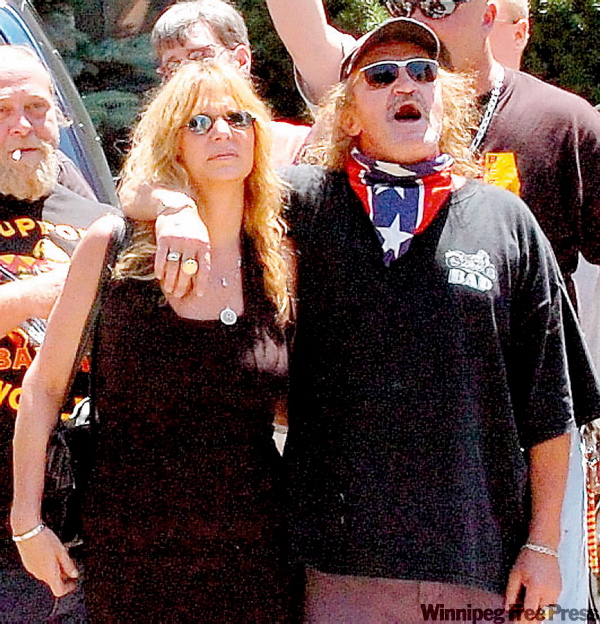
"Kellestine is a psychopath… There are no kinder or gentler words that would be true."
Court has heard that the bikers were invited to the farmhouse of Kellestine, a fellow Toronto Bandido with whom relations were strained, on April 7, 2006, and that seven of the men were led out of Kellestine’s barn, one by one, never to return — a "parade of death," Hicks said.
Accused Michael Sandham took the stand and admitted shooting the first man, Luis Raposo, who then died in a pool of his blood on the barn floor. Sandham had told the court it was because he had a gun in his hand and flinched when Raposo shot first. His lawyer also suggested Sandham shot Raposo in self-defence.
Court heard from two others who were there that night — one a fellow accused and the other a biker who became an informant in exchange for immunity — who said they saw Kellestine shoot some of the men point-blank.
The notion of a plan — a requisite for a first-degree murder conviction — has become central to the case, and in Hicks’ closing address he suggested Kellestine formulated a "spur-of-the-moment" plan to which only fellow accused Sandham and Dwight Mushey were privy.
Evidence has been presented that there were orders from U.S. Bandidos officials for Kellestine to strip the rest of the Toronto members of their Bandido status, and that after doing so he and Sandham would rise within the organization.
But at what point, if any, the plan morphed from a "patch-pulling" to a mass murder has been the subject of several theories presented by the defence in their closing submissions. Hicks, the lawyer for Brett Gardiner, suggested it was when Kellestine, Sandham and Mushey left the barn three times for private meetings after Raposo was shot.
"It was Kellestine’s plan and Kellestine’s plan alone," Hicks said. "Kellestine formulated this plan in the fields of his farm."
— The Canadian Press