Frank McKenna’s reputation stands on its own merits
Advertisement
Read this article for free:
or
Already have an account? Log in here »
To continue reading, please subscribe:

Digital Subscription
One year of digital access for only $205*
- Enjoy unlimited reading on winnipegfreepress.com
- Read the E-Edition, our digital replica newspaper
- Access News Break, our award-winning app
- Play interactive puzzles
*First annual payment billed as $205.00 + GST for one year. This annual subscription will automatically renew at $233.00 + GST every 52 weeks (10% off the regular annual price of $259.35). Offer available to new and qualified returning subscribers only. Cancel any time.
To continue reading, please subscribe:
Add Free Press access to your Brandon Sun subscription for only an additional
$1 for the first 4 weeks*
- Enjoy unlimited reading on winnipegfreepress.com
- Read the E-Edition, our digital replica newspaper
- Access News Break, our award-winning app
- Play interactive puzzles
*Your next Brandon Sun subscription payment will increase by $1.00 and you will be charged $17.95 plus GST for four weeks. After four weeks, your payment will increase to $24.95 plus GST every four weeks.
Read unlimited articles for free today:
or
Already have an account? Log in here »
Hey there, time traveller!
This article was published 19/12/2009 (6111 days ago), so information in it may no longer be current.
Frank McKenna
Beyond Politics
By Harvey Sawler
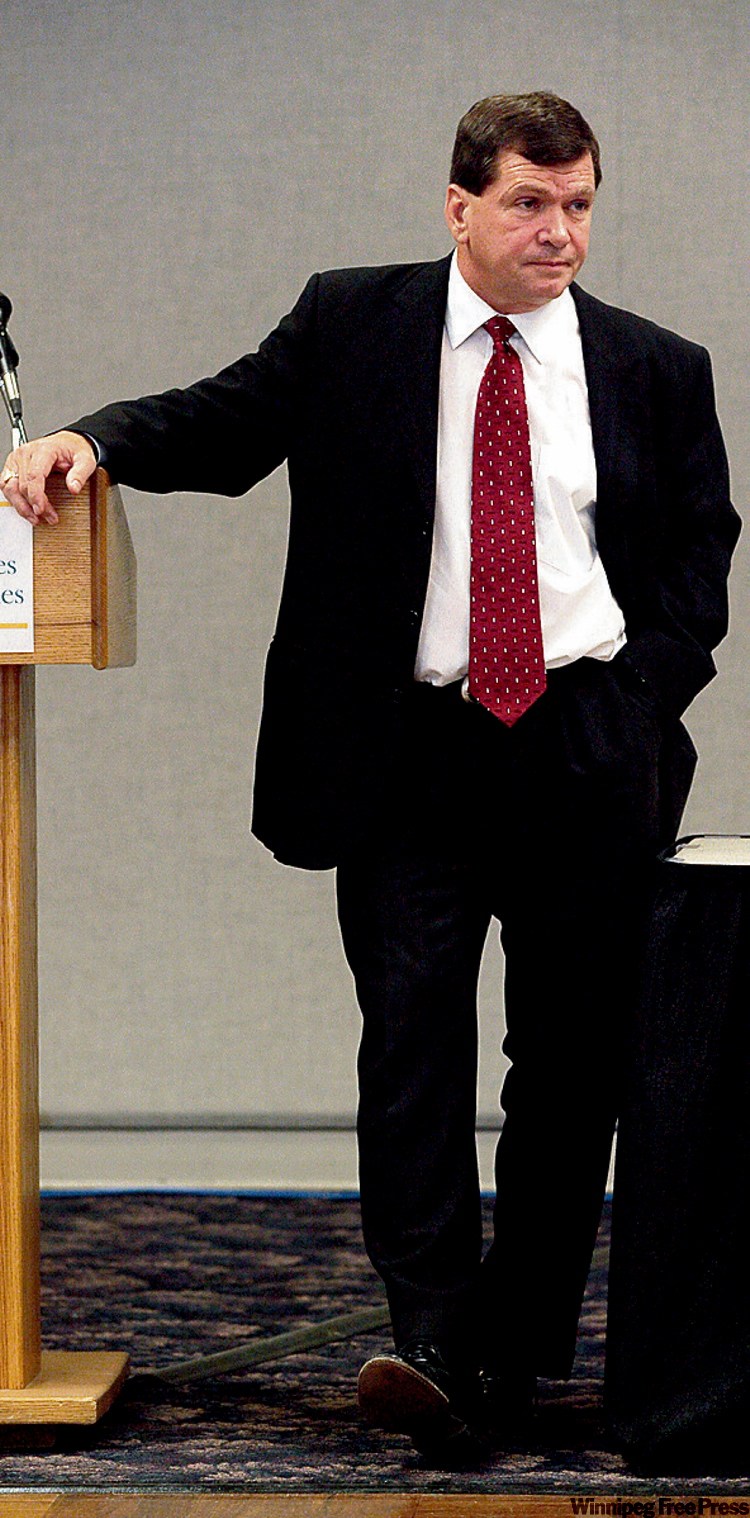
Douglas and McIntyre, 311 pages, $33
Frank McKenna is one of those Canadians frequently referred to as "the best prime minister Canada never had."
This places him in the same territory as Ed Broadbent and Robert Stanfield. When first Paul Martin and then Stéphane Dion quit as Liberal leader, the widespread assumption was that McKenna would contest and win the leadership, and then triumph over that wily fox, Stephen Harper.
It didn’t happen. This volume lays out the origins of the legend and the reasons the premier would not, in the end, play ball.
The author, Charlottetown-based Harvey Sawler, has written widely, but thinks of himself primarily as a tourism writer. This may explain some of the hyperbole, for, while this is not a hagiography, the book is largely uncritical.
McKenna began his political career as leader of the provincial Liberals in New Brunswick at a time when Tory Richard Hatfield reigned supreme. But in 1987, McKenna and his party won every single seat in the legislature, a result which worked wonders for his political profile.
The issues of the day were pumping up the economy and dealing with the unresolved constitutional issues left over from the early part of the 1980s.
The Liberal government did "not so bad" in dealing with the economy, and jobs did materialize. But, as in Manitoba at the same time (under PC Gary Filmon), many new jobs were in the call-centre industry.
The constitutional issue was that of the Meech Lake Accord, an area where he showed a great deal of detachment. He was able to avoid the ignominy of being the man who had scuttled "this historic agreement." The blame fell on Filmon and the new premier of Newfoundland, Clive Wells.
Leaving the premier’s office in 1997, McKenna did very nicely in the private sector. But in 2005, he was appointed Canadian ambassador to the U.S. This ushered in, perhaps, the most fulfilling period of his life.
Sawler is at his best in describing the networking and conniving at this level of politics. Winnipeggers will be fascinated with his stories about the U.S. Embassy role of University of Manitoba graduate Colin Robertson.
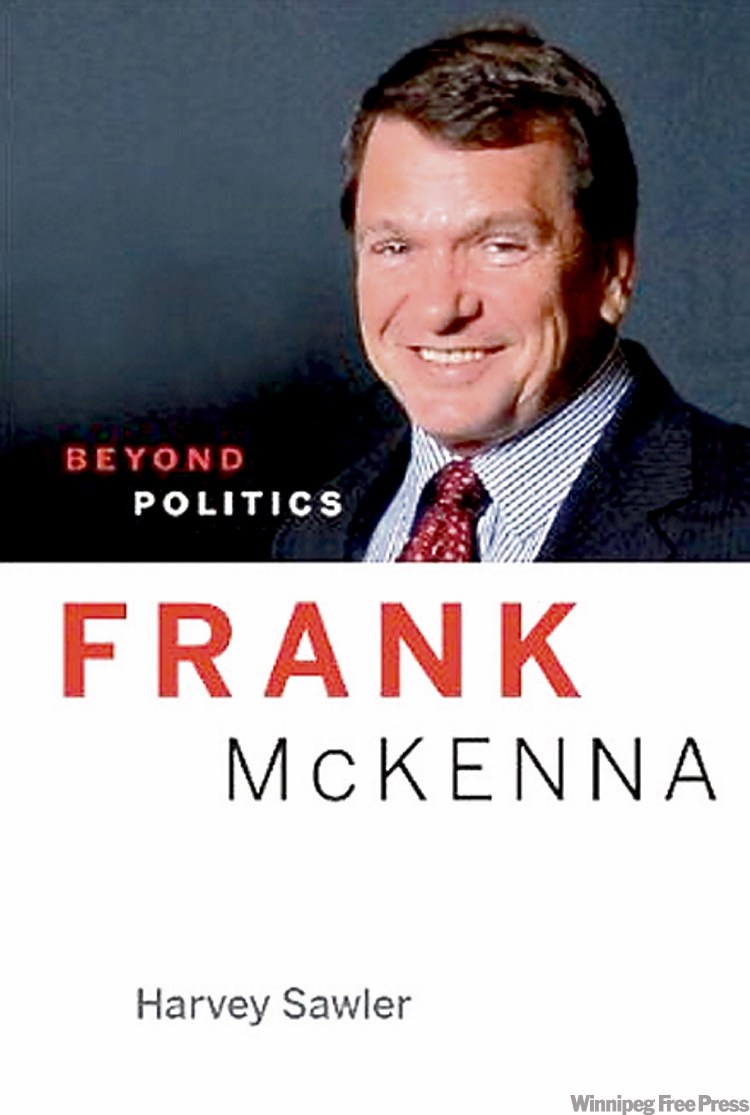
Although only in Washington for a brief time, McKenna proved adept in handling the issues that came before him, and in winning the trust and friendship of American politicians.
The issues of the day included softwood lumber, mad cows, the Devils Lake project and numerous left-over items from the free trade negotiations years before. The friends he made included both Bushes and Bill Clinton.
In assessing McKenna’s personality, Sawler emphasizes his man’s cerebral qualities at the same time as he expands on Ambassador McKenna’s simplicity.

Surprisingly, it appears that McKenna’s favourite politician was no less than Hubert Horatio Humphrey. (It is odd that he fails to mention HHH’s four years as U.S. vice-president.
After being replaced by Michael Wilson shortly after the Harper government was inaugurated in February 2006, McKenna went back to a dynamic world of commerce and community service.
"Best prime minister we never had"? McKenna’s historic reputation scarcely depends on living up to some ill-defined standard.
It is sufficient to say that he served his province and his country well.
Geoff Lambert is a political scientist at St. Paul’s College at the University of Manitoba, where Colin Robertson was one of his students.