

A decade of ups — and downs
Manitoba definitely wasn't a haven of tranquillity
Advertisement
Read this article for free:
or
Already have an account? Log in here »
To continue reading, please subscribe:

Digital Subscription
One year of digital access for only $205*
- Enjoy unlimited reading on winnipegfreepress.com
- Read the E-Edition, our digital replica newspaper
- Access News Break, our award-winning app
- Play interactive puzzles
*First annual payment billed as $205.00 + GST for one year. This annual subscription will automatically renew at $233.00 + GST every 52 weeks (10% off the regular annual price of $259.35). Offer available to new and qualified returning subscribers only. Cancel any time.
To continue reading, please subscribe:
Add Free Press access to your Brandon Sun subscription for only an additional
$1 for the first 4 weeks*
- Enjoy unlimited reading on winnipegfreepress.com
- Read the E-Edition, our digital replica newspaper
- Access News Break, our award-winning app
- Play interactive puzzles
*Your next Brandon Sun subscription payment will increase by $1.00 and you will be charged $17.95 plus GST for four weeks. After four weeks, your payment will increase to $24.95 plus GST every four weeks.
Read unlimited articles for free today:
or
Already have an account? Log in here »
Hey there, time traveller!
This article was published 31/12/2009 (6063 days ago), so information in it may no longer be current.
Putting the past decade under a microscope can burn all sorts of holes in the theory that the Manitoba economy is all about stability and is slow to change.
We were all aware of the powerful shift in global economic dynamics, the rise of the Asian economies and the massive disruption digital technologies are creating.
But Manitobans are probably guilty of being somewhat disinterested in the cacophony of change, preferring to think of this province as a more orderly, controllable burg.
But of course, that’s really not the case.
"ö Arguably the biggest story of the decade was the rise and fall of Canwest Global Communications Corp. The elements of the story include many of the key dynamics that shaped the decade: globalism (some of the company’s most profitable divisions through the decade were in New Zealand and Australia); the 500-channel universe (the company painstakingly grew its digital cable television portfolio); the Internet’s emergence as an information clearinghouse threatening the future of traditional media; and the credit crunch and recession at the end of the decade that has made it almost impossible for heavily leveraged companies to stabilize their balance sheets.
"ö On the other side of the coin, Manitoba Telecom Services turned 100 in 2008 and no longer depends on dial tone in the home and at work for its future prosperity.
Instead it’s now a telco leader in the distribution of television service and its growth products include wireless telephones and high-speed Internet service.
"ö Winnipeg is still the home to the last tractor factory in the country but Buhler Industries, which started the decade in a bitter labour dispute, is now owned by Russian interests. The city remains an ag equipment centre with family-owned MacDon Industries continuing to expand and Ag Growth International growing as if there never was a recession.
"ö Whole industries came and went during the decade. The call centre business was growing like a weed at the beginning of the decade but ended in retreat with Convergys, one of the city’s largest and oldest players, laying off 500 people. The city’s needle trade has been a part of the business fabric of the city since the beginning of the previous century, but in the last decade major employers like Nygard, Western Glove Works and Gemini Fashions dramatically cut local production or went out of business entirely. The hog industry was a star performer in the ’90s but as this decade wound down it has became a money-loosing proposition and is now in dire straights.
"ö It’s hard to believe we have been picking over the bones of the Crocus Investment Fund for six years now. Crocus was a mainstay in the business pages for almost the entire decade — the first half with constructive developments, the second half with news so distracting and harmful it may have single-handedly cast an investment chill across the province that is only now starting to lift.
"ö Aboriginal business interests emerged into the mainstream during the decade. Tribal Council Investment Group continues to operate as one of the few locally focused investment funds. The Aboriginal Chamber of Commerce was formed in Winnipeg in 2004 — the first in the country.
Aboriginal-owned businesses had unprecedented access to construction contracts in the massive Manitoba floodway project and also on the Wuskwatim hydro plant. Manitoba Hydro spent countless years and millions of dollars negotiating equity partnerships with First Nations where Hydro projects encroach on traditional land.
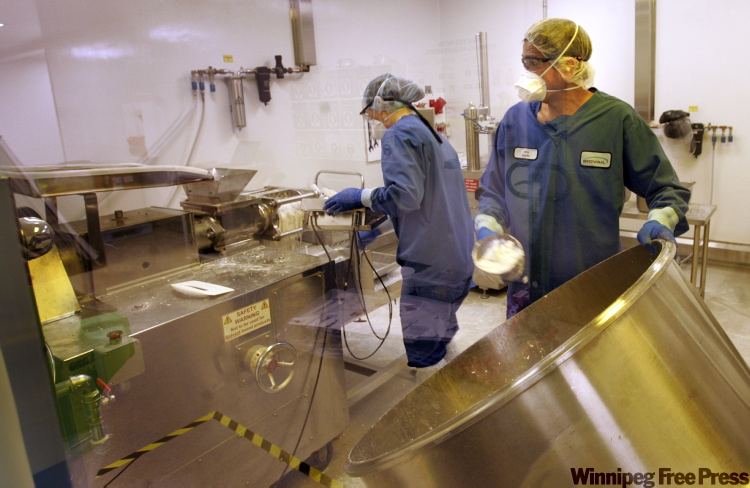
"ö The term "biotech sector" was not even uttered in reference to Winnipeg until about 2002. Since then a real industry has emerged with homegrown companies like Cangene Corp. and Manitoba production facilities for Apotex and Biovail establishing an enduring presence. Several research entities are hard at work on new drugs. The last decade also witnessed one of the classic industry disappointments after a $100 million bet on Medicure’s heart drug eventually proved unsuccessful.
"ö The province experienced its share of promising innovations that could not fully blossom. The Isobord strawboard plant, whose technology may yet be revived some day, closed in the middle of the decade; plans to build an ambitious new combine, the McLeod Harvester, were wound down after exhausting funding possibilities; and the clever Sidetrack Technologies subway tunnel advertising concept also ran out of money and is now an orphaned technology.

"ö In the ’90s it seemed as if nothing was being built in Winnipeg, but the past decade saw a boom of new residential, commercial, industrial and retail construction.
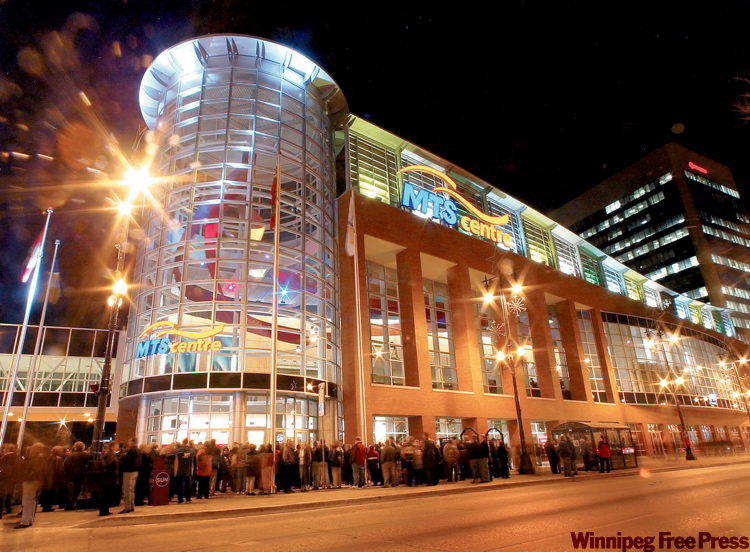
Former premier Gary Doer loved to use the line about the return from near extinction of the construction crane. Billions of dollars of development took place this decade including the MTS Centre, the new airport terminal, the Hydro building, the Canadian Museum for Human Rights, the floodway expansion, the massive retail hub at Kenaston and McGillivray that came into being at the beginning of the decade and the city’s first new rental apartment buildings in many years.
"ö There was further consolidation in the grain industry. Agricore and United Grain Growers merged at the beginning of the decade followed by Saskatchewan Wheat Pool’s acquisition of Agricore in 2007 to form Viterra… in Regina.
The Canadian Wheat Board stood up to political meddling from Ottawa and retained its status as farmers’ single desk wheat and barley marketing agency.
martin.cash@freepress.mb.ca