Presbyterian church served Red River settlers

Advertisement

Advertise with us

In 1854, 42 years after the first Scottish-Presbyterian settlers and first pioneers of the Red River area arrived in what is now Winnipeg, the first Presbyterian church in Western Canada finally opened its doors.

Read this article for free:


By clicking the button above, an account will be created and you will begin to receive some of our recommended newsletters. You may opt out of any newsletter by visiting your Email and Communication Preferences page or by clicking "unsubscribe" at the bottom of any email.

or

Already have an account? Log in here »

To continue reading, please subscribe:

Digital Subscription

One year of digital access for only $1.44 a week*

  • Enjoy unlimited reading on winnipegfreepress.com
  • Read the E-Edition, our digital replica newspaper
  • Access News Break, our award-winning app
  • Play interactive puzzles

*Billed as $5.77 plus GST every four weeks. After 52 weeks, price increases to the regular rate of $19.95 plus GST every four weeks. Offer available to new and qualified returning subscribers only. Cancel any time.

To continue reading, please subscribe:

Add Free Press access to your Brandon Sun subscription for only an additional

$1 for the first 4 weeks*

  • Enjoy unlimited reading on winnipegfreepress.com
  • Read the E-Edition, our digital replica newspaper
  • Access News Break, our award-winning app
  • Play interactive puzzles
Start now

*Your next Brandon Sun subscription payment will increase by $1.00 and you will be charged $17.95 plus GST for four weeks. After four weeks, your payment will increase to $24.95 plus GST every four weeks.

Opinion

Hey there, time traveller!
This article was published 30/01/2010 (6107 days ago), so information in it may no longer be current.

In 1854, 42 years after the first Scottish-Presbyterian settlers and first pioneers of the Red River area arrived in what is now Winnipeg, the first Presbyterian church in Western Canada finally opened its doors.

Landlords, who carried out highland clearances in Scotland in the early 1800s, drove the poor folk of Sutherlandshire and other parts of Scotland away from their homes in order to make way for sheep grazing.

At the urging of the fifth Earl of Selkirk, hundreds of Scottish people left the familiar rolling hills and green glens of their homeland to settle along the Red River here.

Of several promises made to the settlers before they left Scotland, one promise was to enable them to continue to worship and be ministered to by a Presbyterian minister. It would be almost 40 years before this promise would be kept. Until then, the settlers worshipped in the Church of England’s Upper Church, now St. John’s Cathedral, which was built in 1822. The settlers worshipped in that church for the next 30 years.

Repeated appeals from the settlers over the years finally resulted in the Free Church or Presbyterian Church in Canada sending Rev. John Black, who became the first Presbyterian minister in Western Canada, to the Red River area in 1851.

Born in 1818 in Scotland, his family moved to New York when he was 23 and he was ordained in 1851 after graduating in theology from Knox College in Toronto.

Persuaded that same year to go to the needy Red River area, Black agreed to go for a short while only.

The 33-year-old minister arrived by birchbark canoe on the Red River in September 1851. Rev. Black arrived that first day at the home of local sheriff and historian, Alexander Ross. Intending to stay only briefly in the settlement, Black ended up marrying Ross’s daughter, Henrietta, fathered seven children with her and remained in the settlement for the rest of his life.

Earlier in 1851, the Hudson’s Bay Company had granted a plot of land at Frog Plain (just north of today’s Chief Peguis Bridge) and 150 pounds to the Presbyterians for the purpose of building their church.

The 300-member congregation set their hearts upon fashioning their new church on that site after the old church in their homeland of Sutherlandshire, Scotland. They used sleds to carry limestone from Stony Mountain and wood was hand-sawn in preparation for the building, but the ruinous flood of 1852 washed away much of the timbers.

Rev. Black delivered his services that spring at Stony Mountain, where settlers sought refuge from the devastating flood waters using only a stone as his pulpit. This rock is now incorporated into the John Black Memorial United Church on Henderson Highway.

Kildonan Presbyterian Church officially opened its doors in January 1854.

Built with massive stone walls and a four-foot-wide foundation, the church held about 500 people and was as unpretentious on the inside as it was on the outside, in keeping with the Presbyterian tradition of the time. The Scottish stonemason, Duncan McRae, who helped to build Upper and Lower Fort Garry, St. Andrews on the Red, St. Clements and many other churches, supervised the construction of the Kildonan church.

An adjacent manse, or minister’s residence, and a schoolhouse, Nisbett Hall, were also completed, which together, rapidly became the hub of the religious, academic and social life of the Presbyerian community. The first Manitoba College building was built on the site in 1872. It is now the oldest constituent college of the University of Winnipeg.

John Black died in 1882 at the age of 64, and lies buried in the Kildonan cemetery among the settlers whom he served so well.

In the 1980s a larger church was built just north of the old church. This church, now the Kildonan Community Church, incorporates the original Nisbett Hall schoolhouse, which was moved, brick by brick, from its home on the banks of the Red River to the new church where it was attached.

The older church still stands today, not far from the winding Red River, as a testament to the strongly held faith of the settlers who struggled but never gave up on their determination to worship as did their forefathers.

Tours are conducted at this church, which is a provincial heritage site.

Cheryl Girard is a Winnipeg writer.

The Free Press is committed to covering faith in Manitoba through our Religion in the News project. This reporting continues because readers like you step forward to fund it.

Donate now to support our reporting on religion.

Your donation is eligible for a charitable tax receipt. BECOME A FAITH JOURNALISM SUPPORTER

Report Error Submit a Tip

The Free Press acknowledges the financial support it receives from members of the city’s faith community, which makes our coverage of religion possible.
More Stories

Would Canada actually spy on Cuba?

Peter McKenna 5 minute read Preview

Would Canada actually spy on Cuba?

Peter McKenna 5 minute read 2:00 AM CDT

The Globe and Mail recently ran a series of stories on how “Havana syndrome” negatively impacted a number of diplomats working at the Canadian embassy in Cuba. As of this writing, there has been unusual radio silence on the topic from Mark Carney’s governing Liberals.

The reportage also linked the so-called “sonic attacks” or what the Americans call “anomalous health incidents” (and the attendant concussion-like symptoms) to a Russian high-frequency microwave weapon. More importantly, the Globe maintained that Moscow’s retaliation against Canadian officials in Havana was because of their close co-operation with U.S. intelligence agencies in spying on the Cuban government.

Some of the articles claimed that high-tech satellite gear, which was brought into Cuba covertly by U.S. officials, was installed on the roofs of the residences of Canadian diplomats in Havana. Presumably, Canadian officials — or what are sometimes referred to as officers or agents working under the Global Security Reporting Program (GSRP) within the Department of Global Affairs — were using this satellite technology to collect intelligence on human sources in Cuba.

The secret information was eventually passed on to Canada’s partners in the so-called “Five Eyes” alliance (the U.S., Australia, Britain and New Zealand). It’s worth pointing out that this wouldn’t have been the first time Canadian officials in Cuba were funnelling sensitive intelligence to their U.S. counterparts.

Read
2:00 AM CDT

‘Make eye contact’: police urge extra caution amid spate of vehicle-pedestrian collisions

Scott Billeck 4 minute read Preview

‘Make eye contact’: police urge extra caution amid spate of vehicle-pedestrian collisions

Scott Billeck 4 minute read Updated: Yesterday at 6:00 PM CDT

Winnipeg police are urging motorists and pedestrians to exercise extra caution at intersections following a rash of collisions across the city, including one that claimed the life of a woman.

“Having the right of way does not make you safe,” Insp. Helen Peters of the Winnipeg Police Service’s traffic division said during a news conference Monday morning.

“This isn’t just about who’s at fault. This is about keeping each other safe and doing everything we can as drivers, motor vehicles or pedestrians to help each other out and navigate our roads.”

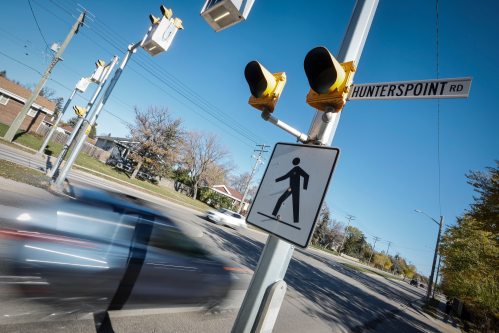
Police said a woman in her 80s was struck by a vehicle that failed to stop at a stop sign while turning right onto eastbound Roblin Boulevard from Hunterspoint Road on Sept. 29.

Read
Updated: Yesterday at 6:00 PM CDT

Consumer apprehension grows as US retailers adopt AI-assisted pricing tools

Dee-ann Durbin And Anne D'innocenzio, The Associated Press 7 minute read Preview

Consumer apprehension grows as US retailers adopt AI-assisted pricing tools

Dee-ann Durbin And Anne D'innocenzio, The Associated Press 7 minute read Updated: Yesterday at 6:00 PM CDT

U.S. consumers aren't just frustrated with high prices. They're angry and confused about the increasingly high-tech ways that restaurant chains and major retailers are setting those prices.

Digital price tags are rapidly replacing paper ones in grocery aisles. Artificial intelligence tools help businesses decide what to charge by predicting how customers might respond. Terms like “dynamic pricing” and “surveillance pricing” are stirring anxiety on social media, where users wonder if different people are getting different prices for the same product.

Americans have grown accustomed to changing prices when booking flights, hotel rooms and rides, but the prospect of everyday spending shaped by algorithms they don’t understand and personal data they may not realize they’re sharing has touched a nerve.

“There are major tensions happening right now between who’s really going to have the power with some of these algorithms and usage of bots and AI: the companies or the shopper,” said Katie Thomas, who leads an internal consumer behavior think tank at the management consulting firm Kearney.

Read
Updated: Yesterday at 6:00 PM CDT

Sex assault charges stayed after youth admits lying

Tessa Adamski 4 minute read Yesterday at 8:28 PM CDT

BRANDON — Charges were stayed mid-trial for a man accused of sexually assaulting a teenage girl in an abandoned house after the youth admitted during cross-examination she was lying about what happened.

Defence lawyer Bob Harrison peppered the 15-year-old victim with questions in Brandon’s Court of King’s Bench on Monday, suggesting she feared getting in trouble if she now spoke the truth, despite previously telling police his client, 22, inappropriately touched her in a July 2024 incident.

The girl, who can’t be identified due to a publication ban, initially held firm in her testimony, saying, “No, he did touch me inappropriately,” before Harrison posed the question again, and she answered, “I can’t really understand.”

Harrison asked the question a third time, saying, “I’m going to suggest that you’re concerned that if you tell the truth that he didn’t touch you, that you may get in trouble. That’s the situation, isn’t it?”

Presbyterian church served Red River settlers

By Cheryl Girard 4 minute read Saturday, Jan. 30, 2010

In 1854, 42 years after the first Scottish-Presbyterian settlers and first pioneers of the Red River area arrived in what is now Winnipeg, the first Presbyterian church in Western Canada finally opened its doors.

Landlords, who carried out highland clearances in Scotland in the early 1800s, drove the poor folk of Sutherlandshire and other parts of Scotland away from their homes in order to make way for sheep grazing.

At the urging of the fifth Earl of Selkirk, hundreds of Scottish people left the familiar rolling hills and green glens of their homeland to settle along the Red River here.

Of several promises made to the settlers before they left Scotland, one promise was to enable them to continue to worship and be ministered to by a Presbyterian minister. It would be almost 40 years before this promise would be kept. Until then, the settlers worshipped in the Church of England's Upper Church, now St. John's Cathedral, which was built in 1822. The settlers worshipped in that church for the next 30 years.

Feds hold back on stable health funding

Editorial 4 minute read Preview

Feds hold back on stable health funding

Editorial 4 minute read 2:00 AM CDT

The federal government wants provinces to improve health care, expand treatment services and find better ways to deliver care. But it’s refusing to provide provincial governments with the one thing they need most to plan for the future: stable, predictable funding.

That’s not a serious way to manage public health care.

Provincial and territorial health ministers gathered in Winnipeg last week hoping to secure long-term federal funding commitments to help manage mounting pressures on their health-care systems. They left with little more than a promise to keep talking.

Ottawa agreed to extend a $1.2-billion annual funding agreement for mental-health and substance-use treatment, home care and community care by one year. That’s welcome, but it hardly provides the certainty provinces need to maintain existing programs, never mind expand services to meet growing demand.

Read
2:00 AM CDT