Theme may be same, but its impact is less
Advertisement
Read this article for free:
or
Already have an account? Log in here »
To continue reading, please subscribe:

Digital Subscription
One year of digital access for only $205*
- Enjoy unlimited reading on winnipegfreepress.com
- Read the E-Edition, our digital replica newspaper
- Access News Break, our award-winning app
- Play interactive puzzles
*First annual payment billed as $205.00 + GST for one year. This annual subscription will automatically renew at $233.00 + GST every 52 weeks (10% off the regular annual price of $259.35). Offer available to new and qualified returning subscribers only. Cancel any time.
To continue reading, please subscribe:
Add Free Press access to your Brandon Sun subscription for only an additional
$1 for the first 4 weeks*
- Enjoy unlimited reading on winnipegfreepress.com
- Read the E-Edition, our digital replica newspaper
- Access News Break, our award-winning app
- Play interactive puzzles
*Your next Brandon Sun subscription payment will increase by $1.00 and you will be charged $17.95 plus GST for four weeks. After four weeks, your payment will increase to $24.95 plus GST every four weeks.
Read unlimited articles for free today:
or
Already have an account? Log in here »
Hey there, time traveller!
This article was published 17/04/2010 (5946 days ago), so information in it may no longer be current.
The Promise of Rain
By Donna Milner
McArthur & Company, 320 pages, $25
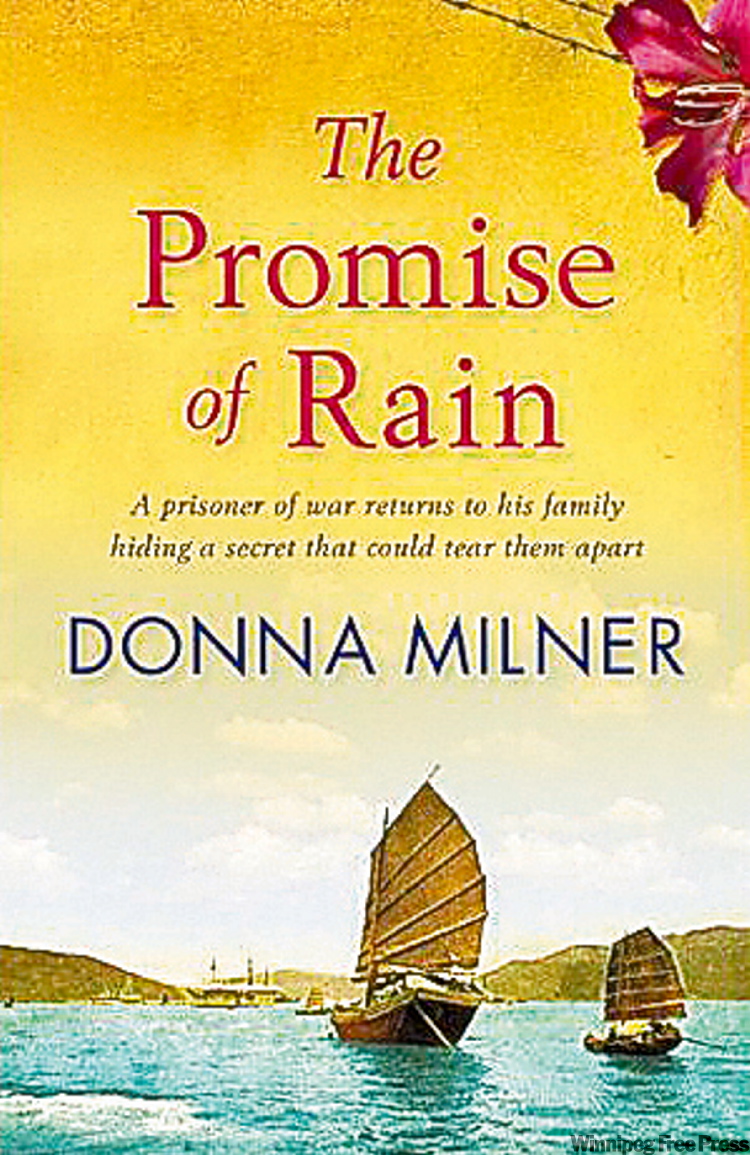
BRITISH Columbia literary writer Donna Milner’s debut novel, After River, enjoyed well-deserved success when it was published in 2008.
That novel was highly readable and moving as it deftly examined the way in which one family’s past, and small errors in judgment and miscommunications, influenced its future happiness.
Milner’s second novel follows the same theme, but does so with significantly less impact. The Promise of Rain, in fact, reads more like a first novel by an untried and unpolished author.
Surprisingly, given the great achievement of After River, it is sappy, predictable and formulaic, relying too much on scenarios that are either too simplistic or unrealistic.
This is unfortunate because Milner actually uses the novel to examine a critical chapter in Canadian history, one that has largely been ignored by the literary community. That chapter is the devastating experiences of Canadian soldiers who fought with the British in the Far East during the Second World War.
Milner’s storyteller is Ethie Coulter, an 11-year-old living with her parents and two brothers in Southern Vancouver in the early ’60s.
"Even though our home in Fraserview, like all of the look-alike veterans’ homes in that South Vancouver neighbourhood, was commonly referred to as a wartime house, the war was seldom mentioned there," Edie narrates. "It lay in wait … ready to emerge without warning and grasp my father in its silent grip."
Unbeknown to her, Ethie’s father Howard had spent four years in a Japanese prisoner-of-war camp following the battle for Hong Kong. Young, brash and confident, he had proudly volunteered for the Winnipeg Grenadiers, but within months of signing up the realities of war and the depravities of imprisonment had turned him into a broken, ineffective and uncommunicative man.
It is only years later when Ethie’s mother Lucy dies suddenly under mysterious circumstances that Ethie begins to fully comprehend the causes of her father’s emotional alienation and the role that she must play in order to keep her family intact.

This role includes looking out for her mentally disabled brother Kipper, pouring her father’s bottles of whisky down the sink, and befriending a young Asian woman who has suddenly started hanging out near the Coulter home. This woman, predictably, shares a secret with Ethie’s father, a secret rooted in their shared experiences under Japanese occupation.
Considering the amount of emotional trauma that Ethie has experienced, her reactions, actions and level-headedness just do not ring true. The scenes dealing with her mother’s death at the beginning of the book, and those dealing with Kipper’s disappearance at the end of the book, are especially frustrating.
In between these pages, Milner, through Ethie, touches on the naïveté of young soldiers, the ravages of war, and the lingering effects of guilt and grief. Such topics usually make for great reading. In this case they do not.
Sharon Chisvin is a Winnipeg writer who read After River for six hours straight on an overseas flight.