Spirit of the North in focus
Exhibit a move toward upcoming Inuit Art Centre

Advertisement
Read this article for free:
or
Already have an account? Log in here »
To continue reading, please subscribe:

Digital Subscription
One year of digital access for only $205*
- Enjoy unlimited reading on winnipegfreepress.com
- Read the E-Edition, our digital replica newspaper
- Access News Break, our award-winning app
- Play interactive puzzles
*First annual payment billed as $205.00 + GST for one year. This annual subscription will automatically renew at $233.00 + GST every 52 weeks (10% off the regular annual price of $259.35). Offer available to new and qualified returning subscribers only. Cancel any time.
To continue reading, please subscribe:
Add Free Press access to your Brandon Sun subscription for only an additional
$1 for the first 4 weeks*
- Enjoy unlimited reading on winnipegfreepress.com
- Read the E-Edition, our digital replica newspaper
- Access News Break, our award-winning app
- Play interactive puzzles
*Your next Brandon Sun subscription payment will increase by $1.00 and you will be charged $17.95 plus GST for four weeks. After four weeks, your payment will increase to $24.95 plus GST every four weeks.
Read unlimited articles for free today:
or
Already have an account? Log in here »
Hey there, time traveller!
This article was published 01/10/2016 (3613 days ago), so information in it may no longer be current.
The largest collection of Inuit art in the world just got a little larger.
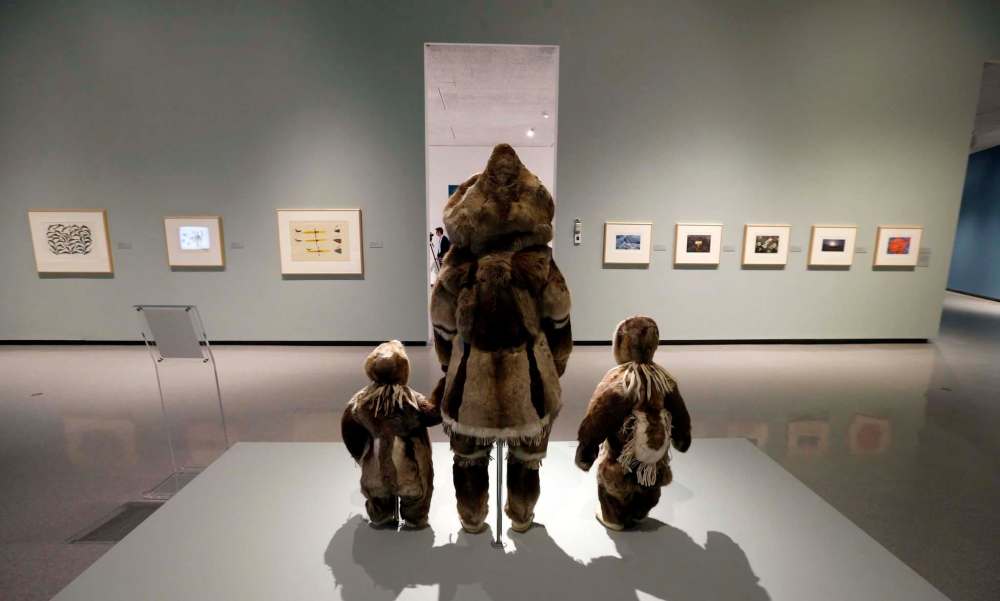
On Friday, the Winnipeg Art Gallery opened an exhibit called Our Land: Contemporary Art from the Arctic, made up of 100 pieces selected from 7,300 pieces of Inuit art — from carvings to wall hangings to photographs to clothing — that had been held in storage in Yellowknife since the formation of Nunavut in 1999.
And the people of Nunavut say the collection will go a long way in educating not just Canadians, but the world about their rich, isolated culture.
“It’s a huge sense of relief to know it’s finally in its new home,” said Pauloosie Suvega, the deputy minister of culture and heritage for the Nunavut government. “There’s always anxiety when (art) is in transit. Some of it, such as carvings made out of bones, can be very fragile.”
For the last two decades, much of the collection had been kept in storage at the Prince of Wales Northern Heritage Centre in Yellowknife, N.W.T. There was no facility with the proper climate controls to keep the artifacts in Nunavut.
The collection was meticulously documented and transported in 300 crates that travelled more than 6,000 kilometres from Yellowknife, Iqualuit, Peterborough and Toronto, arriving in Winnipeg last March on a five-year loan. The WAG’s total collection of Inuit art now totals more than 20,000 pieces.
In the next few years, the collection that makes up Our Land will go from relative obscurity in storage to displays in Paris and Washington, said WAG director and CEO Stephen Borys.
“Much of it hasn’t been seen by the public ever,” Borys said. “Much of it hasn’t been seen since 1999. We feel some responsibility, but it’s an incredible opportunity.
“We love the collection,” he added. “It augments our own collection. It actually gives us a chance to compare works, compare artists.
“It’s a great chance for scholars, researchers and curators to have at their fingertips the largest collection in the world. But it’s also great for a class of Grade 8 students.”
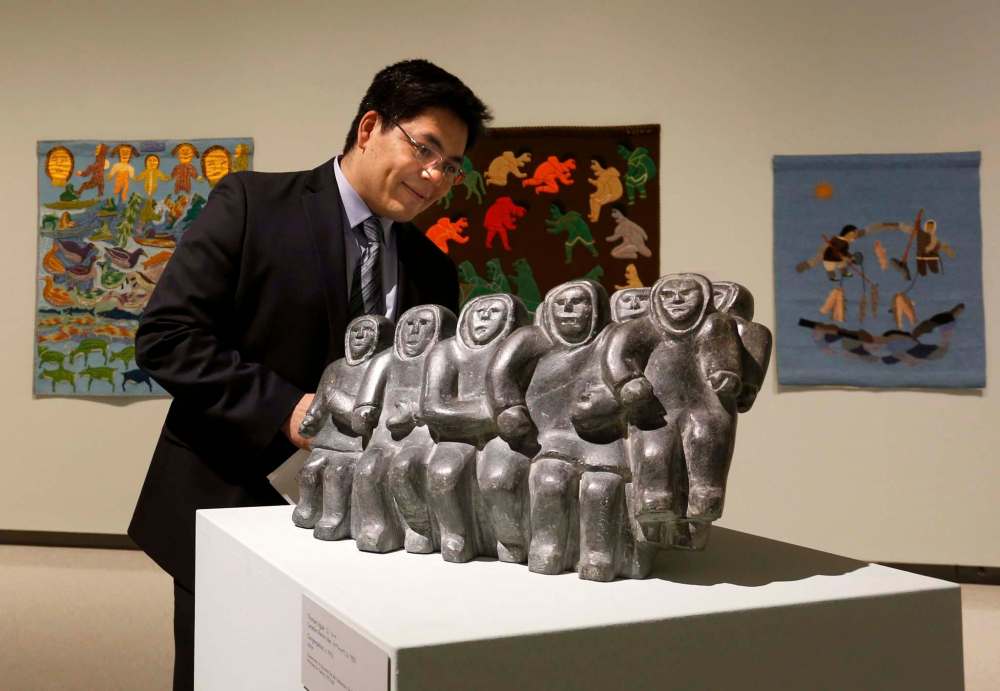
The exhibit will run until the new year.
Our Land — which is “Nunavut” in Inuktitut — is described by both WAG officials and Nunavut representatives as a visual journey not just across the North, but across time.
“Art has a great way of telling a cultural story, a human story and a community story,” Suvega noted. “We wanted to share that part of our history. Inuit have always been a very studied society. We look forward to the world learning more about our art and our people.”
Borys said the agreement to house the artifacts is a continuing partnership between the WAG and Nunavut government moving toward the construction of the $60-million Inuit Art Centre, which is expected to break ground next year.

Borys said the Nunavut collection will expand the foundation for collaboration with the North, including art and museum residencies, education programming, the exhibition and promotion of Inuit art and shared economic development and tourism.
“It’s a cultural exchange, but it’s also an economic exchange,” he said.
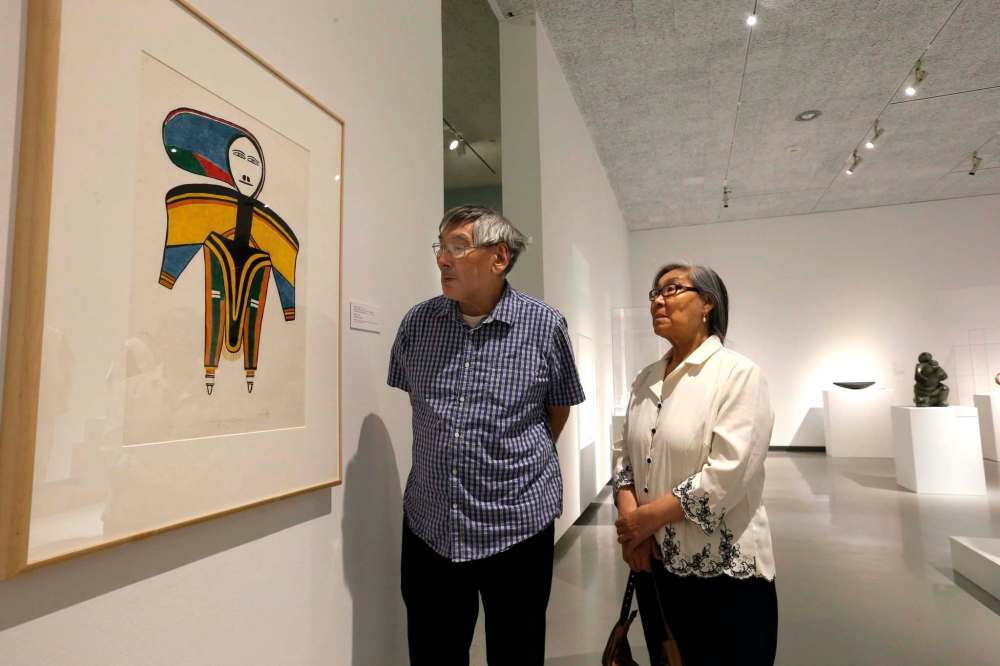
Suvega also welcomed the collaboration between Nunavut and the WAG with “optimism and opportunity.” But Friday the deputy minister was simply drinking in the view.
In conjunction with the exhibit, the WAG is offering several programs, including: the Oct. 12 Art for Lunch featuring a behind-the-scenes talk with Radovan Radulovic, WAG head of conservation; on Nov. 2, WAG Inuit Art Curator Darlene Coward Wight will conduct an exhibition tour; Feast features a traditional Arctic meal paired with a tour of Our Land Oct. 12 and Nov. 17.
randy.turner@freepress.mb.ca
Randy Turner
Reporter
Randy Turner spent much of his journalistic career on the road. A lot of roads. Dirt roads, snow-packed roads, U.S. interstates and foreign highways. In other words, he got a lot of kilometres on the odometer, if you know what we mean.
Our newsroom depends on a growing audience of readers to power our journalism. If you are not a paid reader, please consider becoming a subscriber.
Our newsroom depends on its audience of readers to power our journalism. Thank you for your support.
Randy Turner
Reporter
Randy Turner spent much of his journalistic career on the road. A lot of roads. Dirt roads, snow-packed roads, U.S. interstates and foreign highways. In other words, he got a lot of kilometres on the odometer, if you know what we mean.
Our newsroom depends on a growing audience of readers to power our journalism. If you are not a paid reader, please consider becoming a subscriber.
Our newsroom depends on its audience of readers to power our journalism. Thank you for your support.
Advertisement Advertise With Us
Advertisement Advertise With Us
History
Updated on Saturday, October 1, 2016 9:28 AM CDT: Photos added.
Updated on Saturday, October 1, 2016 3:20 PM CDT: Number of pieces fixed.
Updated on Saturday, October 1, 2016 5:59 PM CDT: Adds video