Burlesque, jazz, hip-hop dance blend with classical in bawdy Elton John ballet
Advertisement
Read this article for free:
or
Already have an account? Log in here »
To continue reading, please subscribe:

Digital Subscription
One year of digital access for only $205*
- Enjoy unlimited reading on winnipegfreepress.com
- Read the E-Edition, our digital replica newspaper
- Access News Break, our award-winning app
- Play interactive puzzles
*First annual payment billed as $205.00 + GST for one year. This annual subscription will automatically renew at $233.00 + GST every 52 weeks (10% off the regular annual price of $259.35). Offer available to new and qualified returning subscribers only. Cancel any time.
To continue reading, please subscribe:
Add Free Press access to your Brandon Sun subscription for only an additional
$1 for the first 4 weeks*
- Enjoy unlimited reading on winnipegfreepress.com
- Read the E-Edition, our digital replica newspaper
- Access News Break, our award-winning app
- Play interactive puzzles
*Your next Brandon Sun subscription payment will increase by $1.00 and you will be charged $17.95 plus GST for four weeks. After four weeks, your payment will increase to $24.95 plus GST every four weeks.
Read unlimited articles for free today:
or
Already have an account? Log in here »
Hey there, time traveller!
This article was published 02/03/2017 (3476 days ago), so information in it may no longer be current.
Alberta Ballet’s bold and bawdy Love Lies Bleeding has been one of the brightest — and flashiest — crown jewels in its audience-pleasing series of contemporary ballets.
The opportunity to see the wildly theatrical show that’s had audiences throughout North America buzzing since its 2009 première in Calgary is not one to be missed, nor is the rare sighting of another major Canadian ballet company appearing in our city.
The 101-minute production (including intermission) choreographed by Alberta Ballet artistic director Jean Grand-Maître is inspired by the glorious rise and fall — and rise again — of British pop superstar Sir Elton John, who gave his stamp of approval for the homoerotic work.
The loosely-based narrative based on 14 of John’s songs co-written with Bernie Taupin follows its lead character “Elton Fan,” who morphs into his pop hero and descends into excesses of sex, drug, and alcohol in his desperate search for self-acceptance, including his own homosexuality.
But Grand-Maître’s libretto also provides a cautionary tale about the perils of superstardom, as well as being a potent story of the redemptive power of love.
One of the best reasons to see this show is Alberta Ballet’s magnetic principal dancer Kelley McKinlay (alternating with Garrett Groat) who knocks it out of the park in the lead role. The charismatic artist, who’s in his 15th season with the troupe, dances with all the vigour of a pumped-up teenager, while making his character wholly his own.
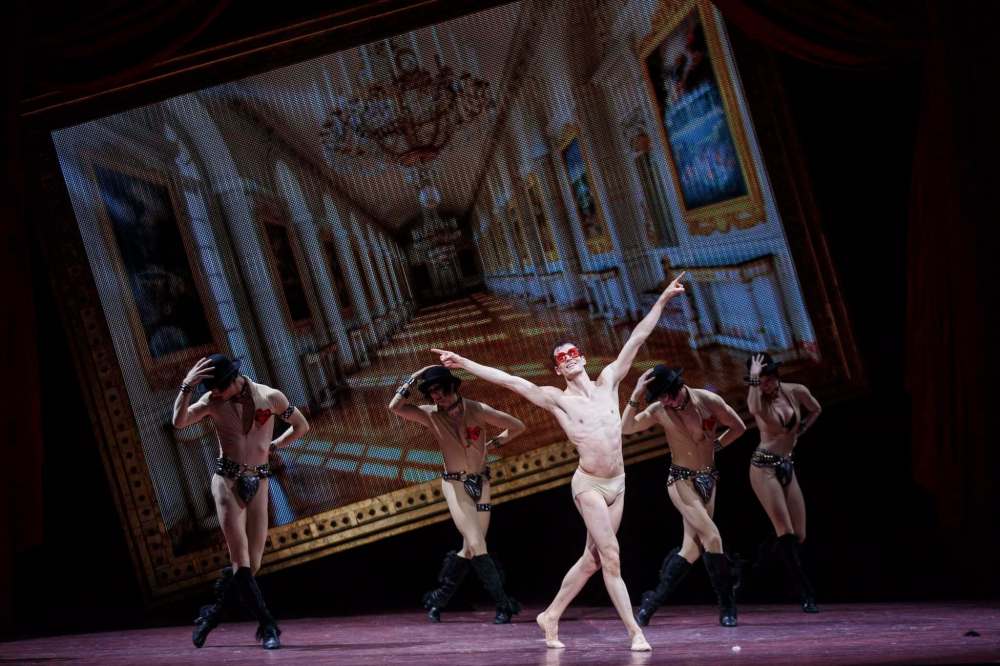
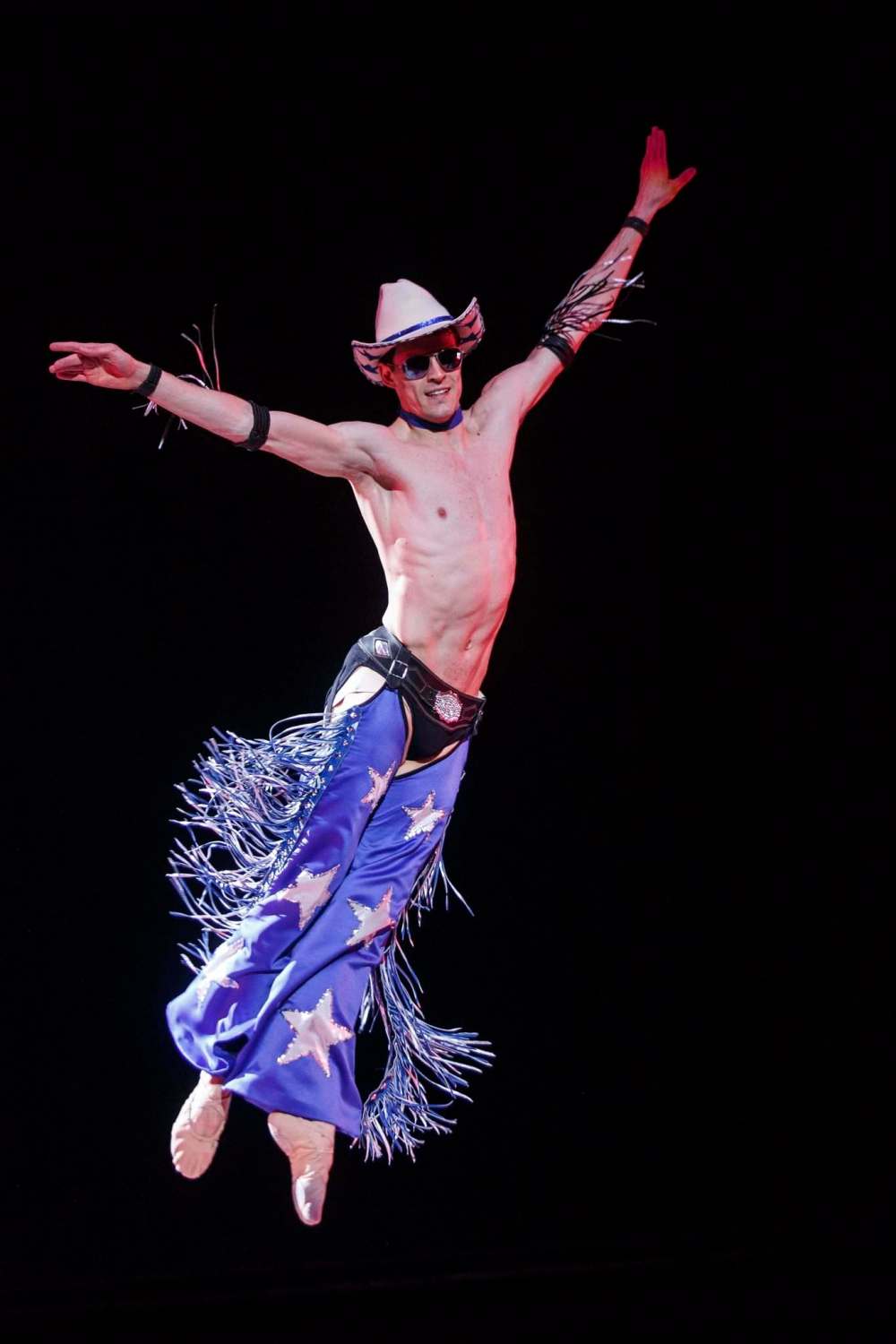
Set in an abandoned theatre, the show-within-a-show begins with “Elton Fan” garbed in the first of Martine Bertrand’s eye-popping costumes, a glittery, skin-tight baseball uniform, who literally springs into the roots of John’s fame during opening number Bennie and the Jets, flanked by a rhinestone-encrusted team of seven “Baseball Corps” dancers.
There’s no Elton John character per se, although Grand-Maître effectively uses a leitmotif of a young child (RWB School Recreational Division student Zachary Zegalski, alternating with Miles Ehlers) who circles the stage on an old-fashioned tricycle to evoke John’s persona.
Grand-Maître’s now-revised choreography is a mosh pit of Bob Fosse stylings, burlesque, jazz, hip-hop, and social dance (breakdance, hand jive, line dance, etc.) blended with classical ballet technique, including a cheeky nod to Swan Lake’s cygnets.
There are copious bump ‘n’ grind moves, pelvic swivels and thrusts, and more flesh than seen on a local ballet stage in an entire season. However, an abundance of unison movement akin to jazz class combinations also invariably weakens the smaller ensemble sections of trios, quartets, and sextets, with precious little pointe work for ballet purists.
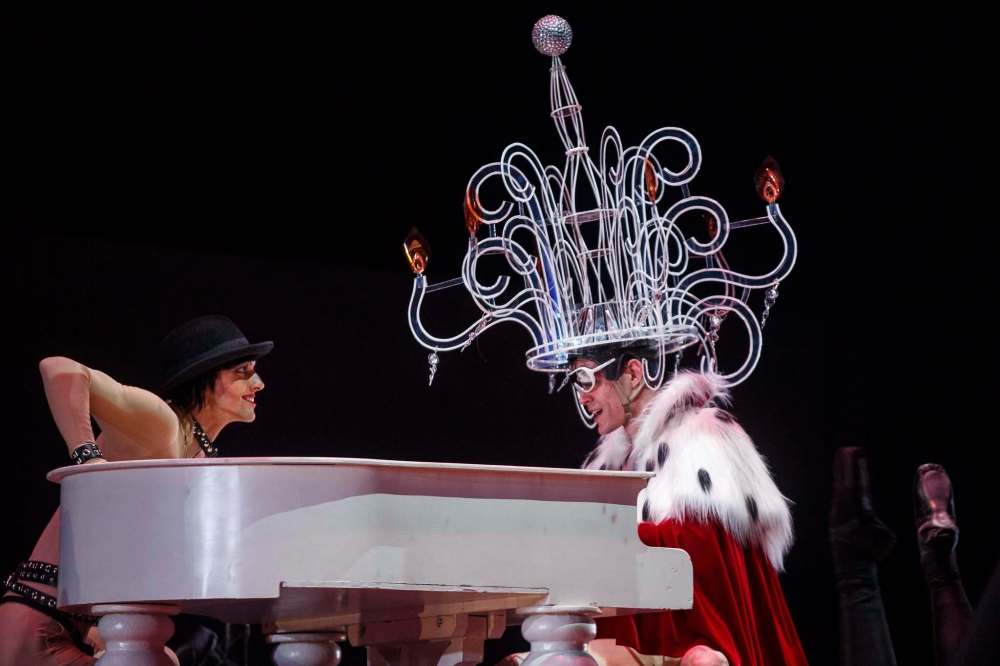
The transitions between each section, including onstage costume changes for McKinlay, are mostly handled well, albeit some prove overly lengthy.
One highlight is the menacing (though still wickedly sexy) “Demonics” sextet (featuring former RWB dancers Serena Sandford and Catherine Rutherford) who appear throughout like Bowler-hatted bats from hell, taunting and teasing Elton Fan into submission with their sadomasochistic-styled riding crops, and blow white “cocaine” powder into his face out of ornate jewel boxes.
Others include “The Drags,” a trio of stiletto-teetering drag queens during Believe, and cryptically, four bewigged, gilded gladiators who appear during Madman Across the Water and effortlessly swing McKinlay over their heads like a ragdoll.

Some of the show’s most powerful moments occur during its two male duets. Sixty Years On, performed by Groat and Nicolas Pelletier as the Lovers represent both hope for Elton Fan, who watches the duo from the side, as well as a chilling visual testament to the deadly threat of AIDS, symbolized by a gleaming sword that hangs above the duo.
The ballet’s beating heart is The Bridge, with McKinlay joined by Groat’s character simply called “David,” depicting John’s real-life partner, Canadian filmmaker David Furnish. Their intimate pas de deux is performed with utter conviction, balancing tender, inter-connected movement with raw, male athleticism. Their prolonged kiss becomes the elixir for John’s emotional torment, as well as propels the narrative into its all-guns-blazing finale Saturday Night’s Alright for Fighting performed by the entire company that even got the crowd of 722 clapping along.
Grand-Maître goes for the emotional jugular as well. As a winged McKinlay is suspended in a harness above the stage like a wounded Icarus during The King Must Die, Zegalski suddenly pelts out from the wings on his tricycle like a life flashback to John’s lost innocence. The effect is harrowing.
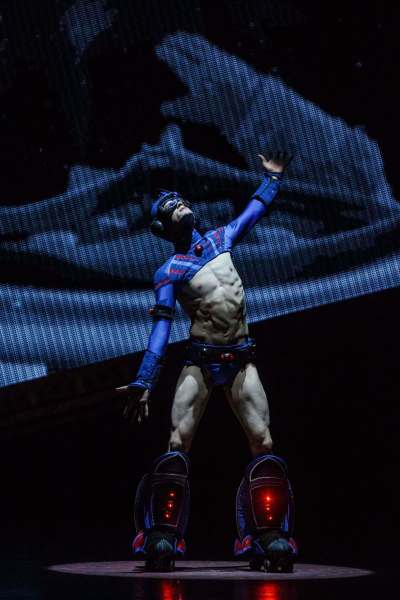
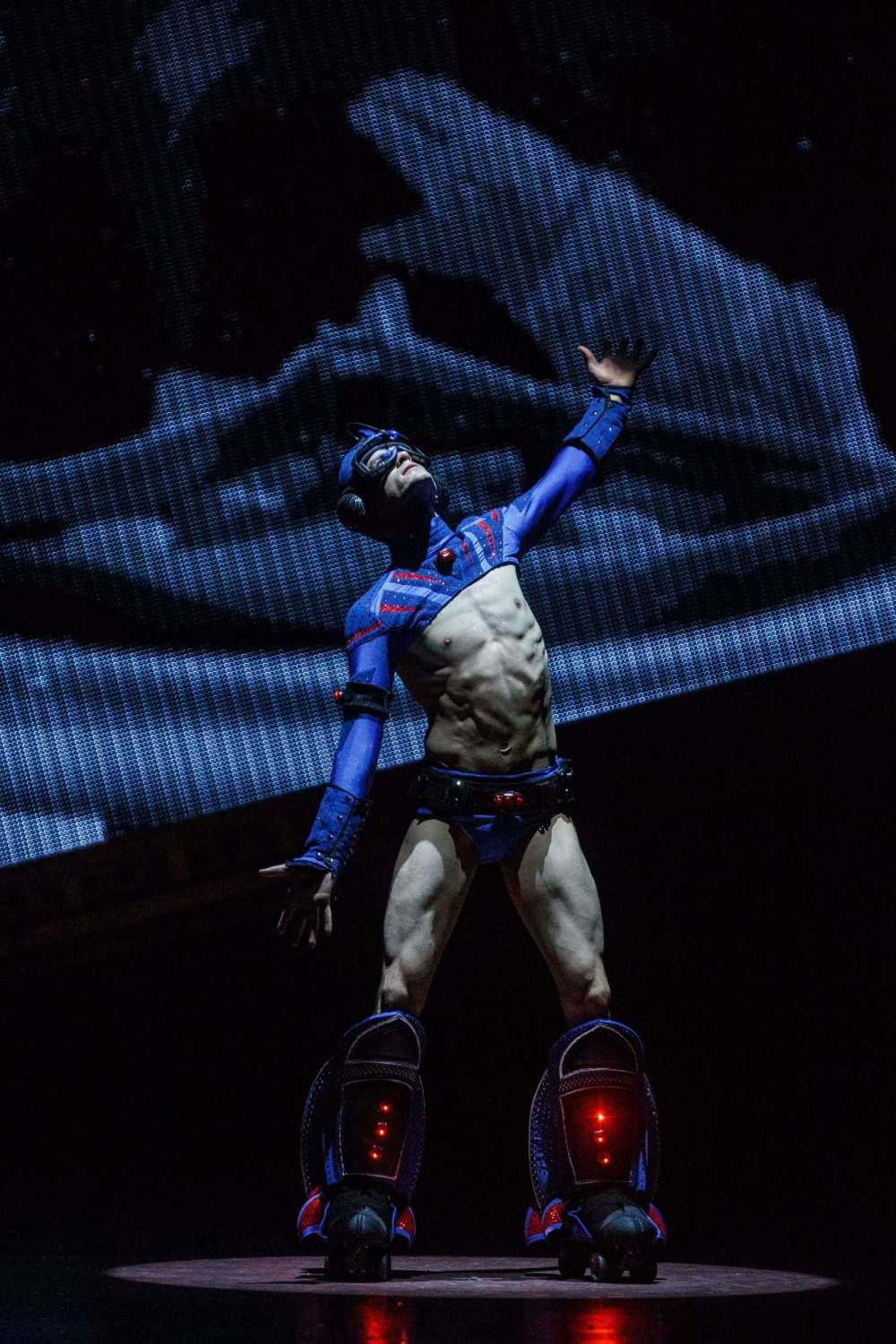
But where the show excels is its outrageous, over-the-top spectacle, including several scenes that elicited open gasps from the audience. Rocket Man is performed against a night sky where McKinlay, festooned with red LED lights, shoots across the stage on rollerblades, while a chorus spin and twirl like shooting stars.
holly.harris@shaw.ca
Holly Harris writes about music for the Free Press Arts & Life department.
Our newsroom depends on a growing audience of readers to power our journalism. If you are not a paid reader, please consider becoming a subscriber.
Our newsroom depends on its audience of readers to power our journalism. Thank you for your support.