There will be blood, and perhaps sweet awareness

Advertisement
Read this article for free:
or
Already have an account? Log in here »
To continue reading, please subscribe:
Digital Subscription
One year of digital access for only $1.44 a week*
- Enjoy unlimited reading on winnipegfreepress.com
- Read the E-Edition, our digital replica newspaper
- Access News Break, our award-winning app
- Play interactive puzzles
*Billed as $5.77 plus GST every four weeks. After 52 weeks, price increases to the regular rate of $19.95 plus GST every four weeks. Offer available to new and qualified returning subscribers only. Cancel any time.
To continue reading, please subscribe:
Add Free Press access to your Brandon Sun subscription for only an additional
$1 for the first 4 weeks*
- Enjoy unlimited reading on winnipegfreepress.com
- Read the E-Edition, our digital replica newspaper
- Access News Break, our award-winning app
- Play interactive puzzles
*Your next Brandon Sun subscription payment will increase by $1.00 and you will be charged $17.95 plus GST for four weeks. After four weeks, your payment will increase to $24.95 plus GST every four weeks.
Read unlimited articles for free today:
or
Already have an account? Log in here »
Hey there, time traveller!
This article was published 19/01/2021 (2106 days ago), so information in it may no longer be current.
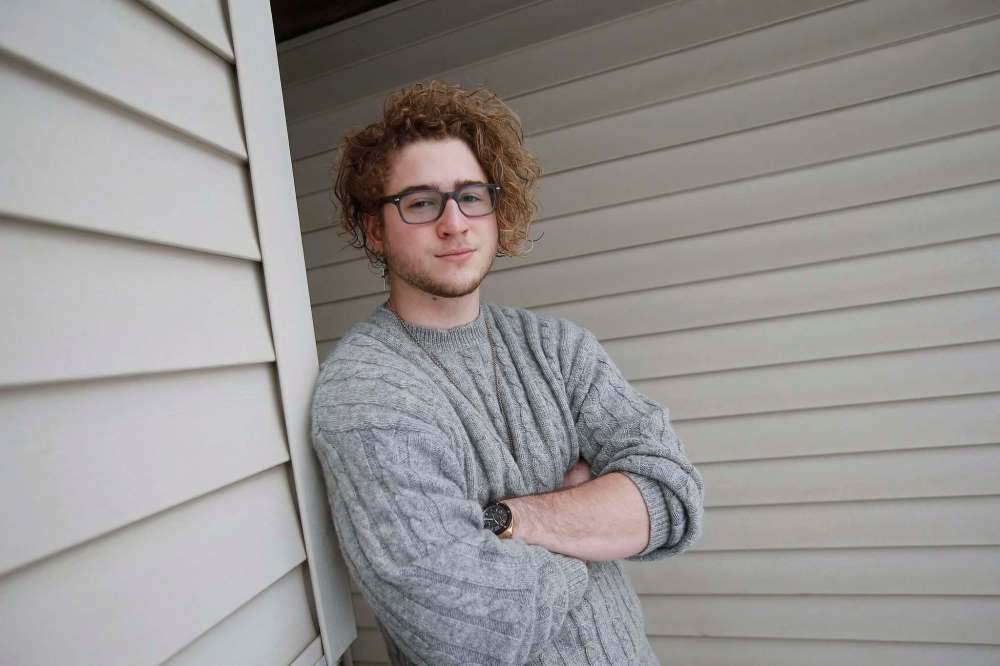
For the first time in his 18 years, Mac Fontaine’s parents are sleeping through the night.
The Winnipeg teen took a night-shift job at a grocery store during the pandemic in part so that he could manage his blood-sugar levels on his own. Like many living with Type 1 diabetes, he has to test his blood every three hours. If the glucose levels dip too low — especially while he’s asleep — the consequences could be deadly.
That means pricking his fingers at least eight times a day to squeeze out a drop of blood onto a test strip; he and his parents have done it more than 5,000 times since he was diagnosed at five years old.
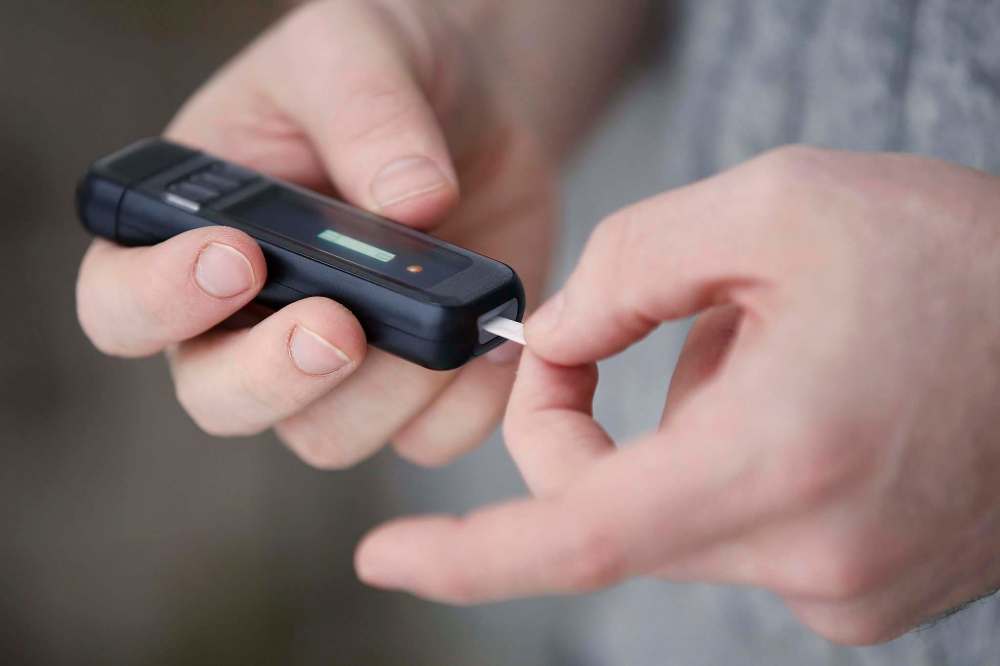
“I’ve done it so much, to the point where I actually don’t have fingerprints,” he says lightly.
He’s among more than 20 Manitobans — diabetics and their families and caregivers — who are calling on local politicians to experience a day in the life of a Type 1 diabetic by testing their own blood 10 times over the course of 24 hours.
The Great Manitoban Finger Prick Challenge aims to convince political leaders that provincial health-care coverage needs to be expanded to cover the cost of medical technology that automatically and more reliably measures blood sugar.
As of Monday, 12 MLAs — including newly appointed Mental Health Minister Audrey Gordon and opposition party leaders — have agreed to participate. They’re being asked to use donated test kits on themselves at times when diabetics would typically have to test — such as before eating or exercising — and record the results on video.
Organizers hope MLAs will see the need for Manitoba’s provincial health plan to start covering continuous glucose monitors, says Trevor Kirczenow, whose nine-year-old son Matthew was diagnosed with Type 1 diabetes a year-and-a-half ago.
“Some people have private health coverage through their employment, but folks have been losing that due to pandemic job losses, and some people have no coverage at all, some insurance companies just don’t include that in their plans, so lots of people are paying out of pocket for it,” Kirczenow says, adding it was “heartbreaking” to see many families post in a private Facebook group over the past few months saying they’d lost their private benefits and couldn’t afford their usual supplies to manage diabetes.
The devices, commonly called CGMs, use sensors embedded in the skin to deliver blood-sugar readings every few minutes, and send an alarm to the user or their caregiver as soon as levels drift out of whack. They cost $300 per month, roughly the same price as insulin pump supplies. The pumps themselves cost thousands, and are covered in Manitoba for children until they reach 18.
“There’s a lot of things that people don’t see and don’t know,” about living with Type 1 diabetes, Fontaine says, noting his parents still have to test his blood while he’s asleep during the day.
Now that he’s an adult, Fontaine is facing the reality of paying those expenses on his own. He doesn’t have a CGM, and more Pharmacare coverage would really help, he says.
“It’d be a huge relief financially. I’m just 18, I still only work part-time, so I honestly don’t make enough money to be able to cover everything that I would need in a year,” he says.
His mother, Jenn Fontaine, says she’s relieved not to have to wake up at midnight, 3 a.m., and 6 a.m. every day to test her son’s blood, but she’d worry less if he had a CGM, since blood sugar is affected by so many different factors, even temperature.
“I think most people are under the (impression) that the fluctuations are their fault, like they ate something. They don’t understand that hormone fluctuations, anxiety fluctuations, feeling under the weather… all of those things impact them just as much as food,” Jenn Fontaine says.
“It’s not that he snuck a piece of cake and that’s why his blood (sugar level) is not good.”

The monitors aren’t just a “cool gadget,” according to Diabetes Canada, which considers them potentially life saving for the majority of people with Type 1 diabetes and some with Type 2. The national organization says Canada lags behind other countries in coverage of these devices. Yukon provides full coverage of CGMs, and there is partial coverage in Ontario and Quebec, while Saskatchewan recently announced plans to cover the cost of the devices.
Even without the monitors, Type 1 diabetics still face annual expenses of up to $15,000 if they don’t have coverage and health benefits, says Kimberley Hanson, Diabetes Canada’s federal affairs executive director, who noted CGMs have been shown to prevent more expensive health costs for provinces down the line.
“These devices, we believe, can be if not cost-neutral, pretty close to it,” Hansen says. “We have to look at it from a bit more holistic of a perspective than I think most jurisdictions have done yet.”
katie.may@freepress.mb.ca
Twitter: @thatkatiemay
Katie May is a multimedia producer for the Free Press.
Our newsroom depends on a growing audience of readers to power our journalism. If you are not a paid reader, please consider becoming a subscriber.
Our newsroom depends on its audience of readers to power our journalism. Thank you for your support.
Katie May is a multimedia producer for the Free Press.
Our newsroom depends on a growing audience of readers to power our journalism. If you are not a paid reader, please consider becoming a subscriber.
Our newsroom depends on its audience of readers to power our journalism. Thank you for your support.
Advertisement Advertise With Us
Advertisement Advertise With Us
History
Updated on Tuesday, January 19, 2021 6:54 PM CST: An earlier version of this story misstated the cost of insulin pumps and didn't make clear that Fontaine's parents still have to test his blood sugar while he's asleep.