Seas the day Journalist-playwright says the time is now to focus on ways to save the Earth’s oceans
Read this article for free:
or
Already have an account? Log in here »
To continue reading, please subscribe:

Digital Subscription
One year of digital access for only $205*
- Enjoy unlimited reading on winnipegfreepress.com
- Read the E-Edition, our digital replica newspaper
- Access News Break, our award-winning app
- Play interactive puzzles
*First annual payment billed as $205.00 + GST for one year. This annual subscription will automatically renew at $233.00 + GST every 52 weeks (10% off the regular annual price of $259.35). Offer available to new and qualified returning subscribers only. Cancel any time.
To continue reading, please subscribe:
Add Free Press access to your Brandon Sun subscription for only an additional
$1 for the first 4 weeks*
- Enjoy unlimited reading on winnipegfreepress.com
- Read the E-Edition, our digital replica newspaper
- Access News Break, our award-winning app
- Play interactive puzzles
*Your next Brandon Sun subscription payment will increase by $1.00 and you will be charged $17.95 plus GST for four weeks. After four weeks, your payment will increase to $24.95 plus GST every four weeks.
Read unlimited articles for free today:
or
Already have an account? Log in here »
Hey there, time traveller!
This article was published 05/03/2022 (1613 days ago), so information in it may no longer be current.
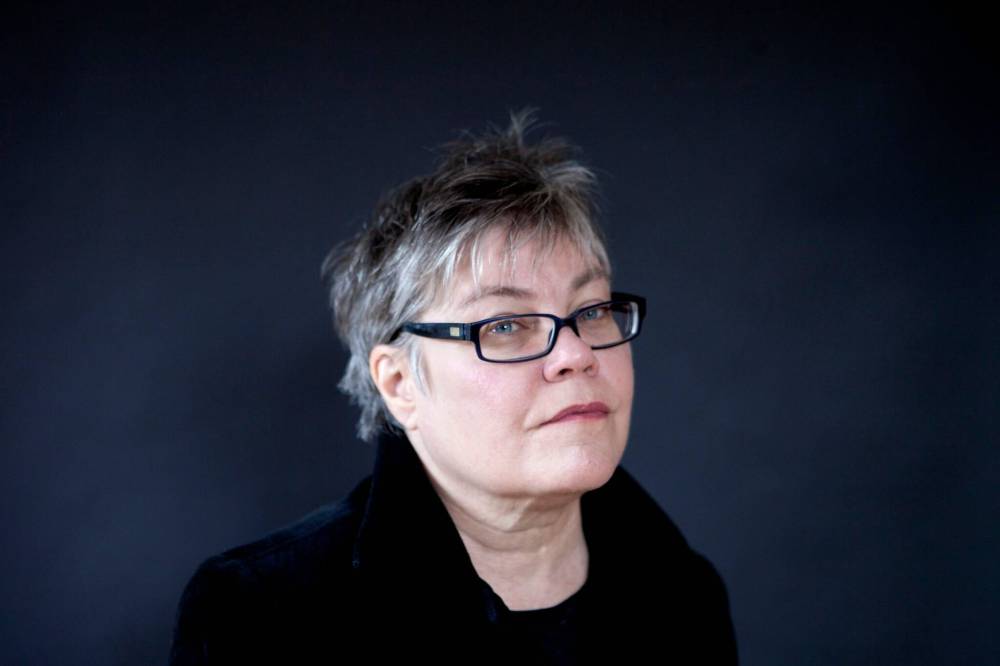
Alanna Mitchell’s calm tone belies the serious nature of her words.
“If everything on land were to die tomorrow, everything in the ocean would be fine, but if everything in the ocean dies, nothing on land will survive,” Mitchell says in her mellifluous voice.
Mitchell has a pleasant way of delivering the harshest of truths; our 30-minute phone conversation renders me speechless as she drops terrifying facts about climate change, and more specifically, how our dependence on fossil fuels has caused the acidification of the ocean.
In 2005, Mitchell, a journalist, author and playwright, embarked on 13 journeys over three years, travelling across the world’s oceans with marine biologists and scientists in an effort to understand how this vast body of water, containing 99 per cent of the living space on this planet, works.
What she discovered on her travels was sobering; humans have released so much carbon dioxide (CO2) into the atmosphere that it’s being absorbed by the ocean, resulting in altered pH levels.
To put it simply: oceans are now 30 per cent more acidic than they have been in 55 million years.
“I am actually terrified of the ocean; I am afraid of water,” Mitchell admits, laughing.
“It took a lot to get me to go on these journeys; it was just sheer curiosity. I needed to understand how it all worked and the only way I could do that was to go in it and on it.
“The oceans are a primary life support system on the planet. We use it as a transport route, we fish in it but we really don’t think about how it functions in our daily lives.”
And now it’s in danger, all down to our love for fossil fuels, Mitchell says, noting that it’s time to change to solar power and wind energy.
“We are putting CO2 into the atmosphere roughly 100 times faster than any other known time in history,” she explains. “We are burning fossilized remains of plants and animals and ancient carbon is going up into today’s atmosphere.
“We need to switch it and we know how to do this. It’s not mysterious — we know how to get our energy sources from non-fossil places. There are nature-based solutions which have emerged in the last 20 years. If we let nature do it our planet has the capacity to heal itself from the carbon assault.”
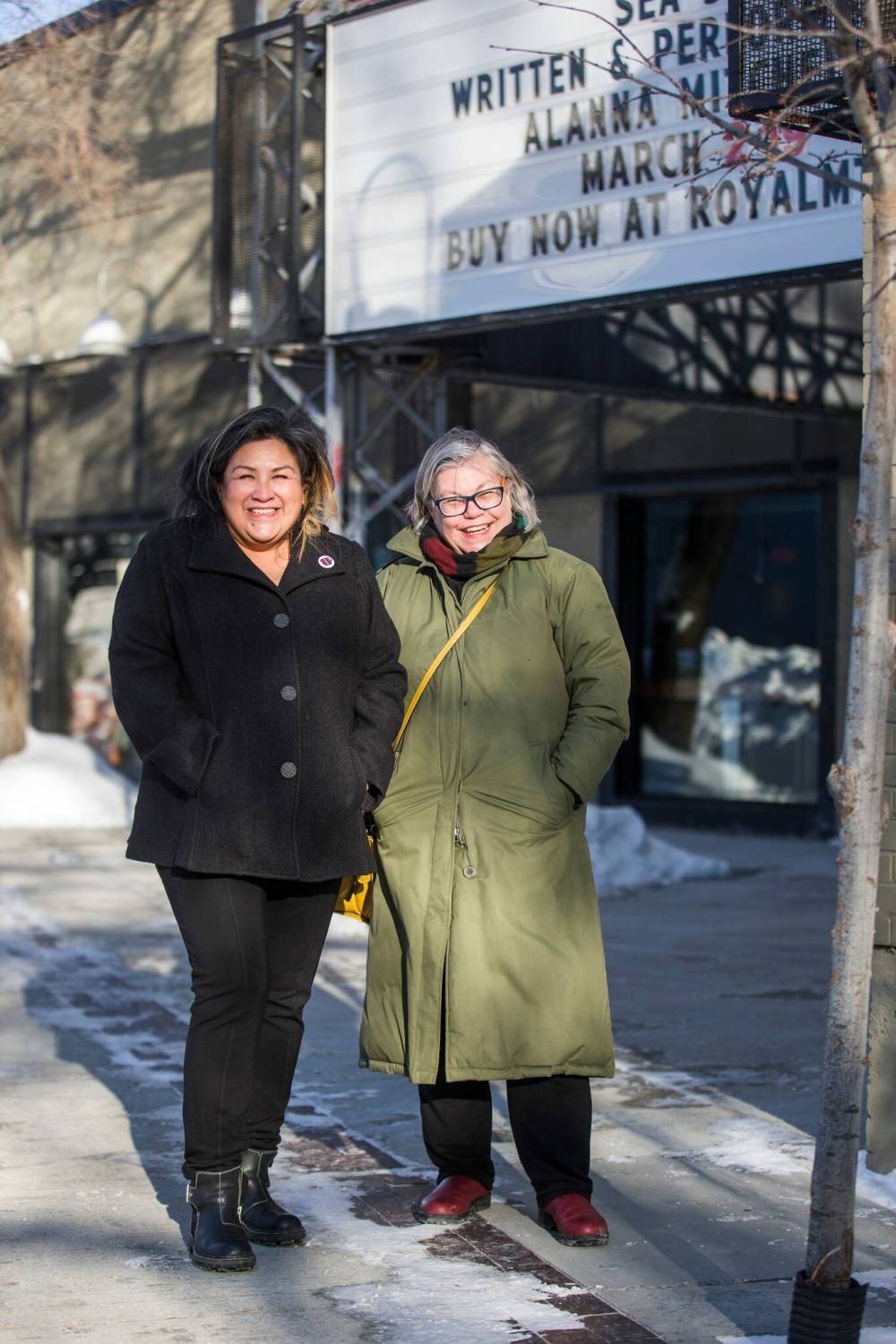
Mitchell’s experiences shaped her 2009 book Sea Sick — The Global Ocean Crisis, which in turn inspired her one-woman monologue currently being performed at Royal Manitoba Theatre Centre as as part of its climate-change program The Bridge: Our Only Earth.
“The play is very old-fashioned. I’m telling the story of some of the grand adventures I went on with scientists such as marine biologist and oceanographer Sylvia Earle, coral reef biologist Nancy Knowlton, marine ecologist/geologist Joanie Kleypas, senior scientist Carol Turley, who is one of the word’s experts on ocean acidification, and Tim Flannery, author of The Weather Makers, a study on human-induced climate change.”
During the hour-long performance Mitchell hopes to transport her Manitoba audience to the Galapagos islands, Panama, Plymouth, the Gulf of Mexico, Puerto Rico and finally, the bottom of the ocean.
This will be the first time Mitchell, who grew up in Regina, performs in the Prairies.
“I love being back here; it’s very meaningful. The Prairies infuse this play about the sea and I am able to find connections between the ocean and the Prairies… everything was once ocean.”
Sea Sick is one of two live events being performed during The Bridge’s run, the other being What You Won’t Do For Love, a film exploring the lives and loving partnership of environmentalists David Suzuki and Tara Cullis.
“It is really exciting to have live performances. We weren’t sure if we were going to be allowed to because of the restrictions but now that they have been eased, there will be in-person audiences and it will be cool to see the buzz,” says Anishinaabe/Mohawk writer and producer Kim Wheeler, who is curating the program.
There are also digital-only productions including panel talks, an interactive climate-change installations and an immersive workshop piece which culminates in a community bike-ride at Little Red Library.
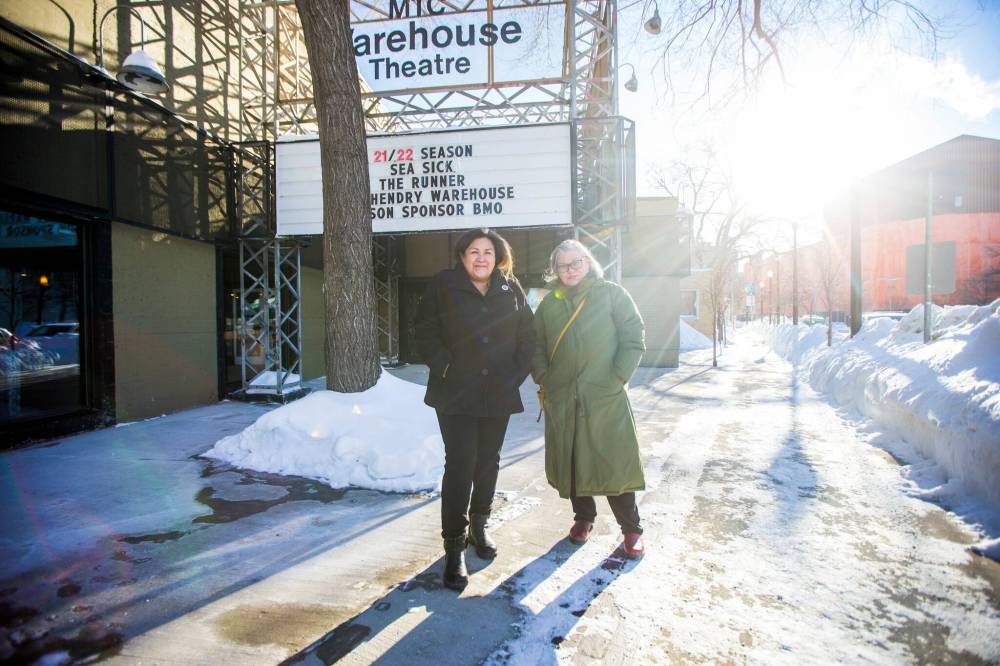
Wheeler feels this year’s theme of tackling climate change is timely.
“As humans, we are wrecking this planet. And it feels like big business doesn’t care. There is a saying in the Indigenous community: When the last tree has been cut down, the last fish caught, the last river poisoned, only then will we realize that one cannot eat money.
“But I also hold out hope that we can turn things around like we did with the ozone layer.”
Mitchell is also hopeful, despite all that she’s seen.
“I’ve been through all the despair; it doesn’t get us where we need to go. This is an extraordinary moment in our species history and there is joy in that. We have such an opportunity for change. My goal with the play is to explain the stakes of what we are up against — and inspire people to do what they can do.
“I would never limit our imagination as a species to tackle this. It’s not game over yet and the play shows that.”
The Bridge: Our Only Earth runs at Royal Manitoba Theatre Centre until March 19. Tickets for Sea Sick start at $22.25 and can be purchased from the royalmtc.ca.
Twitter: @nuchablue

AV Kitching is an arts and life writer at the Free Press. She has been a journalist for more than two decades and has worked across three continents writing about people, travel, food, and fashion. Read more about AV.
Every piece of reporting AV produces is reviewed by an editing team before it is posted online or published in print — part of the Free Press‘s tradition, since 1872, of producing reliable independent journalism. Read more about Free Press’s history and mandate, and learn how our newsroom operates.
Our newsroom depends on a growing audience of readers to power our journalism. If you are not a paid reader, please consider becoming a subscriber.
Our newsroom depends on its audience of readers to power our journalism. Thank you for your support.
Related Articles
Journalist delivers dramatic facts about world’s oceans