Pinawa survivalist nabs top prize on rugged reality show
Juan Pablo Quiñonez spent 78 days on his own in the wilderness — and emerged $500,000 richer

Advertisement
Read this article for free:
or
Already have an account? Log in here »
To continue reading, please subscribe:

Digital Subscription
One year of digital access for only $205*
- Enjoy unlimited reading on winnipegfreepress.com
- Read the E-Edition, our digital replica newspaper
- Access News Break, our award-winning app
- Play interactive puzzles
*First annual payment billed as $205.00 + GST for one year. This annual subscription will automatically renew at $233.00 + GST every 52 weeks (10% off the regular annual price of $259.35). Offer available to new and qualified returning subscribers only. Cancel any time.
To continue reading, please subscribe:
Add Free Press access to your Brandon Sun subscription for only an additional
$1 for the first 4 weeks*
- Enjoy unlimited reading on winnipegfreepress.com
- Read the E-Edition, our digital replica newspaper
- Access News Break, our award-winning app
- Play interactive puzzles
*Your next Brandon Sun subscription payment will increase by $1.00 and you will be charged $17.95 plus GST for four weeks. After four weeks, your payment will increase to $24.95 plus GST every four weeks.
Read unlimited articles for free today:
or
Already have an account? Log in here »
Hey there, time traveller!
This article was published 10/08/2022 (1489 days ago), so information in it may no longer be current.
He walked into a survival show expecting nothing.
Eleven weeks later, Pinawa’s Juan Pablo Quiñonez emerged from the bush victorious on History channel’s Alone after spending 78 days by himself in the wilderness to claim top spot as Season 9 champion.
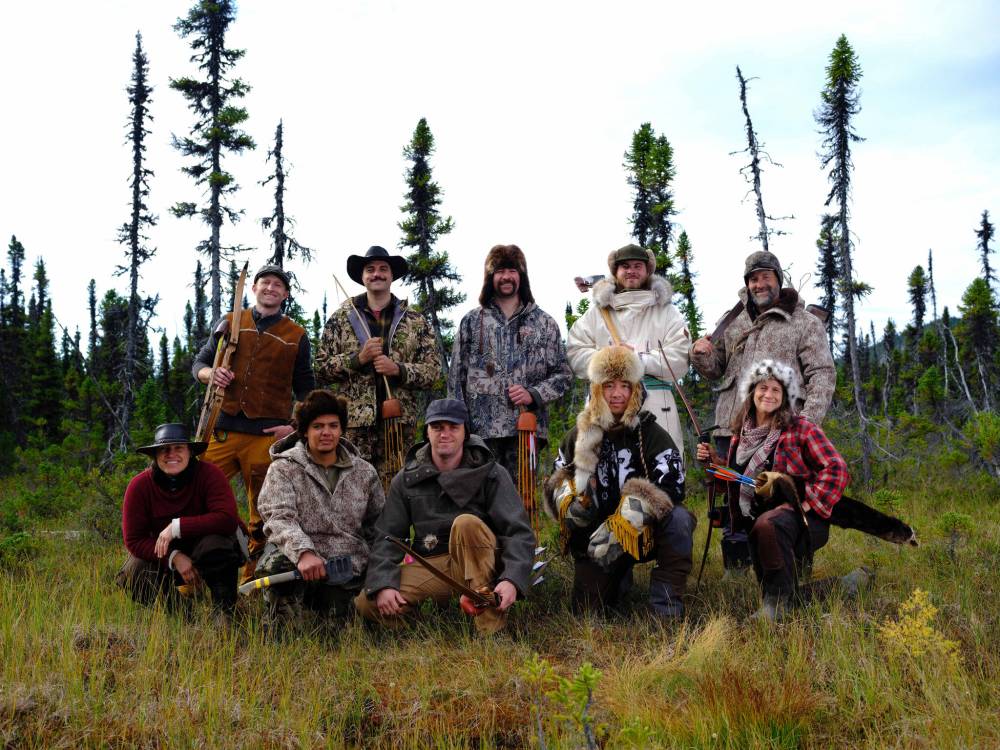
Touted as the ultimate test of human will, the premise of Alone is simple: 10 survivalists, each equipped with 10 items of their choosing, are dropped in separate locations of a remote area where they have to survive in total isolation, with hopes of outlasting everyone else to claim $500,000 in prize money.

Supplied
In order to prepare for his time in the wilderness, Juan Pablo Quiñonez shot his bow 200 times a day and put on weight prior to being left to his own devices in Labrador.
Set down by helicopter on the banks of Labrador’s Big River, deep in polar bear territory, Quiñonez, a survival specialist and wilderness first responder, is no stranger to a life cut off from civilization having embarked on similar adventures before.
In 2016, together with his partner Jennifer Ford, he paddled into the boreal forest of Manitoba with the intention of spending half a year there. In 2019, Quiñonez spent 100 days in solitude during the winter, using his hunting and gathering skills to keep himself alive. This latest expedition proved to be equally as challenging.
“I had this idea that I am just going to go and give it my all. When you have that commitment, when you jump into something like that… it’s wild. It’s a jump into the abyss. It’s one of the most exciting things I have ever done,” Quiñonez recalls in a Zoom interview Monday.
“When he first told me he was going to be on the show it was super exciting,” Ford adds. “It’s something that he’s worked so hard and so long for and I was overwhelmed with excitement. It was hard not having any contact with him, but I was prepared for it because I had gone through something somewhat similar when he was away for the 100 days.”
Because of his previous experiences living in the wild, Quiñonez did not have to prepare too much before he embarked on his adventure. He did, however, practise shooting his bow 200 times every day and made a concerted effort to gain weight before leaving for Labrador.
“I wanted to put on as much weight as possible, so I drank a gallon of milk a day and had shots of olive oil. It was super difficult, but it helped me mentally in the first few days. It made it simpler for me to stay because of the preparation and investment I had put into it,” he says.
Quiñonez also took freezing cold showers daily in the lead-up to his participation to prepare his mind for what was in store.
Creature comforts he missed during his time in the wilderness, he says, were “a nice comfortable bed and tap water; just water which I could turn on a tap and drink from.”
Supplied
The survivalists on season 9 of History channel’s Alone had to survive in total isolation with hopes of outlasting everyone else to claim $500,000 in prize money.
Coming back to civilization took some getting used to. After more than two months away from the hustle and bustle of life, it was like a “cultural shock.” He was overstimulated: too many sights, sounds, smells and, of course, people made everything hard to deal with.
“Fortunately when I got back it was very gradual. I first spent time in a heated tent and then I went to a hotel where I was kind of secluded and then from there to an airport and then to my house,” he explains.
Living in Pinawa has also made things easier. “Where I live there is a lot of nature, so I can go outside and just get my nature fix,” he says.
Quiñonez is a firm believer in living the simple life, and has always dreamt of having his own cabin in the wilderness, where he can get water from a lake or river and can hunt, fish or trapp his food. “I want a life that is more engaged and connected to the world. We are basically hunter-gatherers, all of us, and to experience that is very fulfilling and rewarding. It’s just what makes us tick as humans.”
The mental fortitude required to emerge victorious from surviving an isolated life in a wild environment surely must have presented its dark moments?
He pauses before answering, looking for the right words. “I don’t know — by the end it was hard to deal with all the things and the lack of sleep, but I wouldn’t say those were dark times. It is hard, yes, and you are just basically being worn down bit by bit, slowly and gradually. I was already stripped raw by the lack of food, lack of sleep, being isolated, the elements… all of this stripped me of my ego and I was just raw emotion.”
So what kept him going? “I felt very, very engaged with the experience, and I also felt at home. When you are out there after so long, you basically realize this is it — this is your life now, and I was very content and satisfied. Even though it was hard, it was super engaging. There have been very few occasions in my life where I have been as engaged with every aspect of my life as I was there. It was nice.”

He’s back to reality now, answering emails and fielding calls for interviews, his current life a world away from the solitude he experienced when shooting the show. The plan is to use his prize money to buy land where he will build a homestead community, a place where he can live a life he believes everyone should be striving for — one where people are content with less and are more connected to nature.

Supplied
In this 2016 photo, Quiñonez and his partner Jennifer Ford next to a canoe after spending 180 days together in the wilderness.
“We are less resilient as a society because we have many distractions. Being in the forest is not the answer for everyone, but being connected to your water, to your energy, to your food allows you to be more resilient — it makes you healthier, and this is what I want for my family,” he says.
The 30-year-old has also written a book, Thrive: Long-Term Wilderness Survival Guide, in which he shares the lessons he has learnt through his past experiences.
“There is no book about long-term wilderness survival… I put a lot of effort into it, and it’s my gift to the survival community.”
AV.kitching@winnipegfreepress.com
AV Kitching is an arts and life writer at the Free Press. She has been a journalist for more than two decades and has worked across three continents writing about people, travel, food, and fashion. Read more about AV.
Every piece of reporting AV produces is reviewed by an editing team before it is posted online or published in print — part of the Free Press‘s tradition, since 1872, of producing reliable independent journalism. Read more about Free Press’s history and mandate, and learn how our newsroom operates.
Our newsroom depends on a growing audience of readers to power our journalism. If you are not a paid reader, please consider becoming a subscriber.
Our newsroom depends on its audience of readers to power our journalism. Thank you for your support.
AV Kitching is an arts and life writer at the Free Press. She has been a journalist for more than two decades and has worked across three continents writing about people, travel, food, and fashion. Read more about AV.
Every piece of reporting AV produces is reviewed by an editing team before it is posted online or published in print — part of the Free Press‘s tradition, since 1872, of producing reliable independent journalism. Read more about Free Press’s history and mandate, and learn how our newsroom operates.
Our newsroom depends on a growing audience of readers to power our journalism. If you are not a paid reader, please consider becoming a subscriber.
Our newsroom depends on its audience of readers to power our journalism. Thank you for your support.
Advertisement Advertise With Us
Advertisement Advertise With Us