Love and loss
Five years of widowhood a chance to reflect on the difficult path to now — and the task of carrying on
Advertisement
Read this article for free:
or
Already have an account? Log in here »
To continue reading, please subscribe:

Digital Subscription
One year of digital access for only $205*
- Enjoy unlimited reading on winnipegfreepress.com
- Read the E-Edition, our digital replica newspaper
- Access News Break, our award-winning app
- Play interactive puzzles
*First annual payment billed as $205.00 + GST for one year. This annual subscription will automatically renew at $233.00 + GST every 52 weeks (10% off the regular annual price of $259.35). Offer available to new and qualified returning subscribers only. Cancel any time.
To continue reading, please subscribe:
Add Free Press access to your Brandon Sun subscription for only an additional
$1 for the first 4 weeks*
- Enjoy unlimited reading on winnipegfreepress.com
- Read the E-Edition, our digital replica newspaper
- Access News Break, our award-winning app
- Play interactive puzzles
*Your next Brandon Sun subscription payment will increase by $1.00 and you will be charged $17.95 plus GST for four weeks. After four weeks, your payment will increase to $24.95 plus GST every four weeks.
Read unlimited articles for free today:
or
Already have an account? Log in here »
Hey there, time traveller!
This article was published 15/08/2022 (1478 days ago), so information in it may no longer be current.
This year marks five years since my husband, Mendel, died. I did not expect to discover it had been five years. I did not expect to mark such an anniversary, though my husband had been chronically ill for more than 25 years. How does one expect such things in life? How does one prepare?
At the outset of Mendel’s illness, we had two boys in the fresh vigour of their young lives and a diagnosis that suggested a 70 per cent chance of remission. My husband was in his 30s, a proud provider, able bodied, an athlete capable on any playing field, in any gym.
But, he was not lucky. There was no remission.
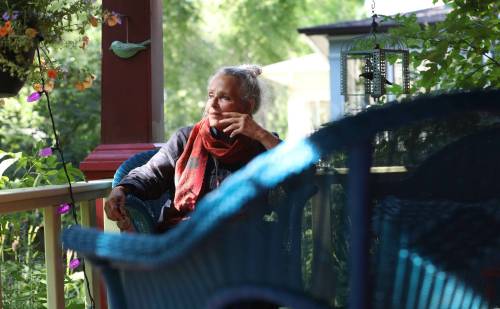
RUTH BONNEVILLE / WINNIPEG FREE PRESS After her husband Mendel’s death, Deborah Schnitzer looked for stories and strategies that spoke to loss, but while comparative frames can be useful, the unique experience of losing a loved one requires very specific attention.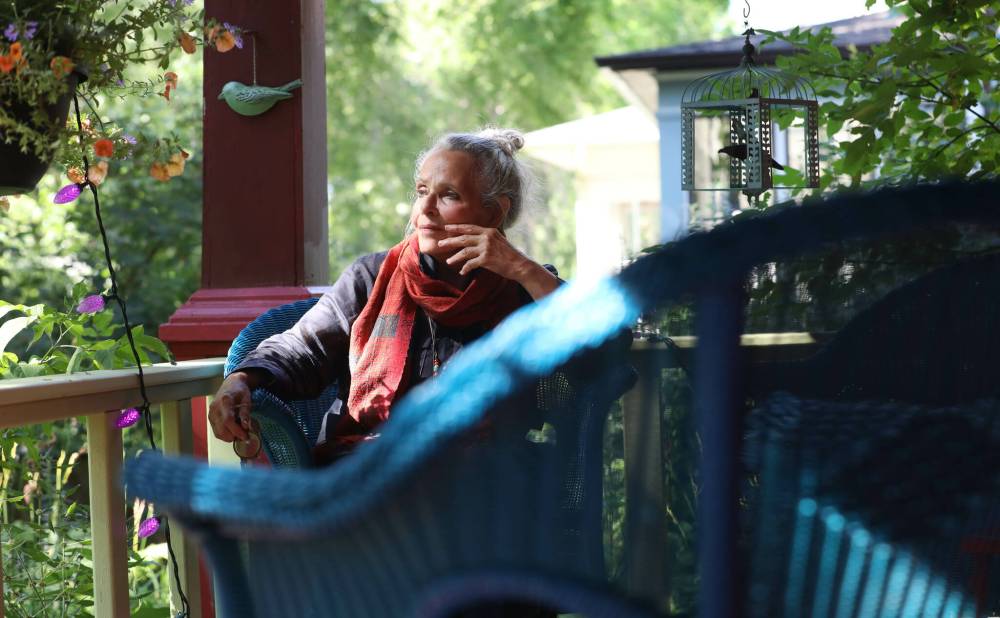
Initially, after his death, as a newly widowed woman, I looked for stories and strategies that spoke to loss. There were parts that resonated as reflection, analysis and advice. Sometimes a timeline was inserted in the analysis or the advice as given, suggesting reasonable coping strategies that might be undertaken by the one left behind.
There were references to markers that distinguish the nature of the death — accidental, sudden, expected — and thus contexts for the nature of the trauma named as grief and mourning. And I understood that frames of reference could be helpful, the stories of others moving resources.
But time and the quality of life’s diminishment following the death of a life partner are as various as the life shared and the life lived on its own afterwards. Comparative frames can be useful, but the unique character of any loss requires specific attention.
Adrift in the unique features of a world and identity lost with Mendel gone, I could hardly grasp a reality in which I was a remainder. Even in the midst of friends and family, the sense of being on my own without that lifetime together was unbearable.
I learned to bear even as I dissolved, emerging step by step — such little steps in the almost-standstill time after the severing death enacts.
Death lessons are formidable, life-altering and necessary. One of its first lessons I called the Widow Hours. For me, they peaked daily from four to eight p.m., from late afternoon to early evening.
First there was the rawness of the morning, but I had a new coffeemaker that was easy to operate. I seemed easy to operate. Inside my house, on my own, I did not connect to any dot. I did not receive or make calls. I could get into my car, now cavernous, but only to mind my two-year-old granddaughter at her house: I knew that if she would like the park, I would like the park; if she needed food, I would get for her the food she liked.
Otherwise…
Food is nothing but cereal. Cereal is easy. Little bowls. Refilled if need be. My daughter-in-law brings a giant bottle of vitamins for older women. I am that older woman, but weeks pass and I cannot commit to much else. I am perhaps irritating. I am irritating but loved. I add gum and Coke Zero, a scrambled egg. I am fading.
Fading moves some Widow Hours into Winners, the store. My closet has clothes that are too big. I do coffee, wait for cereal, and then wait for whatever an afternoon might bring — the pushing of furniture around in circles; the opening and closing closets; the sifting through drawers without recognizing contents once seemingly consequential.
Then there is four o’clock and nothing. I look for Mendel. I look for the depth in the air created by two together in a kitchen wondering about the shape that might make a dinner hour.
I am vacancy, a plastic bag in the breeze. I grow thinner and thinner. I have never been this thin. In my late 60s, a few months after Mendel is dead, some would call me gaunt. I wish for gaunt.
Mendel was emaciated in the final stages of his illness. I think this parallel but I don’t investigate beyond its surface. I think instead that no one will ask me how I am doing because I am a prepared and published statement, and — how ironically, how funnily — some will welcome my weight loss thinking I am more fit. A stamp of approval for women. Thin does so many good things in the world.
In my fade, my “fit,” at four o’clock, when there cannot be dinner, or Netflix, or… I choose Winners and its yield of small things. There are racks of them I can try on, the less of me giving satisfaction: I am small. I am disappearing. I can be a woman in a fitting room trying on small things all the way through any dinner hour. I do not know who I am dressing, but I know I am dressing for losing.
Everything is out of place, time, sync. Wasting away. Each day hurts, as did the one before: one month, two, through a first year.
I don’t have the exact dimensions for an ending, but this widowdom, this widowhood, this world without the partner and passion of my life, does not seem livable. Everything is out of place, time, sync. Wasting away. Each day hurts, as did the one before: one month, two, through a first year.
I wonder: do two people who never grow old enough to look like one another, as couples often do, look now alike because I have come, in my own way, close to the wasting exacted by the disease that ate my husband up?
RUTH BONNEVILLE / WINNIPEG FREE PRESS Separation is eternally present in the mind, Deborah Schnitzer says of the experience of widowhood.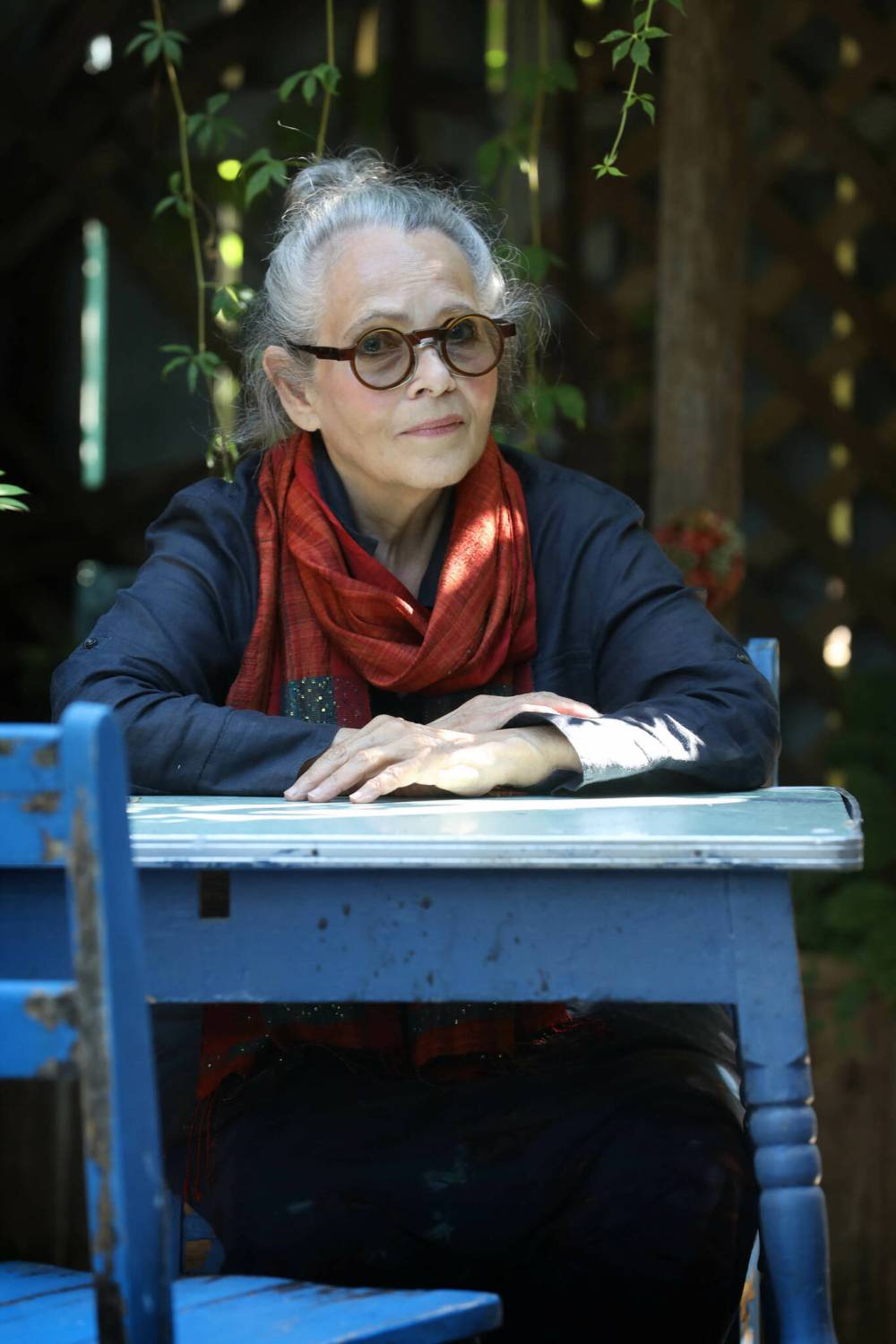
Of course not. I am still flesh and bone. Mendel is ash in little containers in respective family houses and in two plastic bags I will take to a lake and a river he had loved.
In the time that takes me from one year to the next and the next, however, there can be little bits of wakening from a world gone grey and foreign. A new world, forbidding in its challenge but persistent in its presentness, dimensioned by grief and mourning, is somehow capable of affirming that I am not able to starve myself into non-existence.
I recognize there is no worth in a denial of fundamental needs, no integrity in risking a hospital ward skewered by disordered and dysregulated, divorced from choices that can ground my two feet remaining, my still-breathing being.
One day this being finds herself in front of the mirror in Winners at 7:37 p.m. with choice, no longer trying on small, no longer on the edge of choiceless, but resident in the time ongoing. I begin to renounce the hold of losing everything.
Slowly, the Widow Hours can coexist with other time frames. I go to Winners in the morning. I exchange small for looser garments, look at fitting-room mirrors, more able to accept the pattern of life-death-life inherent in my ongoing-ness, a pattern that can define the terms of all mortals who outlive their mates.
”Giving shape and voice to the dedicated remembering I undertake reveals how I am made by the time before and the time after.”
I do not know how many widows may have found themselves with skinny jeans in fitting-room confessionals, demanding that their appearance coincide with the erasure death dictates through circumstances that take a life partner away.
Five years later, I bring to Winners the woman staring back at me living a passage never wished for, a woman who has stood at endings, in emergency rooms, tormented, at wit’s and heart’s end, a woman who holds her hands together now, gentled by the gesture that expands to hold both the hands she has long loved and her own, now giving shape and purpose to a life the one lost will never know.
At this five-year marker, I think of the life and death I lived with an undaunted and wise man, his grasp levered by undying hope and grimmer understanding. That delicate balance characterizes my sense of where I stand now.
The location is expansive, informed by the passage of time, deepened by memory and marked by rituals I invent to hold legacy and truth telling. It is a location that names his death and my sorrow in losing him, not as particulars I “recover” from or “get over” so that I can “get on.” Rather, it is a location that encourages me to carry the lifetime lived, the experience of grief and the rhythms of mourning as part of my emerging identity without his physical presence.
Giving shape and voice to the dedicated remembering I undertake reveals how I am made by the time before and the time after.
I unravel and integrate parts of the woman I become as widow, this new yet composite identity, now five years old. I look back at the nature of my time: I stand, in my present moment, with the depth of that experience, and I look forward framed by the co-existence of the lament and hope that distinguishes how I go on.
This is my time signature. Adjusting, more able to stand on my own two feet as I must, I am as sure that my two feet placed beside Mendel’s would have been full of the wonder a remission, however fragile, could have given to next steps together.
When two together yields to the dying of one part of that duo, as it will for so many of us, that separation is eternally present in the mind of the one whose life continues.
I say eternally present, not because my remembering — my making of ongoing memories in relation to loss — will outwit my mortality. Rather, my remembering — a candle, incense, a photograph — lives in the paradoxical and blended time of then, now, and always. It responds to the specifics of time and place, and transcends that specificity by participating in the presentness created in forms of remembrance and visioning — in action, art, and story so often kindled by sorrow, shimmering love and remarkable relation.
debbieschnitzer@mts.net
Deborah Schnitzer
Winnipeg writer Deborah Schnitzer explores life lessons from women in their Third Act.
Our newsroom depends on a growing audience of readers to power our journalism. If you are not a paid reader, please consider becoming a subscriber.
Our newsroom depends on its audience of readers to power our journalism. Thank you for your support.