Nine nights of hope and happiness
Chaitra Navratri honours Goddess Mother to celebrate Hindu new year
Advertisement
Read this article for free:
or
Already have an account? Log in here »
To continue reading, please subscribe:

Digital Subscription
One year of digital access for only $205*
- Enjoy unlimited reading on winnipegfreepress.com
- Read the E-Edition, our digital replica newspaper
- Access News Break, our award-winning app
- Play interactive puzzles
*First annual payment billed as $205.00 + GST for one year. This annual subscription will automatically renew at $233.00 + GST every 52 weeks (10% off the regular annual price of $259.35). Offer available to new and qualified returning subscribers only. Cancel any time.
To continue reading, please subscribe:
Add Free Press access to your Brandon Sun subscription for only an additional
$1 for the first 4 weeks*
- Enjoy unlimited reading on winnipegfreepress.com
- Read the E-Edition, our digital replica newspaper
- Access News Break, our award-winning app
- Play interactive puzzles
*Your next Brandon Sun subscription payment will increase by $1.00 and you will be charged $17.95 plus GST for four weeks. After four weeks, your payment will increase to $24.95 plus GST every four weeks.
Read unlimited articles for free today:
or
Already have an account? Log in here »
Hey there, time traveller!
This article was published 27/03/2023 (1254 days ago), so information in it may no longer be current.
The arrival of spring signals the arrival of an auspicious time for Hindus.
During a religious festival of nine nights, Hindus are celebrating Chaitra Navratri, also known as Vasant Navratri. In Sanskrit, Chaitra refers to the months of March and April, Vasant means the spring season and Navratri translates to nine nights.
Celebrated by Hindus worldwide, this festival is a special time filled with hope and happiness.
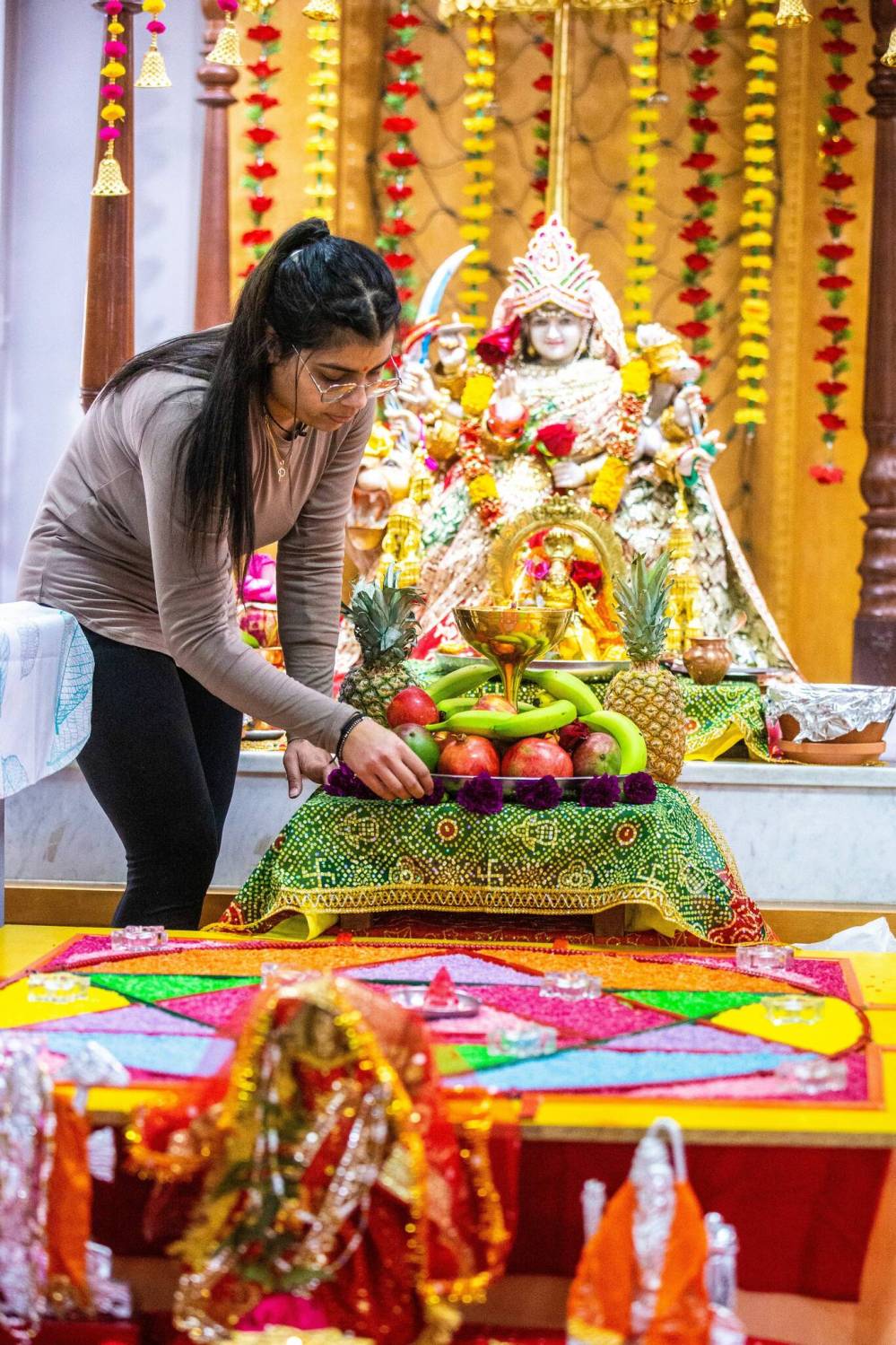
MIKAELA MACKENZIE / WINNIPEG FREE PRESS
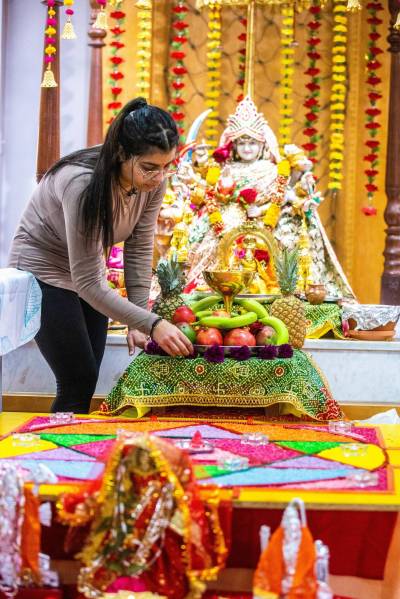
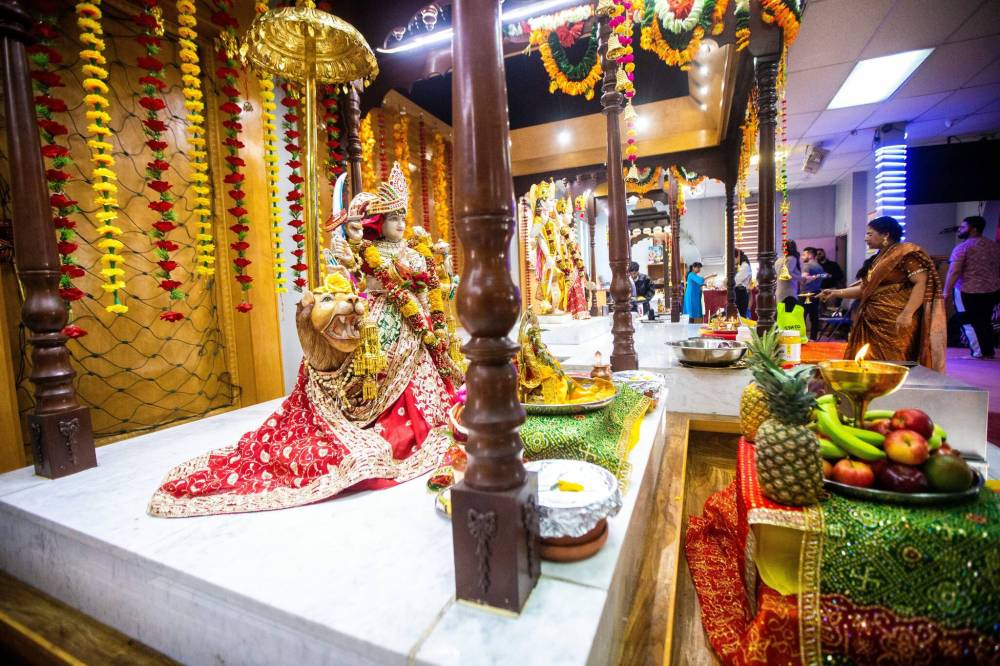
Palak Phull prepares the Goddess Mother altar at the Hindu Temple before a Navratri evening celebration. The festival of nine nights concludes Thursday.
“The main purpose of the Chaitra Navratri is that in our Hinduism we start our New Year on the first day of the celebration,” Pandit Shrikant Sharma, one of the priests of the Hindu Society of Manitoba, says.
Hindus honour and worship the Shakti, or power and energy of the Goddess Mother during Navratri. Referred to as Devi Mata, the Goddess Mother embodies this power and energy through the virtues of knowledge, justice, truth, faith, happiness, grace, compassion, forgiveness and peace — qualities humans need in order to navigate life’s journey and to achieve their life potential.
The Goddess Mother, in her many forms, is worshipped during the festival. For the first three nights of Navratri, Hindus pray to Goddess Durga, the goddess of power who protects devotees and destroys negative vices around and within them.
Each one of the nine forms of Goddess Durga is worshipped for each day of Navratri. Hindus pray to Goddess Lakshmi, who is the goddess of wealth and prosperity for the next three nights. She is the bestower of material and spiritual wealth.
During the last two or three nights, Hindus pray to Goddess Saraswati, the goddess of knowledge, learning, music and the arts. On Thursday morning, the religious day Ram Navami will be celebrated, which marks the birthday of Lord Rama and the end of Chaitra Navratri.
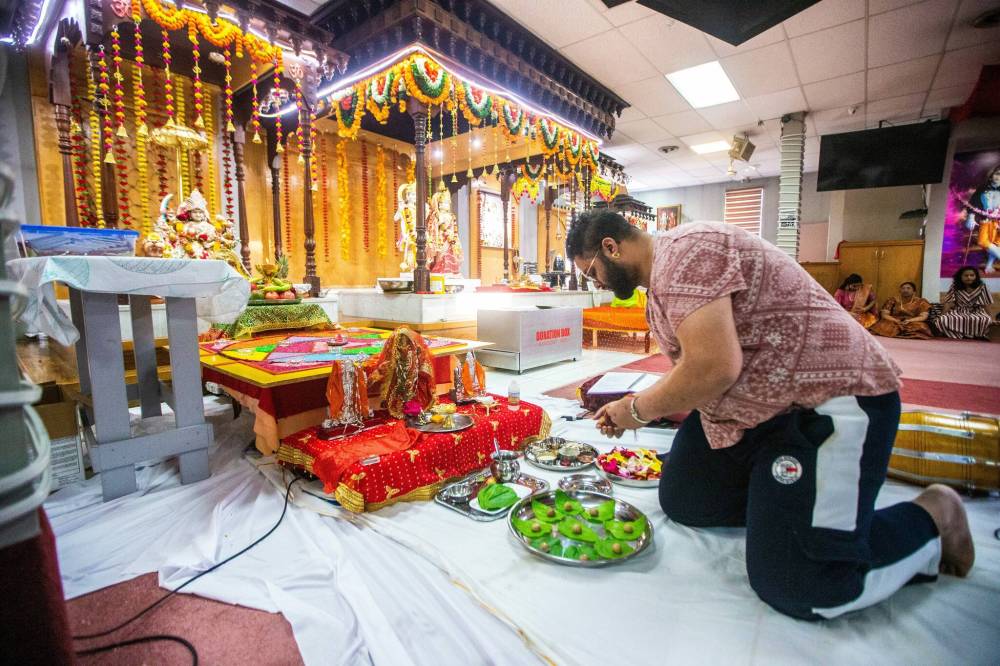
MIKAELA MACKENZIE / WINNIPEG FREE PRESS
Sourabh Phull honours the Goddess Mother.
On the first night of Navratri, community members of all ages came to the HSM Temple and Cultural Centre at 854 Ellice Ave. As they entered the temple, or mandir, they offered fruits, sweets, flowers and money to the deity, Goddess Durga, at the altar. Over the nine nights, devotees offer beautiful sarees, chunnis, or shawl-like scarves as well as colourful bracelets and bindis — all items that gracefully adorn the radiant deity.
Colours are symbolic throughout the celebration. As the priest explains, each colour represents one of the nine forms of Goddess Durga as well as virtues or emotions. White symbolizes purity, innocence and peace; red for love, beauty and bravery; royal blue for wealth and tranquility; yellow for cheer and happiness; green for growth and fertility; grey for balanced emotions and humility; orange for warmth and positive energy; peacock green for individuality and uniqueness; pink for harmony and kindness. Devotees can offer the Goddess Mother flowers and fruits in the corresponding colour as a gesture to seek blessings. The festivities are further enjoyed by devotees opting to wear Indian attire in the matching colour of the day.
Numerous activities take place each night at the temple including ceremonial offerings, or pujas to the Goddess Mother, readings from the religious text Durga Saptshati, singing of religions songs, or bhajans dedicated to the deity and closing prayers. Every evening, either the HSM temple or a host family provides a meal for all attendees. The HSM has a similar Navratri program running simultaneously at the Hindu Temple and Dr. Raj Pandey Hindu Centre at 999 St. Anne’s Rd. during the evenings. With a large part of the festival taking place this year over spring break, there is an opportunity for younger members of the community, along with their families, to participate in the religious activities and learn about the celebration.
The HSM temple will welcome hundreds of attendees over the duration of the festival. Pandit Shrikant Sharma says while they come at this important time to offer prayers and seek blessings, “the temple is not just for the Hindu community, it is open to all.”
He adds it gives him tremendous joy to extend good wishes to all at this special time. Indeed, as she is known as the Mother of the Universe, honouring the Goddess Mother is about universal values. With the freshness of a new year and the brightness of the spring season, the Navratri festival illuminates a reckoning that these values exist within each one of us for our individual betterment and collective humanity. They can help us face life’s challenges and soothe us. At the core, there is a call for peace,which would be enormously helpful in our lives, communities and the world right now. As one line of a Sanskrit mantra says:
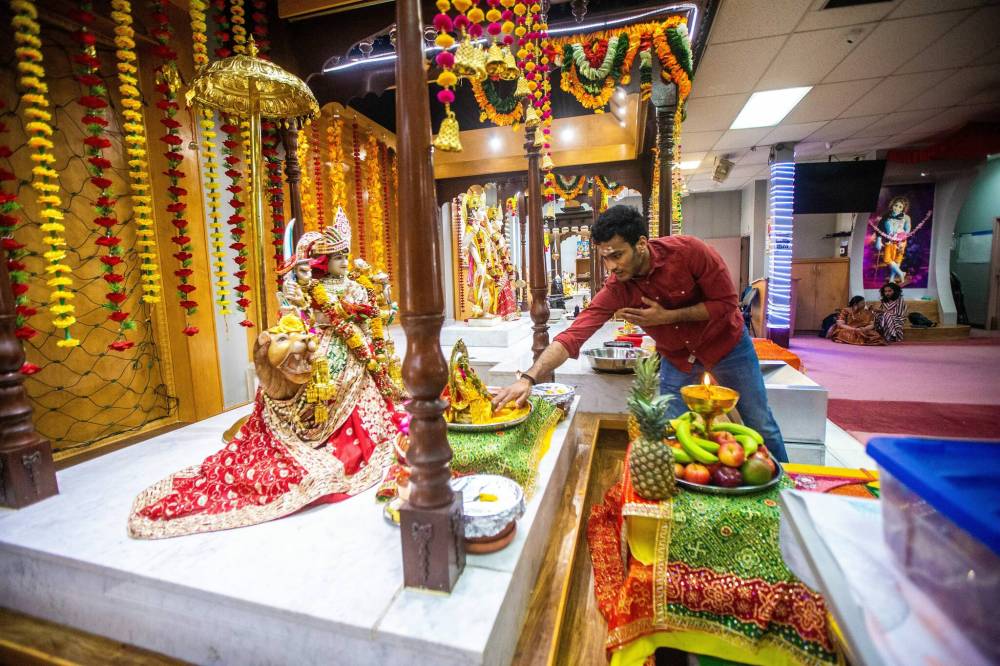
MIKAELA MACKENZIE / WINNIPEG FREE PRESS
Rakesh Chukka acknowledges the deity.
“Yaa Devi Sarva Bhooteshu Shanti Roopena Samsthitaa
Namastasyai, Namastasyai, Namastasyai, Namo Namah”
Salutations to the Goddess Mother who resides in all beings as peace. Salutations to her, again and again, I bow to Her.
Romona Goomansingh, PhD is an educator, freelance writer and author in Winnipeg.
MIKAELA MACKENZIE / WINNIPEG FREE PRESS
The temple is not just for Hindus. ‘It is open to all,’ says Hindu Society of Manitoba priest Pandit Shrikant Sharma.
The Free Press is committed to covering faith in Manitoba through our Religion in the News project. This reporting continues because readers like you step forward to fund it.
Donate now to support our reporting on religion.
Your donation is eligible for a charitable tax receipt.
BECOME A FAITH JOURNALISM SUPPORTER
The Free Press acknowledges the financial support it receives from members of the city’s faith community, which makes our coverage of religion possible.