Why? The awkward, urgent question about sexual assault
In her new film, Danielle Sturk interviews young men and women about the starkly gendered roles

Advertisement
Read this article for free:
or
Already have an account? Log in here »
To continue reading, please subscribe:

Digital Subscription
One year of digital access for only $205*
- Enjoy unlimited reading on winnipegfreepress.com
- Read the E-Edition, our digital replica newspaper
- Access News Break, our award-winning app
- Play interactive puzzles
*First annual payment billed as $205.00 + GST for one year. This annual subscription will automatically renew at $233.00 + GST every 52 weeks (10% off the regular annual price of $259.35). Offer available to new and qualified returning subscribers only. Cancel any time.
To continue reading, please subscribe:
Add Free Press access to your Brandon Sun subscription for only an additional
$1 for the first 4 weeks*
- Enjoy unlimited reading on winnipegfreepress.com
- Read the E-Edition, our digital replica newspaper
- Access News Break, our award-winning app
- Play interactive puzzles
*Your next Brandon Sun subscription payment will increase by $1.00 and you will be charged $17.95 plus GST for four weeks. After four weeks, your payment will increase to $24.95 plus GST every four weeks.
Read unlimited articles for free today:
or
Already have an account? Log in here »
Hey there, time traveller!
This article was published 12/04/2023 (1235 days ago), so information in it may no longer be current.
For Danielle Sturk, the #MeToo movement provided new vocabulary for familiar experiences.
To a woman and mother of four daughters, it was validating to see public discussions about catcalling, unwanted touching, upskirting, solicitation and rape. Yet, she noticed one set of voices was largely absent from the conversation.
“Ninety-eight per cent of sexual assaults are perpetrated by men,” Sturk says, referring to Statistics Canada data on police-report sexual assaults. “We seem to be fairly comfortable accepting that it’s done to women… but we’re not really comfortable saying it’s a gendered problem in relation to who’s causing the violence.”
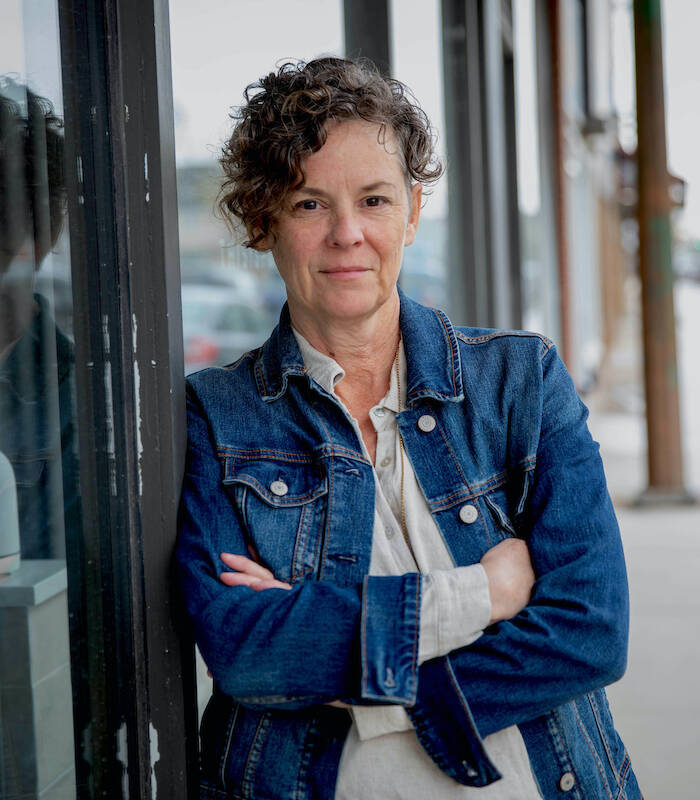
Marta Guerrerro for La Liberté
Filmmaker Danielle Sturk
And so, the Winnipeg-based Franco-Manitoban filmmaker set out to start a dialogue.
Sturk’s new film, Why?, seeks explanations for the gendered nature of sexual violence through candid interviews with young men and women.
While she initially intended to focus on male high school students — since the majority of reported sexual assault victims are under the age of 18 — it was difficult to find schools and subjects willing to participate. Sturk also realized female survivors were a necessary piece of the puzzle.
“I knew I needed to contextualize it,” she says. “It was really pertinent to hear their stories because they were pretty varied, which gave us all a larger sense of how (sexual violence) functions in various ways.”
The bilingual documentary features six subjects — three men and three women — between the ages of 19 and 21 years old. Over the course of 39 minutes, the interviewees talk about their personal experiences with sexual violence. Disparity quickly emerges.
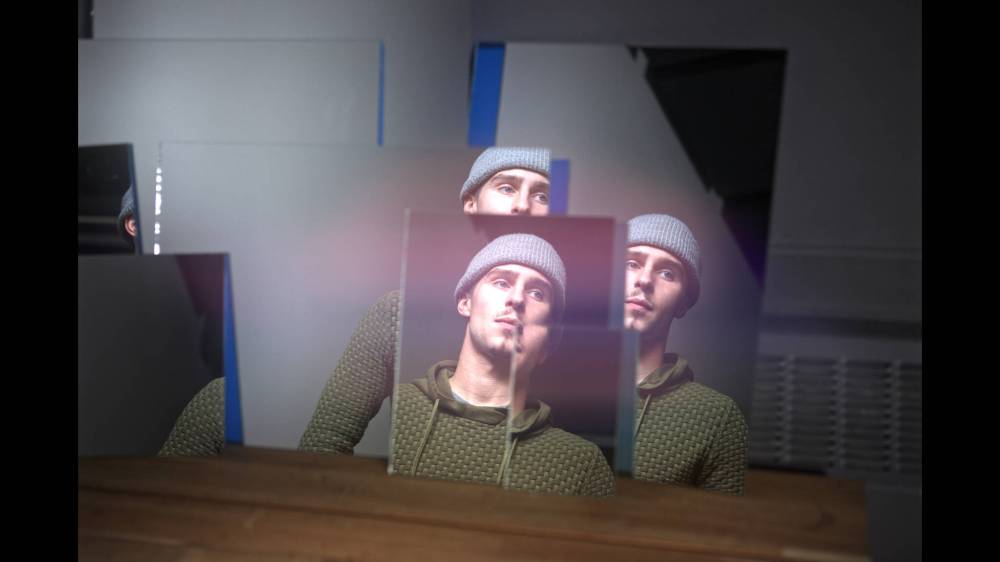
While the women share first-hand accounts of street harassment, intimate partner violence and non-consensual contact, the men discuss the topic at arm’s-length — second-hand stories from female friends, situations that have unfolded at parties, behaviour they’ve witnessed. There’s empathy, but also resignation that this is just the way the world works.
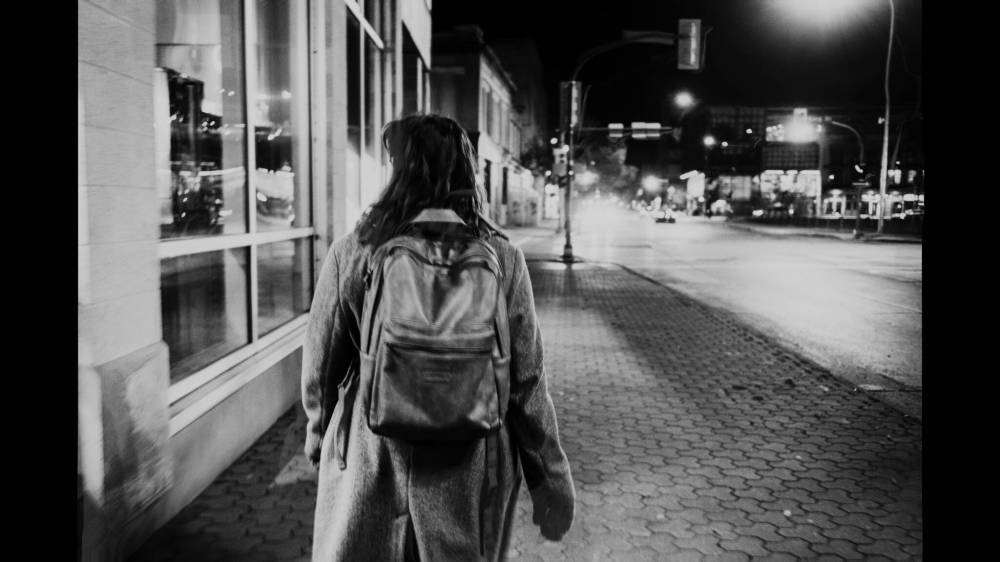
Sturk underlines these differences with visual effects. The male subjects are filmed in classic documentary-style interviews and the female stories are presented as narration set to animated black-and-white photographs.
“It’s a bit staccato,” Sturk says of the stop-motion style of the latter. “Which, to me, reflects the feeling of dissociation that occurs when you’re sexually assaulted or have any kind of trauma — you’re sort of separated from your body.”
National Film Board of Canada
Unlike the young women’s first-hand accounts, the young men’s contribution was arm’s length: stories they’ve heard, behaviour they’ve witnessed.
This approach is particularly effective when the two groups share their thoughts on public spaces. The men are filmed in sunny parks and on quiet riverbanks, locales they frequent to relax and get away from the hustle and bustle of daily life. Then, the camera cuts to a dark downtown street, where the women talk about the pitfalls of walking alone and fear of strangers.
“As a parent, watching daughters start to not go to certain places, not go to certain universities, not go to certain parties… I started to see their worlds getting smaller and smaller,” Sturk says. “Whereas this film shows all the spaces men feel so comfortable being in; they own the world.”
Though the young men and women featured in Why? have very different experiences of sexual violence, Sturk sees them as equal victims of its root cause.
The answer to the film’s central question of why women and girls are more likely to be victims while men and boys are more likely to be aggressors comes down to toxic masculinity — a social norm that creates suffering for both parties, Sturk says.
“These young men did not like that their friends are causing this kind of pain,” she says. “As witnesses and bystanders of sexual violence, they’re also touched by this and affected by this, obviously not in the same way, but they’re part of the problem and the solution as well.”
Why? is available free online through the National Film Board of Canada (wfp.to/nfbwhy). Sturk hopes male viewers will be inspired to talk more openly about and address the issue of gendered sexual violence. While the film focuses on the experiences of young people, adults are a key target audience — especially those in positions of power.

“How can we get in there and assist these young people in creating safe spaces? It’s our responsibility as adults,” Sturk says, adding that she sees schools as important venues for change. “I really think our province needs to move forward and ensure teaching… about sexual-assault prevention occurs in schools.”
National Film Board of Canada
The young women interviewed share first-hand accounts of street harassment, intimate partner violence and non-consensual contact.
From her experience screening the film in classrooms, students are ready for these kinds of difficult conversations.
“The boys were riveted,” she says. “Let’s hear and see boys talk about this — that’s so powerful.”
eva.wasney@winnipegfreepress.com
Twitter: @evawasney
Eva Wasney has been a reporter with the Free Press Arts & Life department since 2019. Read more about Eva.
Every piece of reporting Eva produces is reviewed by an editing team before it is posted online or published in print — part of the Free Press‘s tradition, since 1872, of producing reliable independent journalism. Read more about Free Press’s history and mandate, and learn how our newsroom operates.
Our newsroom depends on a growing audience of readers to power our journalism. If you are not a paid reader, please consider becoming a subscriber.
Our newsroom depends on its audience of readers to power our journalism. Thank you for your support.
Eva Wasney has been a reporter with the Free Press Arts & Life department since 2019. Read more about Eva.
Every piece of reporting Eva produces is reviewed by an editing team before it is posted online or published in print — part of the Free Press‘s tradition, since 1872, of producing reliable independent journalism. Read more about Free Press’s history and mandate, and learn how our newsroom operates.
Our newsroom depends on a growing audience of readers to power our journalism. If you are not a paid reader, please consider becoming a subscriber.
Our newsroom depends on its audience of readers to power our journalism. Thank you for your support.
Related Articles
Woman seeks ID of groping suspect via social media
Advertisement Advertise With Us
Advertisement Advertise With Us
History
Updated on Saturday, April 15, 2023 7:21 PM CDT: Updates film link to National Film Board of Canada