Pro or con spoilers, please mind the one-week rule

Advertisement
Read this article for free:
or
Already have an account? Log in here »
To continue reading, please subscribe:

Digital Subscription
One year of digital access for only $205*
- Enjoy unlimited reading on winnipegfreepress.com
- Read the E-Edition, our digital replica newspaper
- Access News Break, our award-winning app
- Play interactive puzzles
*First annual payment billed as $205.00 + GST for one year. This annual subscription will automatically renew at $233.00 + GST every 52 weeks (10% off the regular annual price of $259.35). Offer available to new and qualified returning subscribers only. Cancel any time.
To continue reading, please subscribe:
Add Free Press access to your Brandon Sun subscription for only an additional
$1 for the first 4 weeks*
- Enjoy unlimited reading on winnipegfreepress.com
- Read the E-Edition, our digital replica newspaper
- Access News Break, our award-winning app
- Play interactive puzzles
*Your next Brandon Sun subscription payment will increase by $1.00 and you will be charged $17.95 plus GST for four weeks. After four weeks, your payment will increase to $24.95 plus GST every four weeks.
Read unlimited articles for free today:
or
Already have an account? Log in here »
Hey there, time traveller!
This article was published 18/04/2023 (1257 days ago), so information in it may no longer be current.
The cruellest spoiler I have ever seen was not in a headline or in a tweet, but written in the dust on a dirty car parked on a busy Winnipeg street.
Instead of the usual crude rendering of male genitalia or a directive to “wash me,” someone used their index finger to print out a three-word spoiler for The Rise of Skywalker, which had just come out, on the vehicle’s back window.
Now, I had already seen the movie so I can say this is also the funniest spoiler I have ever seen. The brevity and creativity were, honestly, very impressive. With a simple formula — MAIN CHARACTER + KEY VERB — this person revealed a major plot point. (Apparently something similar happened, though on a much bigger scale, spoiling the sixth Harry Potter book; the formula was the same but, in that case, it was a full banner suspended over a U.K. highway.)
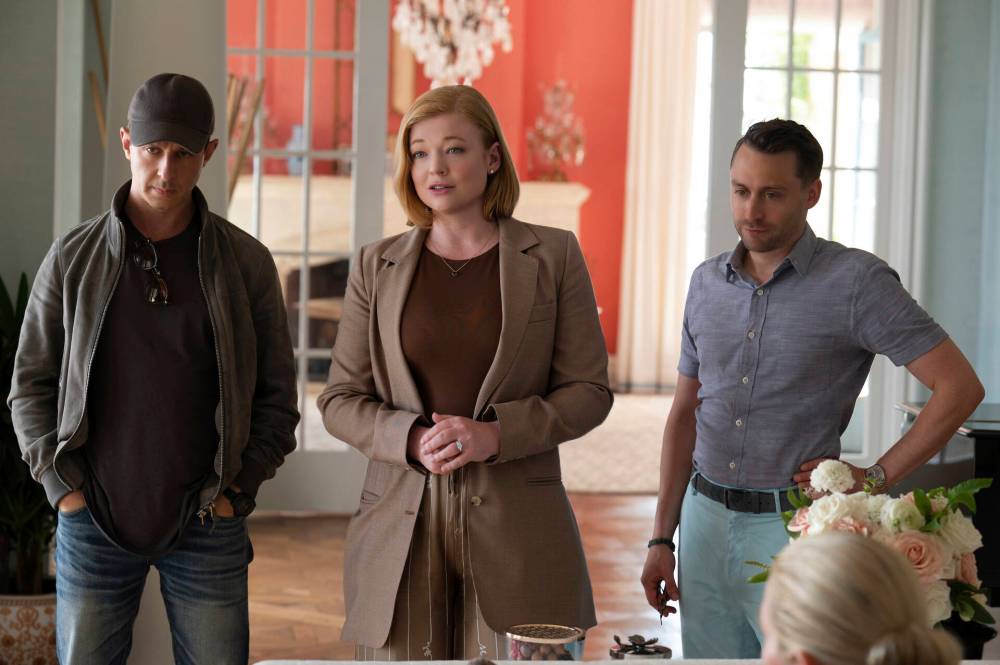
A still from HBO show “Succession”. (HBO via The Associated Press files)
But I know, too, that it was only funny because, for me, it wasn’t a spoiler.
Last week, it was as though MAIN CHARACTER + KEY VERB (and it’s always the same key verb) was written all over the internet about the patriarch of the Roy family at the heart of the HBO drama Succession, reigniting a conversation about spoiler etiquette.
Obviously, spoilers are mostly unavoidable if you’re on social media, what with the rise of live-tweeting TV episodes as though they are one-night-only entertainment events and the fact that, very often, people are still scrolling on their small screens while watching something on their big screens.
But with this particular episode of Succession, the Take Machine was working overtime. It was like people couldn’t wait to ruin it for everyone else.
The traditional advice in these cases is to stay offline until you’ve caught up, which, OK, sure, you can try. But headlines in traditional media have become just as bad. If you hadn’t watched Succession when it aired on Sunday night, it was very possible to have it ruined for you by your newspaper, as was the case for Irish viewers who learned what happened in Succession via an Irish Times headline.
Or, an article could have a “major spoilers ahead” alert, as a New York Times piece made sure to include, only to have the spoiler in the sentence immediately following it.
All of these examples are symptoms of an attention economy hungry for your eyeballs. People want to be “part of the conversation,” and they want to be part of it as it’s happening. And so, we get the proliferation of hot takes and recaps from everyone from casual fans to the podcasters, newsletter writers and legacy media entertainment columnists whose entire jobs are to recap the thing we all (supposedly) just watched. Consume the content to create more content, same as it ever was.

But because everything moves faster, the half-life of content is getting shorter, and more players are jockeying for your attention, there’s even more of a premium placed on being first, so spoiler-riddled content is getting pushed through feeds quicker. Which is how you end up with unwanted spoilers from unexpected sources.
Some people are impervious to spoilers; other people get so upset about them they send people death threats (which, relax, it’s a TV show). It’s understandable why spoilers rob enjoyment from a first-time viewing. They can blunt the emotional impact of a big reveal or a didn’t-see-it-coming plot twist. They turn the act of watching a television show you enjoy into yet another to-do list item to “get done” or “catch up on” before it “gets ruined” or you “fall behind.”
But, as with many things, time heals. A spoiler years later is different from a spoiler on opening weekend or minutes after a bombshell episode airs. And eventually, spoilers themselves become recognizable pop culture references in their own right. Like the identity of Luke Skywalker’s father, for one. Or the identity of Rosebud in Citizen Kane. Or the identity of Keyser Soze in The Usual Suspects. Or who shot J.R.. Or who shot Mr. Burns. This knowledge doesn’t make the source material any less enjoyable because storytelling is more than just plot points.
Still, if you know who KEY VERB in a movie or television episode, maybe wait on broadcasting that, whether via Twitter or on a parked car, for at least one (1) week.
jen.zoratti@winnipegfreepress.com
Jen Zoratti is a columnist and feature writer working in the Arts & Life department, as well as the author of the weekly newsletter NEXT. A National Newspaper Award finalist for arts and entertainment writing, Jen is a graduate of the Creative Communications program at RRC Polytech and was a music writer before joining the Free Press in 2013. Read more about Jen.
Every piece of reporting Jen produces is reviewed by an editing team before it is posted online or published in print – part of the Free Press‘s tradition, since 1872, of producing reliable independent journalism. Read more about Free Press’s history and mandate, and learn how our newsroom operates.
Our newsroom depends on a growing audience of readers to power our journalism. If you are not a paid reader, please consider becoming a subscriber.
Our newsroom depends on its audience of readers to power our journalism. Thank you for your support.
Jen Zoratti is a columnist and feature writer working in the Arts & Life department, as well as the author of the weekly newsletter NEXT. A National Newspaper Award finalist for arts and entertainment writing, Jen is a graduate of the Creative Communications program at RRC Polytech and was a music writer before joining the Free Press in 2013. Read more about Jen.
Every piece of reporting Jen produces is reviewed by an editing team before it is posted online or published in print – part of the Free Press‘s tradition, since 1872, of producing reliable independent journalism. Read more about Free Press’s history and mandate, and learn how our newsroom operates.
Our newsroom depends on a growing audience of readers to power our journalism. If you are not a paid reader, please consider becoming a subscriber.
Our newsroom depends on its audience of readers to power our journalism. Thank you for your support.
Advertisement Advertise With Us
Advertisement Advertise With Us