Gleaming galleries Manitoba Museum gets its annual deep clean
Read this article for free:
or
Already have an account? Log in here »
To continue reading, please subscribe:

Digital Subscription
One year of digital access for only $205*
- Enjoy unlimited reading on winnipegfreepress.com
- Read the E-Edition, our digital replica newspaper
- Access News Break, our award-winning app
- Play interactive puzzles
*First annual payment billed as $205.00 + GST for one year. This annual subscription will automatically renew at $233.00 + GST every 52 weeks (10% off the regular annual price of $259.35). Offer available to new and qualified returning subscribers only. Cancel any time.
To continue reading, please subscribe:
Add Free Press access to your Brandon Sun subscription for only an additional
$1 for the first 4 weeks*
- Enjoy unlimited reading on winnipegfreepress.com
- Read the E-Edition, our digital replica newspaper
- Access News Break, our award-winning app
- Play interactive puzzles
*Your next Brandon Sun subscription payment will increase by $1.00 and you will be charged $17.95 plus GST for four weeks. After four weeks, your payment will increase to $24.95 plus GST every four weeks.
Read unlimited articles for free today:
or
Already have an account? Log in here »
Hey there, time traveller!
This article was published 20/09/2023 (1120 days ago), so information in it may no longer be current.
Soda cans, paper airplanes, a handwritten note to the future and a Lego Stormtrooper are just a few of the “gallery treasures” Carolyn Sirett has unearthed while deep cleaning exhibits at the Manitoba Museum.
“We find really interesting things all over the place,” says the museum’s senior conservator.
Visitors to the Rupert Avenue institution might notice an extra sheen to the galleries following “cleaning week,” an annual September event that sees the museum close to the public for five days while staff from every department assist with special cleaning projects. It’s a seasonal reset between the busy days of summer and the frequent school field trips of fall.
MIKE DEAL / WINNIPEG FREE PRESS Carolyn Sirett, senior conservator at the Manitoba Museum, cleans the giant ground sloth during cleaning week.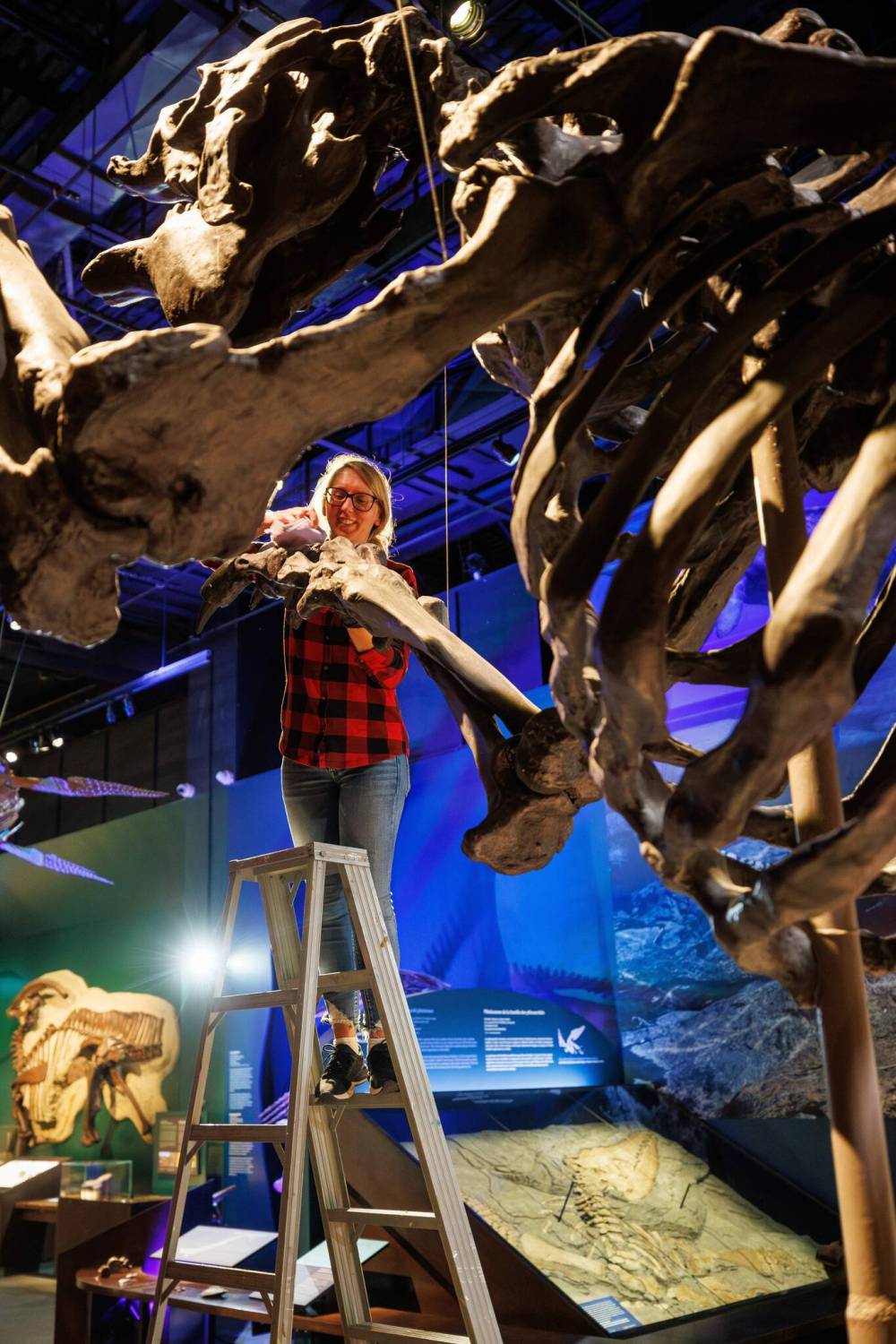
For Sirett, it’s also a chance to delegate some of the dirty work.
“People were pumped about it,” she says of staffers recruited to polish all the glass surfaces in the museum’s 52,000 square feet of gallery space.
“It’s exciting because I’m not allowed to touch anything in here because I’m not a conservator,” says Brandi Hayberg, manager of marketing and communications, who had signed up to help swab the deck of the Nonsuch. “This is my opportunity to do my part in the museum that’s not just typing on a computer.”
While cleaning week is a novel experience for some, keeping the exhibits spick and span is a large part of Sirett’s highly specialized job. She’s one of a handful of conservators in Manitoba and is in charge of the long-term preservation and maintenance of the 2.9 million items in the museum’s collection.
Sirett has been a conservator at the Manitoba Museum since 2013. After obtaining a degree in archaeology and anthropology, she decided to specialize in collections conservation — a career she describes as a “blend of art and science and history.”
Her workdays involve everything from dusting public-facing displays to repairing hundred-year-old artifacts in the museum’s vault. While cleaning isn’t the most glamorous part of the job, it’s a key part of preservation.
MIKE DEAL / WINNIPEG FREE PRESS Carolyn Sirett’s workdays involve everything from dusting public-facing displays to repairing hundred-year-old artifacts.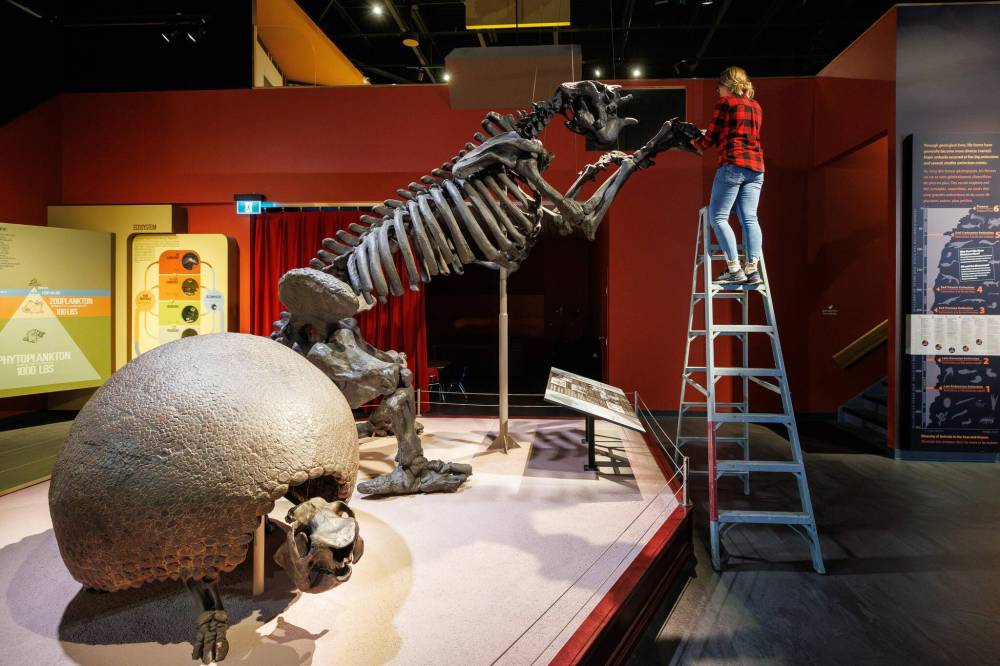
“It’s all super important because it really embodies the stewardship that the museum is trying to do. What is it to collect all this stuff and not care for it?” Sirett says.
During the Free Press’s visit, she was working in the Earth History gallery wiping down the giant sloth replica — which has a tendency to collect cobwebs — and vacuuming the pterosaurs hanging from the ceiling. Fun fact: most of the dust in museums comes from the exhaust of idling school buses and particles released from denim worn by visitors, Sirett says.
Sirett and her assistant have material-specific techniques for cleaning different displays. Screens and brushes are used when vacuuming textiles and fur to avoid damage. Most wet cleaning is done with distilled water brewed on site.
“It’s a fountain of youth upstairs,” Sirett says with a laugh.
“It’s all super important because it really embodies the stewardship that the museum is trying to do. What is it to collect all this stuff and not care for it?”–Carolyn Sirett
Bugs are a going concern in displays containing organic material.
Randy Mooi, curator of zoology, was taking the cleaning week closure as an opportunity to replace several longhorn beetle specimens in the decomposer diorama of the museum’s boreal forest exhibit. The preserved insects had fallen prey to the appetite of living dermestid beetles that managed to infiltrate the gallery.
“This is all great food for dermestids,” Mooi says, while leaning inside the diorama depicting the native scavengers, bugs and mushrooms that aid in decomposition. “We actually use those same beetles to de-flesh specimens, so they actually help museums, but we hate them in the galleries.”
While exhibit damage is addressed year-round, cleaning week offers a chance for closer inspections.
MIKE DEAL / WINNIPEG FREE PRESS Dr. Randy Mooi, curator of zoology at the Manitoba Museum, replaces a longhorn beetle damaged in the decomposer diorama in the Boreal Forest section.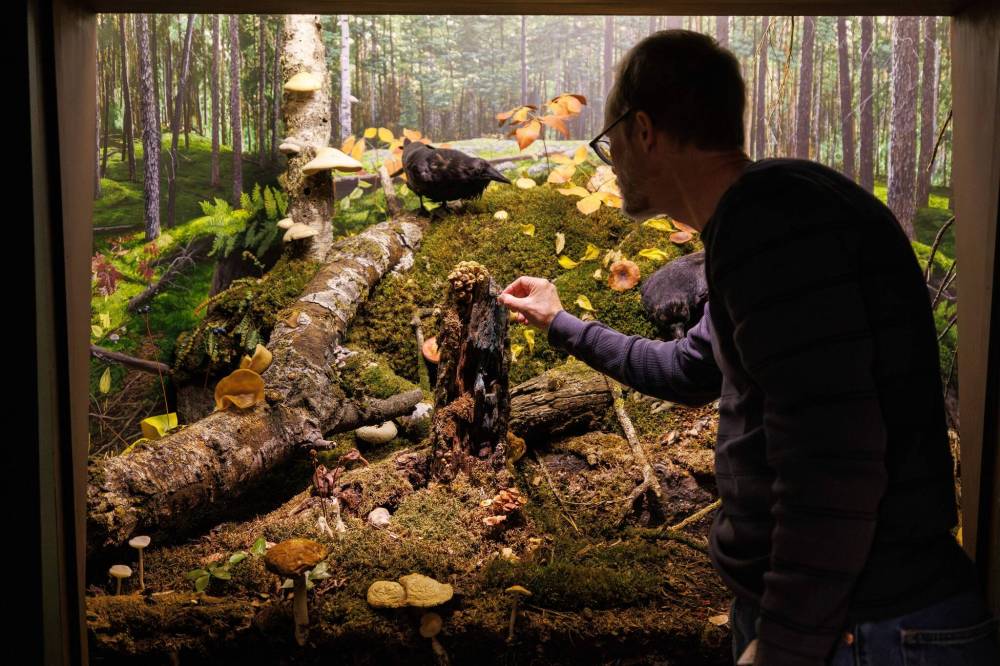
“I just noticed this one is missing his head too, so I’m about to run upstairs,” Mooi says, pointing to a bug on a log. “We have about 75,000 insects in our collections and so for species that are fairly common, we can use some to replace (displays).”
On the other end of the spectrum is the Nonsuch — one of the most challenging exhibits to maintain.
“It’s the biggest artifact we have. It’s a giant ship and you’ve gotta climb all over it to clean it,” Sirett says.
MIKE DEAL / WINNIPEG FREE PRESS Loren Rudisuela carefully vacuums the Caribou diorama in the Boreal Forest section of the museum.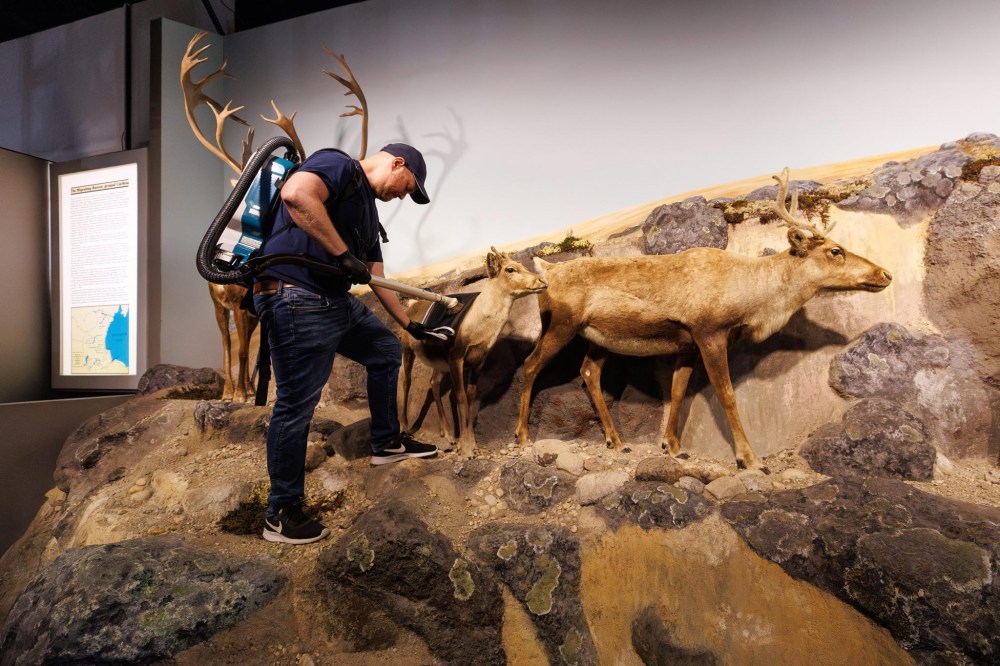
As the only staff member trained to ascend the rigging of the 17th century merchant ship replica, Sirett finds the job equal parts exhausting and exhilarating.
“The ship has been passed down from conservator to conservator,” she says. “It’s always (nostalgic) because you’re carrying the torch to make sure that ship is cared for and that the maintenance is there because everyone loves it.”
eva.wasney@winnipegfreepress.com
Twitter: @evawasney

Eva Wasney covers environmental issues in Manitoba for The Narwhal in partnership with the Winnipeg Free Press. Read more about Eva.
Every piece of reporting Eva produces is reviewed by an editing team before it is posted online or published in print — part of the Free Press‘s tradition, since 1872, of producing reliable independent journalism. Read more about Free Press’s history and mandate, and learn how our newsroom operates.
Our newsroom depends on a growing audience of readers to power our journalism. If you are not a paid reader, please consider becoming a subscriber.
Our newsroom depends on its audience of readers to power our journalism. Thank you for your support.