In a mirror, darkly
Follow-up to The Innocents turns to the nasty side of human behaviour

Advertisement
Read this article for free:
or
Already have an account? Log in here »
To continue reading, please subscribe:

Digital Subscription
One year of digital access for only $205*
- Enjoy unlimited reading on winnipegfreepress.com
- Read the E-Edition, our digital replica newspaper
- Access News Break, our award-winning app
- Play interactive puzzles
*First annual payment billed as $205.00 + GST for one year. This annual subscription will automatically renew at $233.00 + GST every 52 weeks (10% off the regular annual price of $259.35). Offer available to new and qualified returning subscribers only. Cancel any time.
To continue reading, please subscribe:
Add Free Press access to your Brandon Sun subscription for only an additional
$1 for the first 4 weeks*
- Enjoy unlimited reading on winnipegfreepress.com
- Read the E-Edition, our digital replica newspaper
- Access News Break, our award-winning app
- Play interactive puzzles
*Your next Brandon Sun subscription payment will increase by $1.00 and you will be charged $17.95 plus GST for four weeks. After four weeks, your payment will increase to $24.95 plus GST every four weeks.
Read unlimited articles for free today:
or
Already have an account? Log in here »
Hey there, time traveller!
This article was published 16/10/2023 (1051 days ago), so information in it may no longer be current.
With his new novel The Adversary, Newfoundland’s Michael Crummey has returned to the world of his much-lauded 2019 novel The Innocents, which saw a young brother and sister struggle to endure the harsh conditions of remote Newfoundland in the early 19th century, learning to rely on each other as they learn about themselves.
The Adversary, Crummey’s sixth novel (published by Knopf Canada in late September), could be considered a companion piece to The Innocents — what he calls “a mirror of that book, but kind of a shattered mirror.”
The 57-year-old Crummey is an award-winning novelist and poet whose work often explores the rich history of the province he calls home. The Innocents was a finalist for all three of Canada’s big literary fiction prizes — the Giller Prize, the Writers’ Trust Fiction Prize and the Governor General’s Literary Award — and appeared on many year-end best-of lists. He launches The Adversary in Winnipeg Tuesday night at McNally Robinson’s Grant Park location, where he’ll be joined in conversation by Chris Hall.
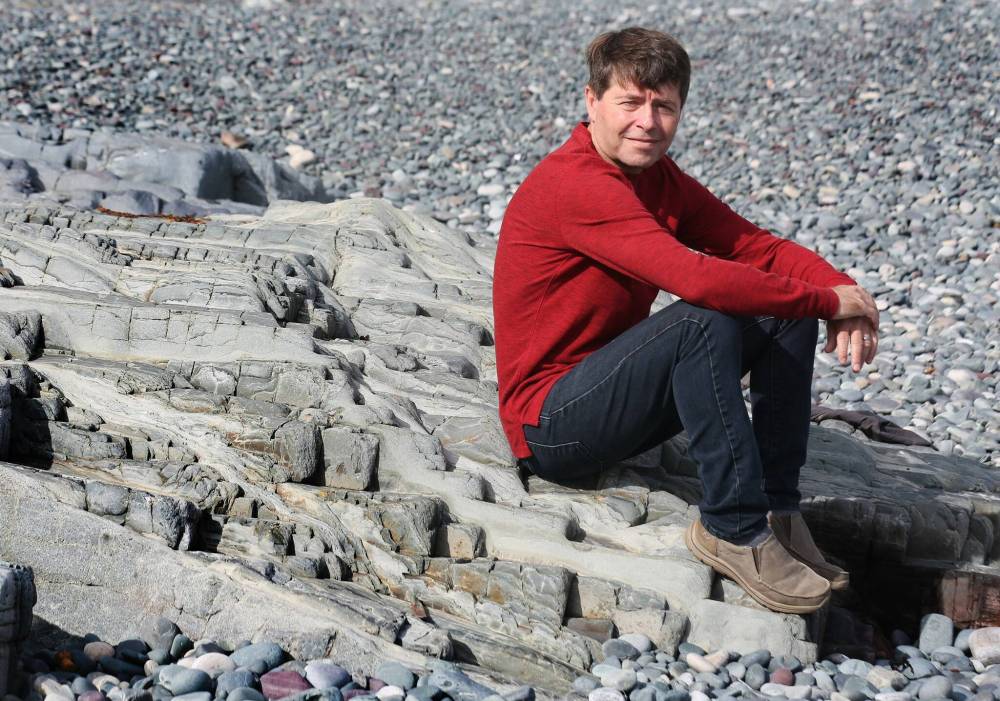
Paul Daly / The Canadian Press files
Author Michael Crummey found in his research a nefarious merchant from Bonavista, and used him as the template for The Adversary.
While researching The Innocents, Crummey came across a real-life character who grabbed his attention and wouldn’t let go.
“He was a merchant who lived around the turn of the 19th century in Bonavista and was, by all reports, a complete bastard and a drunkard and a brawler and a bully,” explains Crummey by phone.
That Bonavista bully was the genesis for Abe Strapp, one of two primary players in The Adversary. “He seemed to me to be the exact opposite of everything that was good in the brother and sister in The Innocents,” says Crummey.
And while he didn’t yet have a story idea for Abe, it was William Blake’s late-18th century poetry collection, Songs of Innocence and Experience, that provided a spark.
“Blake wanted to write mirror-image lyric sequences that explored the two contrary natures of the human soul, I think is how he put it,” Crummey says. “Songs of Innocence is all about the beauty of childhood, lambs frolicking in the fields and spring; Songs of Experience is the exact opposite.”
Rather than write a sequel to The Innocents, Crummey realized he could explore the darker tendencies of a new set of characters set at the same time.
“It eventually occurred to me that if this book was going to be a mirror image, there had to be a sister. As soon as I thought of that, the entire book opened up for me.”
Enter the Widow Caines, a rival merchant and estranged sister of Abe, equally nasty and ruthless.
Crummey relished shifting from writing the inherently good siblings of The Innocents to penning the inherently unlikable duo in The Adversary.
“I think you can enjoy the process of creating a character, regardless of your sympathy or lack of sympathy for them,” he says. “It was interesting to create a character who was as irredeemable as Abe and to try to display him in all his gory glory.”
And while the Widow’s life experiences initially offer more of a sympathetic slant, Crummey sees her as no better than her brutish brother. “I see her as being equally as awful as Abe … they’re sociopathic narcissists,” says Crummey.
“The only relations they’re capable of having are transactional, in terms of what they can get out of people or institutions.”
Unlike the solitary nature of The Innocents, Crummey’s new book is populated by a range of residents of the town of Mockbeggar and nearby Nonsuch.
“That broader canvas with a lot more moving parts … offered challenges, but also a sense of freedom as a writer,” he says. “As much as anything else, I was interested in the ways in which people find themselves tied to, beholden to or in league with these kinds of people.”
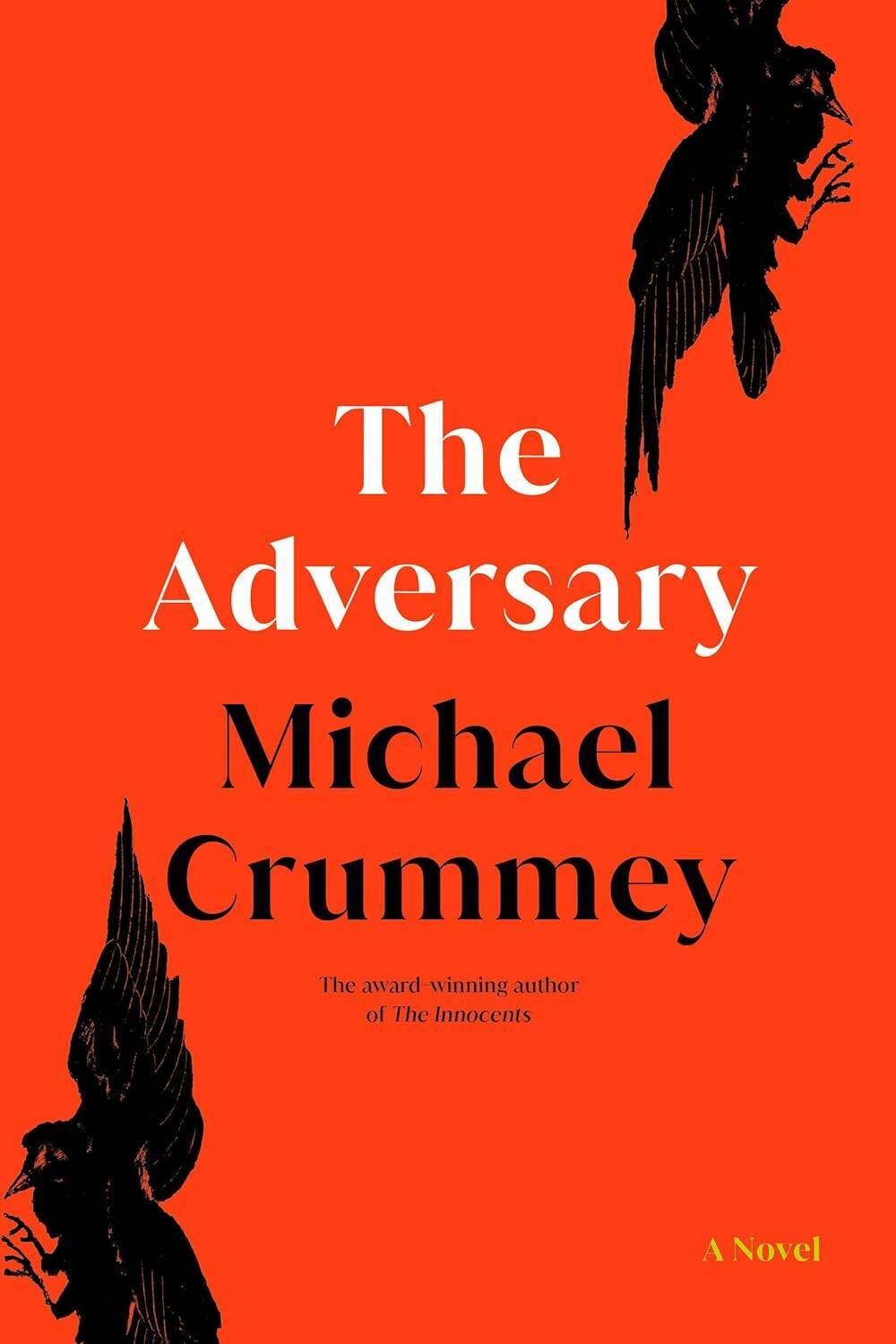
The Adversary
The result is a bleak but beautifully textured novel that tips the hat to the story of Cain and Abel, while The Innocents’ themes hearkened back to the story of Adam and Eve.
While steeped in the history of Newfoundland’s remote port communities, there are thematic ties to the modern world that run throughout The Adversary.
“Part of the motivation for writing this book was seeing it as an opportunity to write through my own sense of frustration and despair and anger over watching the world unfold over the last eight or 10 years,” says Crummey. “There seems to be a marked swing to the right, toward authoritarian forms of government, even in so-called democratic countries, where people just set about stripping away rights and ignoring whatever guardrails have been put in place to avoid abuses of power.”
Crummey also sees connections between The Adversary and the disregard for today’s climate crisis by those with the ability to do something.
“We still have people in positions of power, at the top of corporations who are ignoring the fact that they’re destroying lives,” he says. “And they’ve known it for a generation, at least two generations, and they don’t care, because they’re making big money. And to me, that’s a kind of sociopathic narcissism.”
The Adversary certainly isn’t all doom and gloom — Crummey’s writing is immersive and evocative, the world in which the characters live rich with detail and the language used by them peppered with insults from the time that provide levity and comic relief.

“I found this book, (Francis Grose’s) A Dictionary of the Vulgar Tongue, which is just an incredible document … The Adversary is a dark book, and there’s a lot of difficult things that go on in it. And so for me the language, and particularly the spoken language of people at the time, was the place where I was able to find some sense of release and beauty.”
Whether Crummey will return to the world of The Innocents and The Adversary in future books remains to be seen.
“When I finish a novel, I often feel completely empty; it takes me a while to sneak up on another book, even the idea for another book,” he says.
“I don’t have any plans to stay in that world … but if that’s the book that presents itself, I’d definitely be open to doing that.”
ben.sigurdson@winnipegfreepress.com
Ben Sigurdson
Literary editor, drinks writer
Ben Sigurdson is the Free Press‘s literary editor and drinks writer. He graduated with a master of arts degree in English from the University of Manitoba in 2005, the same year he began writing Uncorked, the weekly Free Press drinks column. He joined the Free Press full time in 2013 as a copy editor before being appointed literary editor in 2014. Read more about Ben.
In addition to providing opinions and analysis on wine and drinks, Ben oversees a team of freelance book reviewers and produces content for the arts and life section, all of which is reviewed by the Free Press’s editing team before being posted online or published in print. It’s part of the Free Press‘s tradition, since 1872, of producing reliable independent journalism. Read more about Free Press’s history and mandate, and learn how our newsroom operates.
Our newsroom depends on a growing audience of readers to power our journalism. If you are not a paid reader, please consider becoming a subscriber.
Our newsroom depends on its audience of readers to power our journalism. Thank you for your support.
Literary preview
An evening with Michael Crummey
● Tuesday, 7 p.m.
● McNally Robinson Booksellers, Grant Park location, also streaming on YouTube
● Co-presented by the Winnipeg International Writers’ Festival as part of Thin Air 2023
● Free admission
Buy on mcnallyrobinson.com
Ben Sigurdson
Literary editor, drinks writer
Ben Sigurdson is the Free Press‘s literary editor and drinks writer. He graduated with a master of arts degree in English from the University of Manitoba in 2005, the same year he began writing Uncorked, the weekly Free Press drinks column. He joined the Free Press full time in 2013 as a copy editor before being appointed literary editor in 2014. Read more about Ben.
In addition to providing opinions and analysis on wine and drinks, Ben oversees a team of freelance book reviewers and produces content for the arts and life section, all of which is reviewed by the Free Press’s editing team before being posted online or published in print. It’s part of the Free Press‘s tradition, since 1872, of producing reliable independent journalism. Read more about Free Press’s history and mandate, and learn how our newsroom operates.
Our newsroom depends on a growing audience of readers to power our journalism. If you are not a paid reader, please consider becoming a subscriber.
Our newsroom depends on its audience of readers to power our journalism. Thank you for your support.
Advertisement Advertise With Us
Advertisement Advertise With Us