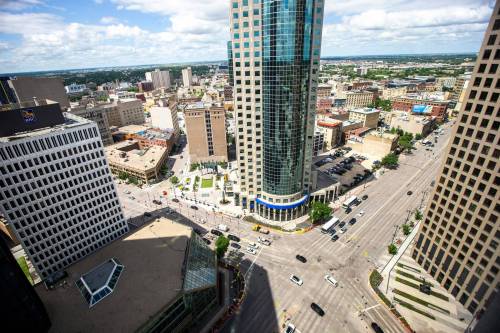
Good Will to say goodbye
Rising rent, dwindling traffic cited as key indie music venue to shut doors

Advertisement
Read this article for free:
or
Already have an account? Log in here »
To continue reading, please subscribe:
Digital Subscription
One year of digital access for only $1.44 a week*
- Enjoy unlimited reading on winnipegfreepress.com
- Read the E-Edition, our digital replica newspaper
- Access News Break, our award-winning app
- Play interactive puzzles
*Billed as $5.77 plus GST every four weeks. After 52 weeks, price increases to the regular rate of $19.95 plus GST every four weeks. Offer available to new and qualified returning subscribers only. Cancel any time.
To continue reading, please subscribe:
Add Free Press access to your Brandon Sun subscription for only an additional
$1 for the first 4 weeks*
- Enjoy unlimited reading on winnipegfreepress.com
- Read the E-Edition, our digital replica newspaper
- Access News Break, our award-winning app
- Play interactive puzzles
*Your next Brandon Sun subscription payment will increase by $1.00 and you will be charged $17.95 plus GST for four weeks. After four weeks, your payment will increase to $24.95 plus GST every four weeks.
Read unlimited articles for free today:
or
Already have an account? Log in here »
Hey there, time traveller!
This article was published 22/11/2023 (1069 days ago), so information in it may no longer be current.
The Good Will Social Club will close its doors in February, ending a nearly decade-long run on Portage Avenue as one of Winnipeg’s most important independent music venues.
Ownership cited the rising cost of living, the ongoing impact of the pandemic and rent that topped $10,000 a month as contributing factors for the decision, announced Wednesday afternoon in an Instagram post.
“It’s a decision we’ve been mulling over the past 10 months,” says Cam Loeppky, one of the venue’s four co-owners. “Every month, we thought we could fix the problems, but the hole was just too deep.”
Loeppky co-owns the venue with Mike Requiema, Anthony Kowalczyk and Donavan Robinson, and has been with the venue since it opened in October 2014 with a mission to fill a gap in the city’s live music scene as an artist-centred space.
While it’s become known for its karaoke and trivia nights, along with several restaurants — A Little Pizza Heaven, Have A Nice Day, Khao House and Primo’s Deli (which recently announced its departure from the space) — operating on site, the Good Will has been an essential small-to-midsize music venue for an eclectic lineup of concerts and dance parties.
MIKAELA MACKENZIE / WINNIPEG FREE PRESS FILES The Good Will Social Club took a hit during the pandemic, from which it never really recovered, owners say.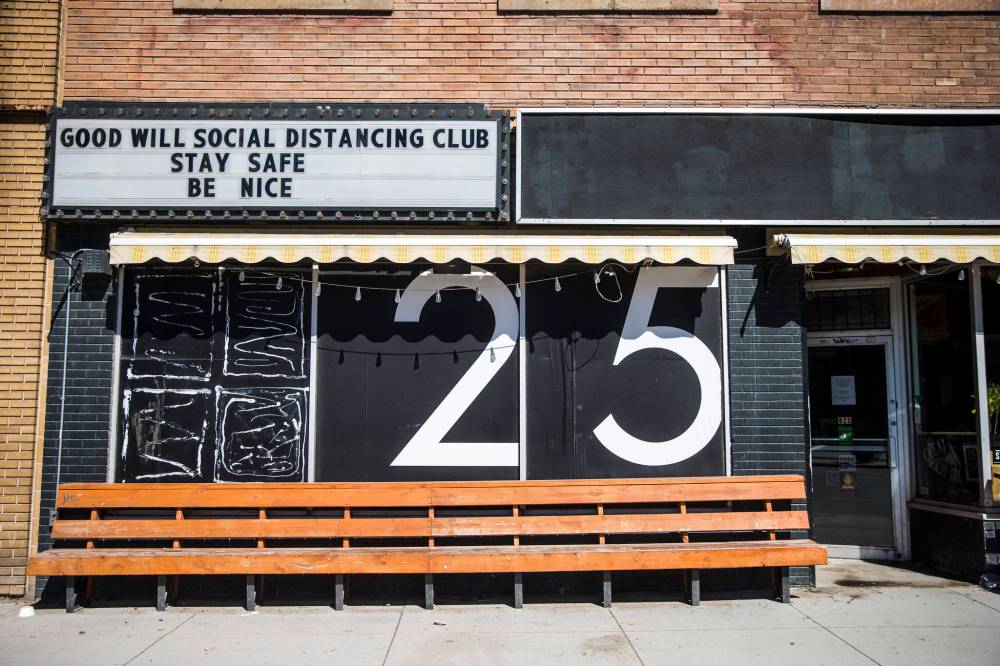
With a capacity of 250, the venue was able to play host to legacy acts such as Canadian pop-rock quartet Sloan or guitarist Lee Ranaldo of Sonic Youth, but has been an especially valuable performance space for up-and-coming Manitoba artists.
Hundreds of artists had their first shows there, the venue serving as a vital place for fans to discover new performers at an affordable ticket price. It also offered a crucial midsize room for touring artists.
The venue was among the earliest adopters in the city of safer-space policies, and its single-stall bathrooms — though legendarily grimy and graffiti-coated — were always gender-neutral.
When the pandemic struck, the venue was forced to close, leading the ownership group to consider shutting down as early as the spring of 2020. The owners started a GoFundMe to keep the club running through difficult times, raising just shy of $60,000.
But the impact of the pandemic was a blow the venue had trouble recovering from, even with the community support, Loeppky says. The club was operating at a deficit, “robbing Peter to pay Paul.”
“After the pandemic, nobody was going out. The cost of living is so high now, so people have to ask, ‘Do I go out and buy groceries, or do I go out and party for a night?’”
“The cost of living is so high now, so people have to ask, ‘Do I go out and buy groceries, or do I go out and party for a night?’”–Cam Loeppky
Performers and patrons were disappointed and shocked by the announcement.
“The Good Will was absolutely a staple in our community,” wrote singer Amos Nadlersmith of indie band Amos the Kid, who worked at the bar for the venue’s first three years. “I’ve seen so many of my favourite bands there. We are losing an absolutely incredible place.”
“The best place to be every weekend,” Emma Murphy, lead singer of Julien’s Daughter, commented on the Good Will’s Instagram post.

Adam Soloway, the venue’s longtime concert booker and a co-founder of Real Love Winnipeg, was initially at a loss for words.
“The Good Will is like a community centre for artists and music lovers, and will be nearly impossible to replace,” he tells the Free Press.
“It’s the spot in town where everyone wanted to play, and will be missed by so many,” he adds.
The Good Will is exploring options for its future, the venue’s social media post said.
“While it’s true that our time in our current space is coming to an end, we believe that this is not a final goodbye,” it reads, adding, “we have carefully considered our options and believe it is time to seek new adventures outside of our current location.”
The ownership did not offer specifics as to what those new adventures may be.
Loeppky says that the venue will operate as usual until Feb. 1, and will work with artists who had shows booked past that date to figure out alternate plans. Shows are currently on the venue’s calendar as late as May.
ben.waldman@winnipegfreepress.com
Ben Waldman is a National Newspaper Award-nominated reporter on the Arts & Life desk at the Free Press. Born and raised in Winnipeg, Ben completed three internships with the Free Press while earning his degree at Ryerson University’s (now Toronto Metropolitan University’s) School of Journalism before joining the newsroom full-time in 2019. Read more about Ben.
Every piece of reporting Ben produces is reviewed by an editing team before it is posted online or published in print — part of the Free Press‘s tradition, since 1872, of producing reliable independent journalism. Read more about Free Press’s history and mandate, and learn how our newsroom operates.
Our newsroom depends on a growing audience of readers to power our journalism. If you are not a paid reader, please consider becoming a subscriber.
Our newsroom depends on its audience of readers to power our journalism. Thank you for your support.
Advertisement Advertise With Us
Advertisement Advertise With Us