A New Hope for Indigenous languages
Move to translate original Star Wars into Anishinaabemowin has its roots right here in River City
Advertisement
Read this article for free:
or
Already have an account? Log in here »
To continue reading, please subscribe:

Digital Subscription
One year of digital access for only $205*
- Enjoy unlimited reading on winnipegfreepress.com
- Read the E-Edition, our digital replica newspaper
- Access News Break, our award-winning app
- Play interactive puzzles
*First annual payment billed as $205.00 + GST for one year. This annual subscription will automatically renew at $233.00 + GST every 52 weeks (10% off the regular annual price of $259.35). Offer available to new and qualified returning subscribers only. Cancel any time.
To continue reading, please subscribe:
Add Free Press access to your Brandon Sun subscription for only an additional
$1 for the first 4 weeks*
- Enjoy unlimited reading on winnipegfreepress.com
- Read the E-Edition, our digital replica newspaper
- Access News Break, our award-winning app
- Play interactive puzzles
*Your next Brandon Sun subscription payment will increase by $1.00 and you will be charged $17.95 plus GST for four weeks. After four weeks, your payment will increase to $24.95 plus GST every four weeks.
Read unlimited articles for free today:
or
Already have an account? Log in here »
Hey there, time traveller!
This article was published 19/12/2023 (995 days ago), so information in it may no longer be current.
It’s one of the most repeated lines in movie history, and soon, it will be spoken in Anishinaabemowin as well.
Star Wars fans may not recognize “Gi-ga-miinigoz Mamaandaawiziwin,” but almost everyone alive knows its English translation: “May the force be with you.”
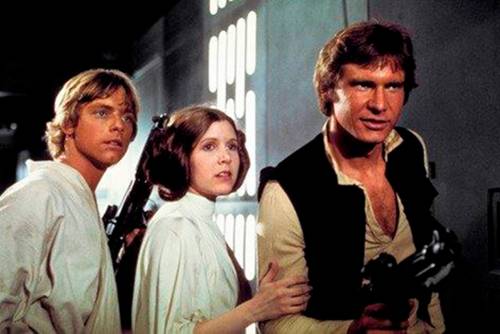
Thanks to a handful of passionate Star Wars fans here in Winnipeg, a version of A New Hope, the 1977 blockbuster that started it all, will be dubbed into Anishinaabemowin, also known as Ojibwa.
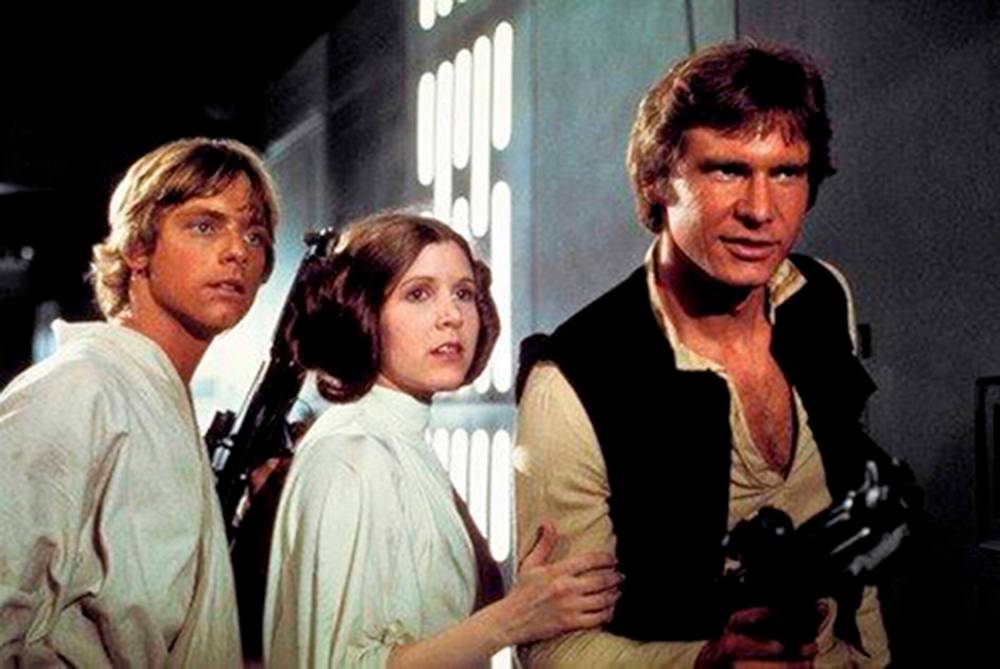
The Dakota Ojibway Tribal Council (DOTC) and the University of Manitoba just announced an alliance with Disney/Lucasfilm to create an official Ojibwa version of the film — making it only the second time that A New Hope will be translated into an Indigenous language. (The first was in 2013 when Lucasfilm released a Navajo version.)
It’s easy to understand the cultural significance of making Star Wars more accessible to a broader audience.
“Language is how knowledge is kept and handed down to future generations, within language we can hear our history and hopes for the future,” said Dan Vandal, federal minister of northern affairs in a news release.
“Our government, together with our partners, are acting to remedy the damage that colonization has caused to Indigenous languages,” he said. “Projects like this are crucial to revitalizing Indigenous languages and bringing them to new audiences so Indigenous Peoples can see themselves and their languages have a place at home and in a galaxy far, far away.”
The idea was the brainchild of Dougald Lamont, former MLA for St. Boniface, who in December 2021, emailed Pablo Hidalgo, a former Winnipegger and Star Wars executive, asking about the possibility of making an Ojibwa version.
“I thought if Star Wars could be translated into Navajo, they might be interested in doing another language as well,” Lamont said in a statement. “And while I’ve never met Pablo Hidalgo, Winnipeg being Winnipeg, we have several friends in common, so I e-mailed him.”
Hidalgo, who graduated from Red River College’s Creative Communications program and has penned several Star Wars books, didn’t work on Navajo Star Wars but frequently works with Michael Kohn at Lucasfilm, who was instrumental in putting it together. Hidalgo was “very happy” to let his hometown roots help open some doors by connecting Lamont and Kohn.
“Star Wars has a proven ability to bring people together in discussion, debate, speculation, creativity and more,” said Hidalgo, senior creative executive, franchise story & content, Lucasfilm Story Group. “Using it as a hook to get people talking about other topics is wonderful. We learned from the Navajo project that Star Wars comes with all these extremely visible icons that have become a sort of cross-cultural shorthand — the Force, the dark side, the Empire, the Rebellion. Translating these icons can help give a revitalizing boost to languages that need it.”
Once virtual intros were made and Lamont received a reply from Kohn, he immediately reached out to his friend Maeengan Linklater at DOTC, who is also a diehard Star Wars fan. (His son’s middle name is Jedi.)
That set the wheels in motion. From there, Linklater and DOTC reached out to develop a proposal, with the University of Manitoba and APTN signed on as partners.
The special dub (a post-production re-recording of the lines lip-synced and mixed with the original production) is being made possible through a partnership between the Dakota Ojibway Tribal Council, the University of Manitoba, Disney/Lucasfilm and APTN, and is supported in part by the Government of Canada through the Indigenous Languages and Cultures Program from Canadian Heritage. Additional support will be provided by Disney/Lucasfilm and APTN.
A New Hope has been translated into more than 50 languages around the world. While there are many Indigenous languages in Canada, Anishinaabemowin was chosen because it has about 320,000 speakers in Canada and the U.S., and is the most spoken Indigenous language in Manitoba, Ontario and Minnesota.

There are multiple goals to the project — in addition to revitalizing Indigenous languages by dubbing Star Wars: A New Hope into Ojibwa, the hope is to use the process as a “proof of concept” for how Indigenous language speakers can either translate future projects or develop film and TV projects of their own in Manitoba.
“It’s the one with the biggest hometown connection for me. As Venn Diagrams go, I recognize that I live in the Star Wars and Winnipeg overlap, and I’m honoured that I get to share that space with a worthy project such as this,” says Hidalgo. “I think it’s a great example of the community that Star Wars can foster, across cultures, generations, languages and countries.”
Script translation, auditions for Anishinaabemowin voice actors and sound recording will take place in Winnipeg, with sound mixing and post-production scheduled to occur at Skywalker Sound in California. Plans are to have a Winnipeg première as well as showings at theatres across Canada. The intent is to also air the film on APTN.
More details and timelines will be announced as the project progresses. For more information, visit StarWarsOjibwe.com.
arts@winnipegfreepress.com
Advertisement Advertise With Us
Advertisement Advertise With Us