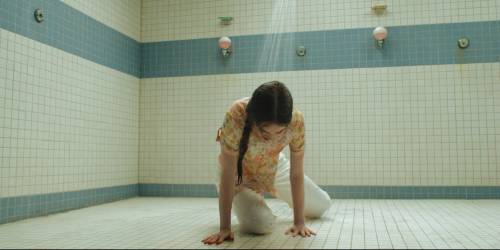
Everyday minutiae re-imagined via fluid vocabulary of movement
Advertisement
Read this article for free:
or
Already have an account? Log in here »
To continue reading, please subscribe:

Digital Subscription
One year of digital access for only $205*
- Enjoy unlimited reading on winnipegfreepress.com
- Read the E-Edition, our digital replica newspaper
- Access News Break, our award-winning app
- Play interactive puzzles
*First annual payment billed as $205.00 + GST for one year. This annual subscription will automatically renew at $233.00 + GST every 52 weeks (10% off the regular annual price of $259.35). Offer available to new and qualified returning subscribers only. Cancel any time.
To continue reading, please subscribe:
Add Free Press access to your Brandon Sun subscription for only an additional
$1 for the first 4 weeks*
- Enjoy unlimited reading on winnipegfreepress.com
- Read the E-Edition, our digital replica newspaper
- Access News Break, our award-winning app
- Play interactive puzzles
*Your next Brandon Sun subscription payment will increase by $1.00 and you will be charged $17.95 plus GST for four weeks. After four weeks, your payment will increase to $24.95 plus GST every four weeks.
Read unlimited articles for free today:
or
Already have an account? Log in here »
Hey there, time traveller!
This article was published 03/05/2024 (884 days ago), so information in it may no longer be current.
One of the best things about modern dance is that you’re never quite sure what you’re going to see, its endless array of thematic concepts as fluid as a dancer’s arched backbend.
In this case, Winnipeg’s Contemporary Dancers took an estimated 40 members of Thursday night’s preview audience on a journey through the microcosms of daily life, with the world première of artistic director Jolene Bailie’s Signals to Segue. The three-performance production at the Rachel Browne Theatre caps the company’s 59th season.
It’s a worthy premise, and an impressive, all-local six-dancer ensemble — Carol-Ann Bohrn, Reymark Capacete, Justine Erickson, Julious Gambalan, Warren McClelland and Shayla Rudd — dance their hearts out during the often highly athletic, 55-minute work.

Leif Norman photo
WCD dancer Shayla Rudd, Warren McClelland and Carol Ann Bohrn
It’s every creator’s dream to have fellow artists demonstrating a fierce commitment to bringing her vision to life, and Bailie has a goldmine with her handpicked dancers.
Other strengths include the show’s dramatic lighting design by the choreographer’s longtime collaborator, the incomparable Hugh Conacher, and a driving electronic score by Emma Hendrix that pulses and provides underscoring throughout.
Brightly coloured pastel costumes of silky shorts and shirts are co-designed by another veteran of Winnipeg’s dance community, Wanda Farian; they pop like cotton candy against the white box set that serves as a canvas for the performers. It also creates an effective backdrop for Conacher’s shadows, shin lighting and geometrical shapes — including stage-wide circles and razor-sharp shafts of light projected onto the floor — that further define the space while adding visual dimension.
The production begins with the six dancers standing upstage in a line. They flail their arms, and slap their own bodies before exploding into Bailie’s visceral movement vocabulary, including high-flying leaps and lifts, daring upside-down flips, and warp-speed spins across the floor, evoking hyperkinetic tumbleweeds.
The larger group breaks into smaller, more intimate ensembles that highlight the “micro-decisions” of Bailie’s theme through more intricate choreographic detail, while wisely spotlighting individual dancers. An early duet of the well-matched Capacete and Gambalan, infused with forceful tumbles and leaps, bleeds into another dynamic trio featuring Bohrn, Erickson and McLelland, who reaches his arms into space and pulses on his toes.
However the abstract work often feels uneven, and overly cryptic. Midway, Bohrn now seated on a yellow chair, holds a microphone and intones, “I’m just going to read some texts but I want you to watch the dance.” Well, yes, it’s hard not to when you have several fine duets happening behind her by McLelland and Rudd, or Capacete with Erickson, with the dancers providing reactive counterpoint to the narration.

Leif Norman photo
Dancer Shayla Rudd-Bohrn
Bohrn then pushes further with a more confrontational dare to the audience: “Are you going to just sit there and not say anything?” Breaking theatre’s proverbial fourth wall is always startling — if not enough to make an audience squeamish.
The production gains greater focus and dramatic intensity with the addition of three chairs (plus a painted mime cube) used as props, as well as a suspended hand microphone magically lowered from the ceiling. Capacete’s dynamic solo (duet?) with the mic enthralls, as he swings it madly around the stage, chasing it around a pool of light before ultimately coiling it around his neck like a noose.

When he says, “Sometimes when I say something, no one responds” or the even more harrowing, “Sometimes I look in the mirror and no one’s there,” it reverberates with postmodern angst of social alienation in an age of technology.
This is echoed during one of the show’s final extended scenes, in which metres of microphone cable are strung across the stage like a giant cat’s cradle, as dancers take turns moving through the labyrinth, caught like spiders in a web of electronica. More of these images would have made this a stronger production.
The show comes full circle with the dancers returning to their opening line formation, now downstage, as they once more swing their arms and segue into staring out at the audience.

Leif Norman photo
WCD dancers Shayla Rudd and Warren McClelland
While re-establishing their “macro” connection as a society, their blank facial expressions and wide-open eyes signal their own “micro” discomfort and disconnection as individuals, in Bailie’s imagined, abstract world of meditative wonder.
holly.harris@shaw.ca
Holly Harris writes about music for the Free Press Arts & Life department.
Our newsroom depends on a growing audience of readers to power our journalism. If you are not a paid reader, please consider becoming a subscriber.
Our newsroom depends on its audience of readers to power our journalism. Thank you for your support.
Dance review
Signals to Segue
Winnipeg’s Contemporary Dancers
Rachel Browne Theatre
Through Sunday
★★★1/2 out of five
Holly Harris writes about music for the Free Press Arts & Life department.
Our newsroom depends on a growing audience of readers to power our journalism. If you are not a paid reader, please consider becoming a subscriber.
Our newsroom depends on its audience of readers to power our journalism. Thank you for your support.
Related Articles
Contemporary dancers finale a look at the minutiae of life
Advertisement Advertise With Us
Advertisement Advertise With Us