Series examines harms of now-illegal conversion therapy

Advertisement

Advertise with us

Conversion therapy — the practice of trying to forcibly change a person’s sexual orientation — was made illegal in Canada almost three years ago.

Read this article for free:


or

Already have an account? Log in here »

To continue reading, please subscribe:

Subscribe and receive a limited-edition Free Press branded hat or tote.

Digital Subscription

One year of digital access for only $205*

  • Enjoy unlimited reading on winnipegfreepress.com
  • Read the E-Edition, our digital replica newspaper
  • Access News Break, our award-winning app
  • Play interactive puzzles

*First annual payment billed as $205.00 + GST for one year. This annual subscription will automatically renew at $233.00 + GST every 52 weeks (10% off the regular annual price of $259.35). Offer available to new and qualified returning subscribers only. Cancel any time.

To continue reading, please subscribe:

Add Free Press access to your Brandon Sun subscription for only an additional

$1 for the first 4 weeks*

  • Enjoy unlimited reading on winnipegfreepress.com
  • Read the E-Edition, our digital replica newspaper
  • Access News Break, our award-winning app
  • Play interactive puzzles
Start now

*Your next Brandon Sun subscription payment will increase by $1.00 and you will be charged $17.95 plus GST for four weeks. After four weeks, your payment will increase to $24.95 plus GST every four weeks.

Hey there, time traveller!
This article was published 23/12/2024 (635 days ago), so information in it may no longer be current.

Conversion therapy — the practice of trying to forcibly change a person’s sexual orientation — was made illegal in Canada almost three years ago.

But the topic is hardly resolved for Winnipeg filmmaker Jonathan Lawrence, who takes up the subject for the second time in the series Alter Boys, a six-part drama currently streaming on CBC Gem. Though set in Northern Manitoba, the series was filmed in Winnipeg and surrounding areas — including Selkirk and Birds Hill — over a whirlwind schedule of 18 days.

“It was a very intense schedule to shoot six episodes, three days per episode in the end. It was very fast,” Lawrence says during a phone interview.

JORDAN POPOWICH PHOTO
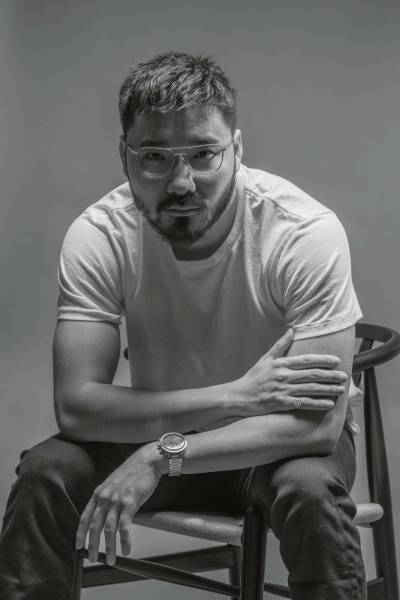
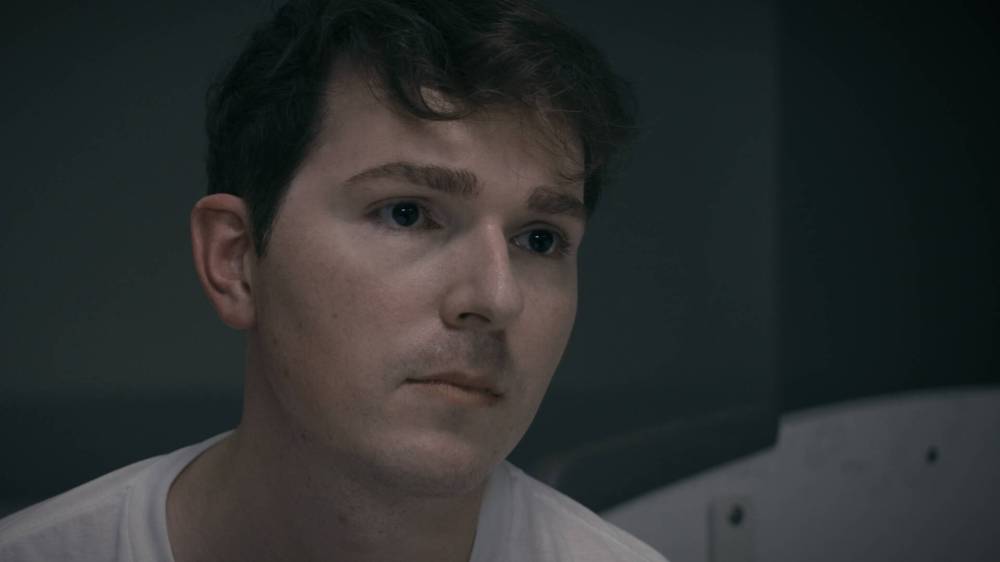
Jonathan Lawrence wrote, directed and stars in the series Alter Boys.

JORDAN POPOWICH PHOTO

Jonathan Lawrence wrote, directed and stars in the series Alter Boys.

The series is a sequel of sorts. Lawrence first approached the subject in 2019 in a short film of the same name that followed two men furtively meeting on the outskirts of a conversion therapy camp trying to make sense of the situation in which they find themselves.

“We never see the camp. We don’t see the facilitators. We don’t even see many of the people attending. It’s just two characters through a series of meetings that they have through the wooded borders of this camp,” Lawrence says.

The short won Lawrence praise, including the Audience Choice Best Short award at the 2020 Reel Pride Film Festival, and Best Manitoba Film at the 2020 Winnipeg Aboriginal Film Festival.

That positive reception inspired him to expand the story to encompass not only more of the young men forced to attend the camp, but the authority figures behind the bucolic facility.

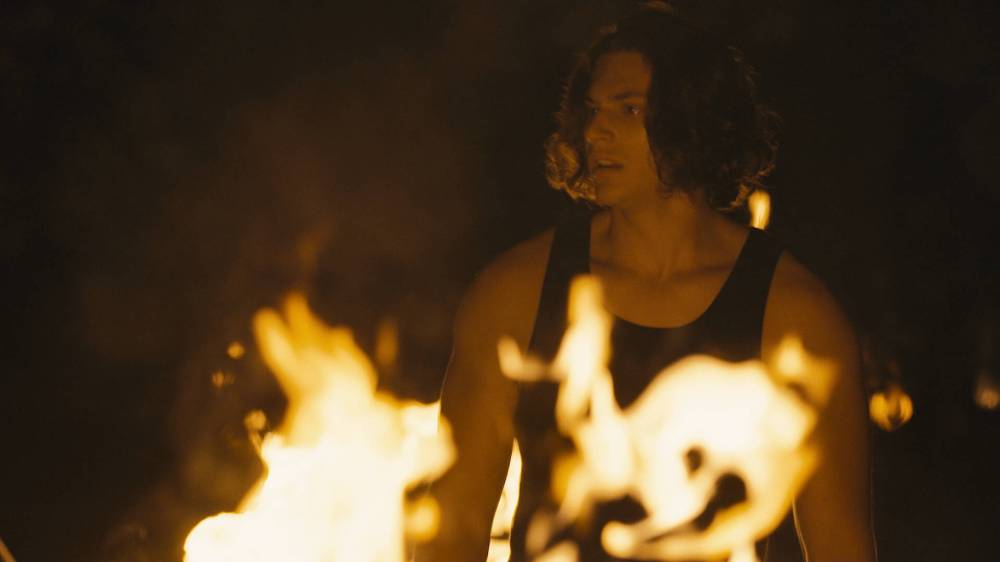
Lawrence, who wrote and directed the series, also stars in the role of Scotty, a young man trying to piece together his shattered existence in the wake of a fire that has torn through the camp. A formal investigation into the blaze spurs a more nuanced examination of the facility and the people navigating the inherent trauma of conversion therapy.

An honours graduate of the University of Winnipeg’s theatre and film department, Lawrence started out as an actor.

“I was articulating storytelling through being an actor,” he says.

But his storytelling vision expanded upon making his first feature film, When the World Was Flat, in 2015.

JORDAN POPOWICH PHOTO
While Lawrence admits he was never subjected to conversion therapy, he still remembers his own experience dealing with adversity.

JORDAN POPOWICH PHOTO

While Lawrence admits he was never subjected to conversion therapy, he still remembers his own experience dealing with adversity.

“After writing that project, it unlocked a wealth of ideas and concepts in storytelling. Finishing that really gave me the push to say: I can do this. And it took off from there,” he says.

Lawrence comes at the subject from an expansive perspective, not only as a queer man, but as a man of Cree and mixed European ancestry.

“I’m Cree from my mother’s side. I was very close with my mom and that heritage was the most prevalent in my life,” he says, adding discovering his sexuality was made easier by that heritage.

“I do remember growing up, when you’re looking for language in particular while you’re trying to discover who you are. I remember learning about being two-spirited at that time, thinking and reading about what that was. I’ve always felt quite welcome within my community,” he says.

While Lawrence admits he was never subjected to conversion therapy, he still remembers his own experience dealing with adversity.

“It largely goes back to the school to being at school, junior high in particular, and facing the bullying that goes on there,” he says. “It definitely was an experience that was quite encompassing it, that was quite relentless and it became such a big part of my life.

“Even though I’m out of it now, that kind of bullying, it lingers. It stays with you.”

JORDAN POPOWICH PHOTO
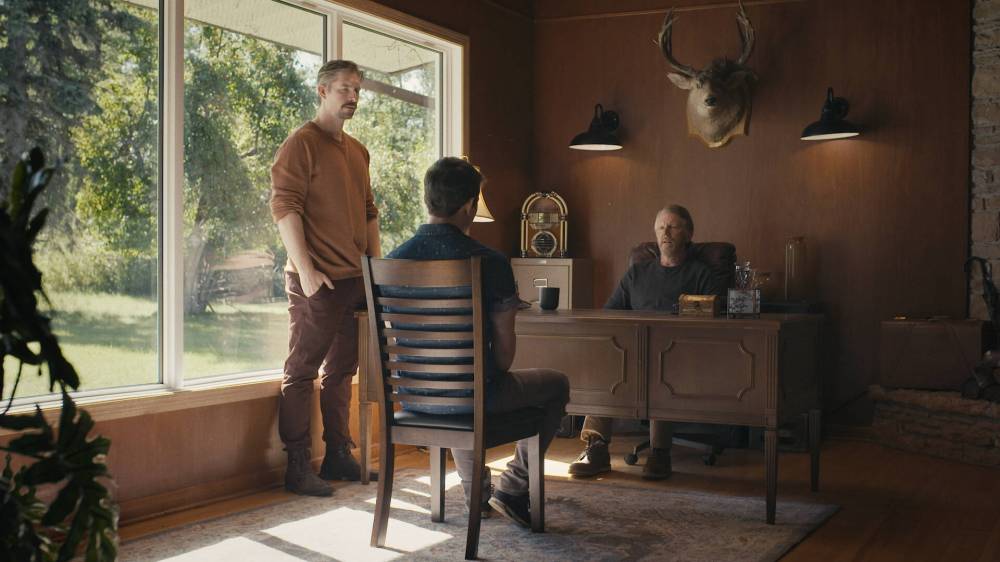
From left: Justin Otto, Jonathan Lawrence and Arne MacPherson in a scene from the series Alter Boys.

JORDAN POPOWICH PHOTO

From left: Justin Otto, Jonathan Lawrence and Arne MacPherson in a scene from the series Alter Boys.

Even so, he says the series also allows something positive.

“I saw it as an opportunity to showcase queer relationships, the dynamics evolving in different relationships, queer affection and intimacy. The adversity was kind of a funnel to showcase that, the beauty of staking claim to identity,” he says.

“But it’s important to acknowledge there is adversity out there in our world.”

randall.king.arts@gmail.com

Randall King

Randall King
Writer

Randall King writes about film for the Winnipeg Free Press.

Our newsroom depends on a growing audience of readers to power our journalism. If you are not a paid reader, please consider becoming a subscriber.

Our newsroom depends on its audience of readers to power our journalism. Thank you for your support.

Report Error Submit a Tip

More Stories

Day 1 of Jets training camp in the books with pairings essentially cemented

Ken Wiebe 7 minute read Preview

Day 1 of Jets training camp in the books with pairings essentially cemented

Ken Wiebe 7 minute read Thursday, Sep. 17, 2026

Nearly six minutes into his question-and-answer session, Scott Arniel took a welcome detour from the news of the day.

After exhausting the discussion around the goalie who wasn’t in training camp, the head coach of the Winnipeg Jets finally got a query about the line combinations and defensive pairings that were unveiled in training camp.

And unlike past years, when exhibition games were more frequent and the training camp wasn’t this condensed, Arniel conceded these groupings were intentional and were likely staying together for some time.

The expansion to an 84-game regular season brings with it a reduction to four pre-season games and a much shorter training camp, which could limit the amount of experimentation that Arniel can do during the next two weeks.

Read
Thursday, Sep. 17, 2026

Series examines harms of now-illegal conversion therapy

Randall King 4 minute read Preview

Series examines harms of now-illegal conversion therapy

Randall King 4 minute read Monday, Dec. 23, 2024

Conversion therapy — the practice of trying to forcibly change a person’s sexual orientation — was made illegal in Canada almost three years ago.

But the topic is hardly resolved for Winnipeg filmmaker Jonathan Lawrence, who takes up the subject for the second time in the series Alter Boys, a six-part drama currently streaming on CBC Gem. Though set in Northern Manitoba, the series was filmed in Winnipeg and surrounding areas — including Selkirk and Birds Hill — over a whirlwind schedule of 18 days.

“It was a very intense schedule to shoot six episodes, three days per episode in the end. It was very fast,” Lawrence says during a phone interview.
The series is a sequel of sorts. Lawrence first approached the subject in 2019 in a short film of the same name that followed two men furtively meeting on the outskirts of a conversion therapy camp trying to make sense of the situation in which they find themselves.

Read
Monday, Dec. 23, 2024

‘She was looking to destroy me’: convicted harasser faces new charges

Dean Pritchard 6 minute read Preview

‘She was looking to destroy me’: convicted harasser faces new charges

Dean Pritchard 6 minute read Thursday, Sep. 17, 2026

When Agnieszka Ciochon-Newton moved into the 55-plus apartment building on Stradbrook Avenue last year, she came across as “timid, soft-spoken and sensitive,” said building manager Tanya Owen.

Little did Owen know the meek-looking 58-year-old woman would soon turn her life and the lives of many of her tenants upside down and threaten her career and family.

“She was looking to destroy me for a simple tenant disagreement,” Owen said Thursday.

Court records show Ciochon-Newton was arrested earlier this month and charged with seven counts of criminal harassment, two counts of uttering threats and one count each of fraud, breaking and entering, attempting to obstruct justice, intimidation of a justice official, mischief and defamatory libel.

Read
Thursday, Sep. 17, 2026

Cabernet Sauvignon star of wine festival

Ben Sigurdson 5 minute read Preview

Cabernet Sauvignon star of wine festival

Ben Sigurdson 5 minute read 3:00 AM CDT

The Winnipeg Wine Festival will celebrate the king of red wine grapes next weekend — the theme of this year’s festival, which takes place Sept. 25 and 26 at the RBC Convention Centre, is Cabernet Sauvignon.

Cab Sauv, as it’s also known, is the world’s most widely planted wine grape of any colour, first coming to prominence in the 1800s in France’s Bordeaux region, where the grape is still popular. Rather than single-variety wines, Bordeaux reds tend to be blends, with those coming from the left bank of the Gironde estuary being Cabernet-dominant, while right-bank wines are Merlot-dominant, with Cabernet Sauvignon playing a supporting role. Cabernet and Merlot work well together and many other countries have followed suit in blending the two.

A team at University of California Davis put Cabernet Sauvignon through a DNA test in 1996 and discovered its parent grapes are Cabernet Franc and Sauvignon Blanc — it’s likely that at some point the two varieties, planted next to each other in some vineyard, crossed and mutated and became the grape we know today. (Someone growing grapes in the 19th century must have had an inkling of what was up, as the grape has been called Cabernet Sauvignon since long before the DNA test.)

Flavour-wise, most Cabernet Sauvignon wines are big and bold, with a core of deep dark berry flavours, some graphite and spice notes and relatively bright acidity. It’s a grape that is well-suited to barrel aging, with most examples seeing at least some time in wood.

Read
3:00 AM CDT

Family account spiced with magic realism, geopolitical intrigue and a ghost story

Reviewed by Zilla Jones 4 minute read Preview

Family account spiced with magic realism, geopolitical intrigue and a ghost story

Reviewed by Zilla Jones 4 minute read 2:01 AM CDT

Tom Lin’s second novel Babylon, South Dakota moves beyond a historical account of an immigrant family’s struggle, delightfully blending and bending genres.

Lin is a Chinese-born novelist whose family emigrated to the U.S. when he was four years old. His debut novel, The Thousand Crimes of Ming Tsu, won the 2022 Andrew Carnegie Medal for Excellence in Fiction, making him the youngest ever recipient of that award. He earned a PhD in English from the University of California Davis and is currently an assistant professor of English and creative writing at the University of Iowa.

Babylon, South Dakota takes place in an unspecified time period that can be understood to be during the Mao era — likely the 1950s or ’60s. A young Chinese couple, the Hsuis, immigrate to the rural community that gives the book its title. They take the names Saul and Mei and settle on a 160-acre homestead left to them by a distant relative.

Saul’s dream is to breed and sell chrysanthemums from seeds he brought from China, while Mei wants to raise livestock. They speak no English, know nothing of life in the United States, are unprepared for the harshness of winter and the isolation of the farm and bring nothing with them except some gold, which Mei hides around the house for emergencies. Their only link to the outside world is a discarded and marginally functioning TV set, which Saul rescues and rigs up.

Read
2:01 AM CDT

Manitoba abandoning spring, fall clock changes

Carol Sanders 8 minute read Preview

Manitoba abandoning spring, fall clock changes

Carol Sanders 8 minute read Updated: Yesterday at 8:48 AM CDT

Time’s up for the time change in Manitoba.

Manitobans won’t be setting their clocks back an hour in November. The province has decided to permanently stay on daylight time after surveying residents on the twice annual clock adjustment.

“We heard from Manitobans loud and clear — no more changing the clocks in Manitoba,” Premier Wab Kinew said in a news release Thursday.

Most of the 72,000 votes submitted in an online EngageMB survey — 92 per cent — said they would like to see the practice end. The survey asked if they preferred earlier sunrises in winter with standard time or the later sunsets in summer with daylight time. More than half of survey participants (58 per cent) indicated a preference to stay on permanent daylight time; 34 per cent voted to eliminate the time change but stay on standard time.

Read
Updated: Yesterday at 8:48 AM CDT