Transatlantic true hearts More than 400 thin, blue airmail pages document a WWII courtship that conquered fear, war and loneliness
Read this article for free:
or
Already have an account? Log in here »
To continue reading, please subscribe:

Digital Subscription
One year of digital access for only $205*
- Enjoy unlimited reading on winnipegfreepress.com
- Read the E-Edition, our digital replica newspaper
- Access News Break, our award-winning app
- Play interactive puzzles
*First annual payment billed as $205.00 + GST for one year. This annual subscription will automatically renew at $233.00 + GST every 52 weeks (10% off the regular annual price of $259.35). Offer available to new and qualified returning subscribers only. Cancel any time.
To continue reading, please subscribe:
Add Free Press access to your Brandon Sun subscription for only an additional
$1 for the first 4 weeks*
- Enjoy unlimited reading on winnipegfreepress.com
- Read the E-Edition, our digital replica newspaper
- Access News Break, our award-winning app
- Play interactive puzzles
*Your next Brandon Sun subscription payment will increase by $1.00 and you will be charged $17.95 plus GST for four weeks. After four weeks, your payment will increase to $24.95 plus GST every four weeks.
Read unlimited articles for free today:
or
Already have an account? Log in here »
Hey there, time traveller!
This article was published 13/02/2025 (581 days ago), so information in it may no longer be current.
Leonard (Len) Abraham Corstiaan Van Roon is a man of letters.
Over the course of 982 days, Van Roon — an officer of the 19th Field Artillery Regiment in the Canadian Armed Forces who served his country from 1943 to 1945 — wrote more than 400 letters to the great love of his life, Verna Alma Ball.
MIKE DEAL / FREE PRESS
103-year-old Second World War veteran Len Van Roon with the collection of letters he and Verna Alma Ball wrote to each other during the war.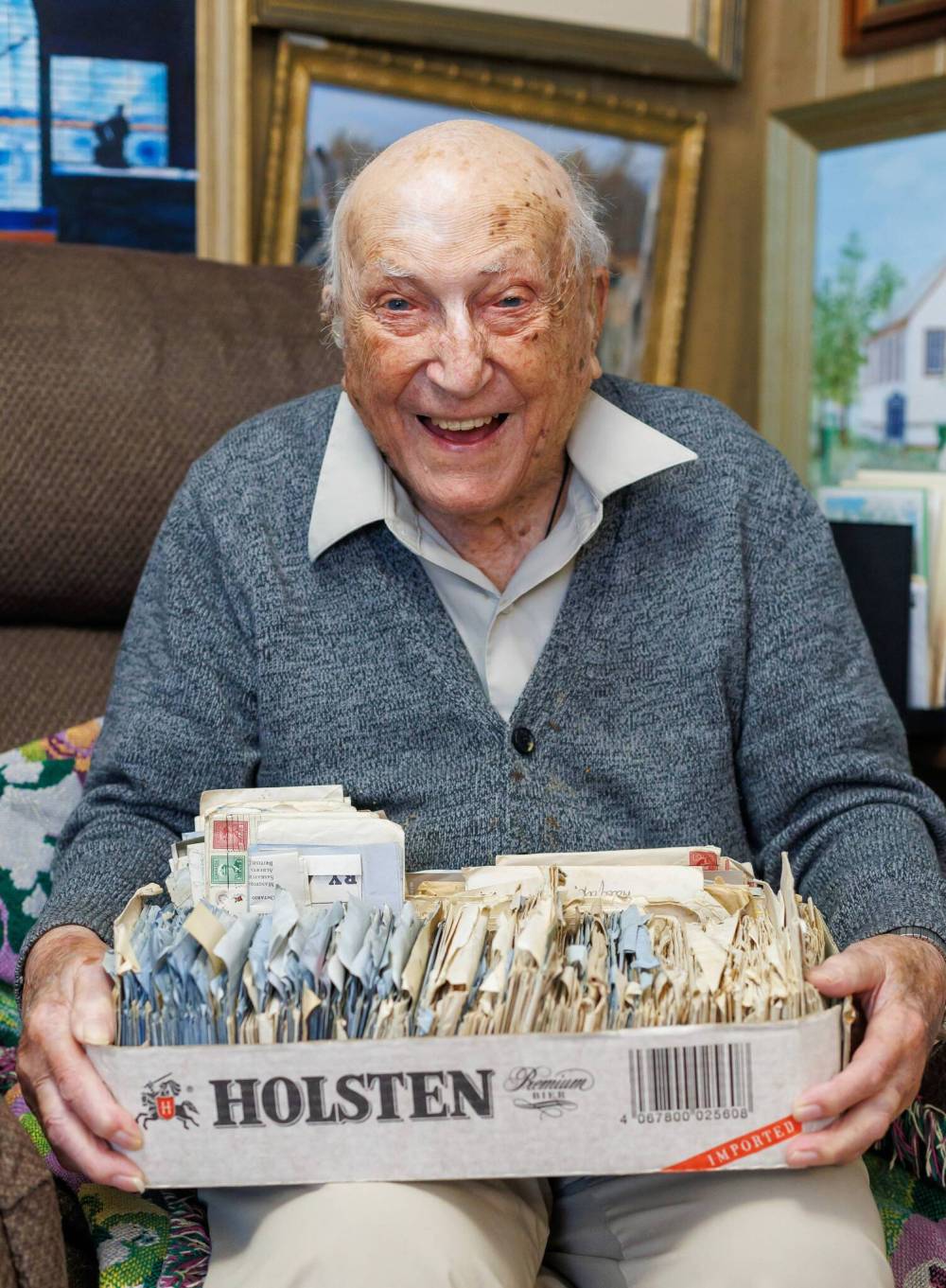
His was a courtship of words during a time of strife.
The letters always began in the same way.
“Dearest Vern…” he would write whenever the the opportunity arose, packing his words in the limited space of the thin, blue airmail sheets provided by the army.
It didn’t matter whether he was crouched down in a foxhole, or wedged in the passenger seat of his Sherman tank or sitting on “bouncy trains” trundling through the countryside or perched on the edge of his bunk, paper balanced on his legs, surrounded by the mess and chaos of an army barracks room — Van Roon wrote and wrote and wrote.
All throughout his deployment, he never stopped writing to his “Dearest Vern…” He’d promised to, you see, and he was a man of his word.
Van Roon wrote from Dartmouth, Halifax, N.S., and from the floor of the MS Queen Elizabeth ship as it made its way across the Atlantic Ocean to Greenock, Scotland.
He wrote from England, and from France, and from Belgium, and from Holland, and from Germany.
Today, those “Dearest Vern” letters, tucked between messages he penned to his mother, other family members and friends, make up the 1,100 wartime missives Van Roon sent home between March 30, 1943, and Dec. 6, 1945.
The letters provide a rare glimpse of young love blossoming in a world caught up in bloody war.
Len Van Roon first set eyes on Verna Ball in church. She had caught his attention when taking charge of the children for their Sunday school lessons in the United Church, then on the corner of Roblin Boulevard and Harstone Road.
He was smitten.
MIKE DEAL / FREE PRESS
Verna Alma Ball on her honeymoon in Kenora in 1946. 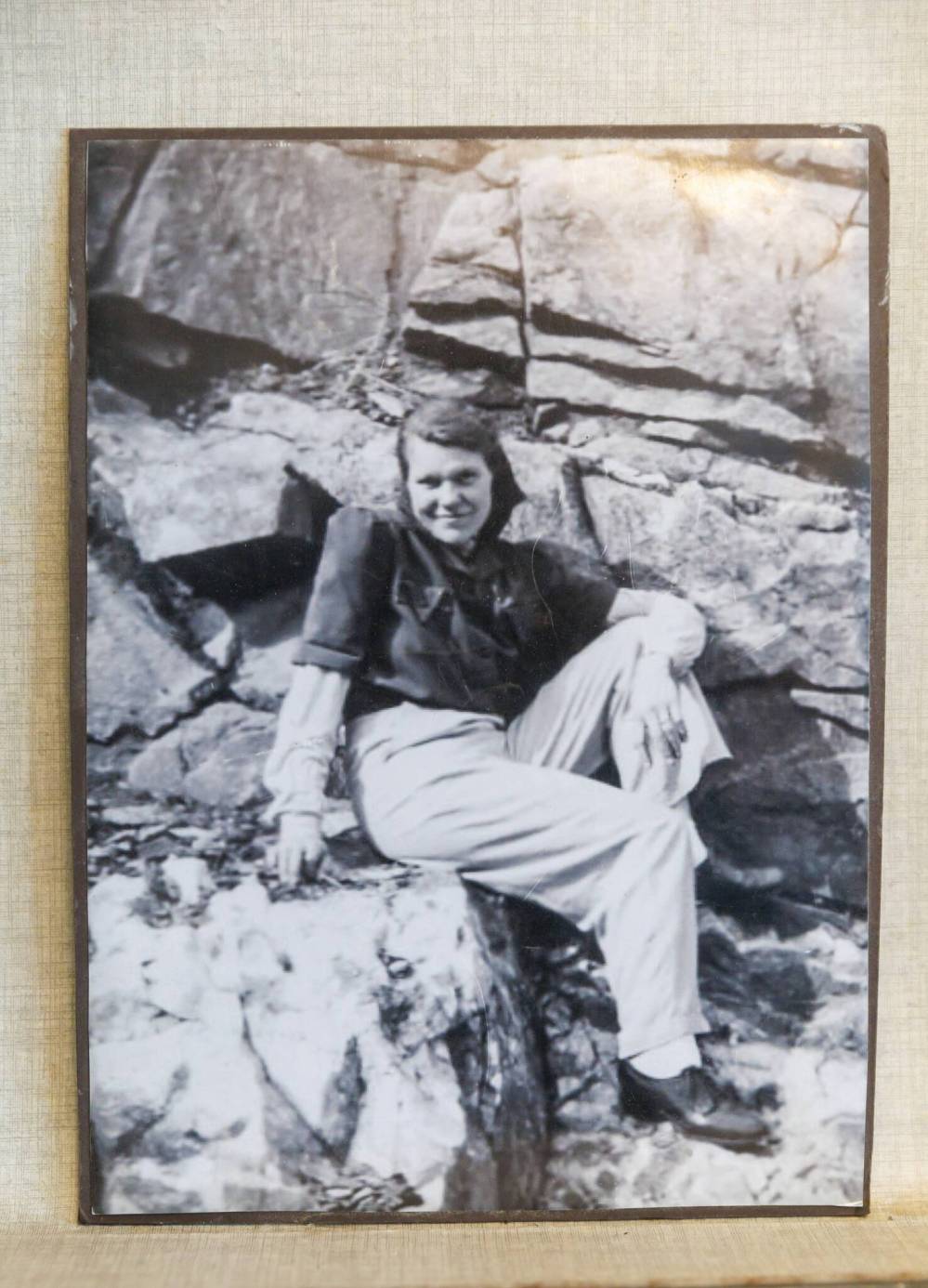
“I was intrigued watching her operate; she was so good with children, with people. That’s how we made contact,” says the 103-year-old Second World War veteran.
After some initial shyness on Ball’s part, the couple began going out.
They were barely a year into their relationship when Van Roon was drafted into the army, decamping to the Fort Garry base in January 1943 to start his basic training; he had just turned 22.
Together they made a plan.
To keep in touch, Van Roon would call Ball, who was working at Victoria General Hospital (on the corner of River Avenue and Rose Street), during her lunch hour.
Letter-writing would commence as soon as he was sent to Nova Scotia, together with hundreds of men from all over the country.
There was a trend for servicemen to wed their beloveds before leaving for war, but that wasn’t something the couple desired.
“We did think about it — we were getting very close to each other — but we both agreed that getting married and going overseas was not a good system. A lot of guys did that and those marriages never lasted. You’re away for two, three years … so we agreed, and that’s why the heavy correspondence,” he says.
The couple begin writing to each other.
Verna goes first — in a letter dated March 29, 1943, she pens a “wee note” to surprise him when he gets to Halifax.
Van Roon’s first letter to her, written a day later, strikes a philosophical note.
MIKE DEAL / FREE PRESS “Writing letters was a lifesaver for my family. I resolved to write a letter a day and, no matter what, I achieved this goal. On D-Day, I was there, and you think, well you are not going to be able to write, but I always managed,” Len says.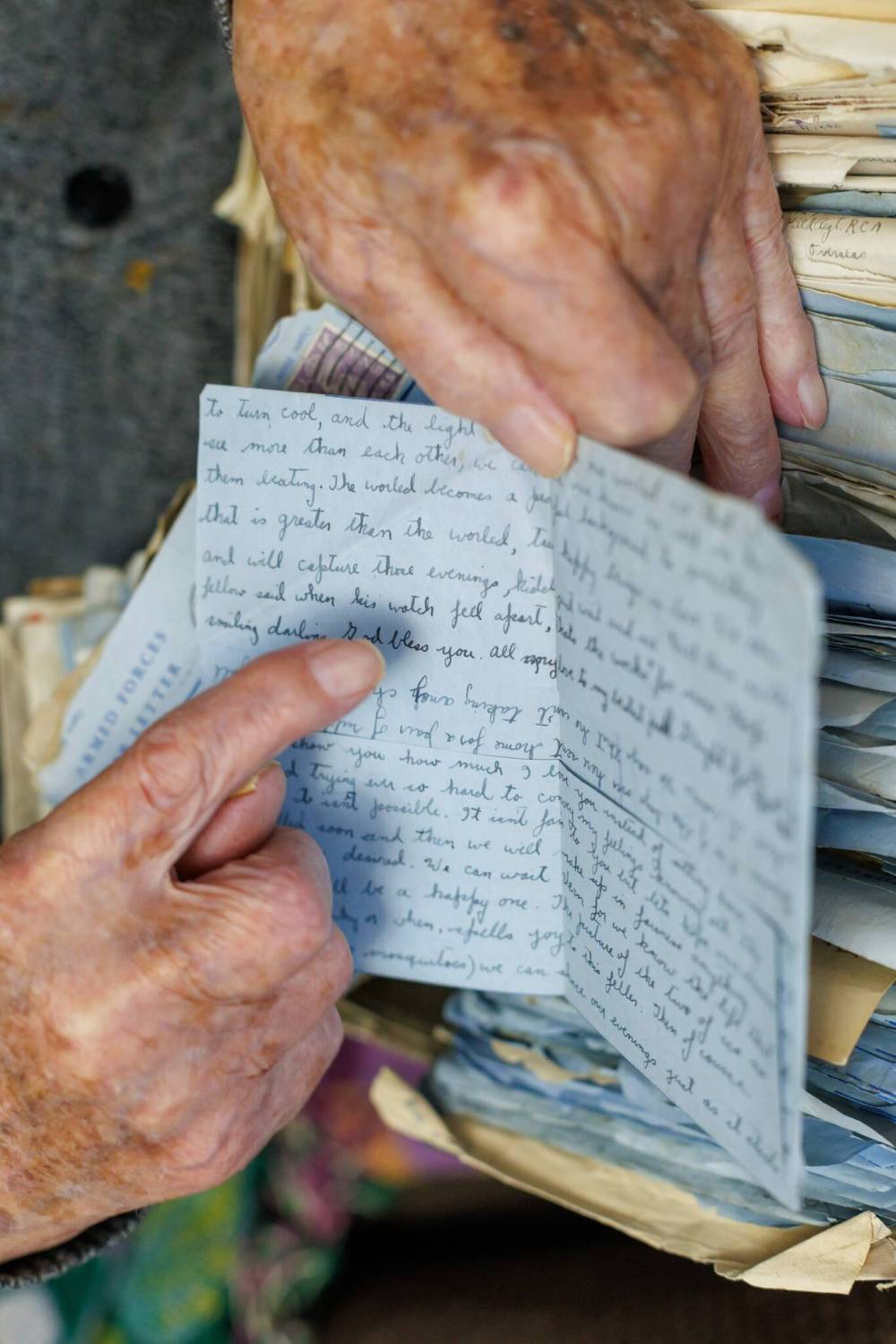
Written by a station on the shore of Lake Superior, where the train has stopped to pick up more troops, he describes the surrounding scenery of “beautiful hills, cliffs and stands of timber.”
“It seems such a shame to see such beauty and to be able to live such a love as ours and still be a cog in a war the aim of which is to destroy,” he writes.
Letters fly between the couple, their love sustained by the thread of words strung across the ocean and through the days, months and years of the war that keeps them apart.
Each blue sheet is filled with the minutia of their daily lives.
Ball writes mostly at bedtime, giving him news of his widowed mother Cornelia, whom she visits often. She talks about her work at the hospital and shares jokes she’s heard, and words of scripture and encouraging verses she’s recently read.
Van Roon determinedly steers clear of war talk. Instead he describes the coastal countryside, jotting down observations of the people he meets and the lads he shares his barracks with.
Describing the atmosphere that arises when large groups of men are confined in close quarters, he writes in vivid detail of “terrific gambling” during card games, of money lost “left and right” and the men’s attempts at levity despite the frightening reality facing them.
Young and very much in love, Ball and Van Roon often write multiple times a day.
Their correspondence during those uncertain years, when everything around them hung in balance, sustained their faith in each other.
Their letters are warm and loving, cautious sentiment and restrained statements giving way to full-throated declarations of longing as the weeks stretch into years and the geographical distance between them becomes greater.
Sometimes Ball sends him packages filled with chocolate and photographic film. He sends the rolls back for her to develop, pictures he only sees upon his return from war.
MIKE DEAL / FREE PRESS
Len holds the camera he had during the war. Verna would send him packages, including film. 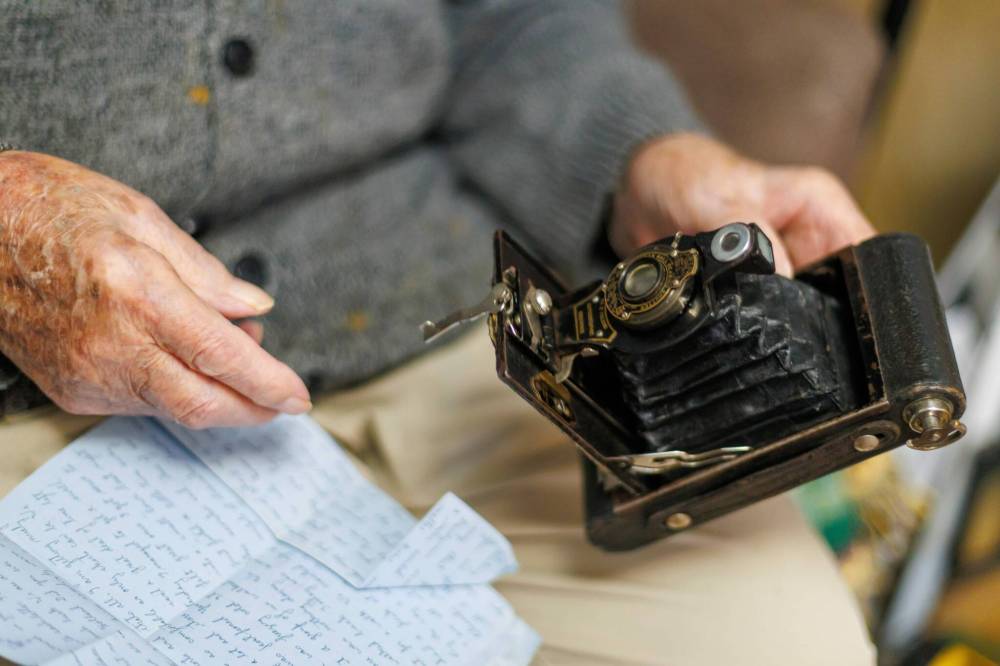
“It was a two-way street; she would write back. I enjoyed doing it, and I enjoyed hearing from her,” Van Roon recalls.
“That’s what we did: we just kept in touch, we just kept in touch, we just kept in touch.”
The letters did more than keep their relationship alive; during the most turbulent of times, Ball’s words — and Van Roon’s promise to write — kept him grounded.
“Writing letters was a lifesaver for my family. I resolved to write a letter a day and, no matter what, I achieved this goal. On D-Day, I was there, and you think, well you are not going to be able to write, but I always managed,” he says.
“I would write at every opportunity. I had a pad and a pen and I used to sit in the co-driver’s side of the Sherman tank and I used to write letters. And that’s how we kept it close, with the letters.”
As the time they spend apart exceeds the time they’ve spent together the letters become longer, penned in instalments between Ball’s activities and Van Roon’s army duties.
He squeezes in paragraphs after lights-out, she dashes off sentences before lunch, coming back to continue late into the night.
It was a frightening time for both — neither could be sure of his safe return — but they continued to write through it all.
“Occasionally I would have run out of ink and would borrow a pen from some other guy,” Van Roon says.
“If I was fighting or if we were under fire for three days, then I couldn’t write and I would catch up, sitting at the bottom of a foxhole or lying down in a shallow trench. There was always something that was flat, a piece of equipment or something that I could put the paper on. It was a good thing to do; it kept me going.”
MIKE DEAL / FREE PRESS
“The army was very good — sending them out and getting them back. We moved, sometimes every day during the action, and those letters found their way to you. Letters were important. It was a good way of handling men, to keep the letters coming from home,” Len said.
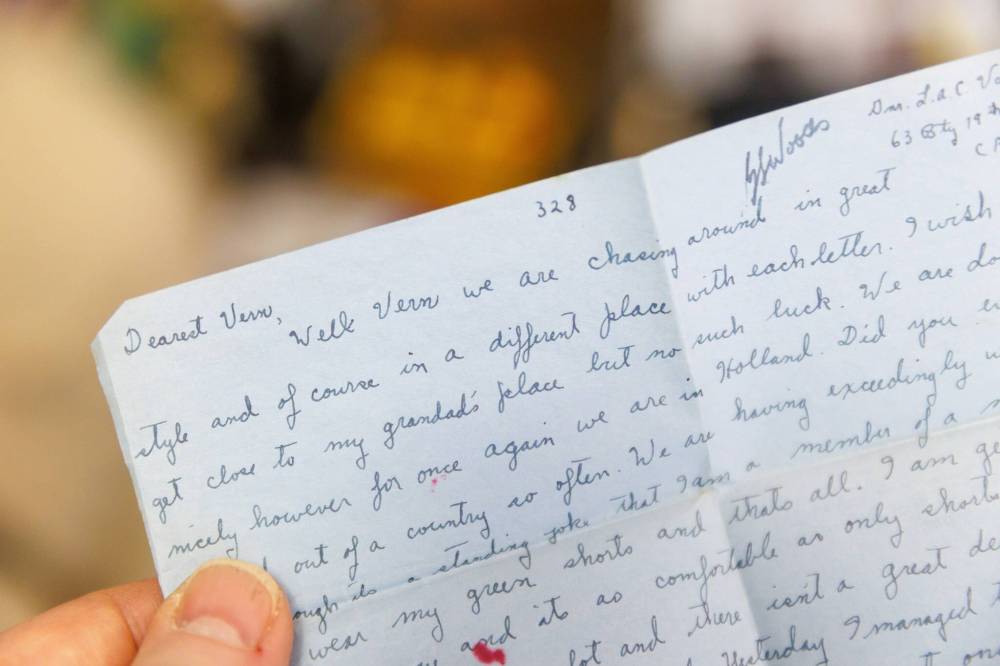
Army mail was processed swiftly.
After writing, Van Roon would put the letters in the command post and officers would take over. They had to make sure sensitive information wasn’t being revealed.
“They had to censor it. Most of the officers were good enough that they would just sign it, but there was one, he liked to read my letters, and he said, ‘Van Roon I hate people that write small and write a lot, and you do both,’ so I wrote even smaller,” Van Roon recalls with a chuckle.
“The army was very good — sending them out and getting them back. We moved, sometimes every day during the action, and those letters found their way to you. Letters were important. It was a good way of handling men, to keep the letters coming from home.”
In a letter dated Dec. 6, 1945 — the last time Van Roon writes to Ball — he sends her a clipping with the name of the ship he will be coming home on.
The couple were reunited just before Christmas that year when Van Roon arrived at Main Street station to be greeted by Ball, and his mother and his friends.
On Sept. 21, 1946, in the very same church where he had first set eyes on her, Van Roon and Ball were wed.
MIKE DEAL / FREE PRESS
Verna Ball and Len Van Roon were married at a one-room United church in Winnipeg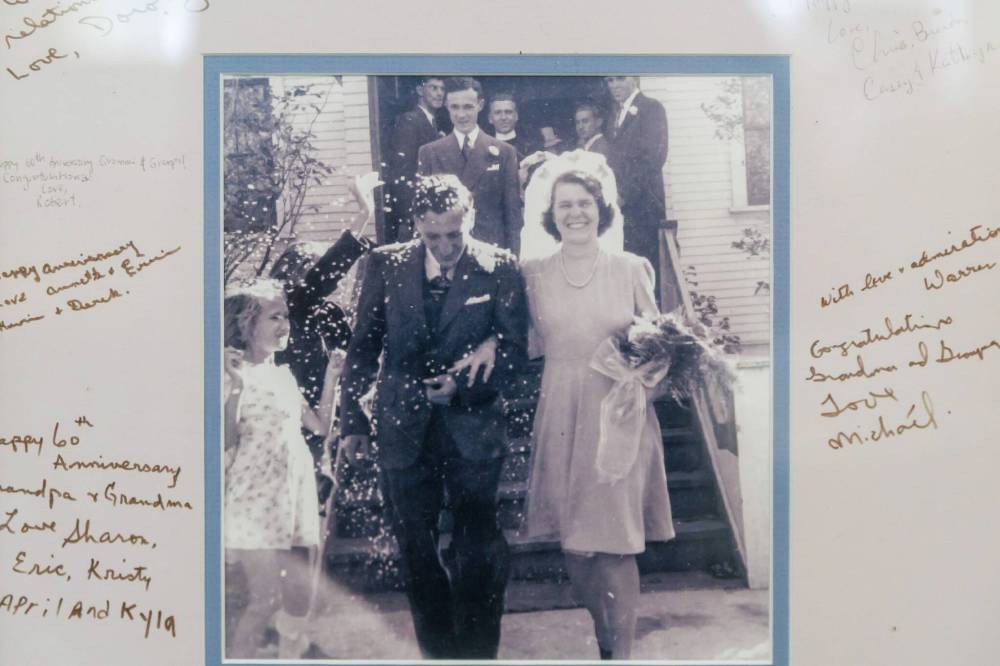
They went on to have four children, eight grandchildren, eight great-grandchildren and one great-great-grandchild.
They were married for 65 years, until Ball died at age 90 in February 2011.
“It just worked. Verna was a beautiful person. What a wonderful personality. If she was doing something, I didn’t interfere because I knew it was going to turn out right,” Van Roon says.
“We had respect for each other and we tried to help each other. I am very fortunate to have had somebody like that for a lifetime.”
av.kitching@freepress.mb.ca

AV Kitching is an arts and life writer at the Free Press. She has been a journalist for more than two decades and has worked across three continents writing about people, travel, food, and fashion. Read more about AV.
Every piece of reporting AV produces is reviewed by an editing team before it is posted online or published in print — part of the Free Press‘s tradition, since 1872, of producing reliable independent journalism. Read more about Free Press’s history and mandate, and learn how our newsroom operates.
Our newsroom depends on a growing audience of readers to power our journalism. If you are not a paid reader, please consider becoming a subscriber.
Our newsroom depends on its audience of readers to power our journalism. Thank you for your support.