A crisis of critical thinking
Author Timothy Caulfield explores the world of online misinformation in The Certainty Illusion

Advertisement
Read this article for free:
or
Already have an account? Log in here »
To continue reading, please subscribe:

Digital Subscription
One year of digital access for only $205*
- Enjoy unlimited reading on winnipegfreepress.com
- Read the E-Edition, our digital replica newspaper
- Access News Break, our award-winning app
- Play interactive puzzles
*First annual payment billed as $205.00 + GST for one year. This annual subscription will automatically renew at $233.00 + GST every 52 weeks (10% off the regular annual price of $259.35). Offer available to new and qualified returning subscribers only. Cancel any time.
To continue reading, please subscribe:
Add Free Press access to your Brandon Sun subscription for only an additional
$1 for the first 4 weeks*
- Enjoy unlimited reading on winnipegfreepress.com
- Read the E-Edition, our digital replica newspaper
- Access News Break, our award-winning app
- Play interactive puzzles
*Your next Brandon Sun subscription payment will increase by $1.00 and you will be charged $17.95 plus GST for four weeks. After four weeks, your payment will increase to $24.95 plus GST every four weeks.
Read unlimited articles for free today:
or
Already have an account? Log in here »
Hey there, time traveller!
This article was published 19/02/2025 (576 days ago), so information in it may no longer be current.
We are awash in competing surveys, polls, studies and the like that have flooded social media — and discerning fact from fabrication is becoming more difficult, and more necessary, amid the dangerous din of misinformation, says Timothy Caulfield.
In Caulfield’s new book The Certainty Illusion: What You Don’t Know and Why It Matters — published in January by Allen Lane, an imprint of Penguin Random House Canada — he tries to help readers locate guideposts among the noise in the hopes of battling the misinformation that has shaped the world view of so many, particularly on the far right.
Caulfield will read from and discuss The Certainty Illusion on Friday at 7 p.m. at McNally Robinson Booksellers’ Grant Park location.

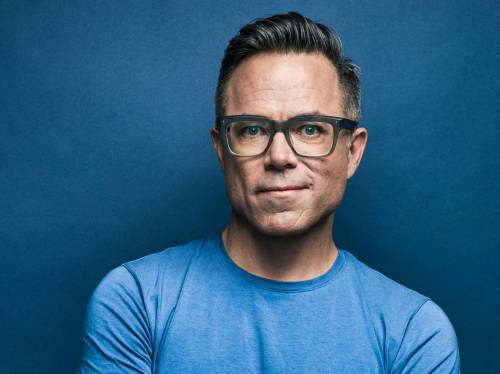
Curtis Trent photo
Timothy Caulfield dissects dubious scientific studies in his latest book.
Caulfield, 61, is a professor in the faculty of law and the school of public health at the University of Alberta and a Canada Research Chair in health law and policy. His previous books include 2015’s The Science of Celebrity… or Is Gwyneth Paltrow Wrong About Everything? and 2022’s Relax: A Guide to Everyday Health Decisions with More Facts and Less Worry.
He has also hosted or contributed to a number of documentaries, including the recent Harder Better Faster Stronger, a CBC doc on myths about men’s health and masculinity.
In The Certainty Illusion, Caulfield explores the world of online misinformation through three threads: the science illusion, the goodness illusion and the opinion illusion.
He dissects dubious scientific studies and journal articles, half-baked wellness and beauty trends, and torqued online polls and reviews of everything from restaurants to electronics to political parties.
“I really wanted to explore the foundational problems and why, increasingly, our information environment is rigged against us, and that’s a big topic, so I tried to pick examples throughout the book that are both really weighty and urgent — like the health issues, like the crumbling of democracy — but also examples that highlight how these forces kind of creep into every corner of our lives,” he says.
Citing dozens of studies and research papers by scientists around the globe and including pages of references and endnotes, The Certainty Illusion is both solidly researched and engagingly written.
For some, reading the headline of an online study, news article or post that jibes with their way of thinking is as deep as people’s critical thinking goes. They will opt to share whatever they feel fits with their own opinions or preconceived notions.
“Recent studies show that 70 to 74 per cent of the content online is shared without clicking through — that means people are responding to headlines, to memes, and that’s what they’re sharing,” Caulfield says.
The misinformation crisis ratcheted up during the COVID-19 pandemic when peer-reviewed studies from reputable journals touting the benefits of vaccination grappled for attention with papers, articles and talking heads whose anti-vaccination arguments and findings stood on shaky ground.

The Certainty Illusion
Caulfield spoke to the Free Press hours after Robert F. Kennedy Jr., a noted purveyor of bad science information and a vocal opponent of vaccines, was confirmed as U.S. President Donald Trump’s secretary of health and human services.
“The scientific literature is becoming increasingly polluted. We’re seeing the rise of fake and questionable scientific journals that are agenda-driven and we’ve seen it happen during the RFK Jr. confirmation hearings,” Caulfield says.
“I’m deeply worried that the scientific literature, the academic literature, is going to become so polluted that it’s going to become difficult, even for experts, for people who have spent their life studying these things, to divine what the scientific consensus on a topic is. For those pushing a particular agenda, that’s the exact goal — it’s doubt-mongering just to try to question what the scientific consensus is to make room for their agenda.”
This doubt-mongering is nothing new.
‘We saw it with tobacco, we saw it with climate-change deniers and, of course, now we’re seeing it on a whole host of topics in the health space, especially vaccines. It’s a really scary moment. I hope it’s a call for the scientific community to stand up,” Caulfield says.
Caulfield reckons that in order to get eyeballs on legit scientific findings, journals and scholars may have to approach sharing their findings differently.
“We have to get creative. We have to work with artists, comedians, graphic artists, whoever, to create content that can do that right in a way that is still accurate and still respectful to the inherent uncertainty of evidence and science,” he says.
And while Caulfield sees Trump’s return to the White House as an inevitable catalyst for yet more misinformation, he thinks the result may offer a sliver of a silver lining north of the border.
“Maybe I’m being overly optimistic, but I’m really sensing that in Canada, since the election in the United States, there has been this rising concern about misinformation. I’m hopeful that’s going to sensitize Canadians during our election cycle to not be bamboozled like I fear many in the United States were,” he says.
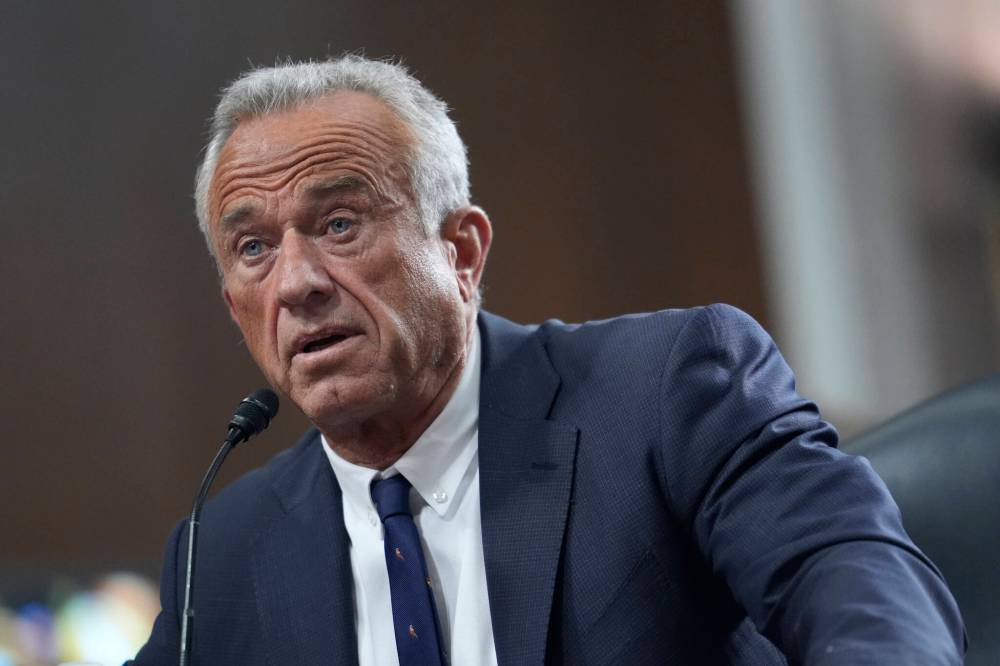
J. Scott Applewhite / Associated Press files
In this Jan. 2025 photo, Robert F. Kennedy Jr. appears at his confirmation hearing in Washington to become Secretary of Health and Human Services. Kennedy has been a skeptic of vaccines and has pushed pushed dubious studies to forward his agenda.

It’s easy to look at the vast swaths of online misinformation in health, beauty, wellness, public opinion and the economy and feel completely overwhelmed — or to simply look away — but pushing back on misinformation and getting the facts out there to counter the dishonest and untruthful studies, polls and reviews is crucial, Caulfield says.
“Given the urgency of the issue, we can’t allow ourselves to become paralyzed by not participating in this public discourse,” he says.
“We need the voices out there.”
ben.sigurdson@freepress.mb.ca
@bensigurdson
Ben Sigurdson
Literary editor, drinks writer
Ben Sigurdson is the Free Press‘s literary editor and drinks writer. He graduated with a master of arts degree in English from the University of Manitoba in 2005, the same year he began writing Uncorked, the weekly Free Press drinks column. He joined the Free Press full time in 2013 as a copy editor before being appointed literary editor in 2014. Read more about Ben.
In addition to providing opinions and analysis on wine and drinks, Ben oversees a team of freelance book reviewers and produces content for the arts and life section, all of which is reviewed by the Free Press’s editing team before being posted online or published in print. It’s part of the Free Press‘s tradition, since 1872, of producing reliable independent journalism. Read more about Free Press’s history and mandate, and learn how our newsroom operates.
Our newsroom depends on a growing audience of readers to power our journalism. If you are not a paid reader, please consider becoming a subscriber.
Our newsroom depends on its audience of readers to power our journalism. Thank you for your support.
Event preview
Timothy Caulfield
Launching The Certainty Illusion: What You Don’t Know and Why It Matters
- McNally Robinson Booksellers, 1120 Grant Ave.
- Friday, 7 p.m.
- Free
Ben Sigurdson
Literary editor, drinks writer
Ben Sigurdson is the Free Press‘s literary editor and drinks writer. He graduated with a master of arts degree in English from the University of Manitoba in 2005, the same year he began writing Uncorked, the weekly Free Press drinks column. He joined the Free Press full time in 2013 as a copy editor before being appointed literary editor in 2014. Read more about Ben.
In addition to providing opinions and analysis on wine and drinks, Ben oversees a team of freelance book reviewers and produces content for the arts and life section, all of which is reviewed by the Free Press’s editing team before being posted online or published in print. It’s part of the Free Press‘s tradition, since 1872, of producing reliable independent journalism. Read more about Free Press’s history and mandate, and learn how our newsroom operates.
Our newsroom depends on a growing audience of readers to power our journalism. If you are not a paid reader, please consider becoming a subscriber.
Our newsroom depends on its audience of readers to power our journalism. Thank you for your support.
Related Articles
Atwood, Toews set to publish memoirs this fall Bad research, social media and celebrity figures sway public opinion while obscuring truth
Advertisement Advertise With Us
Advertisement Advertise With Us