War, conflict and the west
Omar El Akkad’s new essays investigate a writer’s duty in ‘a world that is falling apart’

Advertisement
Read this article for free:
or
Already have an account? Log in here »
To continue reading, please subscribe:

Digital Subscription
One year of digital access for only $205*
- Enjoy unlimited reading on winnipegfreepress.com
- Read the E-Edition, our digital replica newspaper
- Access News Break, our award-winning app
- Play interactive puzzles
*First annual payment billed as $205.00 + GST for one year. This annual subscription will automatically renew at $233.00 + GST every 52 weeks (10% off the regular annual price of $259.35). Offer available to new and qualified returning subscribers only. Cancel any time.
To continue reading, please subscribe:
Add Free Press access to your Brandon Sun subscription for only an additional
$1 for the first 4 weeks*
- Enjoy unlimited reading on winnipegfreepress.com
- Read the E-Edition, our digital replica newspaper
- Access News Break, our award-winning app
- Play interactive puzzles
*Your next Brandon Sun subscription payment will increase by $1.00 and you will be charged $17.95 plus GST for four weeks. After four weeks, your payment will increase to $24.95 plus GST every four weeks.
Read unlimited articles for free today:
or
Already have an account? Log in here »
Hey there, time traveller!
This article was published 06/03/2025 (545 days ago), so information in it may no longer be current.
Omar El Akkad is disillusioned with the West.
For the Portland, Ore.-based author, the October 2023 Hamas attack on southern Israel and the subsequent offensive in Gaza by the Israeli military was the latest, and most horrific, example of how Western ideals of freedom, liberalism and equality have been corrupted and distorted.
And while El Akkad’s novels (2017’s American War and the 2021 Giller-winning What Strange Paradise) are infused with their own sense of despair, in his latest, One Day, Everyone Will Have Always Been Against This, this disillusionment is laid bare.
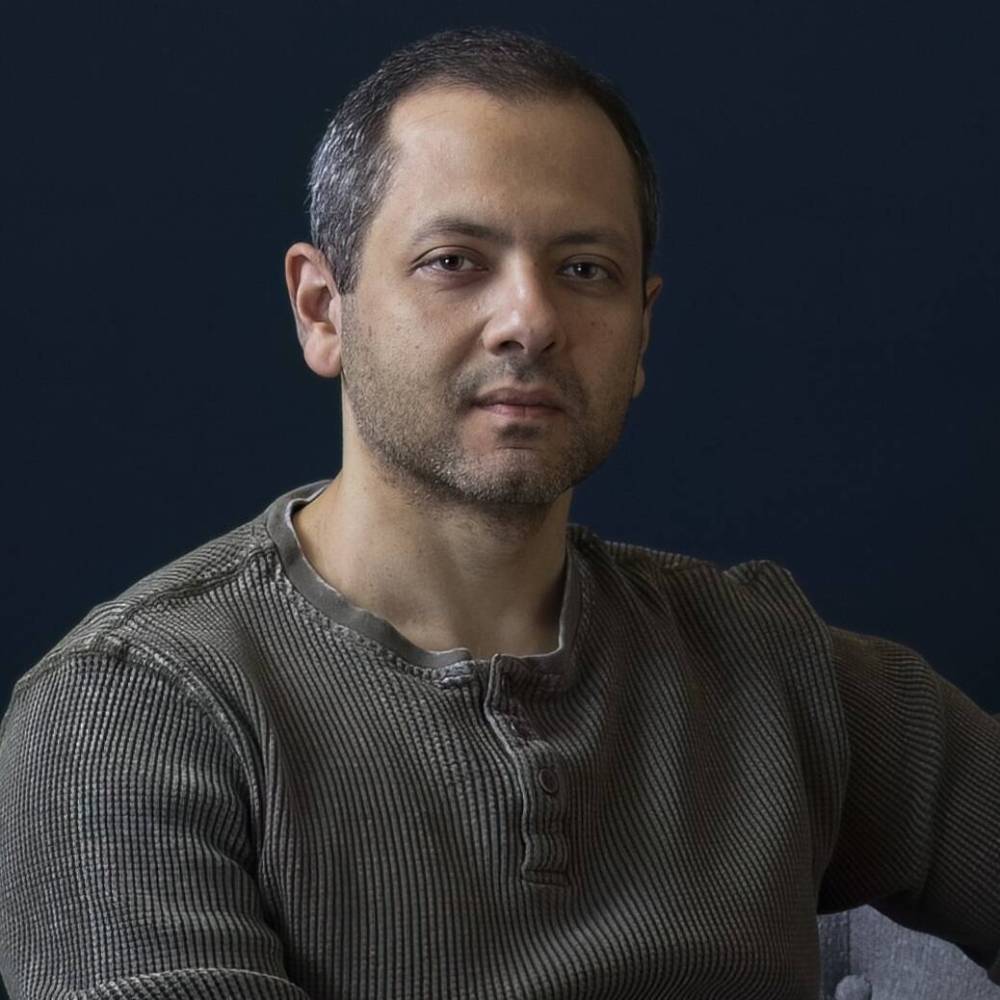
Kateshia Pendergrass photo
Egyptian-born, U.S.-based Omar El Akkad’s new book is dubbed a kind of ‘breakup letter with the West.’
El Akkad will be in Winnipeg on Sunday at 2 p.m. at McNally Robinson Booksellers’ Grant Park location, where he’ll be joined in conversation about his latest book, his debut non-fiction collection, by Winnipeg novelist (and fellow Giller winner) David Bergen.
The Egyptian-born El Akkad, 43, was raised in Qatar before his family came to Canada, where he plied his trade as a reporter for the Globe and Mail before moving to Portland.
One Day… gathers 10 connected essays that combine his memories of living in all these places and the ways war and conflict have intersected with his life, as well as a searing polemic on the Israel-Palestine conflict and the response from the West.
A meeting with an editor in November 2023 sparked the idea of El Akkad writing through the events in the Middle East.
“I was rambling about the only thing that I had been rambling about for the last month, which was this notion of no longer having a sense of what it is the West stands for in light of this slaughter. A few days later, he called and said, ‘You know, you should start writing about this,’” he says by phone in advance of his Winnipeg appearance.
The book’s title is lifted from a tweet El Akkad posted on Oct. 25 about Israel’s attack on Palestine that was seen 10 million times. It was only after an early draft of the book that an editor suggested using a line from that tweet as the title.
“I’m going to spend the rest of my life trying to convince people I didn’t just take a tweet and extend it to 250 pages,” he says.
Given the polarizing subject matter, El Akkad recognizes the book, published in February by McClelland & Stewart, is sure to spark strong feelings both for and against his work.
As such, the author was pleasantly surprised by how little pushback he got from his team, which included a new editor and a new publisher.
“I’m quite grateful to them; they could have gone in a very different direction, or not gone in any direction at all. There was no interference, even though there clearly could have been, because they now have to deal with this book — how they market it, and how they talk about it or don’t talk about it,” he says.
While One Day… is El Akkad’s first foray into non-fiction, the Palestinians’ plight has echoed through his novels, including American War, set in a near-future U.S. ravaged by climate change and civil war.
“American War was very heavily influenced by the oppression of the Palestinian people. It had the word ‘American’ in the title, and very much barged in through the door, pretending to be about a certain thing,” he says.
El Akkad sees One Day… working the other way around.
“There’s something of the inverse happening with this book, where it barges in through the door and is obviously heavily influenced by the last 15 months in Palestine, but is very much a book about here, about the West, about the last 40 years of my life.”
Dubbed his “breakup letter with the West” on the book jacket, One Day… sees El Akkad grappling with helpful, meaningful ways to persevere and resist.
The first, he says, is to refuse the mainstream liberal impulse to find the middle of any two positions and pretend that it’s the high-minded approach.
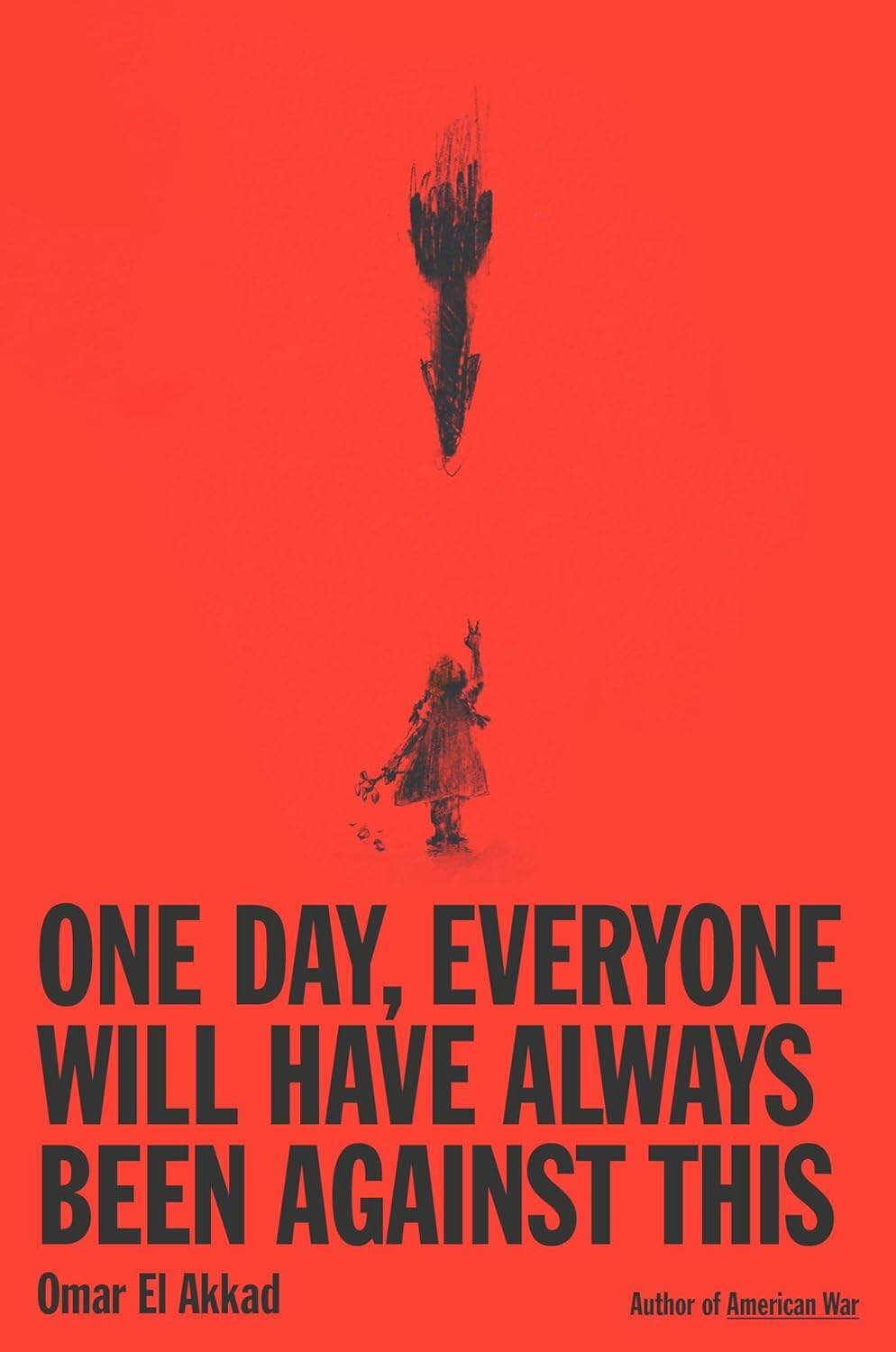
One Day, Everyone Will Have Always Been Against This
“If Donald Trump proposes sending 30,000 immigrants to a concentration camp in Guantanamo Bay and Democrats get him down to 15,000, that’s not a win.”
The second is to take time to grieve.
“This isn’t just a continual chess game. For the last 15 months, I have become conditioned to knowing that when I see a picture of a smiling Palestinian child on my social media feed, it’s almost certainly because that child has just been murdered,” he says.
“Horrible things are going to happen, and to simply armour the soul against them, such that it is no longer a grievable thing, turns one into too cold of a human being to actually function in any kind of positive way.”
As a writer, El Akkad feels he can’t ignore the world around him.
“I’d love to be the kind of writer who spends pages telling you about what the finches are doing. I’m a sucker for a beautiful sentence, for beauty and writing generally. The question I have trouble ignoring is what my duty is as a writer in a world that is falling apart, and so I end up writing these incredibly political books,” he says.
While El Akkad sees more writers incorporating world events into their fiction, even those who don’t can be inherently political by the nature of exclusion.
“You give me a cute love story set in East Jerusalem, and if there’s not a single Palestinian, that is a political book by virtue of its negative space. I think what we’re seeing is more and more writers who are no longer able to dissociate their writing from the world in which that writing is taking place,” he says.

For El Akkad, the act of writing the essays in One Day… offered an outlet for his anger and disillusionment, but came with its own pitfalls.
“I know there’s a part of me that is deeply broken, both by the process of writing this book and the process of living in this world, of living in the moment that caused this book to be written.
“I’m going back into my fiction for a while — until that breaks me.”
ben.sigurdson@freepress.mb.ca
@bensigurdson
Ben Sigurdson
Literary editor, drinks writer
Ben Sigurdson is the Free Press‘s literary editor and drinks writer. He graduated with a master of arts degree in English from the University of Manitoba in 2005, the same year he began writing Uncorked, the weekly Free Press drinks column. He joined the Free Press full time in 2013 as a copy editor before being appointed literary editor in 2014. Read more about Ben.
In addition to providing opinions and analysis on wine and drinks, Ben oversees a team of freelance book reviewers and produces content for the arts and life section, all of which is reviewed by the Free Press’s editing team before being posted online or published in print. It’s part of the Free Press‘s tradition, since 1872, of producing reliable independent journalism. Read more about Free Press’s history and mandate, and learn how our newsroom operates.
Our newsroom depends on a growing audience of readers to power our journalism. If you are not a paid reader, please consider becoming a subscriber.
Our newsroom depends on its audience of readers to power our journalism. Thank you for your support.
Event preview
Omar El Akkad
Launching One Day, Everyone Will Have Always Been Against This
- McNally Robinson Booksellers, 1120 Grant Ave.
- Sunday, 2 p.m.
- Free
Ben Sigurdson
Literary editor, drinks writer
Ben Sigurdson is the Free Press‘s literary editor and drinks writer. He graduated with a master of arts degree in English from the University of Manitoba in 2005, the same year he began writing Uncorked, the weekly Free Press drinks column. He joined the Free Press full time in 2013 as a copy editor before being appointed literary editor in 2014. Read more about Ben.
In addition to providing opinions and analysis on wine and drinks, Ben oversees a team of freelance book reviewers and produces content for the arts and life section, all of which is reviewed by the Free Press’s editing team before being posted online or published in print. It’s part of the Free Press‘s tradition, since 1872, of producing reliable independent journalism. Read more about Free Press’s history and mandate, and learn how our newsroom operates.
Our newsroom depends on a growing audience of readers to power our journalism. If you are not a paid reader, please consider becoming a subscriber.
Our newsroom depends on its audience of readers to power our journalism. Thank you for your support.
Related Articles
Conflict in Middle East leads award-winning novelist to sour on hypocritical Western ideals
Advertisement Advertise With Us
Advertisement Advertise With Us