Omar El Akkad on re-evaluating the West in light of Gaza war
Advertisement
Read this article for free:
or
Already have an account? Log in here »
To continue reading, please subscribe:

Digital Subscription
One year of digital access for only $205*
- Enjoy unlimited reading on winnipegfreepress.com
- Read the E-Edition, our digital replica newspaper
- Access News Break, our award-winning app
- Play interactive puzzles
*First annual payment billed as $205.00 + GST for one year. This annual subscription will automatically renew at $233.00 + GST every 52 weeks (10% off the regular annual price of $259.35). Offer available to new and qualified returning subscribers only. Cancel any time.
To continue reading, please subscribe:
Add Free Press access to your Brandon Sun subscription for only an additional
$1 for the first 4 weeks*
- Enjoy unlimited reading on winnipegfreepress.com
- Read the E-Edition, our digital replica newspaper
- Access News Break, our award-winning app
- Play interactive puzzles
*Your next Brandon Sun subscription payment will increase by $1.00 and you will be charged $17.95 plus GST for four weeks. After four weeks, your payment will increase to $24.95 plus GST every four weeks.
Read unlimited articles for free today:
or
Already have an account? Log in here »
Hey there, time traveller!
This article was published 27/02/2025 (584 days ago), so information in it may no longer be current.
TORONTO – In some ways, Omar El Akkad’s “One Day Everyone Will Have Always Been Against This” is a time capsule.
It is at once a contemporaneous account of Israel’s bombardment of Gaza as seen from the other side of the world, and an indictment of the West.
“It’s also a book that’s very much concerned with the future of a kind of society that would allow such horror to happen. And in that sense, I think it doesn’t just cast forward, it also casts back into history,” the Canadian author said by phone from Portland, Ore., where he lives.
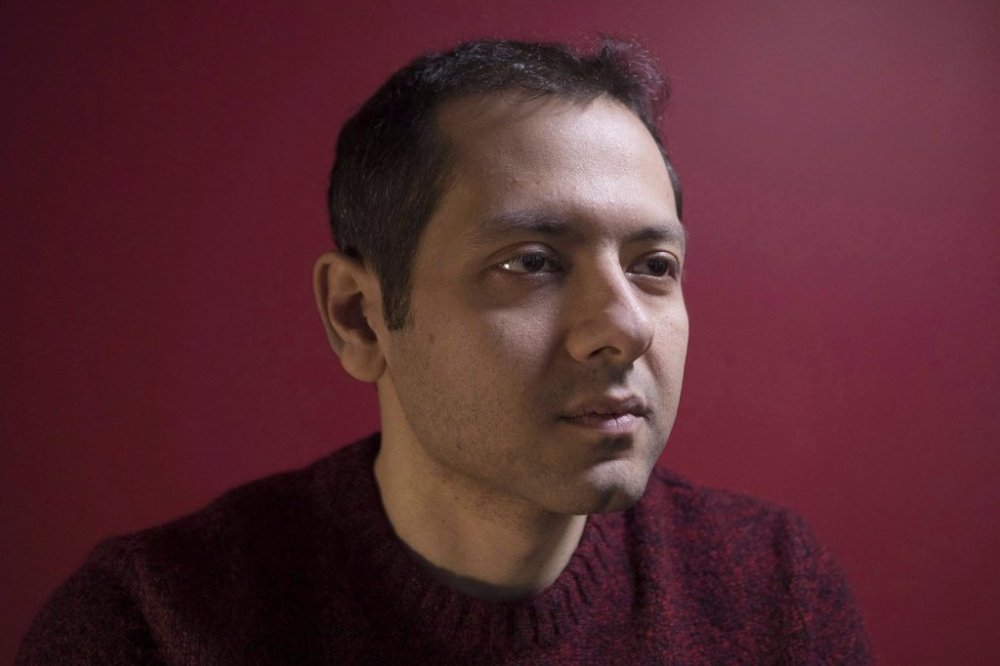
Years from now, it will serve as an artifact from this time, but El Akkad hopes it also provides context for readers today.
“There’s a kind of psychological self-defence mechanism that kicks in during times of immense turmoil where people become deeply focused on the present, and certainly I’m susceptible to that, but as much as possible, at the same time, I was trying to write a book that envisioned the consequences of this present moment and what led to (it).”
El Akkad does that in part by sharing his own history.
Born in Egypt and raised in Qatar, he writes about growing up under repressive Persian Gulf policies and admiring Western values: freedom of expression, fair treatment under the law and “the principle that all innocent lives are equal and deserving of dignity.”
Cracks appeared in those pillars of Western liberalism over the years, writes El Akkad, who in recent years moved to Portland and became a U.S. citizen.
Though he didn’t see them at the time, they were present in Afghanistan and Guantanamo Bay, where he travelled for his work as a journalist with the Globe and Mail.
He witnessed Western institutions abandon the principles they purported to uphold. In Afghanistan, he saw soldiers dehumanize the Afghans around them, treating their lives as lesser. And at Guantanamo, he wrote about men who were jailed arbitrarily with no due process and no explanation.
At that time, he said, he could look away from those uncomfortable realities. He could fly home and resume his life. These days, he can’t focus on anything else.
His life has reoriented itself since Israel began its offensive on Gaza in October 2023, in response to Hamas’ attack on southern Israel that killed about 1,200 people.
Israel’s military offensive has killed more than 48,000 Palestinians, according to Palestinian health officials, and displaced an estimated 90 per cent of Gaza’s population and decimated the territory’s infrastructure and health system.
El Akkad’s book, which was released Tuesday, comes days before the first phase of a ceasefire between Israel and Hamas is set to end on Saturday. Israel released 500 prisoners back into Gaza on Wednesday night, in exchange for Hamas releasing the bodies of four hostages. The prisoners included dozens of women and teenagers.
The two sides are negotiating the terms of the second phase of the ceasefire.
Over the course of the war, El Akkad said he’s been unable to write about anything else.
“Writing is the only thing I know how to do, and it’s the only way that I’m able to try to make sense of the world when the world doesn’t seem to make sense,” El Akkad said.
“In a way, I retreated into this book to try and sit with a sense of profound emptiness that was the direct result of waking up every morning seeing images of the most horrific things people do to one another, and knowing that my tax dollars were paying for it.”
His book portrays a West that holds its self-image in such high esteem that it will do anything to protect it — even betray the principles on which it’s based.
“The reality is that an ally of the West is killing civilians by the tens of thousands and it would be politically inconvenient to call this wrong now when for months, years, decades, it has been deemed perfectly fine,” he writes.
This report by The Canadian Press was first published Feb. 27, 2025.
Related Articles
Omar El Akkad’s new essays investigate a writer’s duty in ‘a world that is falling apart’
Advertisement Advertise With Us
Advertisement Advertise With Us