The price of prevention Protecting pets from disease expensive, but cheaper than the alternative
Read this article for free:
or
Already have an account? Log in here »
To continue reading, please subscribe:

Digital Subscription
One year of digital access for only $205*
- Enjoy unlimited reading on winnipegfreepress.com
- Read the E-Edition, our digital replica newspaper
- Access News Break, our award-winning app
- Play interactive puzzles
*First annual payment billed as $205.00 + GST for one year. This annual subscription will automatically renew at $233.00 + GST every 52 weeks (10% off the regular annual price of $259.35). Offer available to new and qualified returning subscribers only. Cancel any time.
To continue reading, please subscribe:
Add Free Press access to your Brandon Sun subscription for only an additional
$1 for the first 4 weeks*
- Enjoy unlimited reading on winnipegfreepress.com
- Read the E-Edition, our digital replica newspaper
- Access News Break, our award-winning app
- Play interactive puzzles
*Your next Brandon Sun subscription payment will increase by $1.00 and you will be charged $17.95 plus GST for four weeks. After four weeks, your payment will increase to $24.95 plus GST every four weeks.
Read unlimited articles for free today:
or
Already have an account? Log in here »
Hey there, time traveller!
This article was published 21/04/2025 (543 days ago), so information in it may no longer be current.
It’s a grey, windy day in early April and Gus and Sally are enjoying a carefree rip around the Bonnycastle Dog Park, dodging patches of lingering snow while chasing a bouncing tennis ball. The outdoor romp is carefree because the miniature goldendoodles are protected against the springtime return of disease-carrying pests.
“They just went to the vet and got their tick prevention,” owner Gale M’Lot says of the near-identical six-year-old dog siblings.
Purchasing prevention medication — drugs designed to deter critters that transmit Lyme, heartworm and other diseases — is an annual duty for many pet owners, but one that can take a big bite out of the household budget.
MIKE DEAL / FREE PRESS Gale M’Lot (left) and Carol Briggs with Gus and Sally. M’Lot says the prices of preventive medications against Lyme disease and heartworm take a sizable sum from her budget, but she says they’re worth it.
M’Lot estimates she spent $500 this year on a season’s worth of anti-parasitic tablets for Gus and Sally.
“It’s ridiculous,” says the retired pensioner. “Every month we have to put money aside to pay for the pills.”
In Canada, prevention meds are available for cats and dogs by prescription only and come in a variety of applications that increase in price based on the size of the animal. Most vet clinics also require an annual checkup with recommended blood testing prior to dispensing.
For Luke Thiessen, whose full-sized goldendoodle Juniper is doing laps around the dog park, the expense is worth the peace of mind.
“We spend a lot of time outside and go out to northwestern Ontario, where there’s tons of ticks; so it’s important to watch out for her health,” Thiessen says. “It’s definitely something to take seriously especially with more deer ticks being around year-after-year.”
Satisfaction guaranteed
When administered properly, prevention medications for pets are highly effective in protecting against insect-borne illnesses and infestations.
Most manufacturers offer satisfaction guarantee programs, which provide financial compensation to cover the cost of testing and treatment for medicated pets that contract any of the diseases the drugs are designed to prevent, such as Lyme or heartworm.
To qualify for coverage, a prior negative blood test must be provided, as well proof of purchase with a valid prescription. Claims must be initiated by a veterinarian and reimbursement depends on eligibility.
Boehringer Ingelheim, which makes NexGard and Heartgard products, and Zoetis, which produces Simparica, declined or didn’t respond to a request for comment on their respective satisfaction guarantee programs. Neither company includes details of its satisfaction guarantee programs in pamphlets included with its medications, but information can be found online at Boehringer Ingelheim Canine Parasiticides and Zoetis.
Canine cases of Lyme disease — a bacterial infection passed by deer or blacklegged ticks — are on the rise locally.
“In the last couple of years, we’ve seen a 10 to 20 per cent increase for sure in (Lyme) disease,” says Dr. Marc Philippot, a veterinarian and president of the Rolling Plains Veterinary Corp., which operates clinics in St. Claude, Carman and Notre Dame de Lourdes.
According to data from the Companion Animal Parasite Council (CAPC), which compiles vet-submitted test results, nearly 900 dogs tested positive for Lyme in Manitoba in each of the past two years, compared to roughly 680 in 2022. The actual numbers are likely higher because clinics aren’t required to report positive cases.
Philippot believes the spike in Lyme is due to incorrect drug administration and a pandemic-era dog boom coupled with the rising cost of living.
“People might be having trouble to afford the medication, but the cost of treatment is going to be far more than the cost of prevention,” he says.
Lyme disease is a progressive, lifelong condition that can create arthritic joint pain in dogs and, in a small percentage of cases, can lead to life-threatening kidney failure. Symptoms can take months to appear and many dogs show no symptoms at all, which is why annual blood testing is recommended.
Treatment includes a round of antibiotics, which can cost hundreds of dollars, as well as anti-inflammatory medication to treat flare-ups, Philippot says.
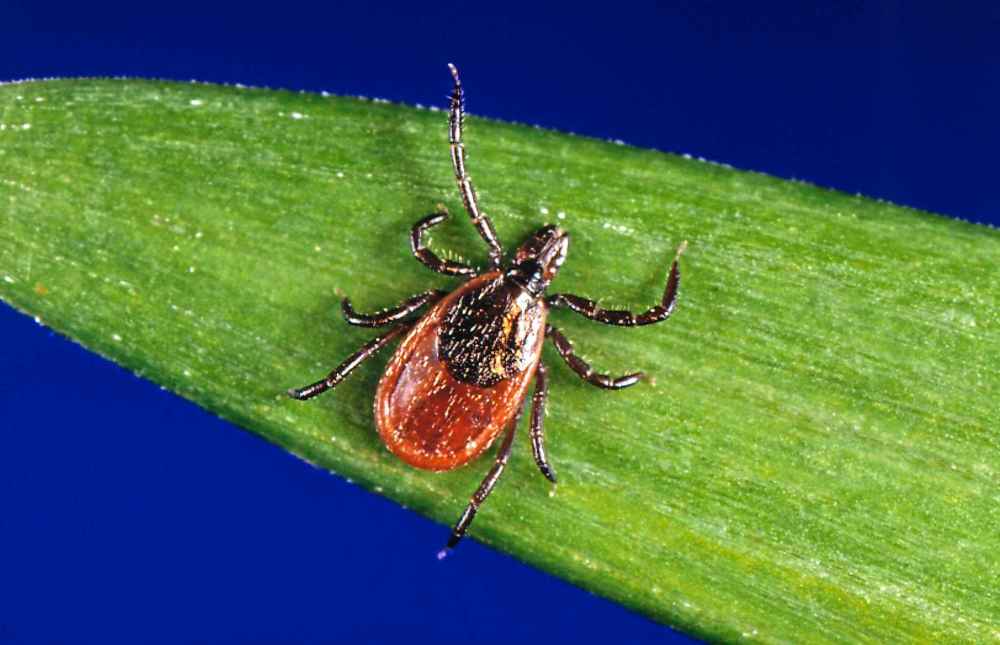
Blacklegged ticks arrived in Manitoba via migratory birds and animals in the late 1980s and have since become endemic. They can now be found virtually everywhere south of the 53rd parallel, including in urban areas.
“Oh yeah, you can find them in your backyard,” says Kateryn Rochon, an associate professor in the department of entomology at the University of Manitoba.
The tiny black and brown arachnids prefer shady areas with ample leaf litter at the transitional zone between different habitats, such as the edge of a forest path, says Rochon.
Dogs tend to pick up more ticks than humans due to their proximity to the ground.
Blacklegged ticks act as a vector for Lyme disease by contracting the borrelia burgdorferi bacteria from an infected animal and passing it to a new host during blood meals.
As with humans, the ticks need to be attached to a pet for a minimum of 24 hours for transmission to occur.
Rochon says it’s important to check yourself, children and pets thoroughly after outdoor activities during tick season, which, for blacklegged ticks, can be anytime the temperature is steadily above freezing.
“In Manitoba, if there’s no snow on the ground, it’s tick season,” she says, adding blacklegged ticks are more prevalent in the fall by virtue of their life cycle.
MIKE DEAL / FREE PRESS Luke Thiessen and Juniper at Bonnycastle Dog Park. 
Misconceptions about tick activity and timelines can hinder the effectiveness of prevention medication, says Philippot.
“Our season could be March to November or April to October depending on the year, and a lot of people don’t realize that so they don’t start treatment right away or they don’t finish off the year on time. Once it warms up, get those medications ready and on board — starting them early is not an issue,” he says.
Prevention medication is available for dogs and cats as a topical or wearable repellent and injections or chewable tablets designed to kill ticks and fleas that latch onto an animal. Short-acting meds should be given every four weeks, while other varieties remain effective for eight to twelve weeks.
Several brands offer full-spectrum coverage against multiple pests, including ticks, fleas and heartworms. There’s also a Lyme vaccine available for dogs that spend a lot of time outside in heavily infested areas.
Heartworm is a less common condition than Lyme, but can be more lethal.
Last year in Manitoba, there were 178 cases of the mosquito-borne disease reported to CAPC.
As with ticks, heartworm larvae are passed via mosquito bite from an infected animal to a new host. The larvae travel through the bloodstream and take up residence in the heart and other vital organs, where they grow into long thin worms and can cause permanent tissue damage.
Symptoms can take months to appear and include a persistent dry cough, lethargy, weight loss, exercise intolerance and difficulty breathing.
Heartworm prevention acts as a pre-emptive dewormer, killing the immature parasites if contact occurs during mosquito season, which typically runs June to November in Manitoba.
Treatment for advanced heartworm can require a lengthy protocol of hospitalization, antibiotics, steroids and restricted exercise for several months.
“Over the long-term, you might be spending small amounts per year (on prevention), but I can tell you, out of experience, a heartworm treatment can be $6,000 to treat these bigger dogs,” Philippot says.
Philippot says it’s best to consult with your veterinarian to determine the best course of prevention medication for your pet’s lifestyle.
eva.wasney@winnipegfreepress.com
Tracking ticks
Since blacklegged ticks are here to stay, Manitoba Health no longer conducts passive or active surveillance of the species. Instead, the province has partnered with eTick, an online platform and smartphone application that allows residents to submit pictures of ticks collected on humans, animals or in the environment for identification.
The province does continue to publish data on confirmed and probable cases of tick-borne diseases in humans.
Kateryn Rochon’s laboratory at the University of Manitoba is responsible for verifying all the ticks that get submitted locally through eTick. Last year, her team combed through nearly 1,200 submissions and positively identified 121 as blacklegged ticks.
While blacklegged ticks are now endemic to Manitoba, public tracking can help researchers monitor changes in the bugs’ activities and locations.
“It gives us trends,” Rochon says. “We can see when people start submitting and so we can see, is the season starting earlier? Is it lasting longer?”
Visit etick.ca to learn more.

Eva Wasney covers environmental issues in Manitoba for The Narwhal in partnership with the Winnipeg Free Press. Read more about Eva.
Every piece of reporting Eva produces is reviewed by an editing team before it is posted online or published in print — part of the Free Press‘s tradition, since 1872, of producing reliable independent journalism. Read more about Free Press’s history and mandate, and learn how our newsroom operates.
Our newsroom depends on a growing audience of readers to power our journalism. If you are not a paid reader, please consider becoming a subscriber.
Our newsroom depends on its audience of readers to power our journalism. Thank you for your support.
Related Articles
Riverview resident fears backyard deer will attract coyotes, spread disease


History
Updated on Tuesday, April 22, 2025 8:49 AM CDT: Corrects that ticks are arachnids
Updated on Tuesday, April 22, 2025 9:34 AM CDT: Adds photo