Sounds of Havana
All-female Afro-Cuban jazz outfit Maqueque comes to Winnipeg

Advertisement
Read this article for free:
or
Already have an account? Log in here »
To continue reading, please subscribe:

Digital Subscription
One year of digital access for only $205*
- Enjoy unlimited reading on winnipegfreepress.com
- Read the E-Edition, our digital replica newspaper
- Access News Break, our award-winning app
- Play interactive puzzles
*First annual payment billed as $205.00 + GST for one year. This annual subscription will automatically renew at $233.00 + GST every 52 weeks (10% off the regular annual price of $259.35). Offer available to new and qualified returning subscribers only. Cancel any time.
To continue reading, please subscribe:
Add Free Press access to your Brandon Sun subscription for only an additional
$1 for the first 4 weeks*
- Enjoy unlimited reading on winnipegfreepress.com
- Read the E-Edition, our digital replica newspaper
- Access News Break, our award-winning app
- Play interactive puzzles
*Your next Brandon Sun subscription payment will increase by $1.00 and you will be charged $17.95 plus GST for four weeks. After four weeks, your payment will increase to $24.95 plus GST every four weeks.
Read unlimited articles for free today:
or
Already have an account? Log in here »
Hey there, time traveller!
This article was published 17/05/2025 (492 days ago), so information in it may no longer be current.
Jane Bunnett is something of an anomaly.
The three-time Grammy-nominated, five-time Juno-winning Canadian Music Hall of Fame inductee collects nods and awards from cultural establishments like she collects passport stamps.
But the wandering saxophonist — whose all-female sextet Maqueque (pronounced Ma-kay-kay) performs two shows this weekend with the Izzy Asper Jazz Series — has long worked at a distance from that establishment.
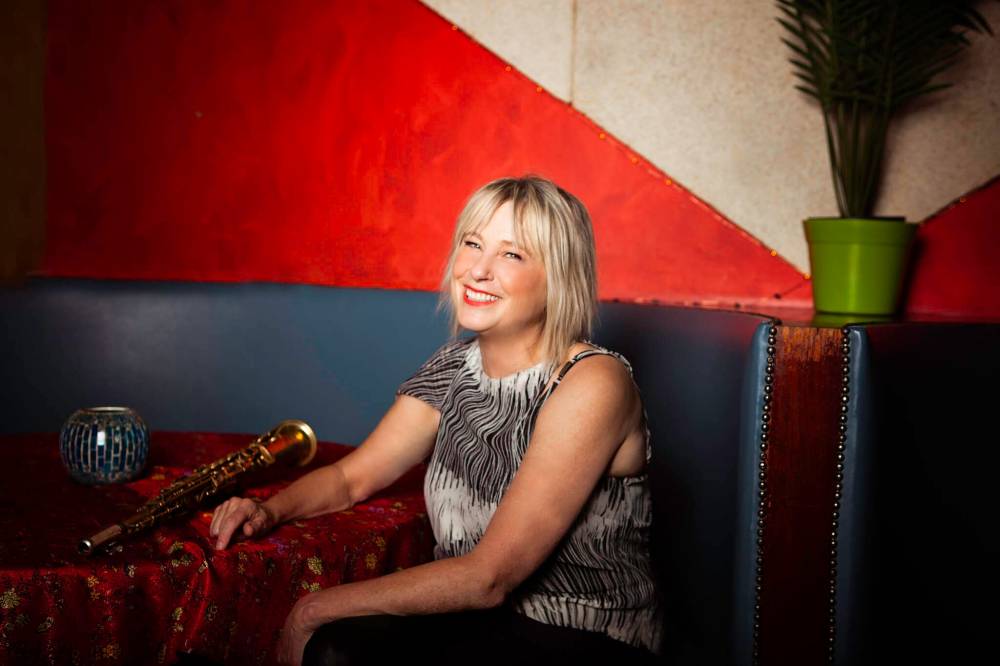
EMMA-LEE PHOTOGRAPHY
Jane Bunnett fell in love with Cuba in the 1980s.
“I don’t do well in institutions,” says Bunnett, an officer of the Order of Canada who, unlike many of this country’s noted jazz musicians, has never held a post in a university jazz department.
She draws inspiration from the spirit, perhaps more than the sounds, of jazz’s Golden Era, when giants such as Charles Mingus and Duke Ellington and a coterie of followers and students would crowd into small, smoky nightclubs and improvise, trade ideas and compete and argue musically.
“It was like an oral tradition that was passed down, and that was the only way that you would work — be on the scene,” she says.
Jazz can be a raw and raucous conversation between ferocious musicians — something often forgotten or sidelined in the era of smooth jazz and lo-fi jazz-hop playlists.
And Bunnett has plenty of stories to tell about jamming with some of Cuba’s finest and fiercest virtuosos on street corners and in hotel lobbies where the beer and music flowed until dawn.
While she arrived on the jazz scene a little late to cross paths with many Golden Era greats — her breakthrough album was 1992’s Spirits of Havana — she’s worked with plenty of contemporary heavy-hitters.
These include Larry Cramer (her husband), Charlie Haden, Paquito D’Rivera and Mercedes Valdés, one of Cuba’s most renowned singers, whose Yoruba-inflected chants rise like prayers on Spirits of Havana.
In some ways Bunnett’s career trajectory feels almost inevitable, though it came with plenty of grit and more than a little weaving through red tape.
Today, Latin and Caribbean fusions with American pop music are common and familiar thanks to the rise of the reggaeton and dancehall genres on Top 40 charts.
This fusion was already brewing as early as the 1940s when artists such as Dizzy Gillespie, with help from Mario Bauzá, absorbed more than a pinch of Afro-Cuban rhythms to create a new bebop mojo.
The movement grew from there, bringing in broader Afro-Caribbean and Afro-Latin influences.
LAUREN DEUTSCH PHOTO
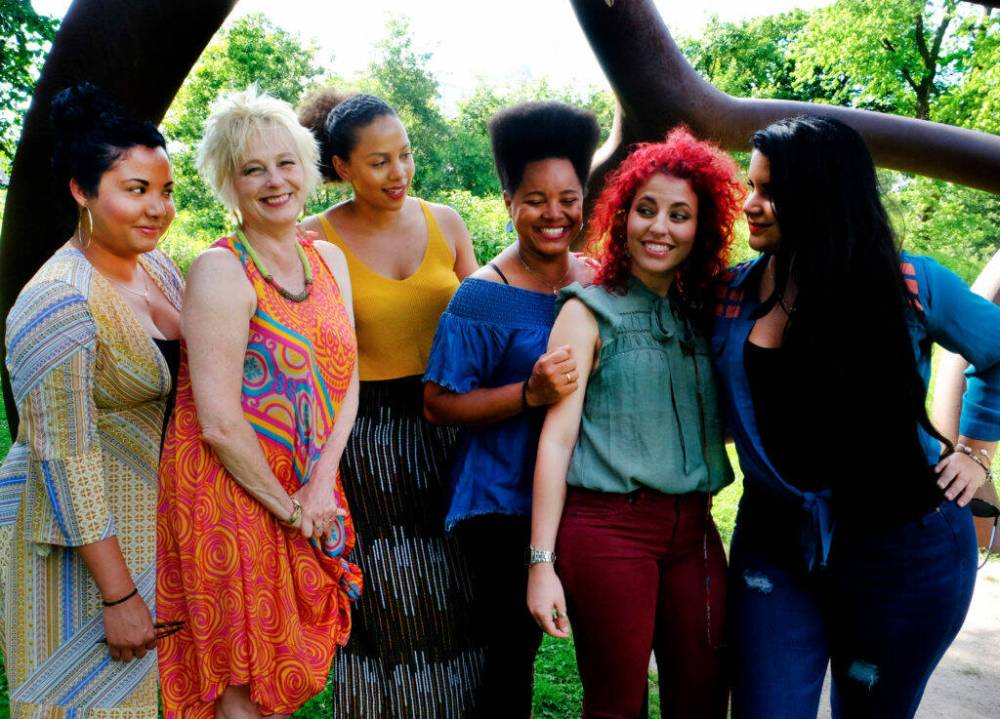
From left: Dánae Olano, Jane Bunnett, Joanna Tendai Majoko, Yissy García, Tailin Marrero Zamora and MaryPaz Fernández play traditional Afro-Cuban material and original compositions.
But just as things were picking up, along came the U.S. embargo on Cuba in 1962, stalling the direct collaboration between American and Cuban musicians for decades.
As a Canadian, Bunnett could sidestep this blockade, though it wasn’t until a fateful trip to Cuba in the early 1980s that the now 69-year-old had her conversion to Afro-Cuban jazz.
“Pretty much from the moment we got to Cuba, there was music in the air. There was a trio inside the airport, a quartet at the bus,” she says.
“And then that night, cocktail hour, there’s this music coming from the outdoor bar — 18 guys, three trumpets, two trombones, four saxophones. It looks unbelievable, like a mirage. Really incredible musical sound.”
From this experience grew one of Canadian jazz’s vital cultural exchanges, one that set in motion more than 20 albums attached to the bandleader, soprano saxophonist and flutist, and brought leading Cuban musicians, working behind Cuba’s so-called “sugar curtain,” to global audiences.
Along the way, she and her collaborators faced plenty of institutional pushback.
“It took three years (to make Spirits of Havana) because of the risk. Foreigners weren’t allowed to go the studios, and the drummers, the rumba group, they were dock workers, so they weren’t allowed in the studios (despite) being very well known,” says Bunnett.
But, after establishing herself on the island nation, where she now enjoys a supportive relationship with Cuba’s music conservatories, American bureaucracy has remained a daunting hurdle.
Bunnett has helped secure visas, arrange travel and provide performance and recording opportunities for her Cuban collaborators in the U.S. and Canada.
And while the gigs are often bigger and more attractive in the States, the embargo makes navigating the visa situation there especially costly and expensive.
Several of her current band members in Maqueque have defected to the U.S., or now live in Toronto, since the band was established in 2013.
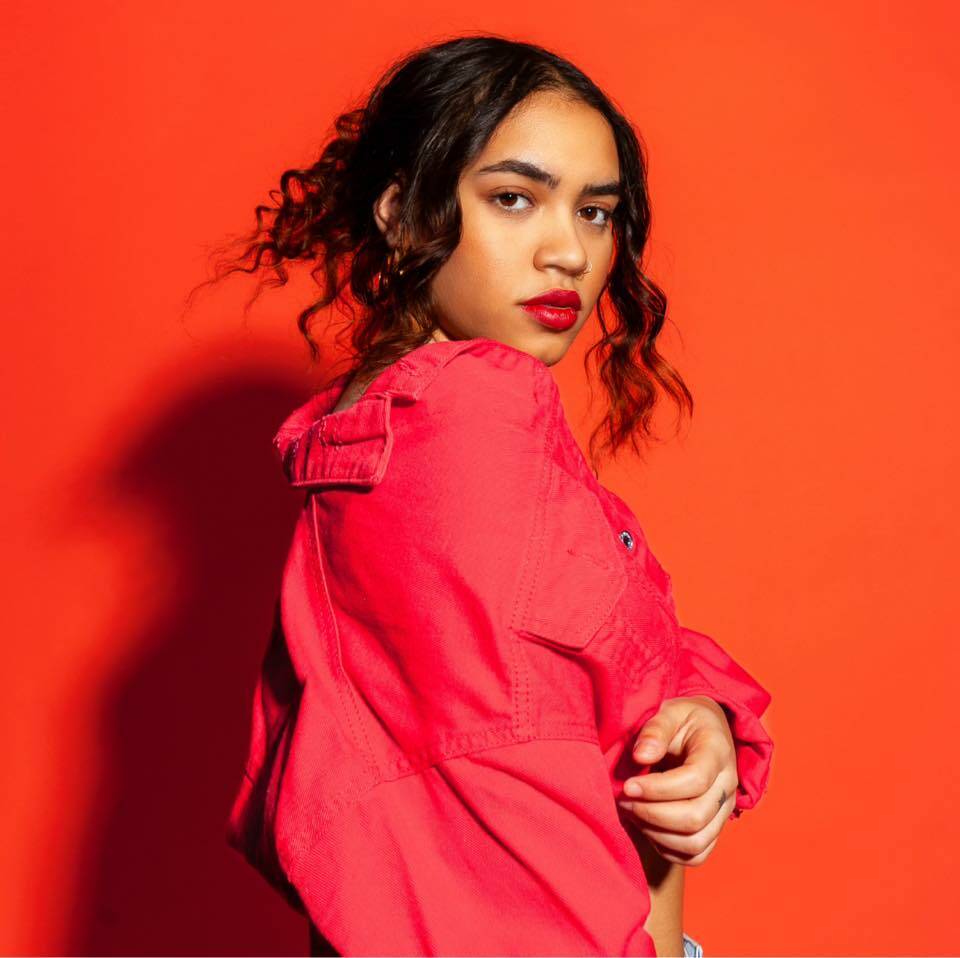
Cuban-born singer Gina D’Soto
Along with Bunnett on flute and soprano sax, the band includes MaryPaz Fernández on congas and percussion, Yissy Garcia on drums, Dánae Olano at the piano, Tailin Marrero Zamora on bass and Gina D’Soto on vocals.
Bunnett recalls inviting the young Grammy-nominated D’Soto, a Cuban who lives in New York, to play with her after seeing her on Facebook.
“Basically, she showed up at the sound check at two in the afternoon and a show at seven, and she just nailed it,” she says.

At the Berney Theatre shows this weekend, the band will be playing a mixture of material from across Maqueque’s four albums, including Afro-Cuban traditionals, pop standards such as Bill Withers’s Ain’t No Sunshine and originals written by Bunnett and band members.
The lineup and sound have evolved over the years, but its all-female identity has never wavered. In Cuba, Bunnett kept meeting young women with serious musical chops and training — then at jam sessions, she would find their boyfriends had grabbed their instruments while they stood on the sidelines.
“I kept saying to (my husband and collaborator) Larry, ‘I understand it’s a macho society, but these girls have put in those 10,000 hours multiple times,’” she says.
“And he said, ‘Well, stop talking about it and do something.’”
conrad.sweatman@freepress.mb.ca
Conrad Sweatman is an arts reporter and feature writer. Before joining the Free Press full-time in 2024, he worked in the U.K. and Canadian cultural sectors and freelanced for outlets including The Walrus, VICE and Prairie Fire. Read more about Conrad.
Our newsroom depends on a growing audience of readers to power our journalism. If you are not a paid reader, please consider becoming a subscriber.
Our newsroom depends on its audience of readers to power our journalism. Thank you for your support.
Concert preview
Jane Bunnett and Maqueque
● Berney Theatre, 123 Doncaster St.
● Today, 8 p.m.; Sunday, 2 p.m.
● Tickets $25-$45 at izzyasperjazz.com
Conrad Sweatman is an arts reporter and feature writer. Before joining the Free Press full-time in 2024, he worked in the U.K. and Canadian cultural sectors and freelanced for outlets including The Walrus, VICE and Prairie Fire. Read more about Conrad.
Our newsroom depends on a growing audience of readers to power our journalism. If you are not a paid reader, please consider becoming a subscriber.
Our newsroom depends on its audience of readers to power our journalism. Thank you for your support.
Advertisement Advertise With Us
Advertisement Advertise With Us