Stars, creators await decision on CanCon rules after tech giants win DST battle
Advertisement
Read this article for free:
or
Already have an account? Log in here »
To continue reading, please subscribe:

Digital Subscription
One year of digital access for only $205*
- Enjoy unlimited reading on winnipegfreepress.com
- Read the E-Edition, our digital replica newspaper
- Access News Break, our award-winning app
- Play interactive puzzles
*First annual payment billed as $205.00 + GST for one year. This annual subscription will automatically renew at $233.00 + GST every 52 weeks (10% off the regular annual price of $259.35). Offer available to new and qualified returning subscribers only. Cancel any time.
To continue reading, please subscribe:
Add Free Press access to your Brandon Sun subscription for only an additional
$1 for the first 4 weeks*
- Enjoy unlimited reading on winnipegfreepress.com
- Read the E-Edition, our digital replica newspaper
- Access News Break, our award-winning app
- Play interactive puzzles
*Your next Brandon Sun subscription payment will increase by $1.00 and you will be charged $17.95 plus GST for four weeks. After four weeks, your payment will increase to $24.95 plus GST every four weeks.
Read unlimited articles for free today:
or
Already have an account? Log in here »
Hey there, time traveller!
This article was published 10/07/2025 (450 days ago), so information in it may no longer be current.
Tom Green says he wouldn’t be where — or who — he is today without Canadian content rules.
“A big part of what makes us Canadian is watching Canadian television on TV when we were growing up. “Mr. Dressup,” “The Beachcombers,” “Danger Bay” — all these shows that help shape your personality,” says the Ottawa-born comedian.
“It’s important to see Canadian stories that reflect what our lives are actually like.”
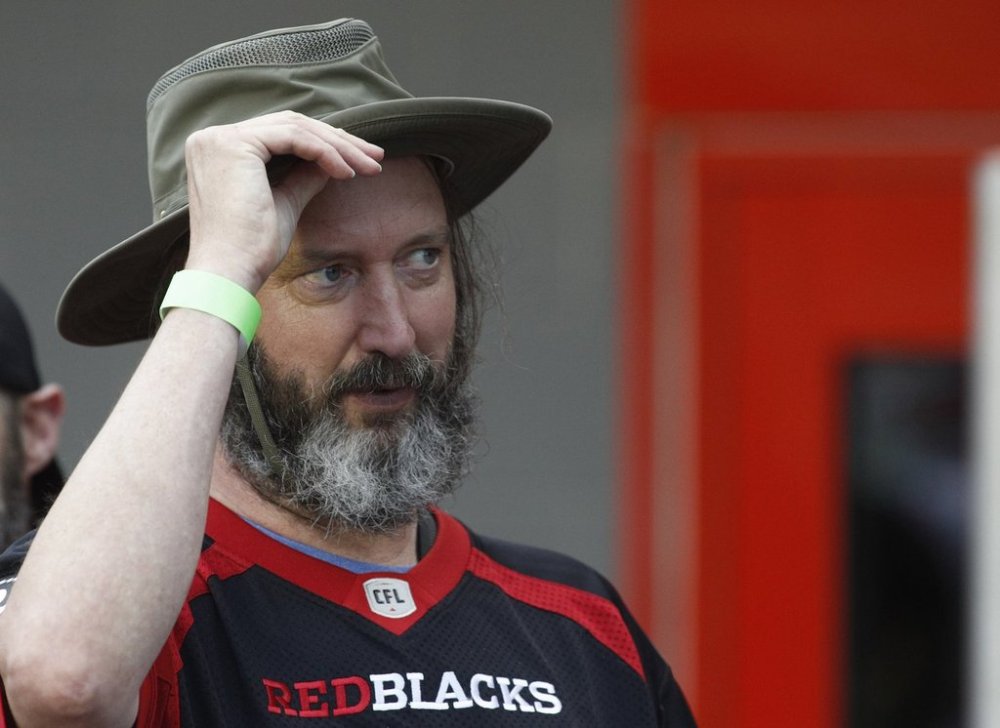
Green got his start in the ’90s with rap group Organized Rhyme, which CanCon airplay rules helped get on the radio, and parlayed that into an absurdist comedy career that took him to MTV and beyond.
He’s among those warning that without strong protections, homegrown voices risk getting lost in the algorithm — a fear heightened now that Canada is pulling back on another digital policy meant to rein in Big Tech.
Late last month, the federal government announced it will withdraw its planned Digital Services Tax, which would have forced global tech giants such as Amazon, Apple and Google to pay levies on digital revenues earned in Canada. The move, made under pressure from the United States, has sparked concern among Canada’s cultural sector that foreign companies will continue to profit from Canadian consumers without giving enough back.
For Reynolds Mastin, president of the Canadian Media Producers Association, the rollback only raises the stakes for the Online Streaming Act, which he sees as Canada’s main tool to ensure streaming platforms help fund local stories.
“The government’s decision to withdraw the Digital Services Tax sets a troubling precedent,” Mastin said in a statement.
“For too long, tech giants have avoided paying their fair share, not only in Canada but around the world. We can’t allow this to open the door to further rollbacks, and potentially undo years of work to level the playing field in Canada’s broadcasting sector through the Online Streaming Act.”
The DST would have charged foreign tech companies a three per cent levy on their Canadian revenues, hitting both content providers like Netflix and Apple TV Plus and service platforms like Uber. The Online Streaming Act, meanwhile, focuses directly on culture: it requires foreign streaming services to help fund Canadian storytelling.
Speaking in an interview last month, Green agreed that streaming giants like Netflix and Amazon “absolutely should” be obligated to devote part of their revenues to Canadian stories.
But some of the world’s biggest entertainment companies see it differently. Several streamers — including Amazon, Netflix and Apple — are challenging the CRTC order that would require foreign platforms earning more than $25 million annually in Canada to contribute five per cent of their local revenue toward Canadian programming. The companies argue the regulator has overstepped its authority.
The Federal Court of Appeal has issued a temporary stay on the payments while the case is being heard, with a decision expected later this summer — just ahead of the Aug. 31 deadline.
“We’re a big country geographically, but with a small population — you need support to stand out in this hugely American market,” says Green, who earlier this year released a standup special, a documentary and a reality series about his farm life, on Prime Video. He’s currently working on the upcoming Crave reality series “Tom Green’s Funny Farm.”
“So many of these massive American productions can be overwhelming to our culture. It’s good to have systems in place that support Canadians.”
As the CRTC works on a new definition of Canadian content, foreign streamers argue they shouldn’t be held to the same requirements as traditional broadcasters.
During a hearing in May, the Motion Picture Association-Canada — which represents major streamers including Netflix, Paramount, Disney and Amazon — urged the regulator to take a “flexible” approach in redefining Canadian content. The group argued against mandating specific creative roles be filled by Canadians.
In its opening remarks, the group said the CRTC shouldn’t impose “any mandatory positions, functions or elements of a ‘Canadian program’” on global streaming services.
Canadian content is currently determined by a 10-point system tied to key creative roles, with six points needed to qualify. For example, having a Canadian director or writer earns two points each, but at least one of those roles must be Canadian.
Neal McDougall, the Writers Guild of Canada’s assistant executive director, warns that “Canadian cultural sovereignty is at stake” if streamers are given too much leeway to define Canadian content.
“Foreign streamers have an interest in a definition that suits them — they want it to look a lot like the foreign location service productions that the streamers are already doing here,” he says.
He points to HBO’s “The Last Of Us” as an example — it’s filmed largely in Alberta and employs Canadians, but is driven by an American creative team and set in the United States.
“The (streamers) want to continue to do what is fundamentally American programming and label it Canadian based on an overly flexible definition.”
The CRTC is considering increasing the points system to 15, with productions needing at least 9 points and a Canadian showrunner — a change McDougall supports.
“It would go a long way to ensuring that creative control over Canadian content is retained by Canadians, because that showrunner position is so foundational to the creative control of the production.”
But Jennifer Kawaja, executive producer of Netflix’s upcoming Canadian thriller series “Wayward,” worries that requiring projects to always have a Canadian showrunner could backfire.
“I’m a bit of a staunch nationalist when it comes to promoting Canadian stories by Canadians, but I also think that to build world-class shows we have to have some choice,” she says.
Kawaja notes that while Canada has “a number of amazing showrunners,” the pool of experienced talent isn’t as deep as in the U.S. or the U.K., partly because of how the industry has developed here.
“It’s not always easy to find experienced showrunners who are both available or, from their point of view or ours or the buyers’, a right fit for the project. So it can sometimes leave a project quite stuck,” she says.
Kawaja also argues mandating a Canadian showrunner in every case might limit opportunities for less experienced Canadian creators to grow alongside seasoned partners.
She points to “Wayward” — its Canadian creator, comedian Mae Martin, enlisted American Ryan Scott as co-showrunner to help steer the large-scale production, since Martin had limited showrunning experience.

“After going through that process, Mae now has the experience to do a bigger show. They chose the person that was best for them, and that person happened not to be Canadian. I would want every less experienced creator to have that opportunity.”
Kawaja says the goal shouldn’t be shutting out foreign talent, but requiring streaming giants to reinvest in local storytelling — something she, too, believes they owe to Canadians.
“I definitely think (streamers) should be contributing to creating, developing and producing Canadian content,” she says.
“I realize that how that happens is complicated for everybody, but they should be contributing to developing our cultural ecosystem if they’re going to benefit from revenues in this country.”
This report by The Canadian Press was first published July 10, 2025.
Related Articles
Canada cancelled its digital services tax. What was it and why did the U.S. hate it?





Advertisement Advertise With Us
Advertisement Advertise With Us