Hungarian master of absurdist excess László Krasznahorkai wins Nobel literature prize
Advertisement
Read this article for free:
or
Already have an account? Log in here »
To continue reading, please subscribe:

Digital Subscription
One year of digital access for only $205*
- Enjoy unlimited reading on winnipegfreepress.com
- Read the E-Edition, our digital replica newspaper
- Access News Break, our award-winning app
- Play interactive puzzles
*First annual payment billed as $205.00 + GST for one year. This annual subscription will automatically renew at $233.00 + GST every 52 weeks (10% off the regular annual price of $259.35). Offer available to new and qualified returning subscribers only. Cancel any time.
To continue reading, please subscribe:
Add Free Press access to your Brandon Sun subscription for only an additional
$1 for the first 4 weeks*
- Enjoy unlimited reading on winnipegfreepress.com
- Read the E-Edition, our digital replica newspaper
- Access News Break, our award-winning app
- Play interactive puzzles
*Your next Brandon Sun subscription payment will increase by $1.00 and you will be charged $17.95 plus GST for four weeks. After four weeks, your payment will increase to $24.95 plus GST every four weeks.
Read unlimited articles for free today:
or
Already have an account? Log in here »
Hey there, time traveller!
This article was published 09/10/2025 (368 days ago), so information in it may no longer be current.
STOCKHOLM (AP) — Hungarian writer László Krasznahorkai, whose surreal and anarchic novels combine a bleak world view with mordant humor, won the Nobel Prize in literature Thursday for work the judges said upholds the power of art in the midst of “apocalyptic terror.”
The Nobel judges said the 71-year-old author, whose novels sometimes consist of just one long sentence, is “a great epic writer” whose work “is characterized by absurdism and grotesque excess.”
He’s the first Nobel literature winner from Hungary since Imre Kertesz in 2002 and joins a list of laureates that includes Ernest Hemingway, Toni Morrison and Kazuo Ishiguro.
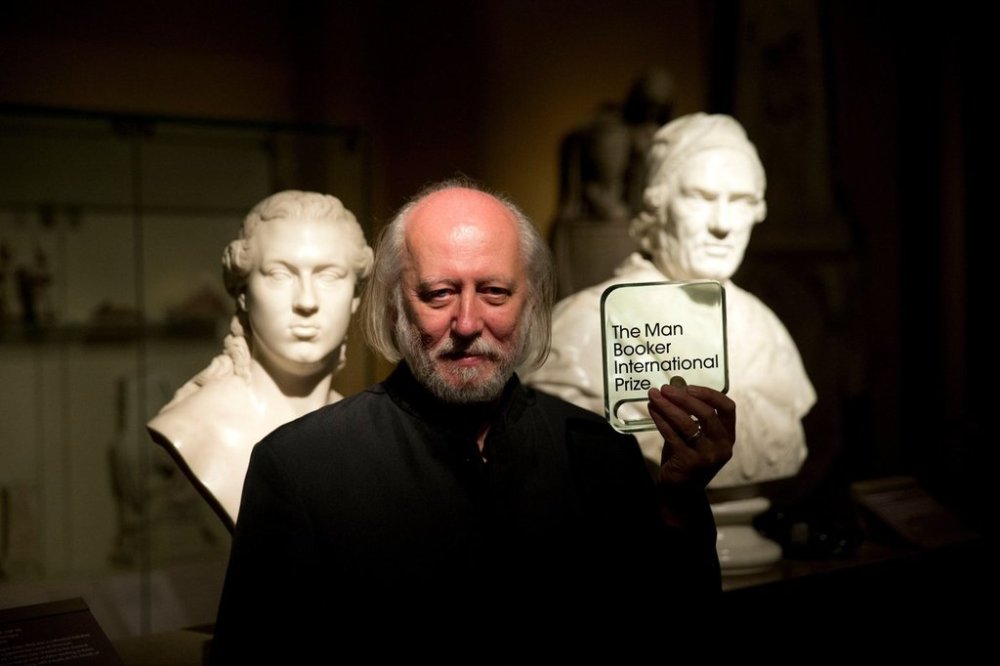
“I am calm and very nervous,” Krasznahorkai told Radio Sweden after getting news of the prize, which comes with an award of more than $1 million. “This is the first day in my life when I got a Nobel Prize. I don’t know what’s coming in the future.”
The work that won the Nobel Prize in literature
The American writer and critic Susan Sontag once described Krasznahorkai as the “contemporary master of the Apocalypse.” His work has echoes of other European writers who explored the absurd tragicomedy of existence, including Franz Kafka and Samuel Beckett.
Zsuzsanna Varga, a Hungarian literature expert at the University of Glasgow, said Krasznahorkai’s novels probe the “utter hopelessness” of human existence, while also being “incredibly funny.”
Krasznahorkai’s near-endless sentences made his work the “Hotel California” of literature — once readers get into it, “you can never leave,” she said.
Varga suggested readers new to Krasznahorkai’s work start with “Satantango,” his 1985 debut, which centered around the few remaining residents of a dying collective farm and set the tone for what was to follow.
Krasznahorkai has since written more than 20 books, including “The Melancholy of Resistance,” a surreal, disturbing tale involving a traveling circus and a stuffed whale, and “Baron Wenckheim’s Homecoming,” the sprawling saga of a gambling-addicted aristocrat.
“Herscht 07769,” from 2021, is set in a German town riven with unrest. Written as a series of letters to then-German Chancellor Angela Merkel, it has just one period in its 400 pages.
Several works, including “Satantango,” and “The Melancholy of Resistance” were turned into films by Hungarian director Béla Tarr.
Krasznahorkai also wrote several books inspired by his travels to China and Japan, including “A Mountain to the North, a Lake to the South, Paths to the West, a River to the East,” published in Hungarian in 2003.
How Krasznahorkai came to win
Krasznahorkai had been on the Nobel radar for some time, committee member Steve Sem-Sandberg said, calling his literary output “almost half a century of pure excellence.”
The writer was born in the southeastern Hungarian city of Gyula, near the border with Romania, and studied law at universities in Szeged and Budapest before shifting his focus to literature.
Varga, the academic, said Krasznahorkai developed a cult following among young Hungarians during the twilight of Communism in the 1980s, when “authors were pretty much like pop stars.”
János Szegő, Krasznahorkai’s editor at the Budapest-based Magvető publishing house, said that the author’s works deal with “life on the periphery,” and are interested in “the techniques of power.”
“All the populist tendencies of our time can also be found in his novels — from barbarism to the manipulation of the masses,” Szegő said.
Krasznahorkai has been a critic of autocratic Hungarian Prime Minister Viktor Orbán, especially his government’s lack of support for Ukraine after the Russian invasion.
In an interview with Swedish newspaper Svenska Dagbladet earlier this year, Krasznahorkai expressed criticism both of Orbán’s political system and the nationalism present in Hungarian society.
“There is no hope left in Hungary today and it is not only because of the Orbán regime,” he told the paper. “The problem is not only political, but also social.”
Orbán nonetheless congratulated the writer in a Facebook post, saying: “The pride of Hungary, the first Nobel Prize winner from Gyula, László Krasznahorkai.”
How Krasznahorkai and others reacted
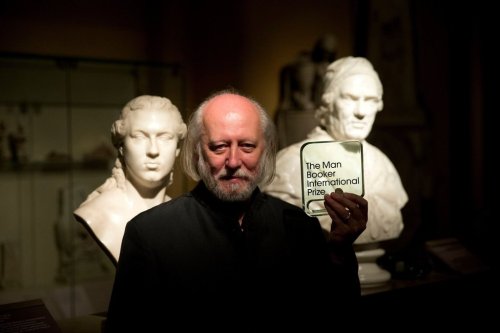
Krasznahorkai received the 2015 Man Booker International Prize for his body of work and the National Book Award for Translated Literature in the U.S. in 2019 for “Baron Wenckheim’s Homecoming.”
He said none of his career was planned.
“I wanted at first to write only one book. And I didn’t want to be a writer,” he told Swedish radio, but rereading his first novel he discovered it wasn’t perfect.
“I started to write another one because I wanted to correct ‘Satantango,’” he said, and later “I tried to write a new book to correct the first two. … My life is a permanent correction.”
The literature prize has been awarded by the Nobel committee of the Swedish Academy 117 times to a total of 121 winners. Last year’s winner was South Korean author Han Kang. The 2023 winner was Norwegian writer Jon Fosse, whose work includes a seven-book epic made up of a single sentence.
The literature prize is the fourth to be announced this week, following the 2025 Nobels in medicine, physics and chemistry.
The winner of the Nobel Peace Prize will be announced Friday. The final Nobel, the Nobel Memorial Prize in Economic Sciences, will be announced Monday.
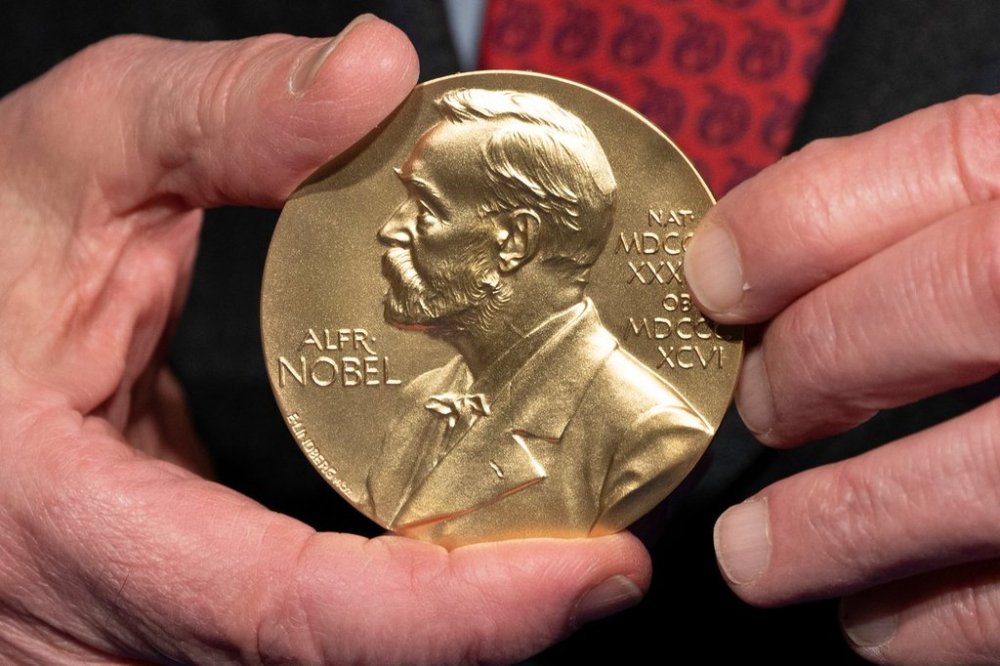
Nobel Prize award ceremonies are held on Dec. 10, the anniversary of Alfred Nobel’s death in 1896. Nobel was a wealthy Swedish industrialist and the inventor of dynamite who founded the prizes.
Each prize carries an award of 11 million Swedish kronor (nearly $1.2 million). Winners also receive an 18-carat gold medal and a diploma.
___
This version removes a comment attributed to Krasznahorkai’s X account, which could not be verified.
___
Mike Corder reported from The Hague, Netherlands, and Jill Lawless from London. Justin Spike in Budapest, Hungary and Bálint Dömötör in London contributed.
Related Articles
Your phone rings, and it's a number from Sweden. Do you answer? A Nobel Prize winner didn't

Advertisement Advertise With Us
Advertisement Advertise With Us