Healing holiday Local grief camp helps youth process the loss of loved ones
Read this article for free:
or
Already have an account? Log in here »
To continue reading, please subscribe:

Digital Subscription
One year of digital access for only $205*
- Enjoy unlimited reading on winnipegfreepress.com
- Read the E-Edition, our digital replica newspaper
- Access News Break, our award-winning app
- Play interactive puzzles
*First annual payment billed as $205.00 + GST for one year. This annual subscription will automatically renew at $233.00 + GST every 52 weeks (10% off the regular annual price of $259.35). Offer available to new and qualified returning subscribers only. Cancel any time.
To continue reading, please subscribe:
Add Free Press access to your Brandon Sun subscription for only an additional
$1 for the first 4 weeks*
- Enjoy unlimited reading on winnipegfreepress.com
- Read the E-Edition, our digital replica newspaper
- Access News Break, our award-winning app
- Play interactive puzzles
*Your next Brandon Sun subscription payment will increase by $1.00 and you will be charged $17.95 plus GST for four weeks. After four weeks, your payment will increase to $24.95 plus GST every four weeks.
Read unlimited articles for free today:
or
Already have an account? Log in here »
Hey there, time traveller!
This article was published 24/10/2025 (298 days ago), so information in it may no longer be current.
The young campers of Camp Firefly are having a whale of time.
Some children are attempting the climbing wall, while others brace themselves before zooming down the zipline. After this they might try their hand at archery, fishing or kayaking.
Those who’d prefer less strenuous activities are welcome to ride bikes, go for a walk in the surrounding forest or check out the colouring, art and fidget-toy stations set up on the grounds of Headingley’s Camp Manitou.
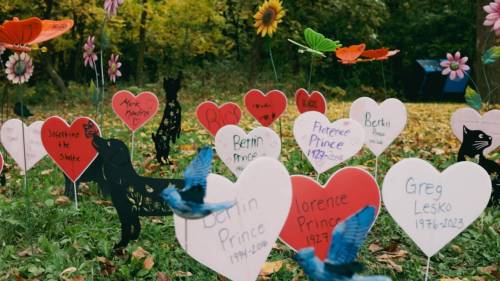
CHRIS PELLERIN PHOTO Grief therapy takes many forms at Camp Firefly.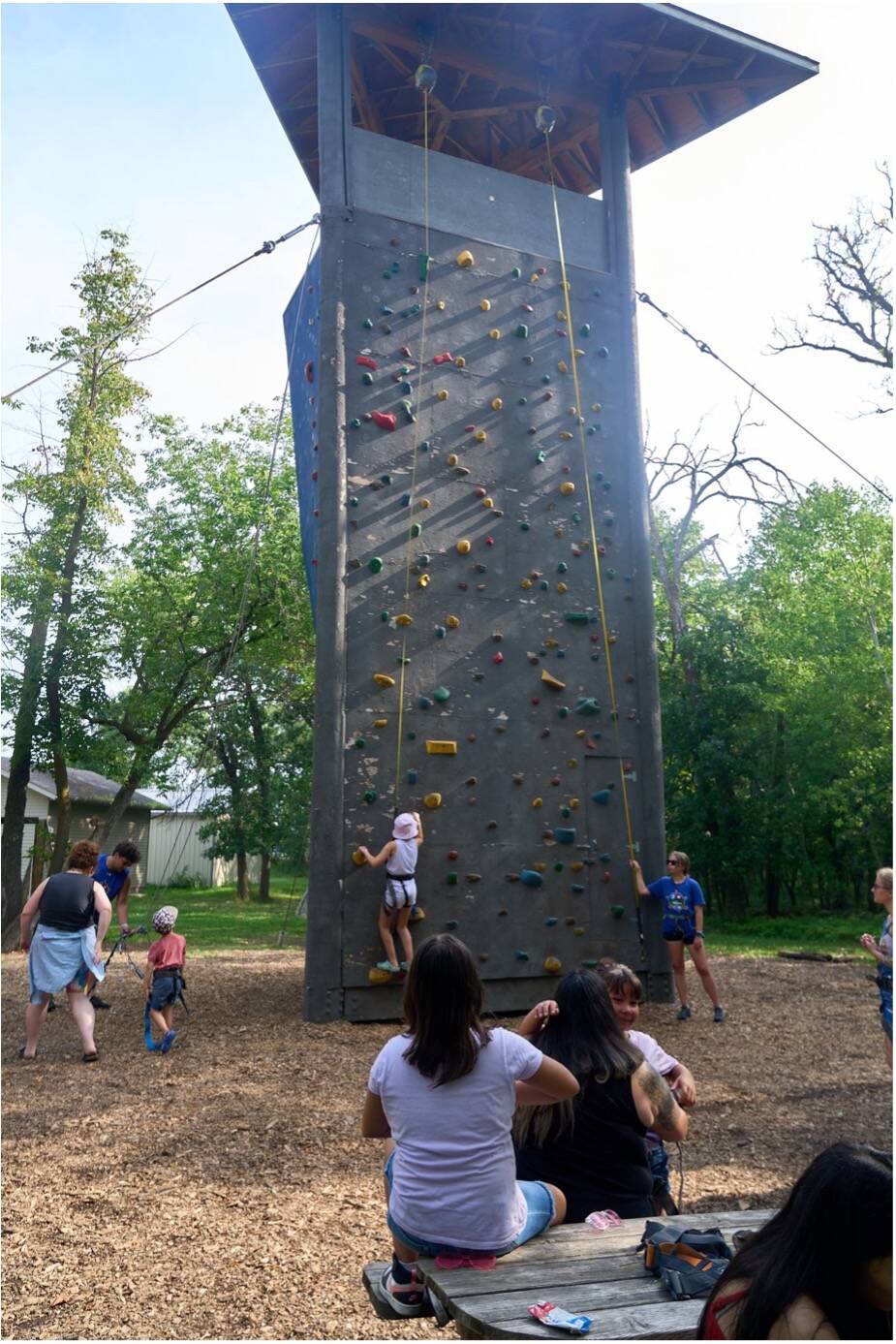
It looks very much like a typical day at summer camp.
But nothing about Camp Firefly is typical; this is a tailored, trauma-informed grief camp for children.
Campers here spend their time alternating between grief therapy, camp activities and cultural workshops.
They are here to learn to grieve in a healthy way, guided by a troop of volunteers corralled by founder Rhys Williams, a social worker who started the camp after realizing there was lack of support for young Winnipeggers impacted by family deaths.
“It’s like an introduction to grieving,” he says. “It’s an opportunity for kids to meet it head-on and learn ways to process and move through it, surrounded by other kids who are going through the exact same feelings that they are, probably for the first time.”
Attendance is by invitation. Willliams visits agencies he has worked with before, gets in touch with people who know or have heard of children that might benefit from the camp and emails schools to extend the invitation to vulnerable students.
Camp Firefly is free to attend; food and drink for the weekend are also provided for everyone.
The camp is aimed at children between five to 17 years old, although campers can bring their own community therapists, support workers and even family members. Williams and his team will find a way to make things work.
“We’re very flexible, we’re very adaptable. We don’t turn kids away at Camp Firefly,” he says.
“One family brought their grandmother, another one brought their mom. We’ve had younger adults in their early 20s attending. I think that’s pretty unique to our camp. We’re giving them that nudge, that opportunity to heal together.”
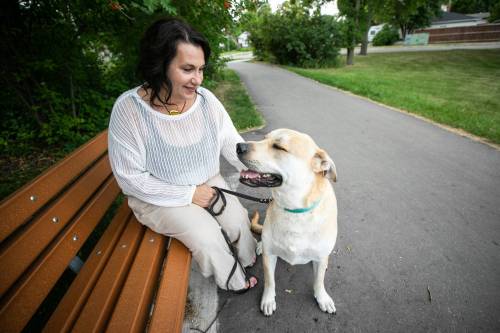
MIKAELA MACKENZIE / FREE PRESS Social worker Rhys Williams created Camp Firefly to help Winnipeg youth process the death of loved ones. 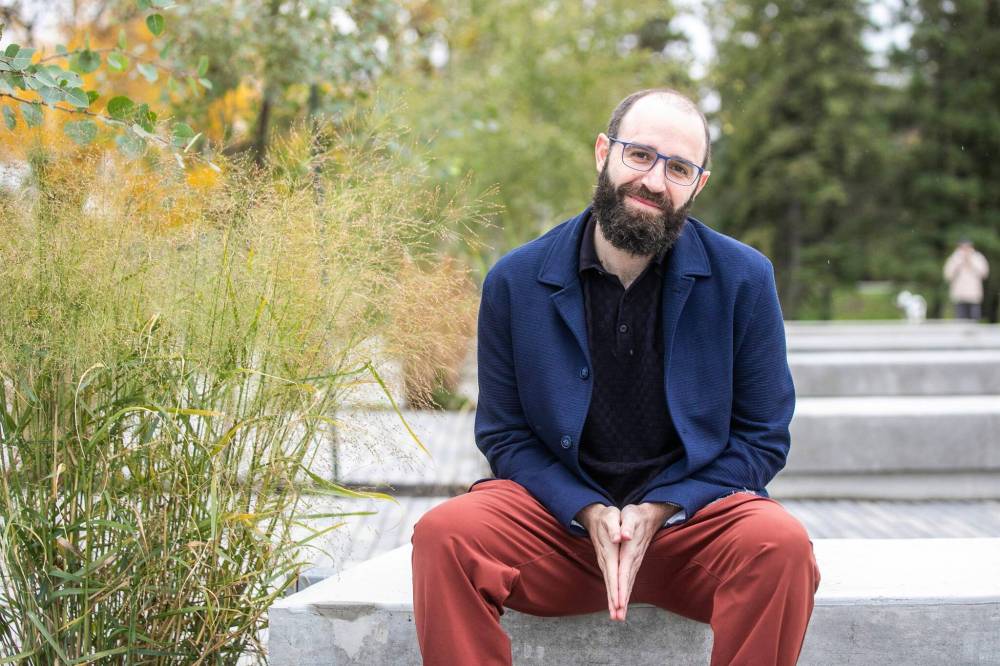
When he first started the event, it was a one-day affair. This year, Williams extended it to include an overnight stay. Those who didn’t want to stay the night could still attend — at Camp Firefly, it’s all about making your own choices.
This ethos extends to activities. Nothing is enforced, no one is expected to take part and there are no rigid timetables to follow.
“Part of being a trauma-informed camp is empowering kids and giving them that choice,” Williams says. “The kids are the directors of their own grief. We tell them directly, ‘You are in charge, you dictate how your grief camp will look.’ We are their guides here to help and support them.”
Everything has been intentionally designed to evoke emotion, establish connections and promote discussion, from the language the staff use to the way the children alternate between activities.
Interspersed between conventional camp pursuits are grief therapy activities, such as cuddling therapy animals or doing music therapy. Other activities are a way to start a conversation about death: memory frames see kids decorate a picture frame containing a photo of their late loved one, while memory pillows are personalized pillow cases covered in patches that remind them of the deceased.
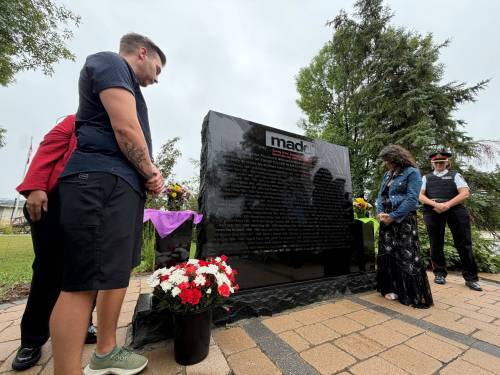
WINNIPEG FOUNDATION PHOTO Campers take part in grief therapy, camp activities and cultural workshops.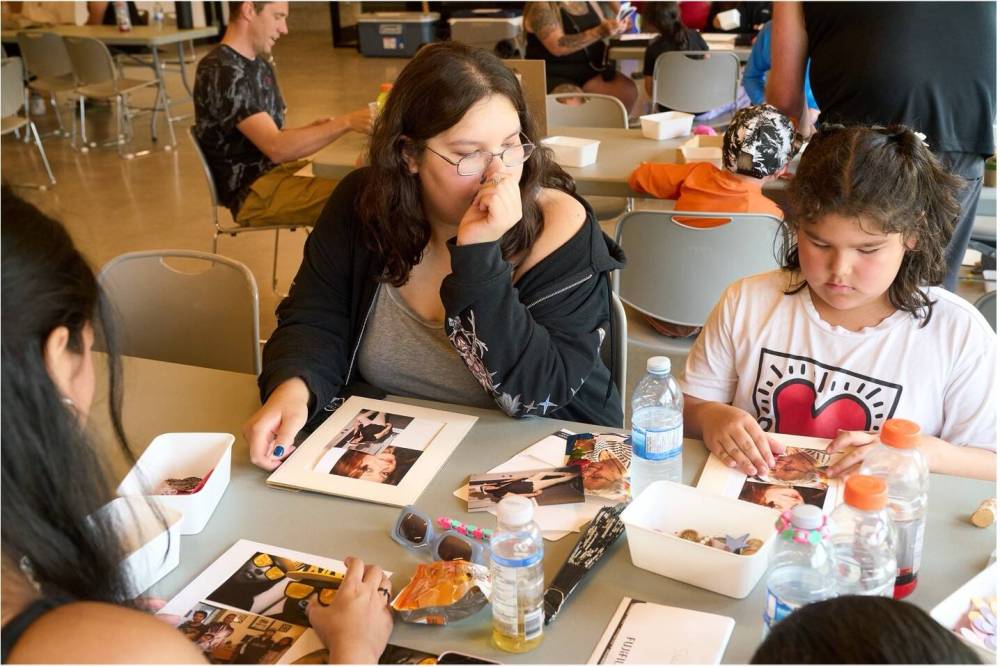
Williams’ mother, Janet, and her six sewing-circle friends spend hours attaching the patches so the pillows are ready for the final grief ceremony, which sees the children writing a letter to the person who has died, and then burning the letter in a bonfire.
“It is this alternation that is the magical formula of grief camp,” Williams says. “You go from lightness to heaviness to lightness to heaviness. The idea is to sort of go up and down, back and forth.”
If the children don’t feel comfortable doing one or any of the grief activities, they don’t have to, but almost everyone takes part in everything.
“This year, after we burned our letters we just sat down around the fire and held one another,” he says. “The children held their memory pillows and we had adults and kids crying everywhere, but in a really supportive way.
“You’ll see adults consoling kids, of course, but you also see children consoling adults. They come up, they hold or they squeeze… they want to make you feel supported. We don’t ask for that; it just happens naturally. Kids see the benefits, the power that comes from helping others, which is a way to also process and their grief.”
Williams had never heard of grief camps until he took on a role with the Winnipeg Regional Health Authority as a mental health counsellor in Churchill. One night, after an especially tough day counselling suicidal youth, he came across a documentary on grief camps.
CHRIS PELLERIN PHOTO Participants take part in camp activities
and trauma-informed therapy sessions.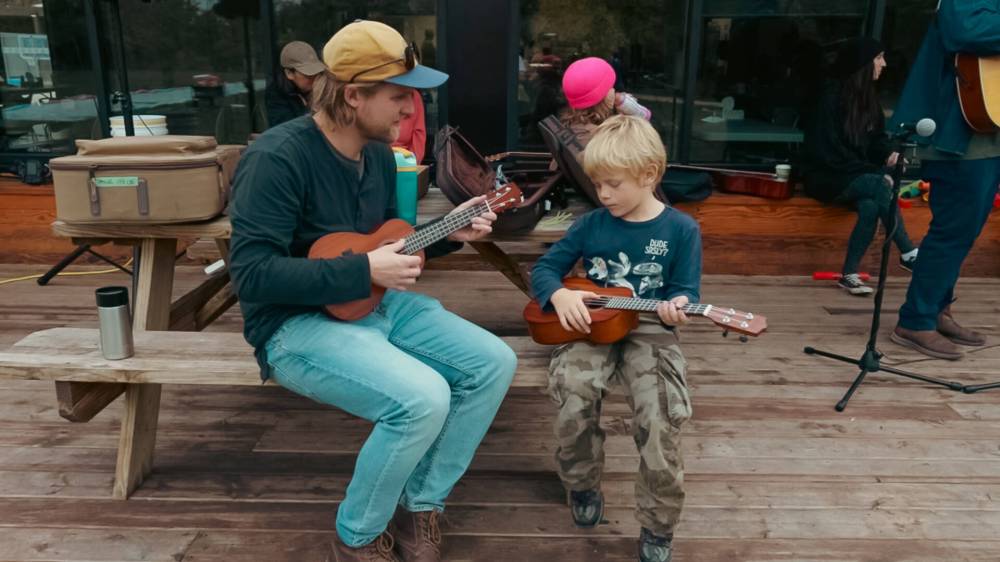
He learned of two in the province — Camp Stepping Stones put on by Interlake Eastern Health Authority and Camp Bridges run by Prairie Mountain Health — but there was nothing in Winnipeg.
A stint volunteering at Camp Stepping Stones fuelled his desire to create something similar for children in the city, specifically the types of children he’d worked with in his counselling career.
“We have multiple kids who are grieving suicide or murder or overdoses, or cancer,” Williams says. “A lot of the kids we work with are kids in group homes, in CFS, in detox units.
“Our camp prioritizes them; it is designed around making them feel safe and comfortable.”
William runs the camp with the help of his family and friends. Every adult must have a criminal background check, a child abuse check and an adult abuse check — which the camp pays for — before they are accepted as volunteers.
All 30 camp companions — the therapists, crisis workers, social workers, Indigenous committee leaders, elders and healers who help facilitate the camp — volunteer their time, knowledge and expertise. No one takes a salary, not even Williams.

Planning can take up to eight months, half of which is spent trying to secure funds.
The costs of running a camp like this can mount and Williams relies on grants and personal donations to keep things going.
It’s a full-time job — except it isn’t his actual employment. It’s something he does after he clocks off from his day job.
“The Winnipeg Foundation is a very big supporter of ours. We couldn’t do it without them. Camp Manitou were very generous to us; they have been very accommodating and they gave us a big discount,” he says.
The goal is to make Camp Firefly an annual event, but first he has to secure long-term sustainable funding. What he needs are donors who want to fund the camp in perpetuity, he says.
Williams is looking for organizations to donate so that he can focus on running the camp without having to piece together funds.
“That is the only way this camp can continue,” says Williams, who is planning next year’s event even though funding is not secured. “I have done it for the last three years without knowing if money is coming in. I’m trying to put the pieces in place so it becomes an annual thing with predictable, sustainable funding.”
av.kitching@freepress.mb.ca

AV Kitching is an arts and life writer at the Free Press. She has been a journalist for more than two decades and has worked across three continents writing about people, travel, food, and fashion. Read more about AV.
Every piece of reporting AV produces is reviewed by an editing team before it is posted online or published in print — part of the Free Press‘s tradition, since 1872, of producing reliable independent journalism. Read more about Free Press’s history and mandate, and learn how our newsroom operates.
Our newsroom depends on a growing audience of readers to power our journalism. If you are not a paid reader, please consider becoming a subscriber.
Our newsroom depends on its audience of readers to power our journalism. Thank you for your support.
History
Updated on Monday, October 27, 2025 11:47 AM CDT: Copy editing changes throughout