Crucible of personal and political
Young-adult novel set amid abortion debates of 1983 Winnipeg
Advertisement
Read this article for free:
or
Already have an account? Log in here »
To continue reading, please subscribe:
Digital Subscription
One year of digital access for only $1.44 a week*
- Enjoy unlimited reading on winnipegfreepress.com
- Read the E-Edition, our digital replica newspaper
- Access News Break, our award-winning app
- Play interactive puzzles
*Billed as $5.77 plus GST every four weeks. After 52 weeks, price increases to the regular rate of $19.95 plus GST every four weeks. Offer available to new and qualified returning subscribers only. Cancel any time.
To continue reading, please subscribe:
Add Free Press access to your Brandon Sun subscription for only an additional
$1 for the first 4 weeks*
- Enjoy unlimited reading on winnipegfreepress.com
- Read the E-Edition, our digital replica newspaper
- Access News Break, our award-winning app
- Play interactive puzzles
*Your next Brandon Sun subscription payment will increase by $1.00 and you will be charged $17.95 plus GST for four weeks. After four weeks, your payment will increase to $24.95 plus GST every four weeks.
Read unlimited articles for free today:
or
Already have an account? Log in here »
Hey there, time traveller!
This article was published 17/11/2025 (334 days ago), so information in it may no longer be current.
Set in Winnipeg in 1983, What Friends Are For follows 15-year-old Leesa Cramer as she becomes entangled in the emotionally charged debate over abortion, sparked by her mother’s activism and the opening of a new clinic in town.
What begins as a loyal daughter’s participation in protests soon evolves into a personal crucible of belief, identity and empathy.
In an email interview, local author Harriet Zaidman says the novel (Heritage House Publishing, 242 pages, $16.95) was born out of her concern over the 2022 repeal of Roe v. Wade, the landmark 1973 U.S. Supreme Court decision that the Constitution protected the right to have an abortion.
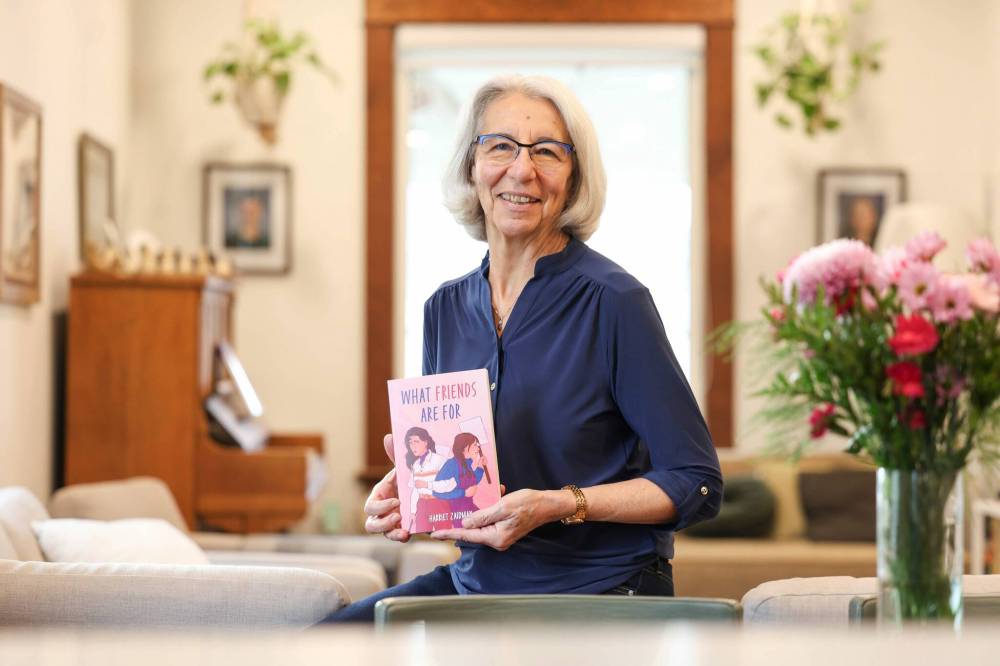
“People have forgotten what women endured before abortion was decriminalized,” she says. “In several states, women are now being criminalized for miscarriages and denied medical care for doomed pregnancies. It feels like we’re stepping backward in time.”
Zaidman’s novel draws on both historical research and personal stories.
“When I told women what I was writing about, many shared stories from their families — mothers, grandmothers, even themselves. These stories affirmed to me that there is a story in most families. As there is in mine.”
She recounts how her own grandmother had two illegal abortions in the 1920s, one of which nearly cost her life, owing to being denied medical care.
“Her crime? Poverty.”
These real-life accounts form the emotional bedrock of the novel. Leesa’s world is shaped by her mother’s grief over miscarriages, her father’s quiet struggle with a wrongful conviction case, and her best friend Jenny’s unwavering religious convictions.
But as Leesa engages in school debates, sleepovers and late-night conversations, she begins to question the moral absolutes she’s been taught.
“You could give the baby up for adoption. What’s wrong with that?” Leesa asks early in the novel — a line that encapsulates her initial belief in preserving life.
“No matter what any law says, women will seek out ways to end unwanted pregnancies.”
But her views are challenged by friend Sandra, whose mother was adopted and feels a deep sense of loss and disconnection. At a pivotal sleepover scene, the girls debate fiercely: “Isn’t it better to be alive, though?” Jenny asks. “How would I know the difference?” Mindy replies.
These exchanges reflect the novel’s central tension: the collision between ideology and lived experience.
“No matter what any law says, women will seek out ways to end unwanted pregnancies. Abortion-related deaths were once the leading cause of (maternal) death,” Zaidman adds. “That history must not be forgotten.”
Leesa’s romantic feelings for Kevin, a charming athlete, add emotional complexity to her journey. Her father’s protective instincts and her mother’s desire to reclaim her career further strain the family dynamic.
Through the lens of Arthur Miller’s play The Crucible, which Leesa studies in school, the novel draws parallels between historical repression and contemporary moral panic. As Ms. Headon, her teacher, says: “When a worldview or a society is challenged, it can become repressive to try and keep its citizens in place — under control. Especially young people.”
Zaidman — the author of several novels and picture books for children who writes about literature for young people for the Free Press — spent 18 months writing the book, immersing herself in research that included Supreme Court decisions, biographies of Dr. Henry Morgentaler and Joe Borowski (advocates for choice and against abortion, respectively) and interviews with women and clinic staff.
“I never stopped researching,” she says.
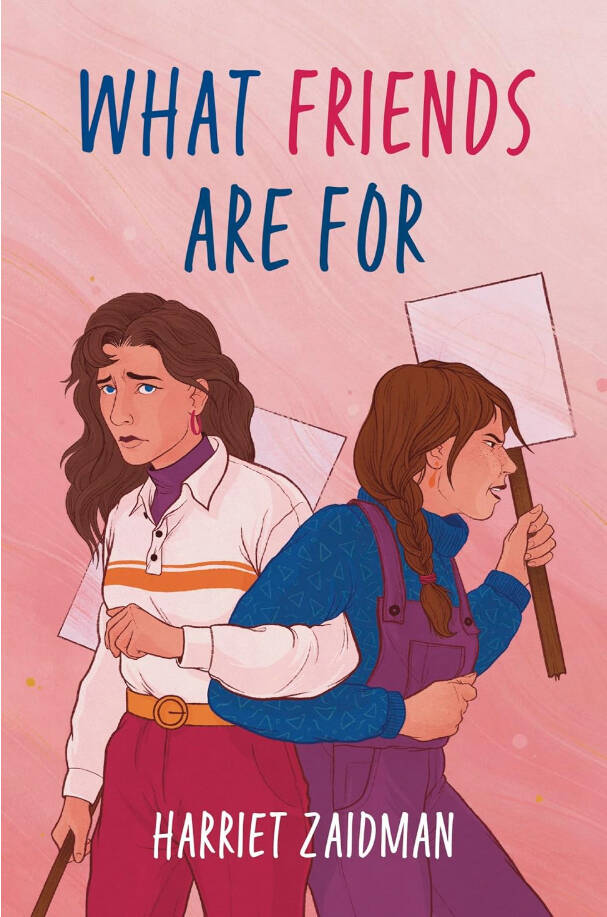
The title What Friends Are For emerged from the conflict between two characters, and the cover artwork — chosen by the publisher — reflects Leesa’s internal struggle.
“She professes one view, but she’s torn by her reality,” Zaidman explains.
Though abortion is legal in Canada, Zaidman emphasizes that access remains uneven.

“It’s very difficult to access in rural and northern communities, and in the Maritime provinces. It should be part of universal health care, but policies and funding still make it a challenge.”
Ultimately, What Friends Are For is a story about ideological awakening, the fragility of friendships, and the courage it takes to think for oneself. It doesn’t preach — it listens, questions and invites readers to do the same.
Zaidman hopes the novel will spark meaningful conversations among young people, educators and families, encouraging reflection on the past and action toward a more compassionate future.
The author will be joined in conversation by Shelagh Rogers, former host of CBC Radio’s The Next Chapter, at the book launch on Thursday.
arts@freepress.mb.ca