Take off, eh
A strange brew of Canadians has joined Bob and Doug Mackenzie in their hoserdom

Advertisement
Read this article for free:
or
Already have an account? Log in here »
To continue reading, please subscribe:

Digital Subscription
One year of digital access for only $205*
- Enjoy unlimited reading on winnipegfreepress.com
- Read the E-Edition, our digital replica newspaper
- Access News Break, our award-winning app
- Play interactive puzzles
*First annual payment billed as $205.00 + GST for one year. This annual subscription will automatically renew at $233.00 + GST every 52 weeks (10% off the regular annual price of $259.35). Offer available to new and qualified returning subscribers only. Cancel any time.
To continue reading, please subscribe:
Add Free Press access to your Brandon Sun subscription for only an additional
$1 for the first 4 weeks*
- Enjoy unlimited reading on winnipegfreepress.com
- Read the E-Edition, our digital replica newspaper
- Access News Break, our award-winning app
- Play interactive puzzles
*Your next Brandon Sun subscription payment will increase by $1.00 and you will be charged $17.95 plus GST for four weeks. After four weeks, your payment will increase to $24.95 plus GST every four weeks.
Read unlimited articles for free today:
or
Already have an account? Log in here »
Hey there, time traveller!
This article was published 11/02/2026 (220 days ago), so information in it may no longer be current.
Seemingly every culture has versions of the picaresque hero: part myth, part social descriptor. They’re the archetypal underdog, the lovable rogue of low social origin who outwiles the elite and powerful.
Italy has Harlequin; Spain, Sancho Panza; France, Gavroche.
As for Canada’s picaresque hero, we could do worse than the hoser.
The term, coined in 1981 by the Toronto Star to describe SCTV’s Mackenzie brothers, Bob and Doug, has a very specific national flavour. They’re often a small-town hick, sure, but the image is pleasantly Canadian — a little cuddlier, even less rebellious, than the hoser’s American counterpart, the redneck.
They’re envisioned as the type to check or chirp you in hockey, then share a Molson with you after the game.
Even if hoser stereotypes can present a hokey image, they can also feel reassuring, if not quite defiant, at a time when Canadian sovereignty is threatened — a time when hit cultural exports such as Heated Rivalry are the exception, and Americanization in media feels more powerful than ever.
Shortly after Prime Minister Mark Carney was sworn in, he chose to calm the country about U.S. President Donald Trump’s tariff assault by hanging with Mike Myers — whose breakthrough persona, Wayne Campbell, was a hosery Scarborough slacker — in front of a hockey rink and quizzing him about heartland bards the Tragically Hip.
Yet, for all the hockey echoes of “elbows up” rhetoric, it’s clear from the polls that the nationalist wave still isn’t connecting with a lot of Canadians, not least of all many small-town and western Canadians, who tend to see it as an artifice of elitist Ottawa party politics.
Does this new nationalism have little space for the hosers, or vice versa? Whatever the case, let’s explore this unpretentious source of Canadian identity and consider some of its colourful expressions.
Hosers on TV
Supplied The factions that existed on Letterkenny all had one thing in common: they hated degens.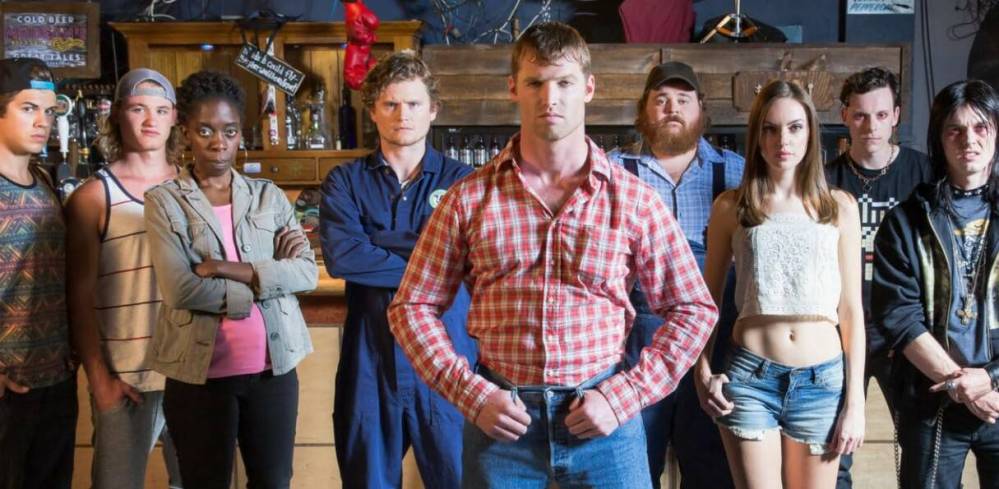
Letterkenny
Google Trends indicates that searches for “gay hockey” have skyrocketed in the past few months.
Unless you’ve been living under a rock, you’ll know why: Jacob Tierney and his smash TV show Heated Rivalry about stick-crossed NHL players/lovers.
Before Rivalry, the Montreal-born Tierney made two other Canadian hockey-related shows in a more traditionally masculine key: the comedies Letterkenny and its spinoff Shoresy.
But they’re so much more than that.
Set in the titular Ontario town of 5,000, Letterkenny explores different registers of hoserdom in its rural universe. There’s the “hicks” who live and work on farms, the “natives” from the neighbouring reserves, the loud “jock” hockey players and the “skid” meth heads.
So many staple figures left out of Vinyl Café’s whitewashed, Rockwellian picture of small-town Canada are there.
And they’re jockeying with one another in Canadian and Indigenous vernaculars that are almost Shakespearean in their verve and wordplay.
But the cliques can also bandy together, such as against “degens” (degenerates) and far-righters who roll into town, in a commentary on Canadian pluralism that’s inspired gushing analyses in the fancy pages of The New York Review of Books.
Hosers in sports
Colleen Jones
Adrian Wyld / The Canadian Press files Nova Scotia’s Colleen Jones: an elegant hoser.
Eloquent in her lilting Haligonian accent, Colleen Jones in no way brings to mind the Great White North’s rubes with their beer nogs and drunken mouses.
But the late curling skip and television personality, who was an icon of that most Canadian sport and died of cancer in November at 65, had her own more elegant way of hosing.
Jones was rarely afraid to get rough-and-tumble as a broadcaster — sometimes racing cars, skydiving and bungee jumping — while working for CBC and ultimately NBC.
She was an underdog who conquered world titles, winning two world championships, and fought different major illnesses in the last decades of her life, competing professionally as late as 2023.
Winnipeg’s hosers
Supplied Ian Ross, as Joe from Winnipeg, delivered a collection of humorous life lessons.
Joe from Winnipeg
It’s hard to avoid the whiteness and maleness of the traditional hoser image.
But if we’re to take Letterkenny’s lead that hoserdom is more about the picaros and underestimated average Joes north of the 49th, then it’s time to shed our skin-deep figure of the hoser.
About 25 years ago, Ian Ross’s “Joe from Winnipeg” persona warmly greeted CBC Radio listeners with his witty, plain spoken “curious Everyman.”
The Governor General’s Award-winning Ojibwa playwright, who died in November at 57, has been canonized for his social dramas, including fareWel and Baloney.
But Winnipeggers also can’t forget his humorous lessons through Joe — always ending with a reassuring “Meegwetch” — on Pokémon, little dogs wearing nail polish, moose on the road and much more.
Music’s hosers
The Tragically Hip
The Hip did something rare.
The Canadian Press files Gord Downie and the Tragically Hip made music that crossed class boundaries.
The idea of “working-class performance art” feels like a fantasy of art school kids who, deep down, are even more allergic to blue collar people than they are to swinging a hammer for a living.
Yet that’s essentially what the Hip pulled off with their rock ’n’ roll poetry about small-town Canada. And they grasped relative fame and fortune without their fans accusing them of selling out.
The Hip stand practically alone among Canadians who appeal to conservative Albertans and progressive Ontarians, rig pigs and hipsters elbowing past one another to cue up the jukebox with songs such as Blow at High Dough and Bobcaygeon.
Honourable mentions: k.d. lang (the country records of her early career), Mac DeMarco and Stompin’ Tom Connors
Political hosers
Darren Calabrese / The Canadian Press files Former Toronto mayor Rob Ford’s quips have become memes since his 2016 death. 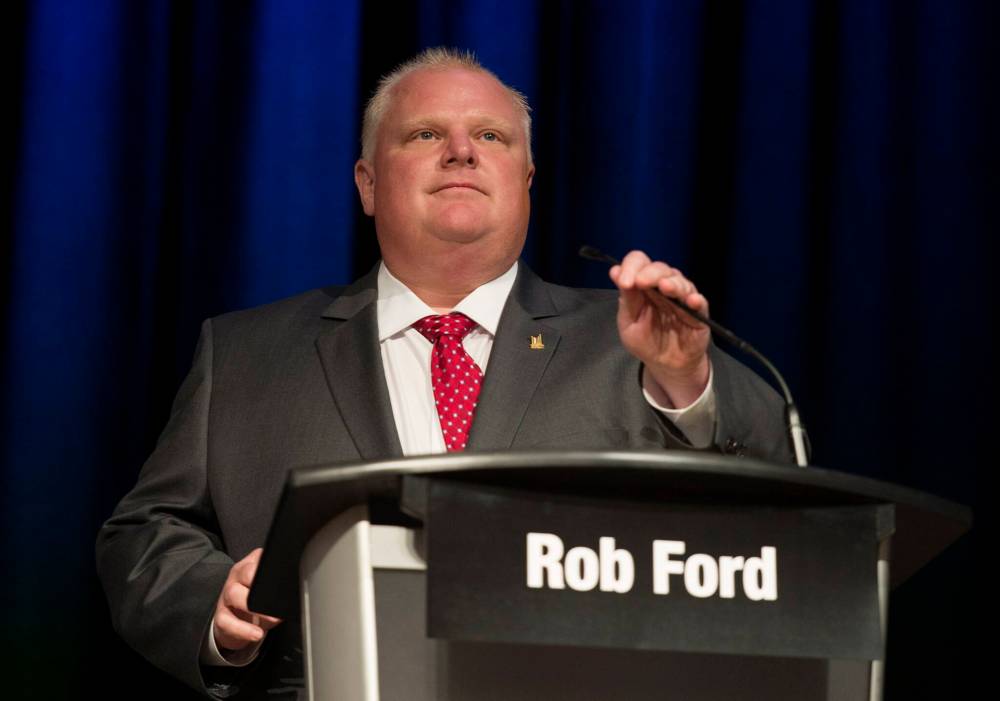
Rob and Doug Ford
Hear us out.
Since his death in 2016, Rob Ford has been somewhat domesticated in the public imagination. His gaffes and quips (“I’ve got more than enough to eat at home” or “So what if I smoked crack?… You’re just jealous that nobody wants to do stuff like that with you because you’re boring”) have become memes rather than wacko threats to sober-minded government.
For critics, his policies or those of his couther brother and current Ontario premier Doug Ford — both associated with rolling back social infrastructure — are a reminder of what the Fords represent politically, whatever their unlikely folksy charms.
Their successes offer another lesson: playing an earthy Canadian is often a very potent media strategy for politicians, liberal or conservative, even if it went haywire with the patois-speaking Rob.
Just watch Manitoba Premier Wab Kinew, a folksy-styled NDPer ranked Canada’s most popular premier, go viral cracking homoerotic hockey jokes with Doug Ford and Canadian PM Mark Carney in a January press conference.
“They want there to be a heated rivalry between Doug Ford and I, but we’re on the same team,” he said, as Ford and Carney laughed.
winnipegfreepress.com/conradsweatman
Conrad Sweatman is an arts reporter and feature writer. Before joining the Free Press full-time in 2024, he worked in the U.K. and Canadian cultural sectors and freelanced for outlets including The Walrus, VICE and Prairie Fire. Read more about Conrad.
Our newsroom depends on a growing audience of readers to power our journalism. If you are not a paid reader, please consider becoming a subscriber.
Our newsroom depends on its audience of readers to power our journalism. Thank you for your support.
Conrad Sweatman is an arts reporter and feature writer. Before joining the Free Press full-time in 2024, he worked in the U.K. and Canadian cultural sectors and freelanced for outlets including The Walrus, VICE and Prairie Fire. Read more about Conrad.
Our newsroom depends on a growing audience of readers to power our journalism. If you are not a paid reader, please consider becoming a subscriber.
Our newsroom depends on its audience of readers to power our journalism. Thank you for your support.
Advertisement Advertise With Us
Advertisement Advertise With Us
History
Updated on Wednesday, February 11, 2026 8:17 AM CST: Corrects typos, formats text