Sketches by eccentric Winnipeg artist Ed Ackerman hit the Hollywood Bowl

Advertisement
Read this article for free:
or
Already have an account? Log in here »
To continue reading, please subscribe:

Digital Subscription
One year of digital access for only $205*
- Enjoy unlimited reading on winnipegfreepress.com
- Read the E-Edition, our digital replica newspaper
- Access News Break, our award-winning app
- Play interactive puzzles
*First annual payment billed as $205.00 + GST for one year. This annual subscription will automatically renew at $233.00 + GST every 52 weeks (10% off the regular annual price of $259.35). Offer available to new and qualified returning subscribers only. Cancel any time.
To continue reading, please subscribe:
Add Free Press access to your Brandon Sun subscription for only an additional
$1 for the first 4 weeks*
- Enjoy unlimited reading on winnipegfreepress.com
- Read the E-Edition, our digital replica newspaper
- Access News Break, our award-winning app
- Play interactive puzzles
*Your next Brandon Sun subscription payment will increase by $1.00 and you will be charged $17.95 plus GST for four weeks. After four weeks, your payment will increase to $24.95 plus GST every four weeks.
Read unlimited articles for free today:
or
Already have an account? Log in here »
Hey there, time traveller!
This article was published 23/02/2026 (205 days ago), so information in it may no longer be current.
Mac DeMarco, one of Canada’s most celebrated indie musicians, has chosen Winnipegger Ed Ackerman’s art to grace posters for his upcoming fall concerts at the Hollywood Bowl and Carnegie Hall.
How DeMarco, who performed two packed concerts at Burton Cummings Theatre in December, came to select Ackerman’s work hardly followed a conventional process.
Ackerman was drawing sketches by himself at the Yellow Dog Tavern across the street from the Burt the night of DeMarco’s first show. Afterward, audiences flooded into the bar and a group of young people sat down at Ackerman’s table and began asking him about his art.
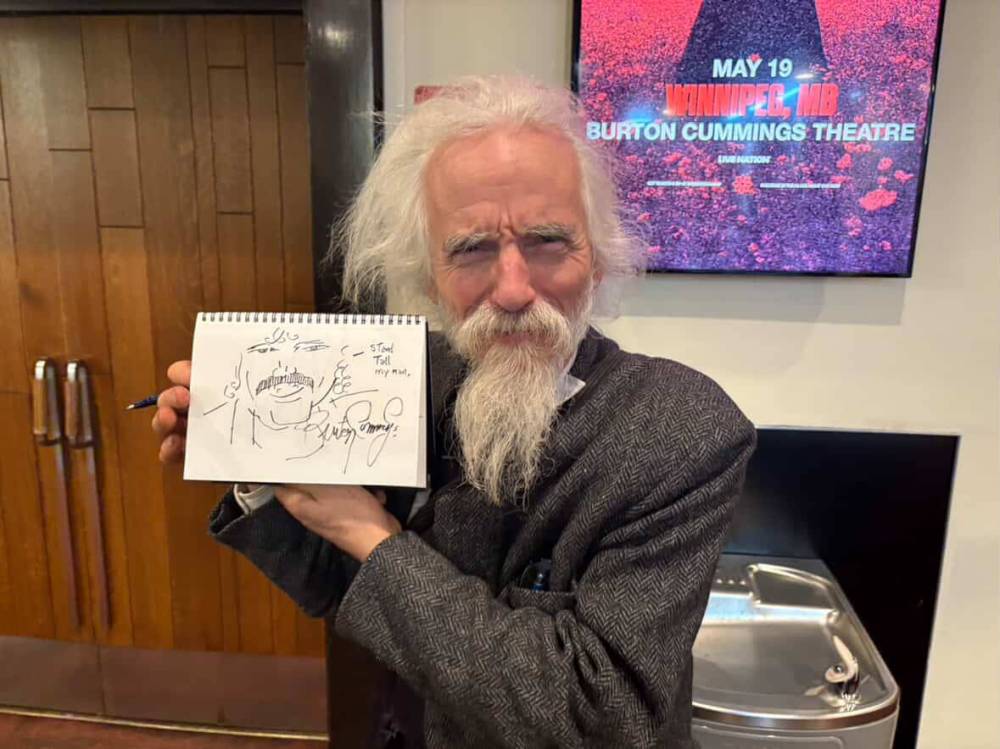
CONRAD SWEATMAN / FREE PRESS
Ed Ackerman was sketching when he had a chance meeting with Canadian indie rocker Mac DeMarco.
“And then they sent this other (man) over, saying, ‘Go, go look at this old guy’s stuff.’ And it was Mac DeMarco,” Ackerman says of the Edmonton musician, whose 2014 album Salad Days was shortlisted for the Polaris Prize.
“I didn’t know him at all, and he thought that was great.”
DeMarco offered Ackerman a free ticket to see him perform the following evening.
“And I said, ‘What can I do for you?’ He said, ‘Make a sketch (at the concert).’”
The next night Ackerman wandered the Burt, drawing caricatures of security guards, audience members and the happenings on stage while DeMarco and his band performed indie rock hits such as Freaking Out the Neighbourhood and Chamber of Reflection.
“I didn’t get his name right. I thought it was Mark D’Acampo,” Ackerman says.
After the concert, a DeMarco fan managed to pass Ackerman’s sketches onto the musician. As far as Ackerman was concerned, that was the end of the matter and a pleasant evening.
Then in mid-January, DeMarco’s team put out a call on social media to track down the Winnipeg artist.
While it didn’t take long to find Ackerman’s name, there was another hitch: the local artist doesn’t own a phone or use email. Ackerman’s friends knocked on his door and left notes until an intermediary was established in Ackerman’s brother.
Ackerman says he happily gave permission to DeMarco’s team to use his sketches in their promotional materials and was paid generously for his work.
Ackerman’s drawings of the show are whimsical, almost slapdash, like doodles on a concert program.
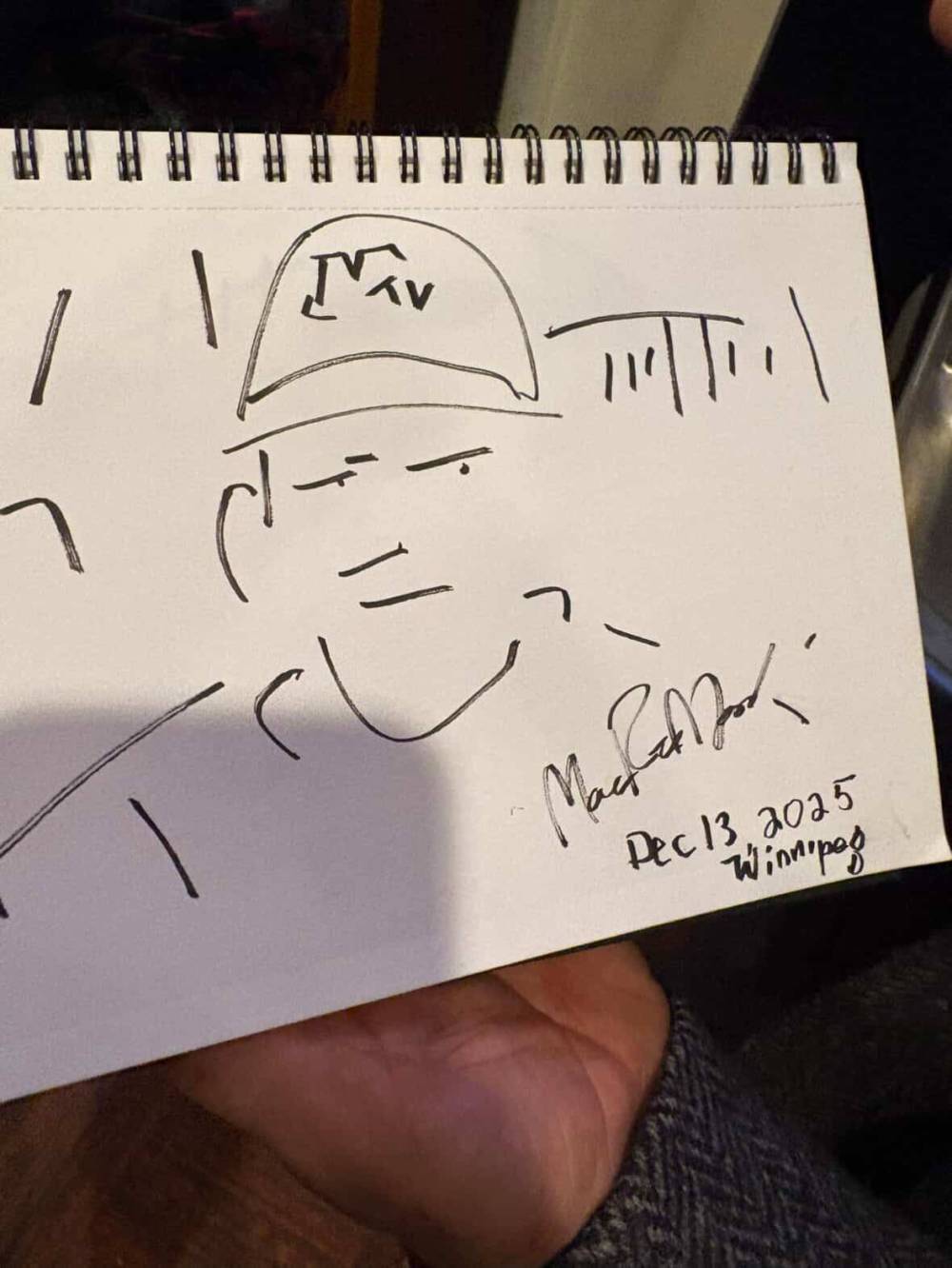
CONRAD SWEATMAN / FREE PRESS
Ackerman’s sketch of DeMarco.
“Art is always just someone else’s junk,” he says.
He doesn’t have an explanation for why DeMarco, known for his DIY ethos and sensitive hoser persona, not unlike Ackerman himself, was drawn to him or his work.
But Ackerman’s reputation certainly precedes him, and stories about him may have reached DeMarco.
Ackerman — who attained relative fame for his 1988 short experimental animated film Primiti Too Taa — is the subject of a 2013 documentary by John Paskievich called Special Ed.
It depicts Ackerman’s Sisyphean efforts to repair several downtown houses — most memorably the “Alphabet House” at 89 Gertie St., decorated with large, discarded sign letters — he’d bought for cheap in the mid-2000s with the goal of restoring them for his children.
After the city deemed the buildings unsafe and threatened to demolish them, Ackerman raced against the clock to repair them and get them up to code.
The film shows the middle-aged Ackerman camping outdoors in the Winnipeg winter to protect the houses from arson, and attempting almost single-handedly to renovate them.
In a masterstroke of political performance art, Ackerman also ran for mayor during that time, declaring one house his political headquarters. This made it more awkward from a PR standpoint for the city to destroy the headquarters of a political opponent running against presiding mayor Sam Katz.
In the end, his efforts weren’t enough for the city: the wrecking ball swung on the Alphabet House in 2010. They came for another in 2012, while Ackerman stood on the roof in protest.
“I stood protecting it with my life. I (did) one day in jail. They tore it down at night with everything I owned in the house,” he says. This was his third house destroyed by the city.
Ackerman may seem drawn, almost romantically, to lost causes.
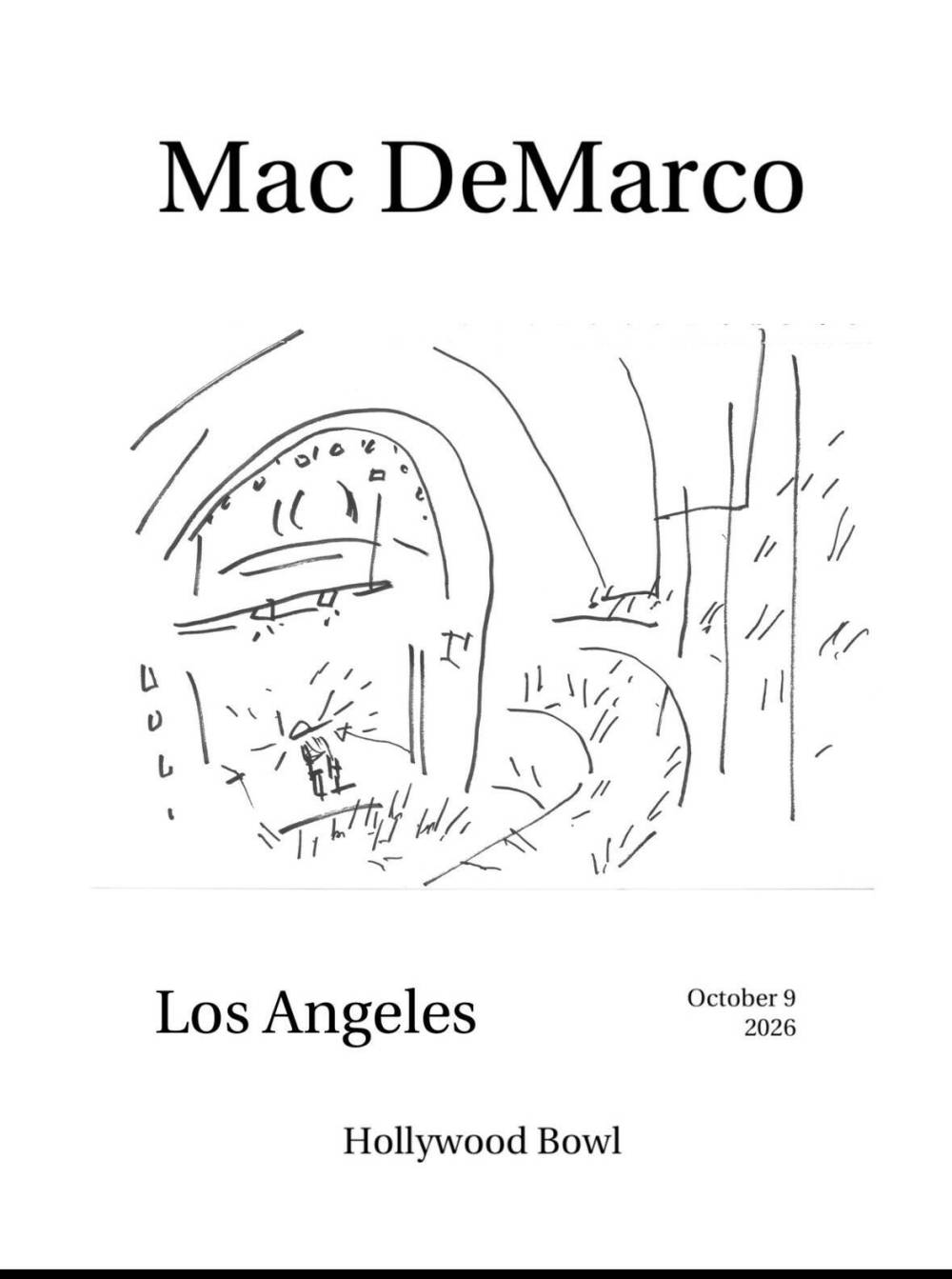
CONRAD SWEATMAN / FREE PRESS
Ackerman’s sketch has been used to promote DeMarco’s Hollywood Bowl concert.
In 2018, while running again for mayor, he was asked the question, “What one thing you would do as mayor to ensure our young kids would stay in this city instead of leaving?”
His response was to hold up a sign that read “Dam the Panama Canal,” a reference to the waterway connecting the Atlantic and Pacific oceans whose opening in 1914 subverted Winnipeg’s promise as a key North American trade hub.
Today, Ackerman lives in a house on the same block as the others, and says it’s nearly paid off.

“The house is fine. It’s the best house I’ve owned. This is for my three children.”
He’s grateful, if nonchalant, about the DeMarco opportunity; he hadn’t yet seen the now public poster, and expressed bemusement to find out that the Hollywood Bowl’s Instagram post showing it had more than 30,000 likes.
Ackerman would prefer to talk more about other experiments — an art project that collages years of rejected applications to the arts councils for funding, a new foray into painting and a film he says he’s working on about the theme of failure.
“You won’t fail, if you don’t try anything,” he says. “(But my work) isn’t necessarily about lost causes. It’s about what seems to be a lost cause may not, in fact, be one.”
winnipegfreepress.com/conradsweatman
Conrad Sweatman is an arts reporter and feature writer. Before joining the Free Press full-time in 2024, he worked in the U.K. and Canadian cultural sectors and freelanced for outlets including The Walrus, VICE and Prairie Fire. Read more about Conrad.
Our newsroom depends on a growing audience of readers to power our journalism. If you are not a paid reader, please consider becoming a subscriber.
Our newsroom depends on its audience of readers to power our journalism. Thank you for your support.
Conrad Sweatman is an arts reporter and feature writer. Before joining the Free Press full-time in 2024, he worked in the U.K. and Canadian cultural sectors and freelanced for outlets including The Walrus, VICE and Prairie Fire. Read more about Conrad.
Our newsroom depends on a growing audience of readers to power our journalism. If you are not a paid reader, please consider becoming a subscriber.
Our newsroom depends on its audience of readers to power our journalism. Thank you for your support.
Advertisement Advertise With Us
Advertisement Advertise With Us