

Offbeat offerings
Gallery’s ‘offcut’ fundraiser reflects its reputation as space to experiment

Advertisement
Read this article for free:
or
Already have an account? Log in here »
To continue reading, please subscribe:
Digital Subscription
One year of digital access for only $1.44 a week*
- Enjoy unlimited reading on winnipegfreepress.com
- Read the E-Edition, our digital replica newspaper
- Access News Break, our award-winning app
- Play interactive puzzles
*Billed as $5.77 plus GST every four weeks. After 52 weeks, price increases to the regular rate of $19.95 plus GST every four weeks. Offer available to new and qualified returning subscribers only. Cancel any time.
To continue reading, please subscribe:
Add Free Press access to your Brandon Sun subscription for only an additional
$1 for the first 4 weeks*
- Enjoy unlimited reading on winnipegfreepress.com
- Read the E-Edition, our digital replica newspaper
- Access News Break, our award-winning app
- Play interactive puzzles
*Your next Brandon Sun subscription payment will increase by $1.00 and you will be charged $17.95 plus GST for four weeks. After four weeks, your payment will increase to $24.95 plus GST every four weeks.
Read unlimited articles for free today:
or
Already have an account? Log in here »
As it approaches its five-year anniversary, the Centre for Cultural and Artistic Practices — an arts organization offering free access to an eclectic slate of programming — wants to stay put in the West Exchange District.
Based in a bright, flexible and “genreless” space at 520 Hargrave St., C’cap — pronounced “sea cap” — began operating there in 2021, taking over the lease from Blinkers, a gallery opened in 2018 by four University of Manitoba art school graduates.
When Blinkers announced that it would be winding down, with much of its team moving to other cities, a group of like-minded artists, including C’cap curator-director Luther Konadu, decided to carry the torch as a professionally run space geared toward emerging artists.
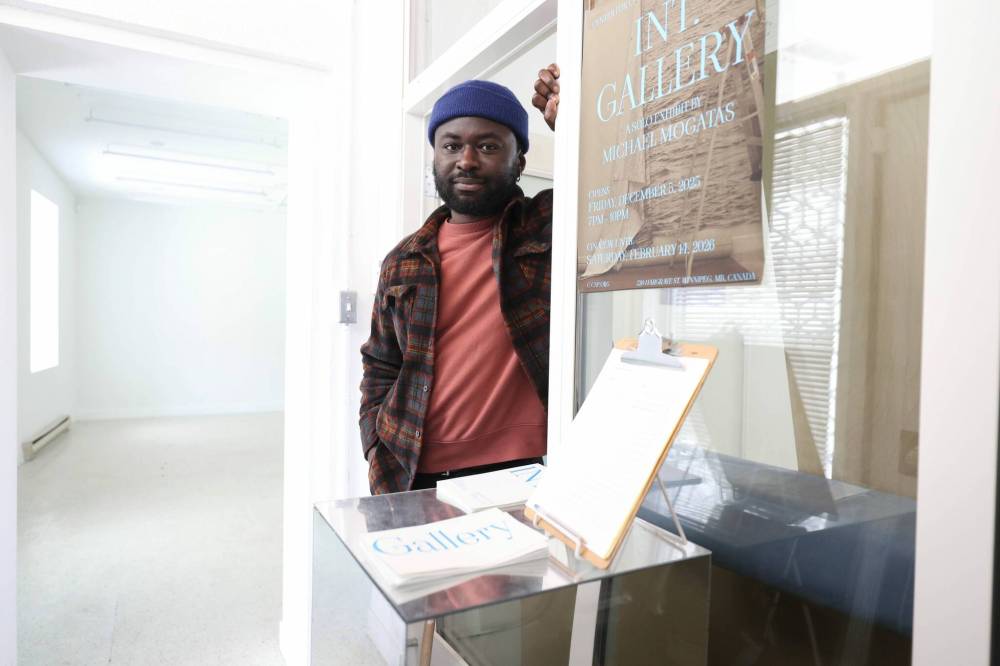
Ruth Bonneville / Free Press
Centre for Cultural and Artistic Practices director Luther Konadu is the organizer of the Offcut fundraiser.
Enabled by funding through the Canada Council for the Arts and other bodies, C’cap held its first exhibition — a selection of new photographs from Vancouver’s Gonzalo Reyes Rodríguez — in fall 2021.
Since then, it’s shared its 480 square feet with dozens of local artists, including painter Ekene Emeka Maduka, visual artist Rhayne Vermette, writer/curator hannah_g, recording artist Zoon and photographer Judah Iyunade.
“One thing I’m very proud of is having a mix of local artists, artists from across the country and international artists,” says the 34-year-old Konadu, a U of M graduate and award-winning photographer who spent seven years working at the Plug In Institute of Contemporary Art. “I really think about what is and isn’t being shown within the city — how to represent that within the gallery — and also thinking about this community, the variety of demographics we’re lucky to have, and representing that within the space as well.
“Beyond that, to be thinking about different kinds of artistic practices, whether it be live performance work or some of the more experimental, intermedia work which we’ve also done,” he adds. “Work that really requires us to go out of our comfort zone and maybe seek more funding to be able to achieve.”
To that end, the organization has asked more than 50 artists to contribute to its upcoming fundraiser, a ticketed event (May 28) that gives attendees a chance to go home with an “offcut” — experimental pieces, sketches, other one-of-a-kind studio ephemera.
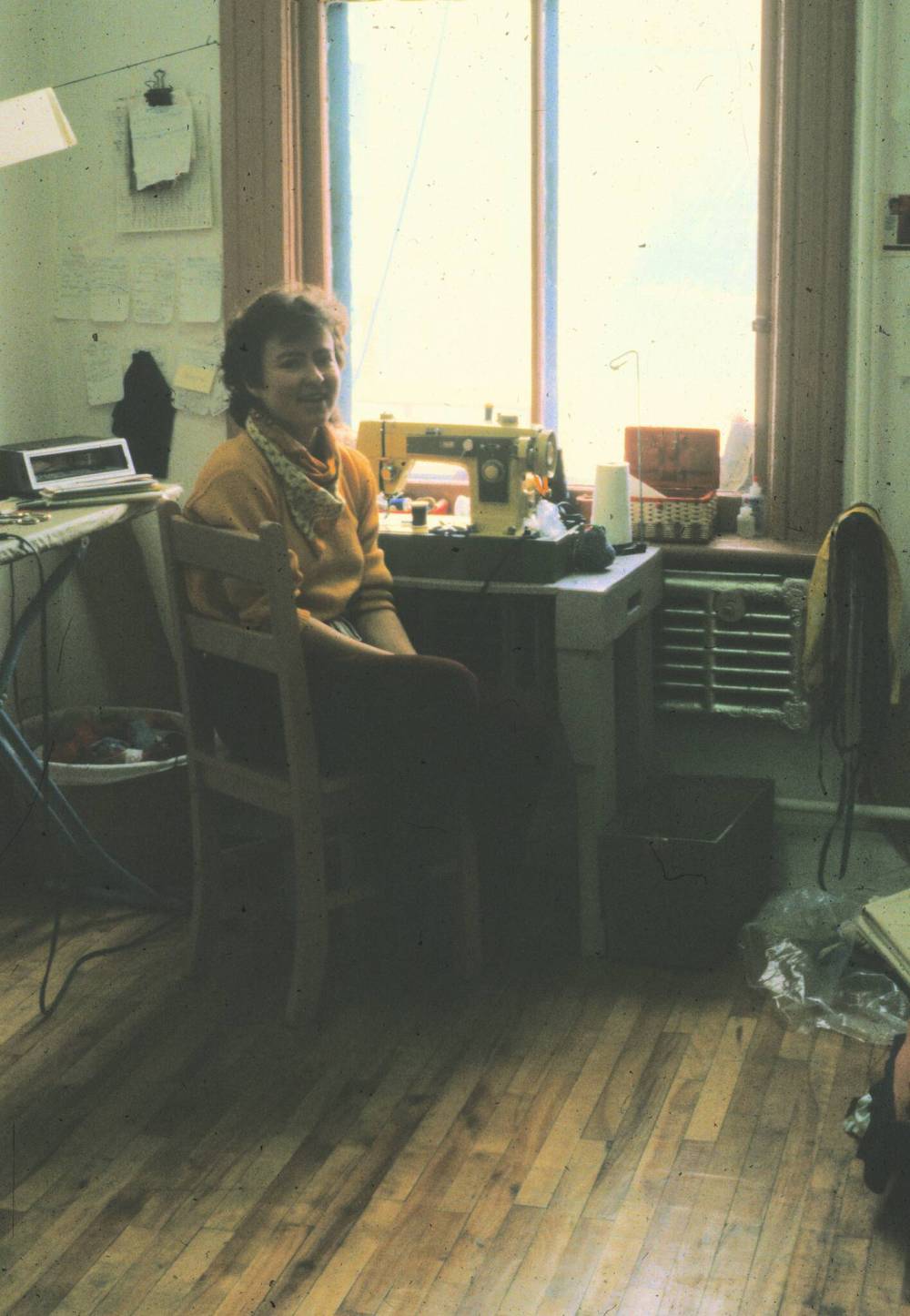
Supplied
Barb Hunt sews futon covers in her Winmore studio in the mid-’80s, when she got her start as an artist.
Textile artist Barb Hunt was thrilled by the prompt from C’cap, which she calls “the most innovative fundraiser I’ve ever participated in.”
The blind-bid process matches the “surprising, refreshing” style that Hunt appreciates in the organization. “It’s sort of anti-art in a funny way.”
“Luther wanted us to pick a work from the edge of our practice, maybe a test piece, something at the fringes of what you do,” says Hunt, a professor emerita at Memorial University who returned to Winnipeg from Newfoundland four years ago. “It kind of forces you to think in a way that’s different from how you think.”
That led Hunt to forgo her favourite current media — velvet and buttons, which she’s sewn together to create textured reflections of natural phenomena like the sun and the moon — and reach for a metaphor for intertwined geographic roots.
“In Newfoundland, I’d pick stuff up on the beach and I found a loop made by fishers where two short rope ends are rebraided together,” says Hunt, who moved to Winnipeg in 1977 to study art at the University of Manitoba. “So I made a version of it in a concrete casting workshop. I’ve had this thing hanging around for years, so I tied a ribbon around it and wrapped it up in tissue paper.”

Barb Hunt photo
The Winmore Clothing building on Main Street housed many artists in the 1980s.
An artist whose work has been exhibited across Canada, Mexico and the United States, as well as in Belgium, England, Italy, Poland and Lithuania, Hunt taught visual art at Western University and Queen’s University.
But her career as an emerging artist can be traced back to downtown Winnipeg, where she rented a live-work space above the Winmore Clothing building (536 Main St., demolished in 1990). “My studio was the three windows above ‘Win,’” says Hunt, who sewed futons and worked at Malabar Costumes’ in-house dry-cleaning shop on Main Street.
Asked how much she paid in rent for her second-floor studio in 1983, she circles around the $100 mark. “But I asked (Winmore owner) Mickey Kraut, ‘What if I fill the space up with other artists, would you cut my rent in half?’ So it went down to $50.
“The 1980s were quite a rich time for Winnipeg art, with a lot of expansion of artist-run centres,” adds Hunt, who would’ve paid around $145 per month, adjusting for inflation. “It was kind of an exciting decade to be there.”

While Konadu says C’cap has an excellent relationship with its landlord, the organization’s rent is still more than $1,500 per month. Compared with other commercial spaces, Konadu knows that bill is considered affordable, but running the gallery on piecemeal annual funding is still a precarious financial undertaking in 2026. (The rental cost adjusted to 1983 dollars would be just over $500.)
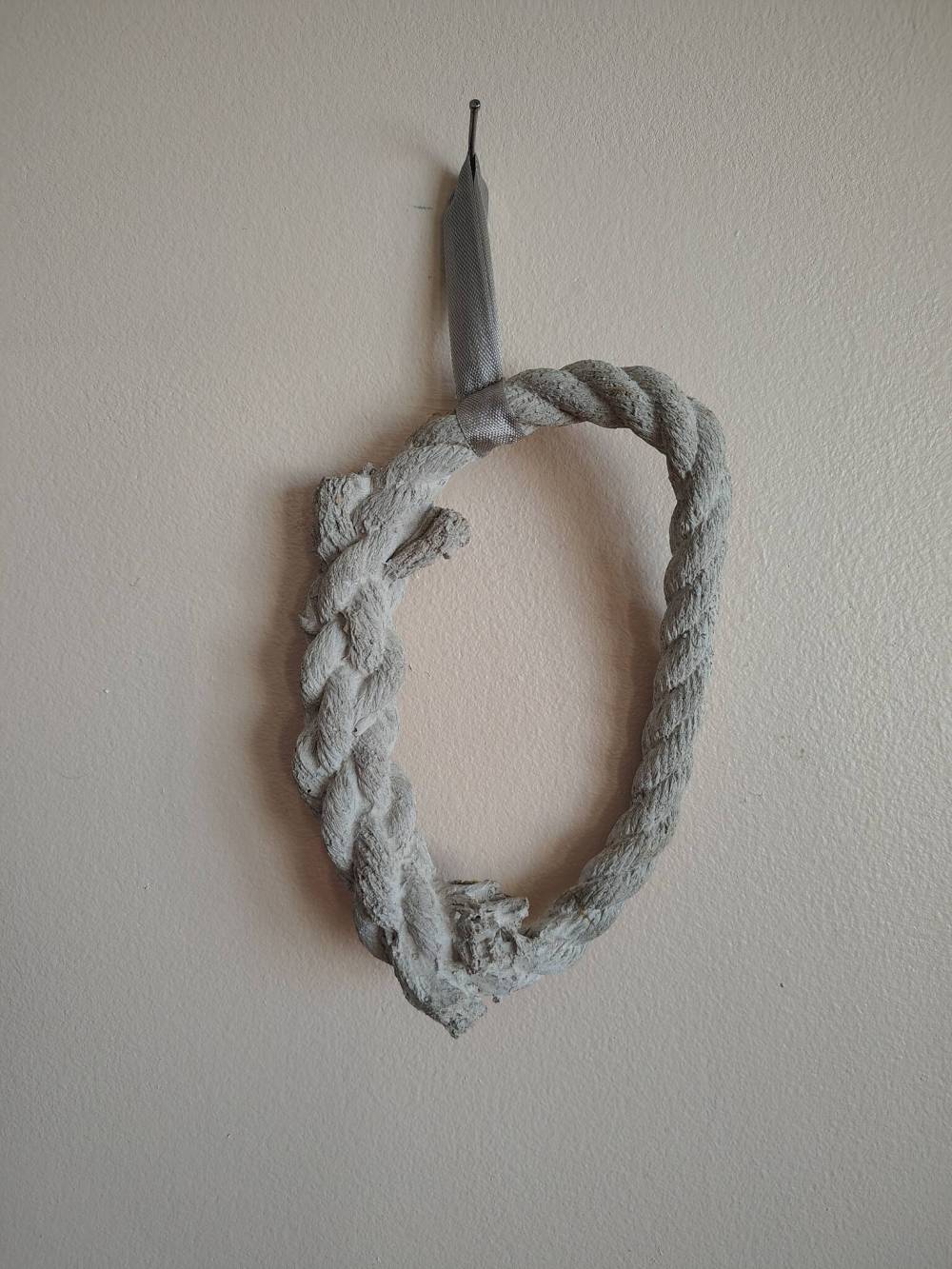
Barb Hunt photo
A concrete cast of a fisher’s rope is Barb Hunt’s contribution to the fundraiser.
At the Offcut fundraiser, the purchase of a $20 token guarantees attendees a donated offcut chosen at random from a draw, while a $80 token guarantees an offcut of the attendee’s choosing from the display. The selections are first come, first served.
The organization’s goal is to raise $10,000, which will go toward operating and programming costs.
For more information about C’cap, visit c-cap.org or follow on social media @c___c.a.p.
winnipegfreepress.com/benwaldman
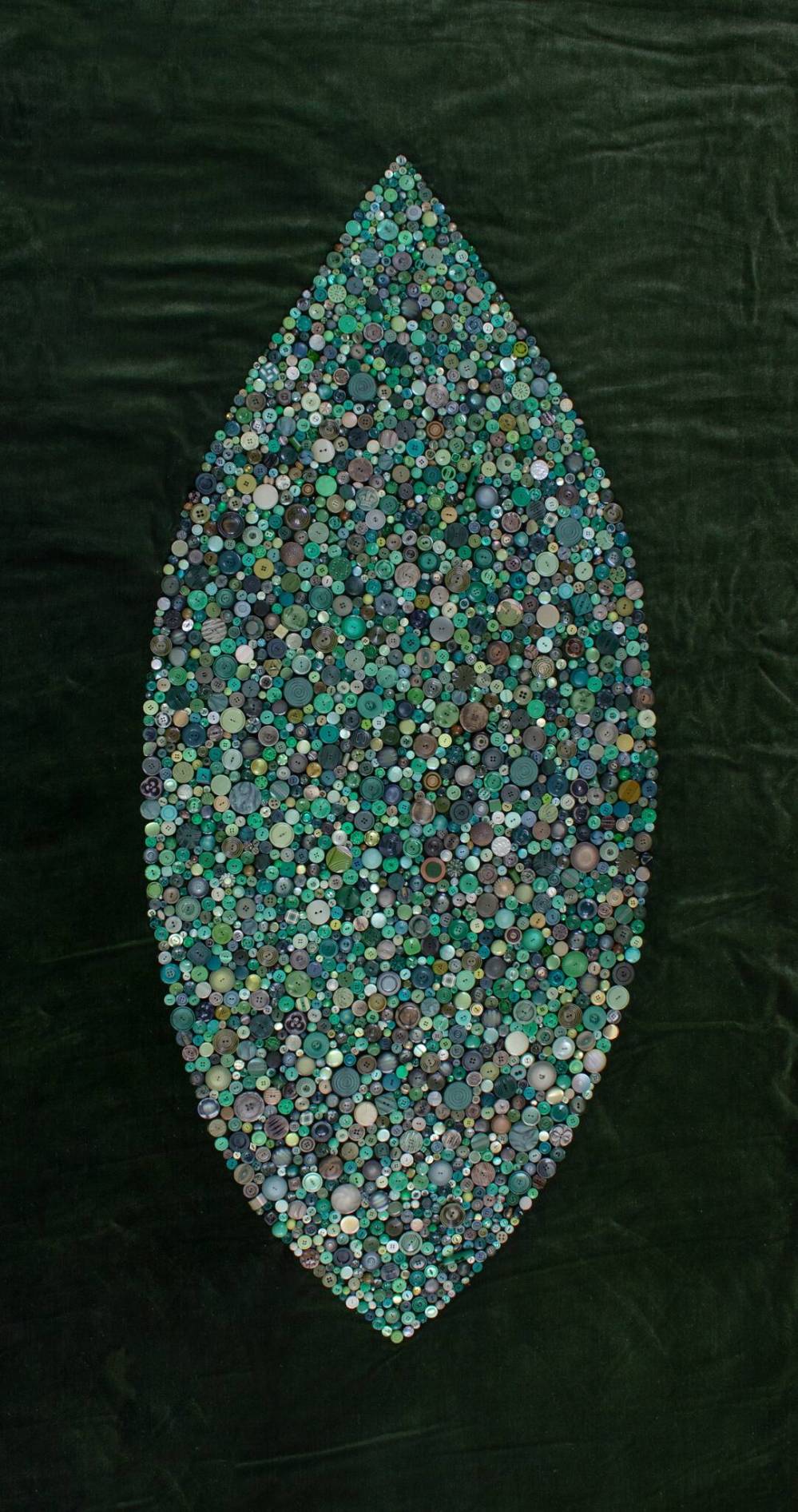
Barb Hunt photo
Hunt’s work uses buttons and fabric to represent natural phenomena.


Ben Waldman is a National Newspaper Award-nominated reporter on the Arts & Life desk at the Free Press. Born and raised in Winnipeg, Ben completed three internships with the Free Press while earning his degree at Ryerson University’s (now Toronto Metropolitan University’s) School of Journalism before joining the newsroom full-time in 2019. Read more about Ben.
Every piece of reporting Ben produces is reviewed by an editing team before it is posted online or published in print — part of the Free Press‘s tradition, since 1872, of producing reliable independent journalism. Read more about Free Press’s history and mandate, and learn how our newsroom operates.
Our newsroom depends on a growing audience of readers to power our journalism. If you are not a paid reader, please consider becoming a subscriber.
Our newsroom depends on its audience of readers to power our journalism. Thank you for your support.
What’s nearby? What came before?
C’cap (520 Hargrave St.) is located directly across the street from the Western Paint Warehouse (521 Hargrave St.) — a 115-year-old building featuring a neon cowboy hat sign and a heritage mural painted by Annie Bergen in 2013.
Around the corner from Little Brown Jug Brewing Co. (336 William Ave.), the gallery is a short walk to Aceartinc. (206 Princess St.) and Urban Shaman (290 McDermot Ave.).
Located directly beside DACAPO Productions (516 Hargrave St.), the C’cap building was formerly a photo processing space for Lab Works in the 1990s. During the mid-1970s, the space was used as a studio by J.M. Venables, an architect who worked for a trio of Winnipeg firms — Pratt, Lindgren, Snider, Tomcej; Gaboury Lussier Sigurdson Venables; Architects Consortium — before going independent in 1975.
Ben Waldman is a National Newspaper Award-nominated reporter on the Arts & Life desk at the Free Press. Born and raised in Winnipeg, Ben completed three internships with the Free Press while earning his degree at Ryerson University’s (now Toronto Metropolitan University’s) School of Journalism before joining the newsroom full-time in 2019. Read more about Ben.
Every piece of reporting Ben produces is reviewed by an editing team before it is posted online or published in print — part of the Free Press‘s tradition, since 1872, of producing reliable independent journalism. Read more about Free Press’s history and mandate, and learn how our newsroom operates.
Our newsroom depends on a growing audience of readers to power our journalism. If you are not a paid reader, please consider becoming a subscriber.
Our newsroom depends on its audience of readers to power our journalism. Thank you for your support.
Advertisement Advertise With Us
Advertisement Advertise With Us