Director brings Métis identity, language to silver screen

Advertisement
Read this article for free:
or
Already have an account? Log in here »
To continue reading, please subscribe:

Digital Subscription
One year of digital access for only $205*
- Enjoy unlimited reading on winnipegfreepress.com
- Read the E-Edition, our digital replica newspaper
- Access News Break, our award-winning app
- Play interactive puzzles
*First annual payment billed as $205.00 + GST for one year. This annual subscription will automatically renew at $233.00 + GST every 52 weeks (10% off the regular annual price of $259.35). Offer available to new and qualified returning subscribers only. Cancel any time.
To continue reading, please subscribe:
Add Free Press access to your Brandon Sun subscription for only an additional
$1 for the first 4 weeks*
- Enjoy unlimited reading on winnipegfreepress.com
- Read the E-Edition, our digital replica newspaper
- Access News Break, our award-winning app
- Play interactive puzzles
*Your next Brandon Sun subscription payment will increase by $1.00 and you will be charged $17.95 plus GST for four weeks. After four weeks, your payment will increase to $24.95 plus GST every four weeks.
Read unlimited articles for free today:
or
Already have an account? Log in here »
TORONTO — Métis culture has been around for centuries, but films set in the Métis world remain rare.
The new movie Blood Lines is intended to help fill that gap. Written and directed by Métis actor Gail Maurice (best known in these parts for playing the fiery title character of the locally lensed 2024 drama Aberdeen), it is set in an Ontario Métis community.
Maurice stars as Léonore, a mother who seeks to reconnect with her grown daughter Beatrice (Dana Solomon) after years of alcohol-fuelled neglect.
Beatrice is unforgiving, and is soon distracted by the presence of a new woman in the community. Chani (Derica Lafrance) has come to town searching for her biological family. Clearly enamoured, Beatrice offers to help.
Maurice and Solomon met with the Free Press in September after the film screened at the Toronto International Film Festival, where she asserted her reasons for making the film.
“Not a lot of Canadians know anything about Métis culture or Métis identity, even to this day. People ask: ‘What are you?’ and I’ll say I’m Métis. And they say, ‘Oh, what’s that?’” Maurice says.
The filmmaker wants to bring an understanding of Métis culture to the world, saying that Blood Lines is the first Canadian feature film to highlight both Métis identity and language.
“It’s also the first feature film in the history of Canada to have the Northern Michif language spoken in the film,” she says, referring to a northern Saskatchewan variation of Michif, a language that interpolates Cree and French.
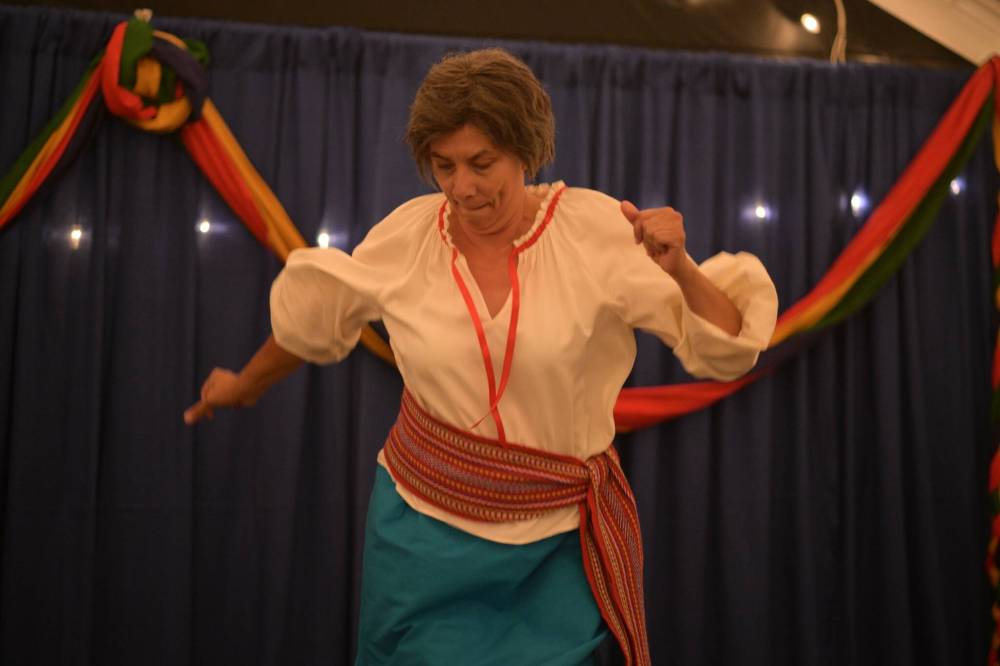
Gail Maurice wrote, directed and stars in Blood Lines.
“There’s only five villages in the world that speak my Northern Michif dialect, so I had to go to my village in Beauval in northern Saskatchewan to find (many of) my actors, who have never acted before.”
Maurice is referring to characters known as the “granny gang,” elders who turn up at intervals to do their best to reconnect the mother and daughter.
“I needed authentic speakers and I wanted to portray everything as authentically as possible in this film. All my themes in my films are family, identity, culture and chosen family,” Maurice says.
“So this is a love story, not only to women, but also to my Métis identity.”
Taking the pivotal role of Beatrice is actress Dana Solomon, who is of Anishinaabe and Guyanese extraction. Hailing from Selkirk and currently living in Mississauga, Ont., she says she was exposed to Métis culture growing up, which helped since the character is a competitive dancer, acquitting herself quite well in a jigging contest in one key sequence.
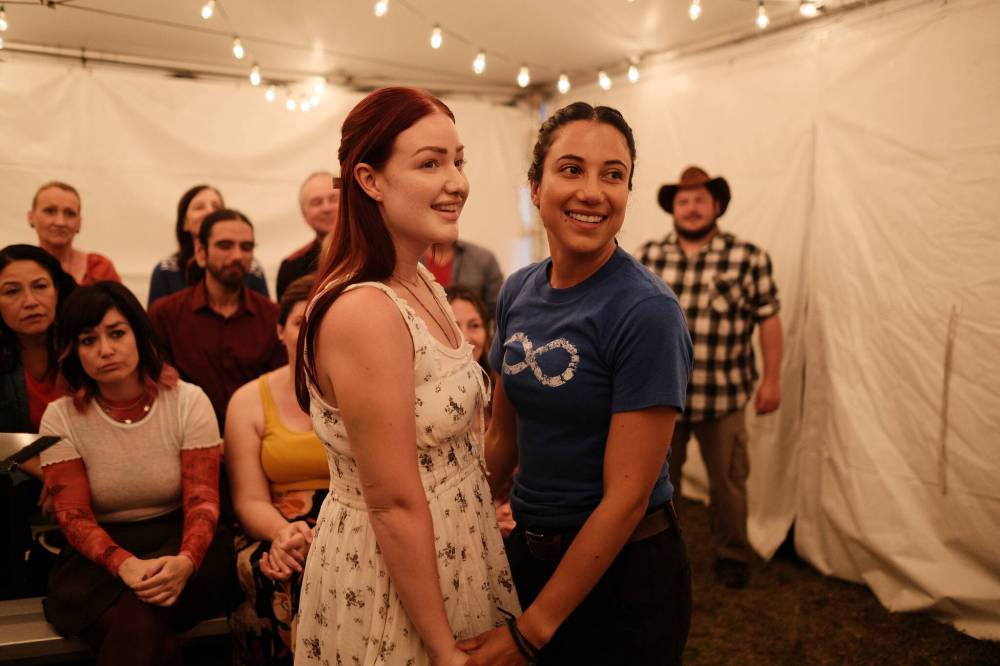
In Blood Lines, Chani (Derica Lafrance, left) is a newcomer to a Métis community seeking her biological family; she is helped by Beatrice (Dana Solomon).
“I’ve been around jiggers growing up. My grandfather, Elmer Seymour, used to be one of the best fiddlers in the region, so that was kind of nice familiarity for me,” Solomon says
Like Maurice, Solomon is a writer-director. She premièred her short film, Niimi, at TIFF, in which she not only starred but choreographed. She plays an Indigenous dancer who attempts to return to the world of ballet after a traumatic incident with a coach.

Solomon, who studied at the Royal Winnipeg Ballet, says it’s a work of fiction.
“But a lot of it was birthed out of my own experiences and I just really wanted to make a film that was about healing and how movement can be healing.”
Her ballet training also helped to pull off the jigging scene in Blood Lines, she says.
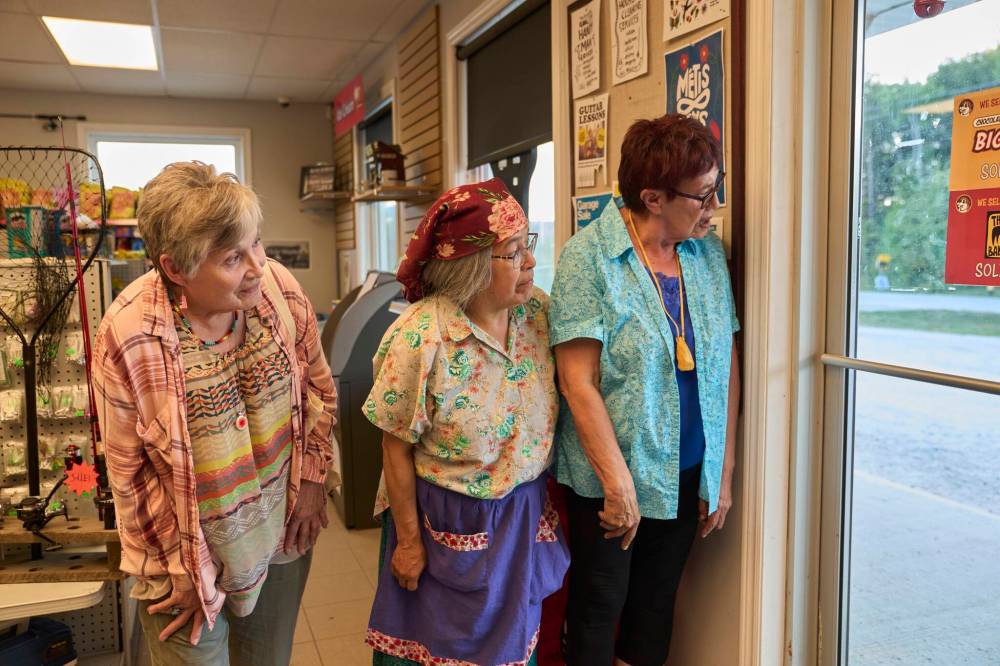
The ‘granny gang’ is made up of first-time actors.
“I’m definitely more classically trained, but I think once you’re a dancer, and you practise and you see it enough, you can pick it up.”
randall.king.arts@gmail.com
Our newsroom depends on a growing audience of readers to power our journalism. If you are not a paid reader, please consider becoming a subscriber.
Our newsroom depends on its audience of readers to power our journalism. Thank you for your support.
MOVIE PREVIEW
Blood Lines
Starring: Gail Maurice, Dana Solomon, Derica Lafrance
● Polo Park
● 89 minutes, PG
Our newsroom depends on a growing audience of readers to power our journalism. If you are not a paid reader, please consider becoming a subscriber.
Our newsroom depends on its audience of readers to power our journalism. Thank you for your support.
Advertisement Advertise With Us
Advertisement Advertise With Us