Patchwork message
Quilt tradition from Underground Railroad period big part of new exhibition

Advertisement
Read this article for free:
or
Already have an account? Log in here »
To continue reading, please subscribe:

Digital Subscription
One year of digital access for only $205*
- Enjoy unlimited reading on winnipegfreepress.com
- Read the E-Edition, our digital replica newspaper
- Access News Break, our award-winning app
- Play interactive puzzles
*First annual payment billed as $205.00 + GST for one year. This annual subscription will automatically renew at $233.00 + GST every 52 weeks (10% off the regular annual price of $259.35). Offer available to new and qualified returning subscribers only. Cancel any time.
To continue reading, please subscribe:
Add Free Press access to your Brandon Sun subscription for only an additional
$1 for the first 4 weeks*
- Enjoy unlimited reading on winnipegfreepress.com
- Read the E-Edition, our digital replica newspaper
- Access News Break, our award-winning app
- Play interactive puzzles
*Your next Brandon Sun subscription payment will increase by $1.00 and you will be charged $17.95 plus GST for four weeks. After four weeks, your payment will increase to $24.95 plus GST every four weeks.
Read unlimited articles for free today:
or
Already have an account? Log in here »
Long before she became a professional quilter, Melinda Clayton Patterson used to watch her mother make quilts from clothing scraps and cardboard templates.
“I came from a family of 14 kids, so going to whatever the store was back then, K-Mart or Woolworth, to buy quilts or blankets for 14 kids was just not feasible because the people were not wealthy,” she says.
“Quilts were not viewed as art. But when I came to Winnipeg, I started taking quilting seriously in my 30s … the heritage came later.”
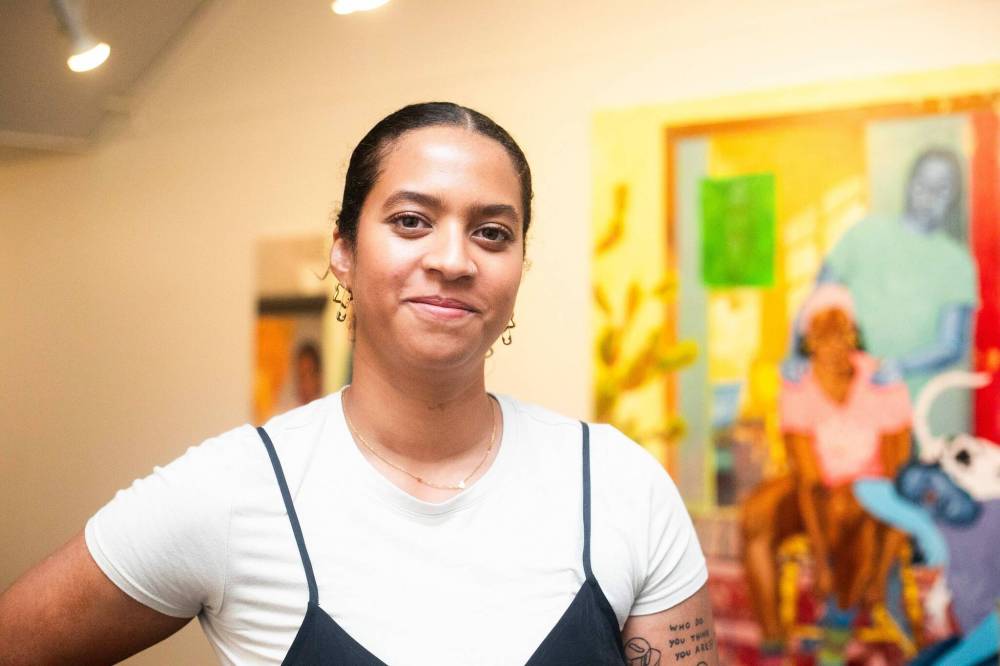
MIKAELA MACKENZIE / FREE PRESS
Bria Fernandes with her new show, Things Left Unsaid, at Gallery 1C03 in the University of Winnipeg on Wednesday, Sept. 10, 2025. For Jen story. Free Press 2025
Today, the 61-year-old native of East Preston, N.S., lives in Winnipeg, stitching together stories of her Black Loyalist heritage and Preston’s foundational role in the birth of Canadian Black culture.
Her work, in the tradition of quilts of the Underground Railroad, are on display at Together in Motion — Black and Indigenous Futures on Treaty 1 Territory at the National Black Canadians Summit, held in Winnipeg this weekend.
In the words of the Michaëlle Jean Foundation, which organizes the event, the summit’s purpose is to “celebrate Black Canadian culture, share powerful stories and shape a more inclusive future.” (Together in Motion is free to the public.)
According to oral history recorded by Jacqueline Tobin and Raymond Dobard, quilts were hung in outdoor spaces to communicate secret messages to enslaved people making the treacherous journey north to freedom in the northern United States and eastern Canada.
Admire Patterson’s densely patterned pieces and you’ll see the symbols, such as the bowtie or the sailboat, telling the fugitive, according to folklore, to wear a disguise or cross water.
“My quilts are not exact reproductions. I take those patterns and make them my own. I am so blessed to be able to tell their story, which in turn is my story, and I’ve taught all three of my granddaughters to quilt,” Patterson says.
Given the exhibition title’s apparent reference to Afrofuturism — an artistic movement with strong accents of science fiction — it may seem surprising, at first, that Together in Motion is so rich with historical references.
The word “motion” gives a clue as to the exhibition’s deeper concern: the dialogue between past and future, and the movement of Black communities to Canada from across the diaspora.
“I really (tried) to allow every artist the freedom to talk about their own personal narrative, their own personal Black experience within the Treaty 1 territory,” says curator Gabriel Bell-Gam, who is also a student in the University of Winnipeg’s master of arts in cultural studies program.
“This exhibition does not present a singular Black experience or speak on behalf of the Indigenous people, but rather seeks to create that dialogue and relationship of solidarity.”
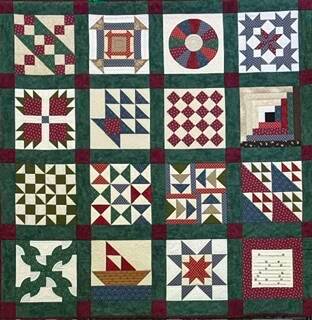
Melinda Clayton Patterson / Supplied
A piece by Melinda Clayton Patterson evokes the Underground Railroad-period in which quilts communicated secret messages to enslaved people.
Many of the 10 featured artists in the exhibition — as well as the Black Canadian Experience Centre — will be familiar. They are among Winnipeg’s most striking artists.
Like Habeeb Andu, whose large-scale paintings quite literally leap off the canvas with clothing, bullet casings and urgently scrawled words on the kidnappings of children in Nigeria amid the Boko Haram insurgency.
Or Bria Fernandes (who recently relocated to British Columbia), whose overwhelming tableaus marry Renaissance-like compositional precision with technicolour surrealism.
Some of the exhibition’s artists were recruited by Graffiti Art Programming, known as much for its curation of street art and gallery shows as its outreach with urban and Indigenous youth.
“I really want to give a big shoutout to Steve (Wilson) from Graffiti Art Programming. He has been really amazing in terms of the process and his team,” Bell-Gam says.
Patterson’s work is not the only part of Together in Motion with a historical focus.
Did you know that the first black union in North America was formed in Winnipeg in 1917? That was the memorably titled Order of the Sleeping Car Porters, established by four Black railway employees: John A. Robinson, J.W. Barber, B.F. Jones and P. White.
A major section of Together in Motion, assembled by the Black Canadian Experience Centre and entitled Black Life and Advocacy in Winnipeg: 1900s–2020, covers early Black history in Winnipeg, including the porter union’s birth and a North End troupe of the Black Girl Guides.
“We start off actually by talking about 795 Main St. address because that was, we know, a place where a lot of these groups met. They knew that was a hub place they would go and become part of the community,” says Judy Williams, program manager and chair of the Black Canadian Experience Centre. She says the exhibition will display her mother’s Girl Guide uniform, as it was her grandmother who started the troupe in question in the early 1940s.
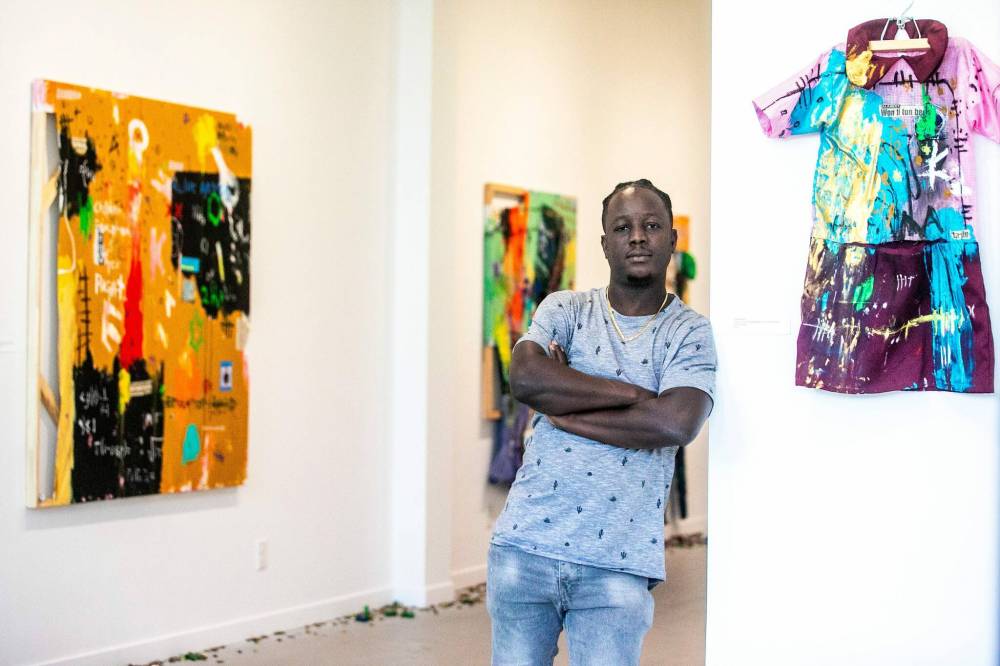
MIKAELA MACKENZIE / FREE PRESS
Habeeb Andu and his exhibition, Theatre of War, at the Main Street Gallery in August, 2025. Andu’s work is featured in the Together in Motion — Black and Indigenous Futures on Treaty 1 Territory exhibition.
“Our organization looks at the past, but also the present and future.”

Bell-Gam says another key throughline for Together in Motion is the Halifax Declaration, a self-described “manifesto” launched in 2022-23 by the Michaëlle Jean Foundation in 2023, which calls for fuller reckoning of Black Canadian history and racial discrimination and institutional changes across culture, health, education and beyond.
Though grounded in United Nations’ internationalist discourse, in particular the UN’s International Decade for People of African Descent (2015–2024), the declaration quickly situates itself in Canada’s specificities — its first pillar, “Recognition,” being as much about Canada’s Indigenous population as its Black population.
“It talks about that solidarity. When I moved down to Canada myself, there were so many stereotypes about the Indigenous communities, but the only difference I really see in terms of my own context is just the tonalities of our skins,” Bell-Gam says.
“Having that solidarity with the Black and Indigenous people, I think that is what embodies the Halifax Declaration, and so that is why it’s really something special for me for this exhibition.”
conrad.sweatman@winnipegfreepress.com
Conrad Sweatman is an arts reporter and feature writer. Before joining the Free Press full-time in 2024, he worked in the U.K. and Canadian cultural sectors and freelanced for outlets including The Walrus, VICE and Prairie Fire. Read more about Conrad.
Our newsroom depends on a growing audience of readers to power our journalism. If you are not a paid reader, please consider becoming a subscriber.
Our newsroom depends on its audience of readers to power our journalism. Thank you for your support.
Together in Motion – Black and Indigenous Futures on Treaty 1 Territory
RBC Convention Centre, Hall D
Friday-Sunday
Free
Conrad Sweatman is an arts reporter and feature writer. Before joining the Free Press full-time in 2024, he worked in the U.K. and Canadian cultural sectors and freelanced for outlets including The Walrus, VICE and Prairie Fire. Read more about Conrad.
Our newsroom depends on a growing audience of readers to power our journalism. If you are not a paid reader, please consider becoming a subscriber.
Our newsroom depends on its audience of readers to power our journalism. Thank you for your support.
Advertisement Advertise With Us
Advertisement Advertise With Us